Colombo exhibition to feature export products, industrial equipment, investment talks
Sri Lanka is seeking lasting partnerships with South Korean businesses through the Sri Lanka Expo 2027 in Colombo in January, according to the country's ambassador to Korea.
The expo will run Jan. 14-17 at the Bandaranaike Memorial International Conference Hall in the Sri Lankan capital, with meetings between companies and an investment forum.
The Sri Lanka Export Development Board, which organizes the exhibition, expects around 750 exhibitors and 1,500 international participants, including buyers, investors and media representatives.
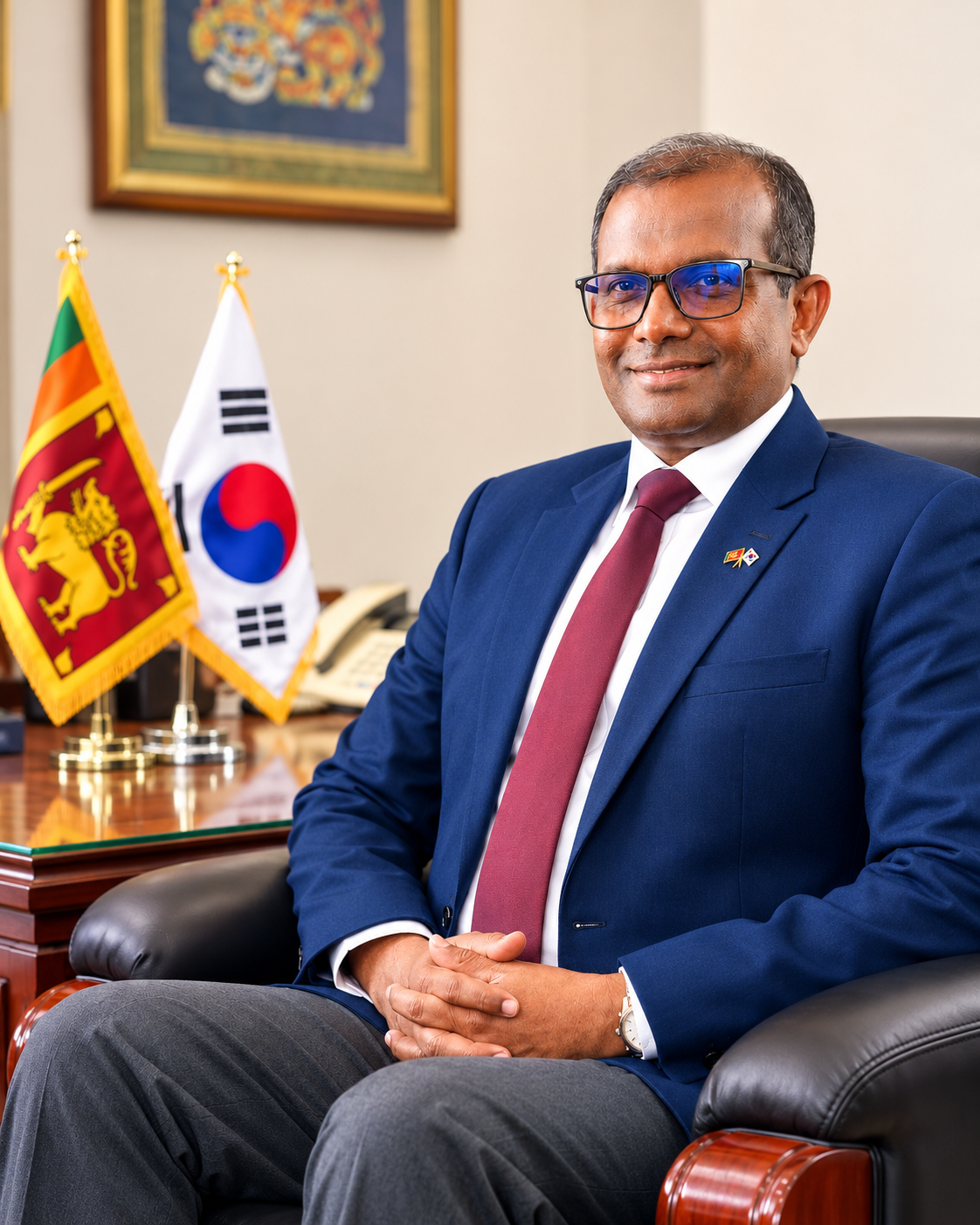
“Our objective is to facilitate lasting commercial partnerships, rather than simply attract visitors to an exhibition,” Sri Lankan Ambassador to Korea Marimuthu Karpaya Pathmanaathan said in an interview with The Korea Herald on Wednesday.
He encouraged Korean companies to supply machinery, automation systems and renewable energy equipment to Sri Lankan businesses, also pointing to information technology, logistics, tourism and healthcare as potential areas for Korean companies considering business in Sri Lanka.
Trade ties and business opportunities
Sri Lanka-South Korea bilateral trade totaled $343 million in 2025, with South Korean exports to Sri Lanka reaching $234 million and imports amounting to $109 million, according to the Korea International Trade Association.
About 20 Korean companies operate in Sri Lanka, according to the Korea Trade-Investment Promotion Agency. The agency says Korean products are regarded as premium goods and advises companies to target middle- and higher-income consumers. Interest in K-pop and Korean dramas is also improving perceptions of Korean products, according to the agency.
The Sri Lankan Embassy in Seoul wants to help Korean participants find suppliers and business partners before the exhibition and follow up on discussions afterward.
“Our priority is to facilitate targeted introductions based on actual business requirements,” Pathmanaathan told The Korea Herald, adding that eligible international buyers may receive discounted travel and accommodation, airport transfers and shuttle services, subject to conditions.
Pathmanaathan identified limited knowledge of each other’s markets, insufficient contact between companies, differences in business practices and Sri Lanka’s economic crisis as factors restricting bilateral trade and investment. He acknowledged that despite progress in economic recovery, Sri Lanka still needed to improve governance, simplify regulatory procedures and maintain consistent policies.
“Sri Lanka has made progress, but continued reforms and reliable commercial partnerships are essential to building lasting investor confidence,” he added.
Tariff benefits and supplier checks
Asked about using Sri Lanka as a base for regional business, Pathmanaathan cited its ports along major Indian Ocean shipping routes.
Sri Lanka and Korea participate in the Asia-Pacific Trade Agreement, which provides preferential tariffs on eligible goods. Pathmanaathan explained that eligibility depends on the product, rules of origin and customs documentation. Access to other South Asian markets requires separate checks under the relevant agreements.
“We encourage Korean companies to assess product-specific tariff benefits before making commercial decisions,” the ambassador advised.
Sri Lanka is pursuing membership in the Regional Comprehensive Economic Partnership, which includes Korea, but does not yet receive tariff benefits under that agreement.
Pathmanaathan cautioned that although the Export Development Board reviews exhibitor applications, participation does not guarantee a company’s financial strength, production capacity or compliance with Korean regulations.
He advised Korean buyers to independently verify suppliers’ registration, export record, references and certifications, adding that products sold in Korea must meet applicable safety, labeling and technical requirements.
The ambassador explained that the embassy can refer businesses to institutions handling commercial disputes, while legal advice and formal proceedings require relevant professionals or courts.
“We encourage companies to undertake due diligence and establish clear contractual terms from the outset,” he added.
sanjaykumar@heraldcorp.com