Tech giant plans new logistics subsidiary, major fulfillment investment as quarterly revenue hits record high
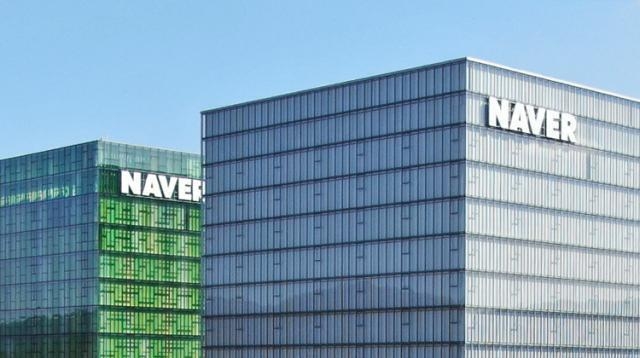
Naver is accelerating its expansion into artificial intelligence computing and logistics, securing a 2 trillion won ($1.5 billion) contract with a US customer and planning a major investment in fulfillment services, even as rising costs dragged down third-quarter earnings.
The Korean internet giant said Thursday it would establish a logistics subsidiary and expand its AI infrastructure business overseas, seeking new revenue streams beyond search and e-commerce.
Naver reported record quarterly revenue of 3.47 trillion won, up 10.7 percent on-year, but operating profit fell 20.9 percent to 451.3 billion won amid higher spending on AI infrastructure, content and offline data.
On an earnings call, CEO Choi Soo-yeon said Naver had secured its first AI factory customer — an unnamed US company — under a computing services contract worth approximately 2 trillion won. The deal covers about 20 megawatts of capacity over four to five years.
Naver's AI factory project with Brookfield and Nvidia is scheduled to begin operations with 55 MW in the first half of 2027, when revenue generation is expected to start, before expanding to 200 MW by 2028.
Chief Financial Officer Kim Hee-cheol said Naver was negotiating with more than 10 prospective customers outside Asia, including major AI model developers, for the remaining 180 MW.
Choi said shortages of liquid-cooled data centers capable of supporting Nvidia's next-generation Vera Rubin chips could strengthen Naver's competitive position.
Meanwhile, Naver plans to establish a logistics subsidiary and expand leased fulfillment centers, leaving warehouse operations and deliveries to partners while using shopping data to forecast demand and optimize inventory placement.
Choi said the expansion could require nearly 1 trillion won through 2030, although financing arrangements would be designed to limit the impact on cash flow and earnings.
The company also plans to launch a personal AI agent app by year-end, connecting search, shopping, local services, reservations and payments to perform tasks for users.
"Traffic from AI Tab to shopping and local services has nearly doubled since launch, with transaction value also growing," Choi said.
Separately, Naver plans to introduce robotic delivery services at residential complexes in Riyadh, Saudi Arabia in the first half of 2027, combining its digital-twin mapping technology with Naver Labs' Nuri robot.
In the third quarter, platform revenue rose 7.3 percent to 1.95 trillion won, while financial platform revenue increased 14.1 percent to 487.7 billion won. Global ventures revenue climbed 15.9 percent to 1.04 trillion won, supported by overseas commerce businesses and Saudi digital-twin projects.
yeeun@heraldcorp.com