Lee and Erdogan discuss wars in Ukraine, Middle East, agree on closer cooperation to help restore regional stability.
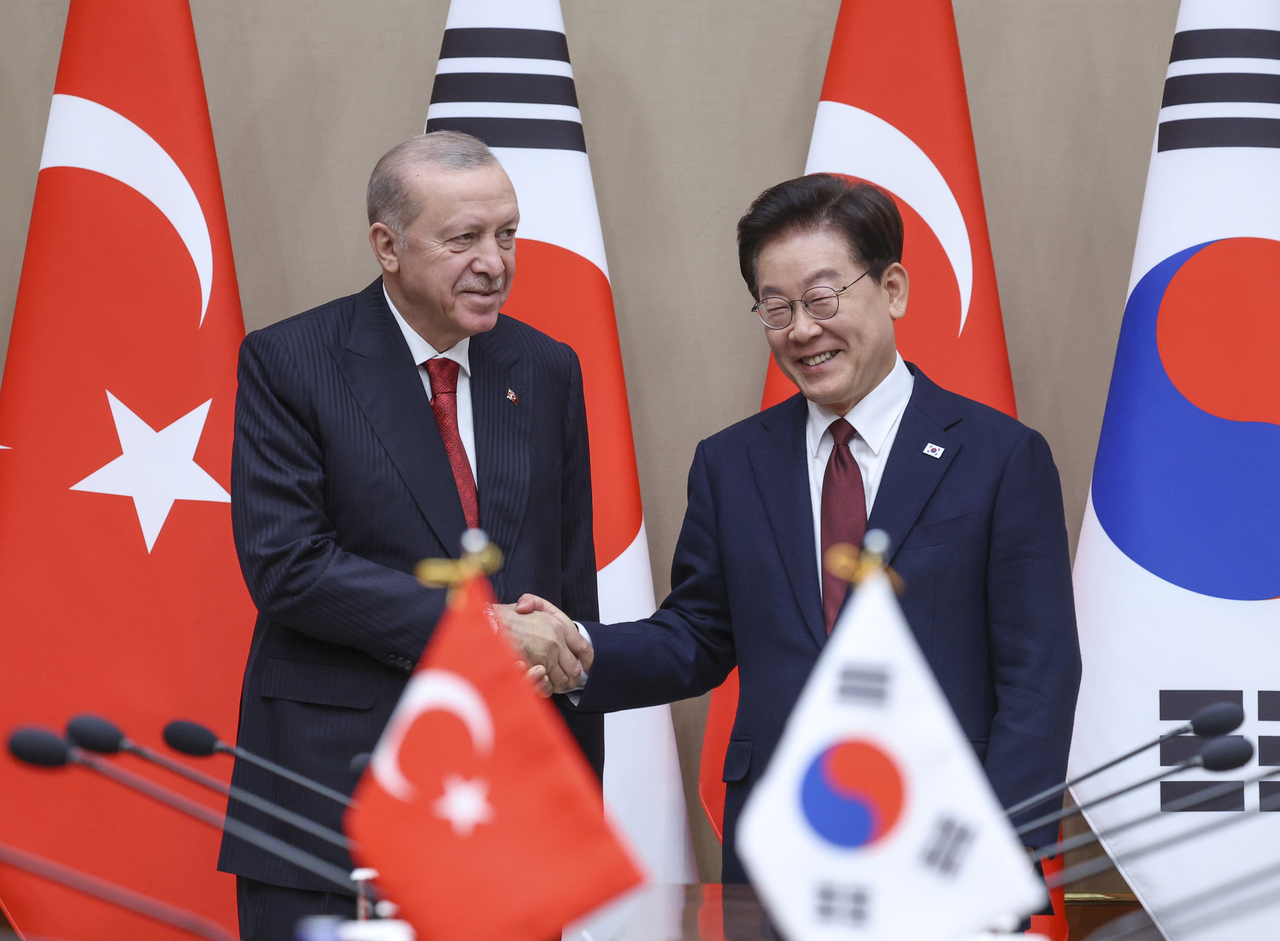
The leaders of South Korea and Turkey agreed Tuesday to deepen cooperation in nuclear energy and the defense industry while strengthening coordination on peace and stability on the Korean Peninsula and in conflict-hit regions, including Ukraine and the Middle East.
The agreements followed a summit between President Lee Jae Myung and Turkish President Recep Tayyip Erdogan at Cheong Wa Dae in Seoul, during Erdogan's first state visit to South Korea in eight years.
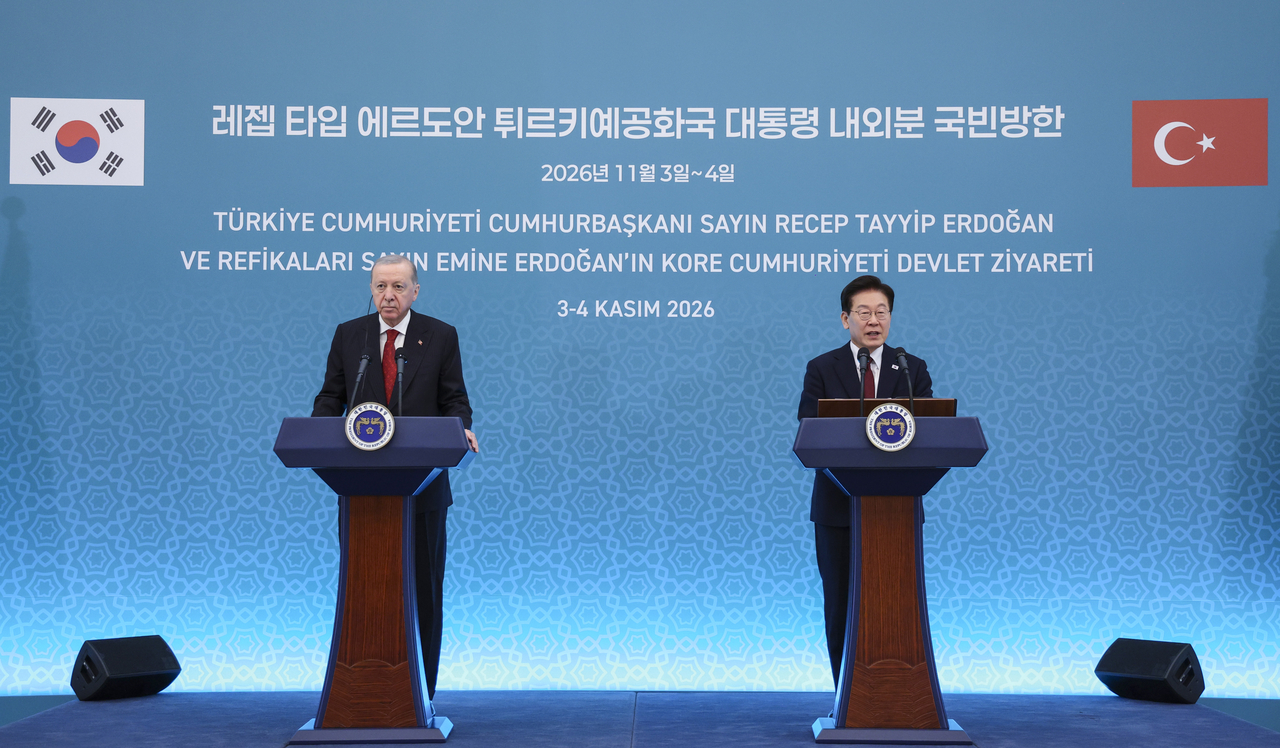
Speaking at a joint news conference, Lee said the leaders reviewed agreements reached during his state visit to Turkey last November and discussed ways to strengthen their strategic partnership.
"We agreed to broaden the scope of cooperation between our two countries, building on the deep friendship and trust forged through blood," Lee said, referring to Turkey's participation in the 1950-53 Korean War.
“We will, first, further strengthen practical cooperation in strategic sectors, including nuclear energy, defense and infrastructure," he said.
Lee said cooperation on Turkey's planned Sinop nuclear power plant, including site assessments and the operation of a joint working group, was "progressing smoothly" under a memorandum of understanding on nuclear energy cooperation signed November 2025.
The project aims to build Turkey's second nuclear power plant on its northern Black Sea coast, with Korea's state-run Korea Electric Power Corporation seeking to participate.
"Building on this progress, we have signed a memorandum on nuclear project financing cooperation to proactively support Korean companies' participation in Turkey's new nuclear power projects," Lee said.
Deepening defense ties, pursuing peace
Regarding defense, Lee said, "the two countries have continued to develop cooperation in the defense sector since the summit in November last year."
Lee pointed to Turkey's Altay main battle tank, developed with technology from South Korea's K2 tank and equipped with South Korean-made engines and transmissions.
Building on that partnership, the two countries held a joint defense industry and logistics committee meeting in July to explore new areas of cooperation. The two countries also signed a letter of intent on naval cooperation in September, signaling efforts to expand their defense ties beyond land-based weapons systems.
"The two countries have agreed to deepen defense cooperation by expanding joint production and technological cooperation and jointly exploring opportunities for companies from both countries to enter third-country markets," Lee said.
The two countries also agreed to deepen cooperation on major road infrastructure projects in Turkey under an agreement signed last year.
On security, Lee said Turkey had reaffirmed its “consistent support” for his administration’s North Korea policies, with both countries agreeing to work toward peace on the Korean Peninsula.
The leaders of South Korea and Turkey, a NATO member, also discussed Russia's war in Ukraine and the conflict in the Middle East. “We agreed to maintain close communication and cooperation to help peacefully resolve conflicts and restore regional stability,” said Lee.
The summit in Seoul notably came three days after Erdogan met Ukrainian President Volodymyr Zelenskyy in Istanbul to discuss prospects for renewed peace talks aimed at ending Russia's war in Ukraine.
Lee added that the countries would expand coordination through multilateral forums, including the United Nations, the Group of 20 and MIKTA.
Broadening horizons in emerging industries
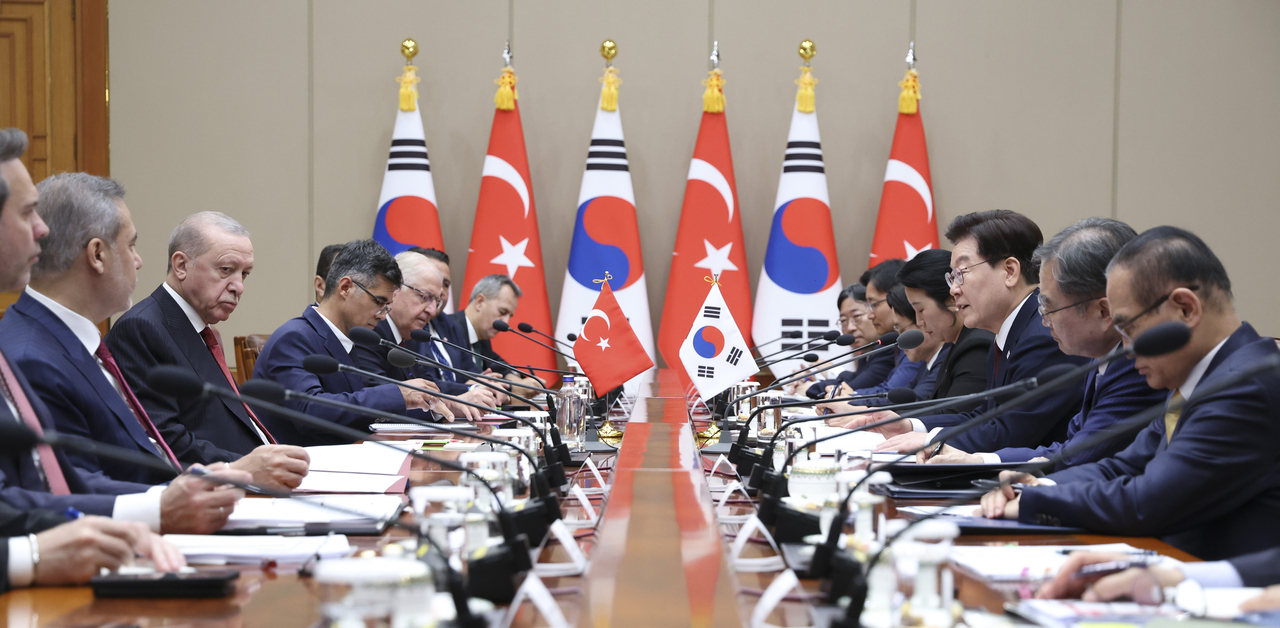
During the summit, Lee and Erdogan also agreed to “expand the horizons of our cooperation into future growth sectors, including biotechnology, energy, science and technology, natural resources, and mining.”
On energy, the countries agreed to establish the Korea-Turkey Energy Transition Forum to promote cooperation in clean energy, hydrogen and renewables.
They also signed an agreement to deepen scientific and technological cooperation in artificial intelligence, advanced telecommunications and cutting-edge materials, with plans to hold their first joint science and technology committee meeting.
Lee also highlighted a new agreement on natural resources and mining, calling it a significant achievement.
“We will actively work to diversify our critical mineral supply chains by establishing an intergovernmental channel for cooperation in natural resources and mining and broadening the basis for bilateral collaboration in technology and investment," Lee added.
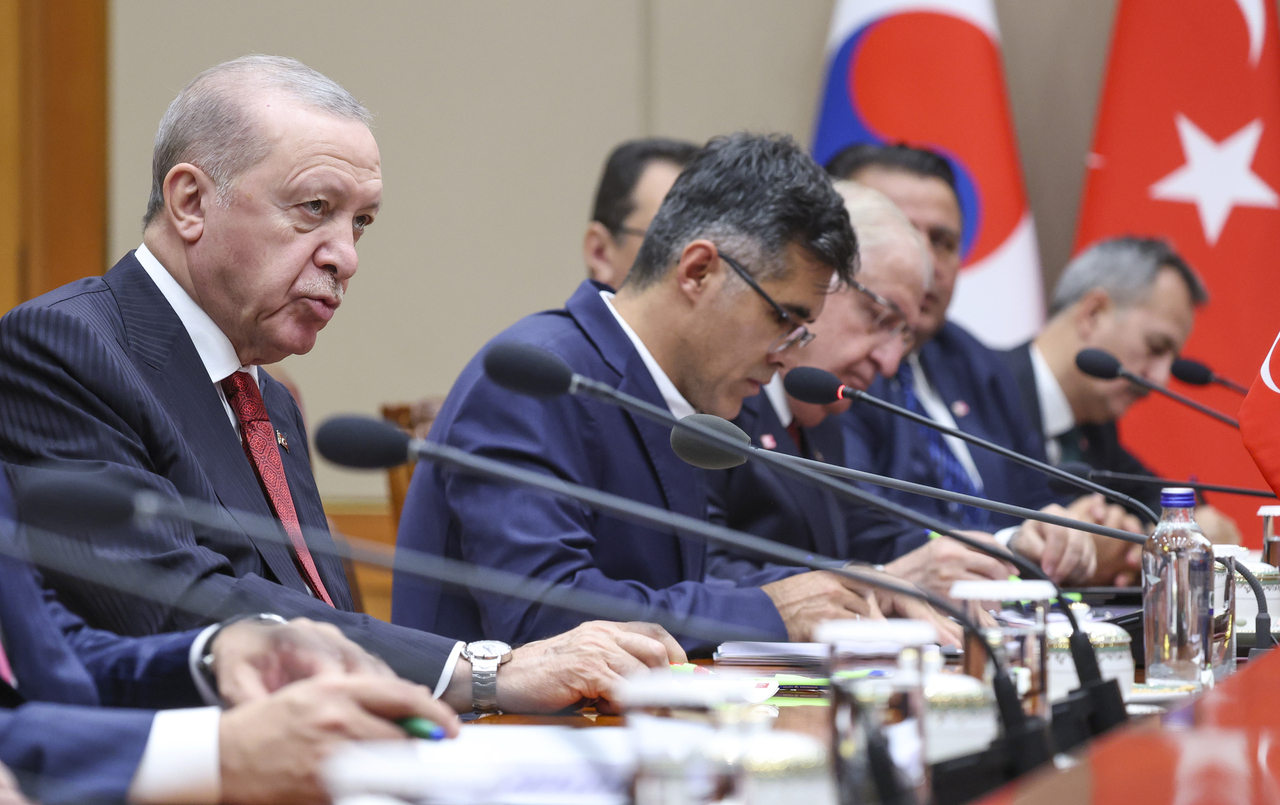
On economic ties, the leaders agreed to expand bilateral trade and investment while addressing barriers facing businesses.
Bilateral trade surpassed $10 billion for the first time in 2023, a decade after a free trade agreement took effect in 2013, and reached a record $10.7 billion last year, according to Lee.
"Our two countries will work together to address outstanding issues one by one, including the trade imbalance, import restrictions and customs clearance delays, and create a more stable business environment for companies in both countries," Lee said.
Turkey has been pushing to revise aspects of its FTA with South Korea to address a persistent trade imbalance that has heavily favored Seoul.
At a bilateral trade committee meeting in June, Ankara proposed revising tariff concessions or exploring other measures to narrow its trade deficit with South Korea. Seoul, meanwhile, raised concerns over Turkish import restrictions and customs barriers affecting South Korean businesses.
The two governments also agreed to work together to address difficulties faced by South Korean nationals seeking work permits in Turkey, according to Lee.
Lee pledged to work closely with Erdogan to implement the agreements and "deliver tangible results" for people of the two countries.
"Today’s summit served as an opportunity to reaffirm our two nations’ deep friendship and trust, and it will go down as an important milestone in our bilateral relations, as we embark on a new future," Lee said.
dagyumji@heraldcorp.com