Founded in 1905, Rotary International has grown into one of the most prominent organizations behind global humanitarian efforts, particularly the decadeslong campaign to eradicate polio.
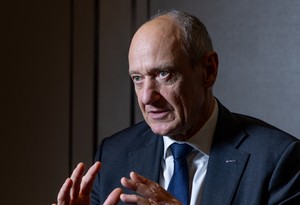
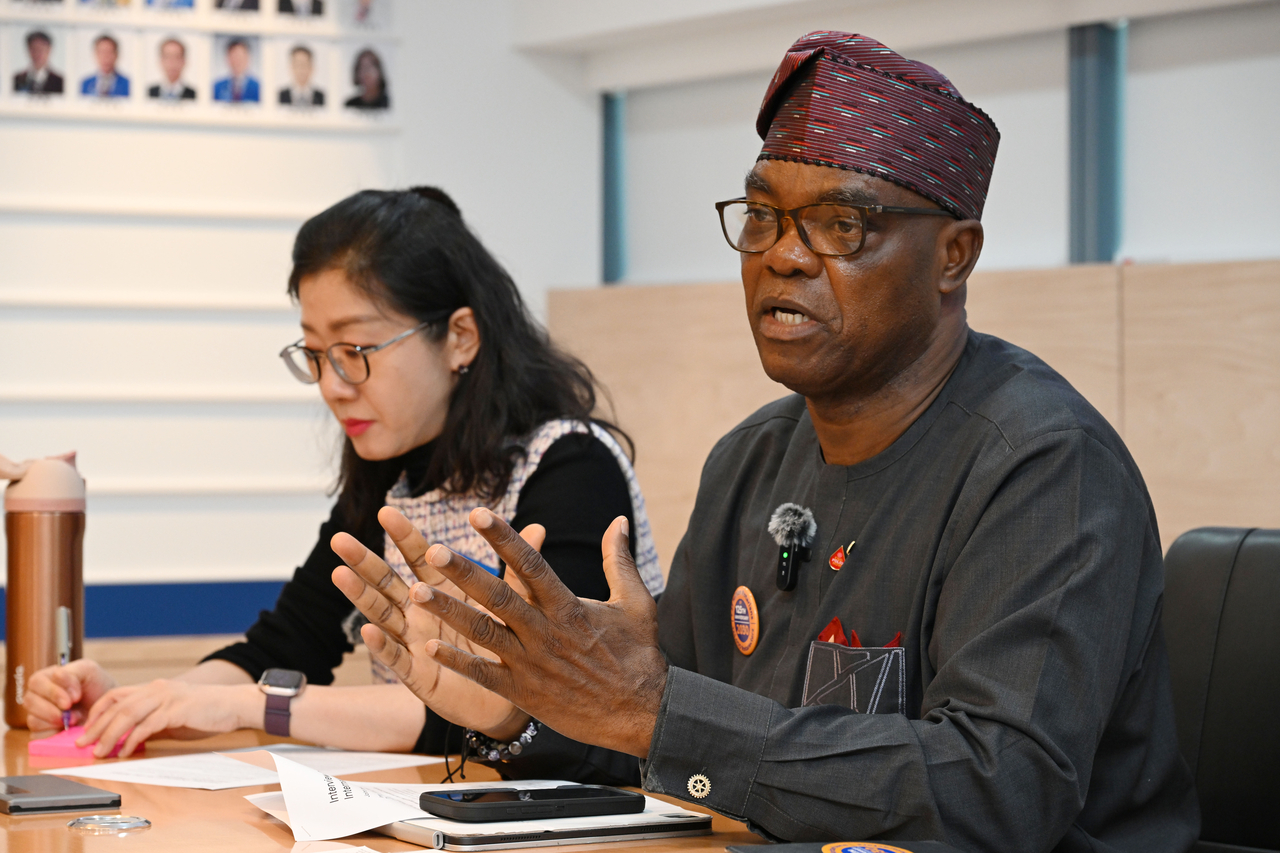
In an interview with The Korea Herald, Olayinka H. Babalola, president of Rotary International, said decades of work with global and local partners had yielded lessons that could serve as a lasting legacy in addressing global challenges, from public health to broader humanitarian efforts.
Babalola encouraged more people in Korea and around the world to take part in Rotary’s ongoing efforts to promote lasting change through humanitarian work, alongside the group’s 1.2 million members across the globe.
Lessons from the fight against polio
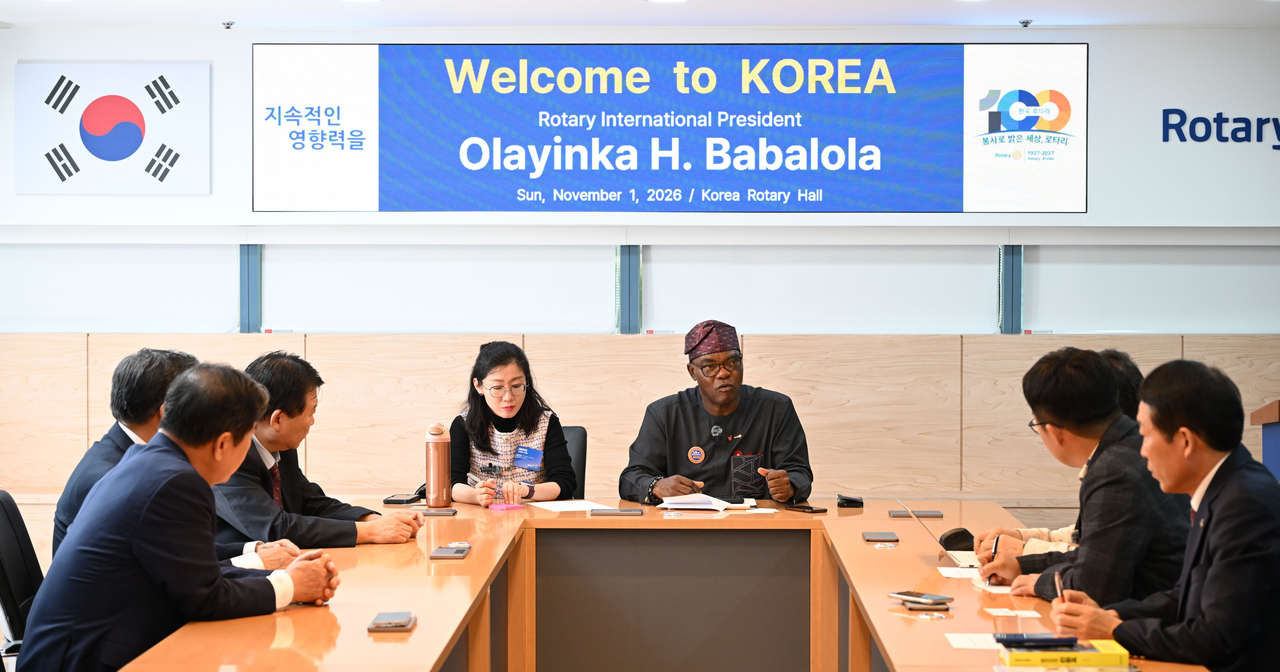
“We are 99.99 percent at eradicating polio, but there are a lot of lessons we have learned along the way,” Babalola said at Rotary Korea’s headquarters in central Seoul on Sunday.
“We have learned, for example, how to raise funds globally and how to build the biggest collaborations in health. Some of these lessons have become a legacy for health around the world.”
He cited contact-tracing practices used during the COVID-19 pandemic and recent Ebola outbreaks in Africa, saying they had been influenced by experience gained in the fight against polio.
Polio eradication is one of the areas in which the global network has made its most notable contributions.
Rotary began its efforts in 1979 by providing polio vaccines to 6 million children in the Philippines. Since 1988, it has worked with global organizations and charities, including the World Health Organization, to help vaccinate more than 3 billion children worldwide.
Babalola cited a dramatic decline in polio cases, from around 1,000 children contracting the disease every day in 1988 to approximately 60 cases reported worldwide between January and October in 2026. The initiative continues in partnership with global organizations, including the Bill & Melinda Gates Foundation.
Rotary Korea has also played a role in the fight against polio, he said.
“Our role has been to fundraise, create awareness, advocate and show up in the field,” Babalola said. “Rotary in Korea has contributed over $27 million to the polio eradication work. Rotary, as an organization, has invested over $3 billion in polio eradication.”
Thanks to these joint efforts, polio is now endemic in only two countries, Afghanistan and Pakistan, according to Rotary Korea. Babalola said he remained determined to push the initiative until the disease was completely eradicated.
“We have tools and knowledge. But the only problem is that we are unable to get the vaccines into the mouths of every child who needs them for many reasons, including insecurity in some regions,” Babalola said. “So I want to encourage Rotary in Korea and around the world: Please stay focused and do not get fatigued. We are almost there, and it needs to happen in our lifetime.”
Beyond polio
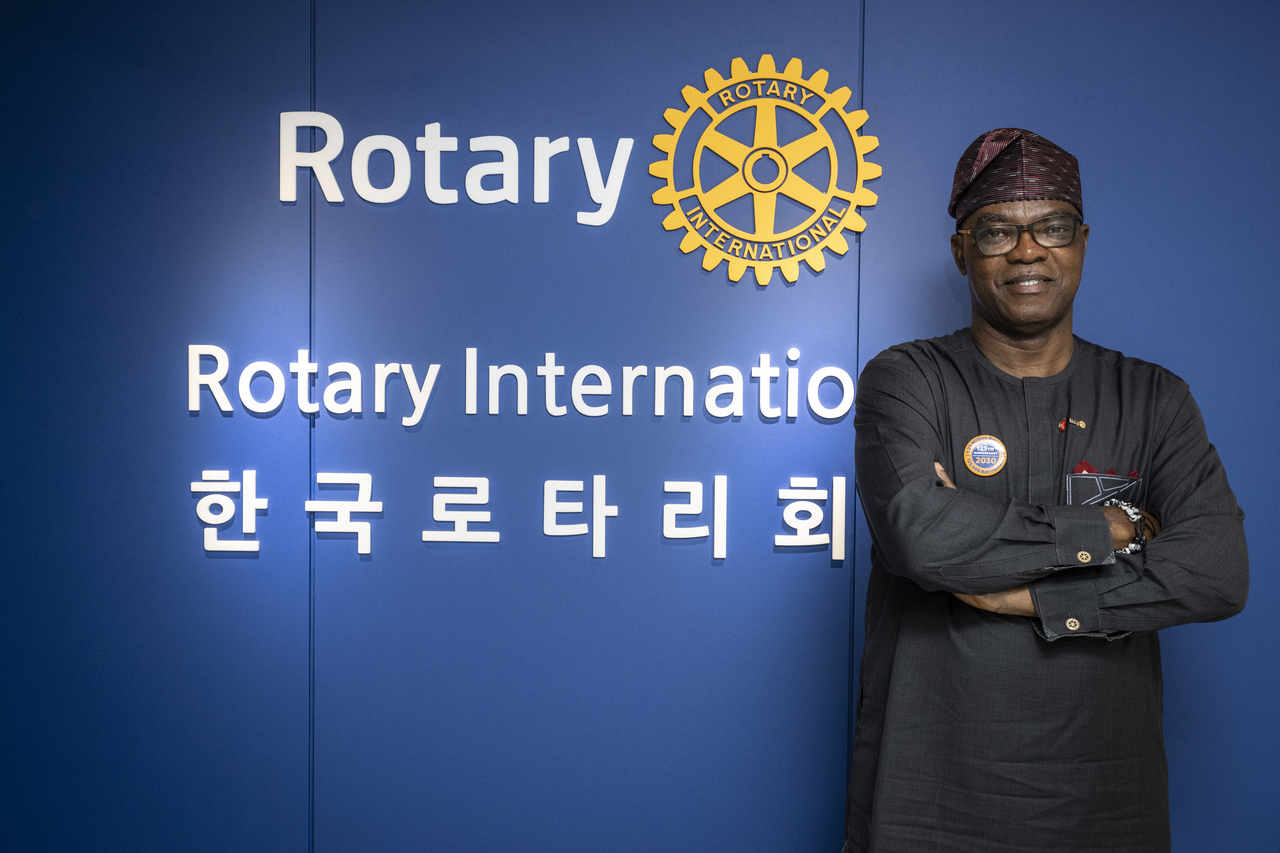
Babalola also discussed a range of humanitarian efforts undertaken by Rotary’s global network, including in Korea. Rotary Korea said Rotary International’s areas of focus also include peace, sanitation, the environment, public health and economic development.
In these efforts, he said, the organization had focused on making a “lasting impact” rather than providing short-term aid.
“In Korea, for example, Rotary has provided support for youth mental health,” Babalola said. “They have gone beyond just counseling to offer even surgical interventions for scars (caused by self-harm).”
A Rotary Korea official who joined the interview explained that the additional support reflects an effort to address the broader challenges young people may face, including the risk of further self-harm and the potential impact of visible scars on their future lives, such as during job interviews.
Babalola also highlighted Rotary Korea’s contributions to international projects beyond disease eradication, including efforts to green parts of the Gobi Desert in Mongolia.
“Korea is a powerhouse. It’s a big part of Rotary worldwide,” Babalola said. “In terms of contributions to our humanitarian work, Korea ranks third or fourth among contributors to the foundation every year. Just last year, it contributed over $18 million.”
“Let me use this opportunity to thank Korean Rotarians for their support for the rest of the world and their generosity,” he added.
Rotary Korea looks to the next 100 years
Rotary Korea now has 67,000 members nationwide, making it the organization’s fourth-largest national membership base after the United States, India and Japan. Next year, it will mark 100 years since Rotary first arrived in Seoul.
Expressing gratitude for Korea’s support of Rotary and its contributions to the network’s international projects, Babalola encouraged Koreans of all ages to take part in Rotary activities.
For younger generations, he said, the organization offers various levels of involvement in volunteer projects, providing opportunities to build relationships and develop communication and networking skills.
“Rotary offers an opportunity to connect not just locally in Korea but to have a network that is international,” Babalola said. “And as you grow in Rotary, this is not a network that fades away. It’s a network that grows stronger.”
He also encouraged older generations, particularly retirees, to overcome loneliness by devoting their time and energy to helping others.
“While Koreans are looking forward to the hundredth anniversary, I am naturally looking forward to the next hundred years of Rotary in Korea,” Babalola said. “I’m confident that the things we will do over the next few years will ensure that Rotary thrives for another 100 years.”
forestjs@heraldcorp.com