Seoul gathering draws over 800 business and policy leaders to discuss industrial AI, critical minerals, supply chain resilience
South Korea and Germany are seeking to turn their industrial strengths into new engines of growth and cooperation in artificial intelligence, semiconductors and advanced manufacturing amid escalating trade tensions and geopolitical uncertainty.
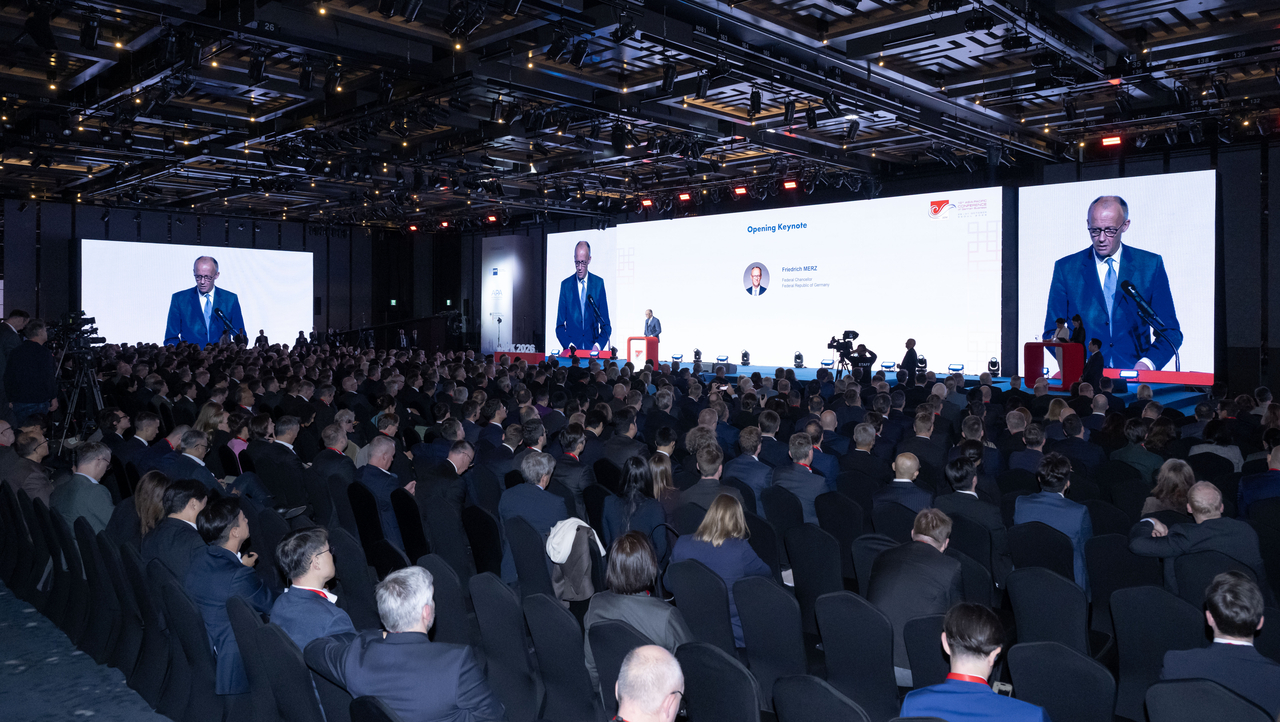
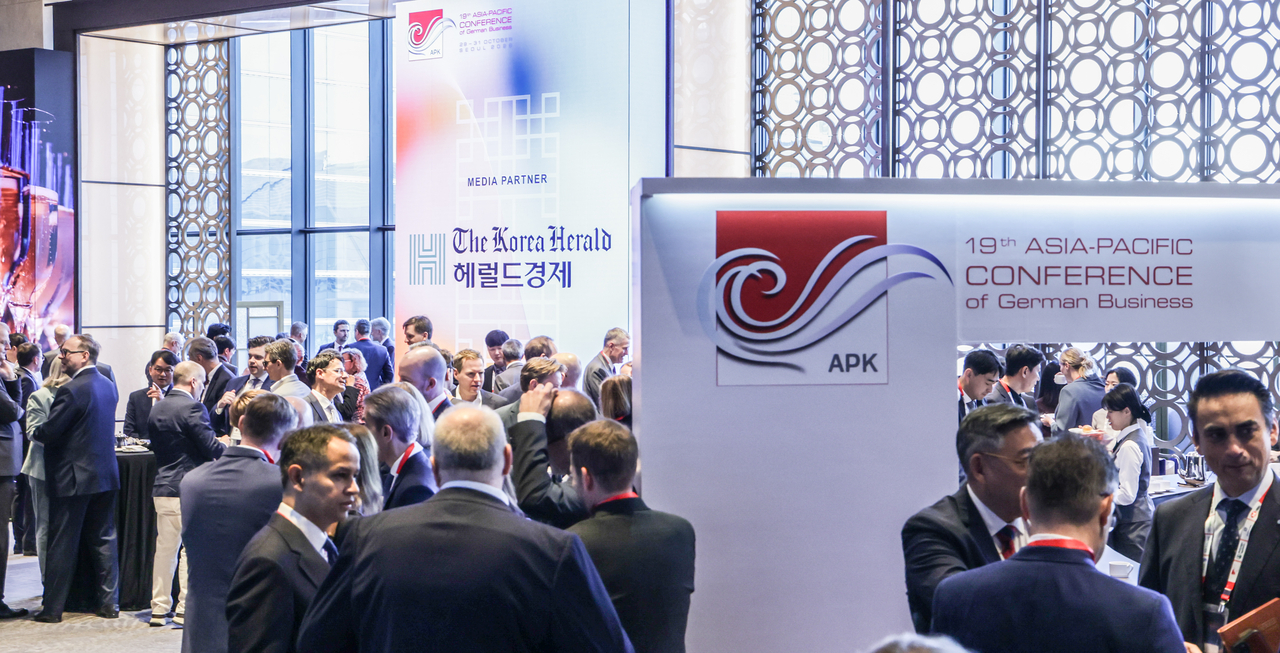
Their efforts took center stage at the 19th Asia-Pacific Conference of German Business, or APK 2026, held in Seoul from Thursday to Saturday. The high-profile gathering brought together German Chancellor Friedrich Merz, South Korean Prime Minister Han Seong-sook and more than 800 participants, including executives representing 400 companies, policymakers and industry experts, to discuss the future of economic cooperation between Germany and the Asia-Pacific region.
The biennial conference drew leaders from major German companies, including Siemens, BASF, Deutsche Bank and DHL Group, for discussions on industrial AI, technological innovation, global trade and supply chain resilience.
In his keynote address Friday, Merz warned that intensifying US-China competition, rising tariffs and geopolitical conflicts were rewriting the rules of global trade, making stronger partnerships increasingly important.
“The evolving geopolitical landscape is bringing like-minded partners closer together and opening the door to the formation of a resilient network,” Merz said. “Germany and South Korea have the opportunity to play a defining role together with partners.”
Merz underscored opportunities for closer ties between the two manufacturing powerhouses, particularly in emerging technologies.
"The structural similarity between our industries provides excellent opportunities for deepening our bilateral cooperation," he said, pointing to a new high-tech cooperation framework signed between the two countries, covering microelectronics, industrial AI and robotics.
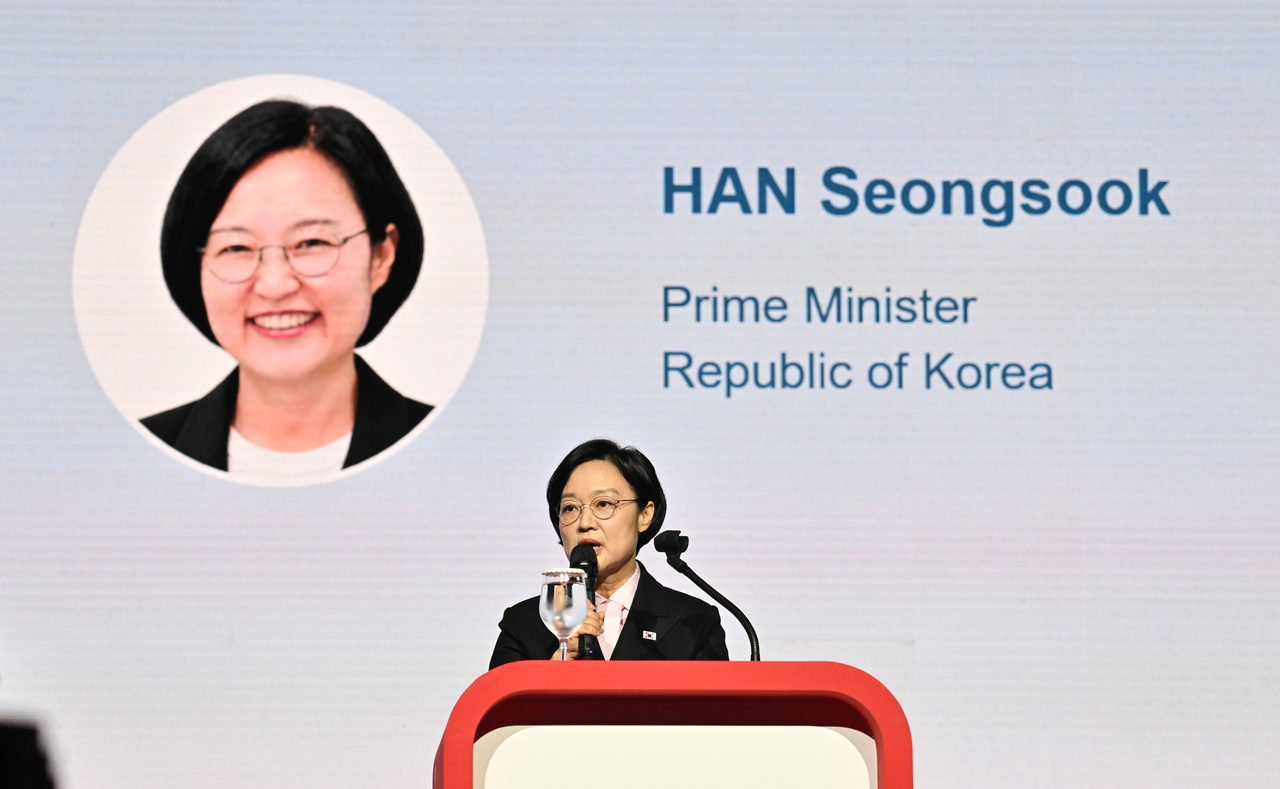
Prime Minister Han echoed his remarks, identifying batteries, semiconductors and AI-powered manufacturing as three promising areas for collaboration.
"South Korea and Germany are reliable partners that enhance their competitiveness together by connecting each other's strengths," Han said.
“When two countries’ industrial data and strengths are closely connected, we can accelerate manufacturing innovation and establish new industrial standards in the AI era,” she said, urging both sides to broaden cooperation from trade and investment to supply chains, advanced technology, resources and energy.
Industrial AI emerges as key battleground
Industrial AI was a major focus of the conference, with business leaders exploring how to move artificial intelligence beyond digital applications and into factories, production systems and infrastructure.
“Industrial AI is a once-in-a-century opportunity to boost productivity, create new businesses and strengthen our economies,” Siemens CEO Roland Busch, chair of the Asia-Pacific Committee of German Business, said during a press briefing on Friday.
“But no country, no company can unlock this potential alone,” he said. “We need to combine our strengths from chips and AI data centers to industrial applications.”
Highlighting partnerships already underway, Busch cited Siemens' work with SK hynix on chip design, Samsung C&T on next-generation data centers and HD Hyundai on digital shipyards.
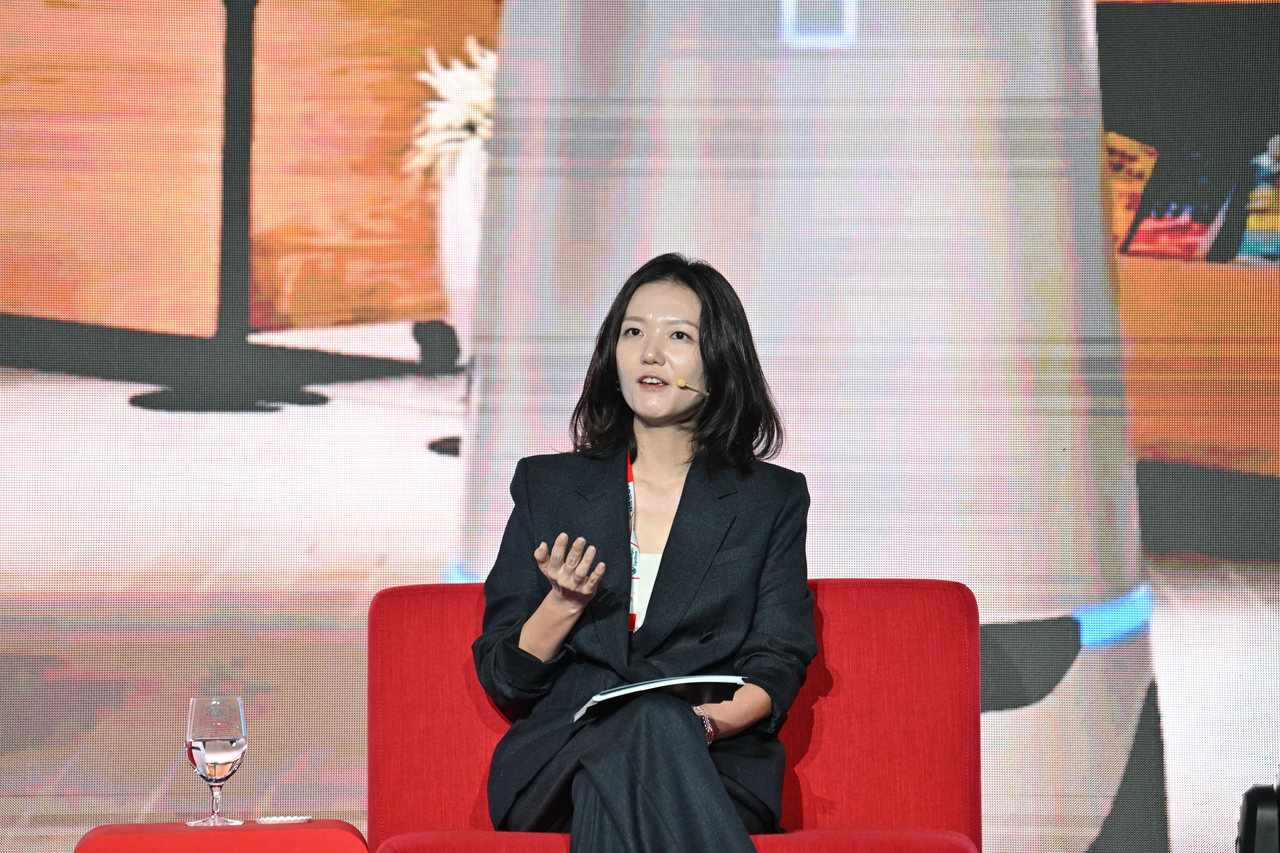
In a separate session on industrial AI on Saturday, Naver CEO Choi Soo-yeon stressed the importance of safety and human oversight as AI moves into factories, buildings and other physical environments.
She said companies must clearly define the scope of AI applications, test systems using real-world data and ensure that humans can stop operations and reverse actions when necessary.
"Responsibility should follow what each side controls," Choi said, adding that AI developers, service providers and operators should each be accountable for the systems and processes under their control.
Supply chain security moves up the agenda
Beyond technology, supply chain resilience was another major focus, particularly as geopolitical tensions threaten access to critical raw materials.
Stefan Rouenhoff, parliamentary state secretary at German’s Federal Ministry for Economic Affairs and Energy, emphasized the need for Korea and Germany to diversify their supply sources and reduce dependence on individual countries.
“It is of utmost importance that we have more resilient supply chains,” Rouenhoff said during a press briefing, warning that shortages and sharp price increases in raw materials could undermine industrial production in both countries.
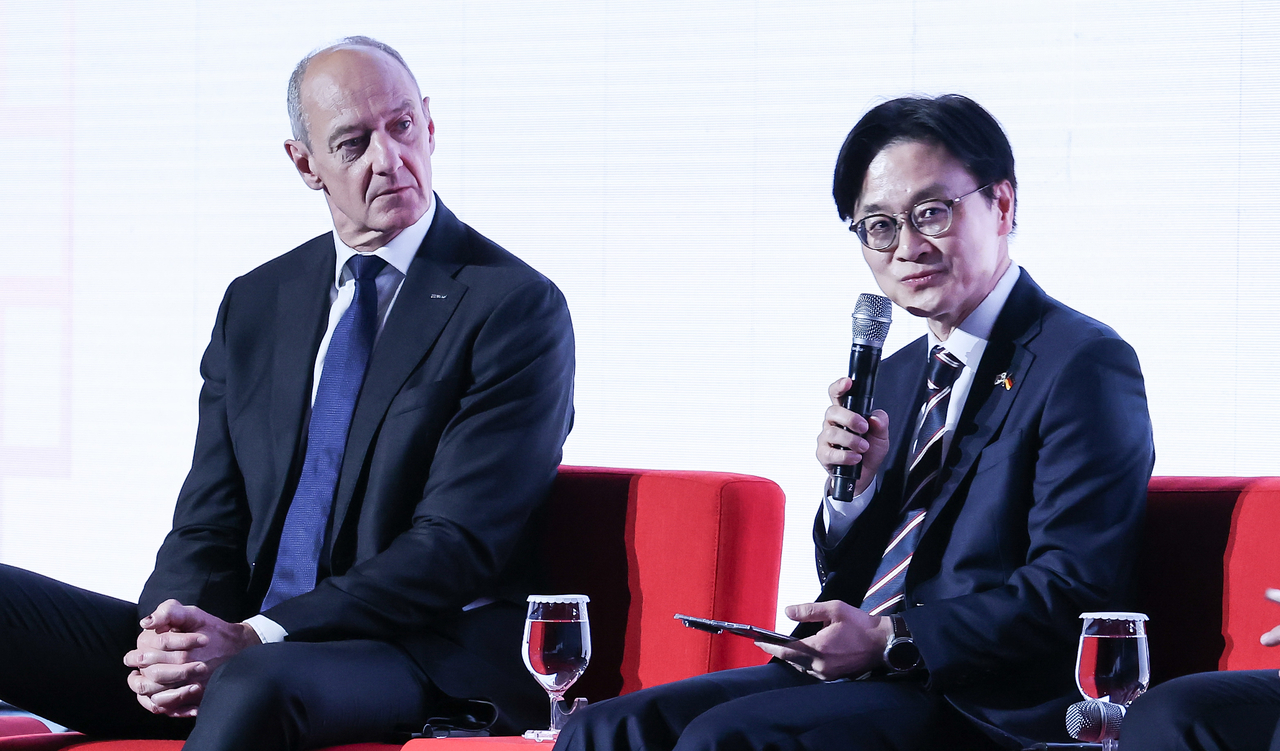
During a panel discussion on shifting global economic power Friday, South Korean Industry Minister Kim Jung-kwan also called for joint efforts to secure critical minerals and strengthen industry supply chains.
“I believe the future of supply chain security lies not in self-sufficiency, but in trusted interdependence,” Kim said.
He said combining South Korea’s strength in batteries, semiconductors and material processing with Germany’s industrial technology, engineering and advanced manufacturing could help the two countries pursue joint investments in critical mineral projects, develop processing technologies and expand recycling.
Startups and future cooperation
Beyond high-level policy discussions, the conference also put emerging innovators in the spotlight through its second AI Startup Award, where startups pitched their technologies and business models to senior business leaders and policymakers.
Vietnamese agritech firm Enfarm took the top prize, beating competitors from South Korea, India, Singapore and China.
Other sessions examined how businesses are adapting to geopolitical uncertainty, from potential trade scenarios in 2030 and corporate financing risks to circular supply chains and industrial policy. Senior executives from BASF, DHL Group, Thyssenkrupp and Deutsche Bank joined discussions on navigating changing trade rules, securing critical resources and strengthening corporate resilience.
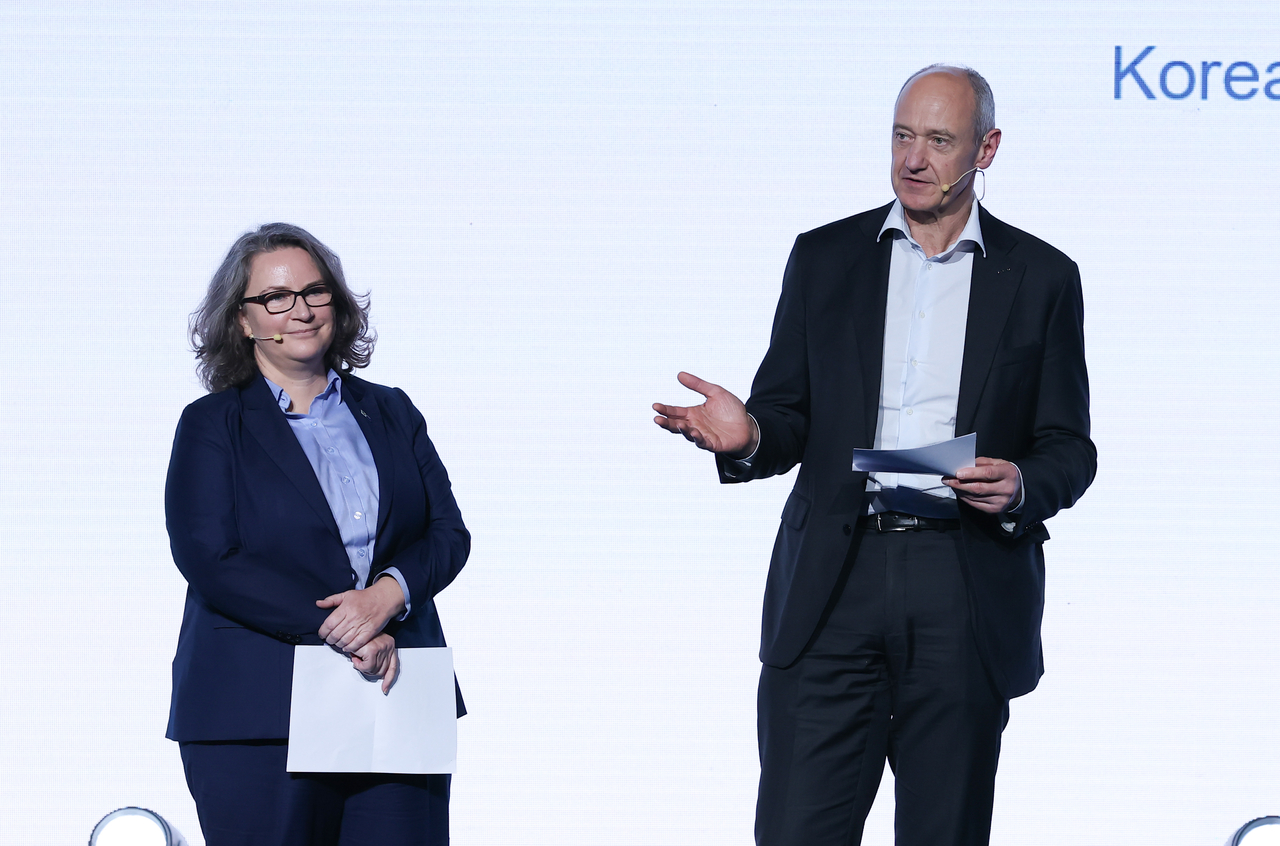
The gathering also featured an Oxford-style debate on industrial policy and talks on Indo-Pacific security interests, reflecting the growing links between economic competitiveness, technology and geopolitics.
After three days of discussions on the future of German-Asian economic ties, the conference wrapped up Saturday, having marked its return to Seoul since 2007 and setting the stage for its next edition in Malaysia in 2028.
sahn@heraldcorp.com