Gear rentals, multilingual trail info and AI chatbot ease the way up Baegundae, Seoul's highest peak
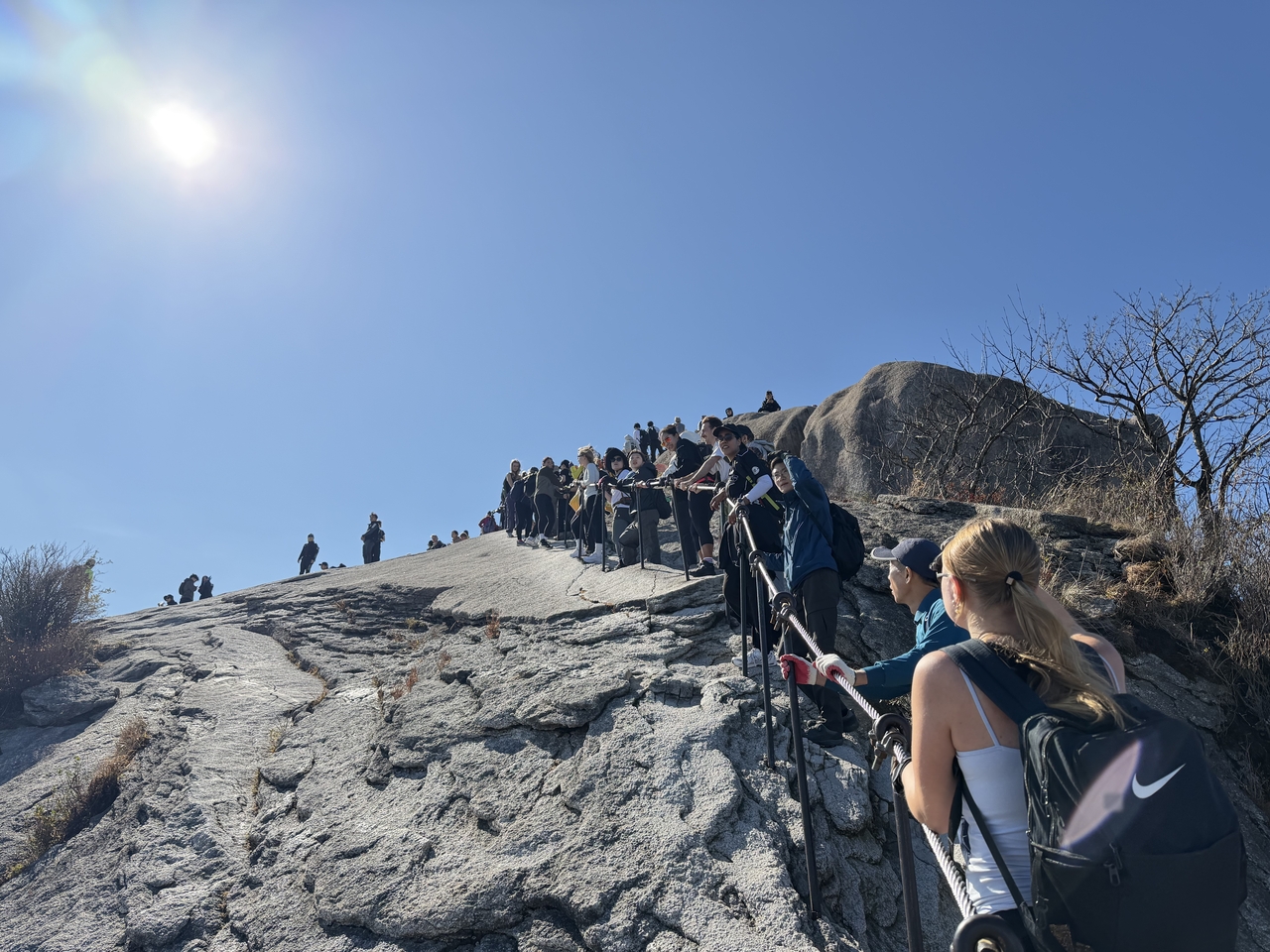
Just below the summit of Baegundae, a line forms on bare granite. Hikers wait their turn to pose beside the Taegeukgi, the Korean national flag, planted at the top of Seoul's highest peak, 836 meters above sea level, as the city spreads out below them.
Many in the line are not Korean.
"For the past three years or so, it feels like more and more foreigners have been coming. Even today, more than half of the hikers are foreigners," said Park Sun-gyu, director of public relations at the Korea National Park Service, who accompanied a media tour of the Baegundae Trail on Oct. 23.
The numbers support that impression. Foreign visitors to Korea's national parks reached 730,000 through the end of July, up 20 percent from 610,000 in the same period last year, according to the park service. The parks drew 1.13 million foreign visitors in all of 2025, a total this year is on pace to surpass.
Among mountain parks, Bukhansan drew 57,000 foreign visitors in 2025.
A mountain in the city
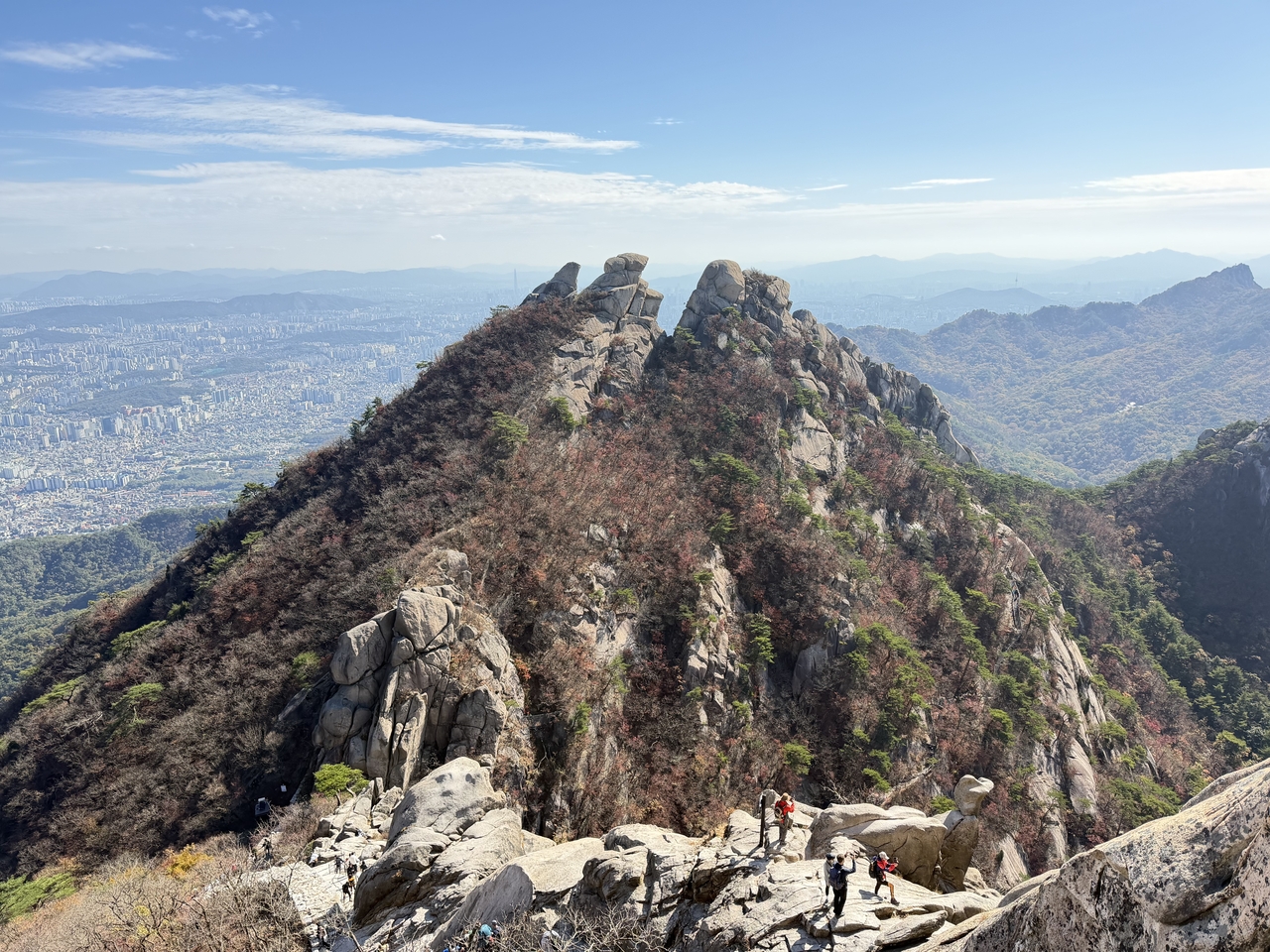
Part of the appeal lies in scale. At 836 meters, Baegundae is modest by global standards, and its summit can be reached on foot in a little over two hours. That makes a climb up Bukhansan a half-day outing that fits easily into a city itinerary.
Access is just as easy. The trailheads sit on the northern edge of Seoul, a subway ride from the city center via the Ui-Sinseol Line, which ends at Bukhansan Ui Station near the main entrance.
The reward at the top is the city itself. From the summit, Seoul’s skyline unfolds in a single view.
“Bukhansan holds a Guinness World Records title, and great spotted woodpeckers live here. It is a place where nature and history live and breathe together. Because it sits in the middle of the city, it draws many visitors and offers residents a comfortable place to rest,” said Cho Hye-jin, an administrative officer at Bukhansan National Park.
Guinness World Records has recognized Bukhansan as the national park with the most visitors per unit area.
Arriving empty-handed
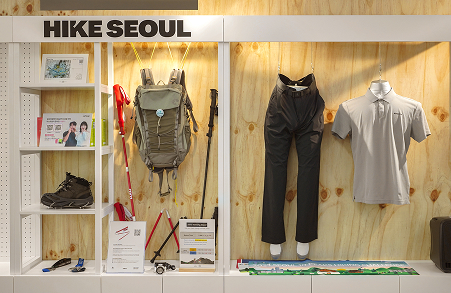
For travelers who did not pack for the mountains, the climb can begin at the Seoul Hiking Tourism Center in Bukhansan, a five-minute walk from Exit 2 of Bukhansan Ui Station.
"We provide trail information in Chinese, English and Japanese, and we rent everything from boots, jackets, pants and hats to bags and poles for $2 to $5," said Lee Su-min, an assistant manager at the Seoul Tourism Organization.
The city runs similar rental centers at Dobongsan, Bugaksan and Gwanaksan.
Up the Baegundae Trail
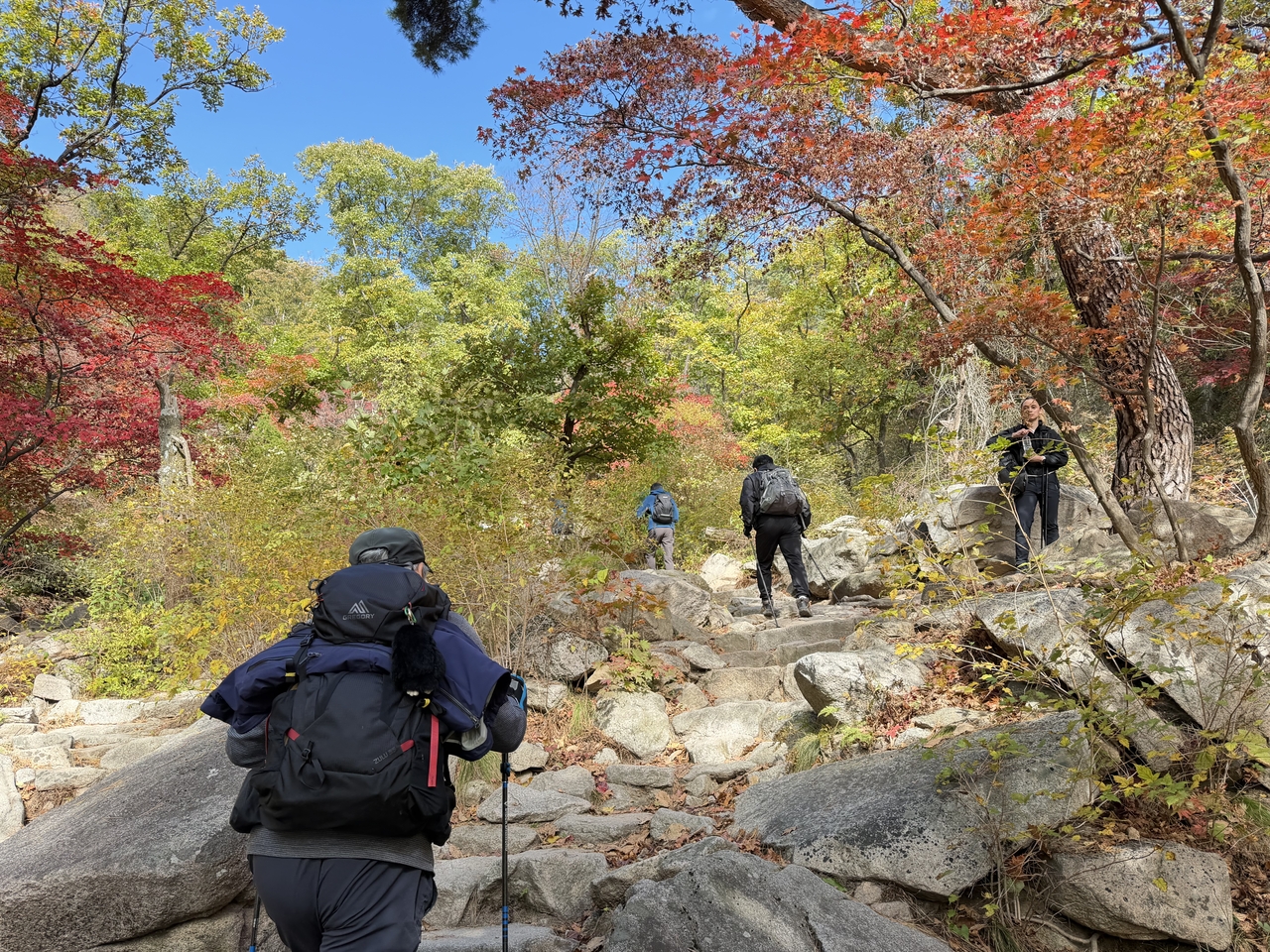
The Baegundae Trail is rated advanced. The 4.1-kilometer route to the summit takes about 130 minutes, starting at the Baegundae Visitor Center and passing Harujae, the park's mountain rescue team base, Baegun Shelter and Baegunbongammun Gate.
The climb to Harujae is steep from the start. Beyond the pass, the forest opens onto granite faces, and the leaves were turning red and yellow during the visit.
"I think the fall foliage will peak around next week. Koreans love going to see autumn leaves," Park said during the tour, putting the peak at the turn of the month.
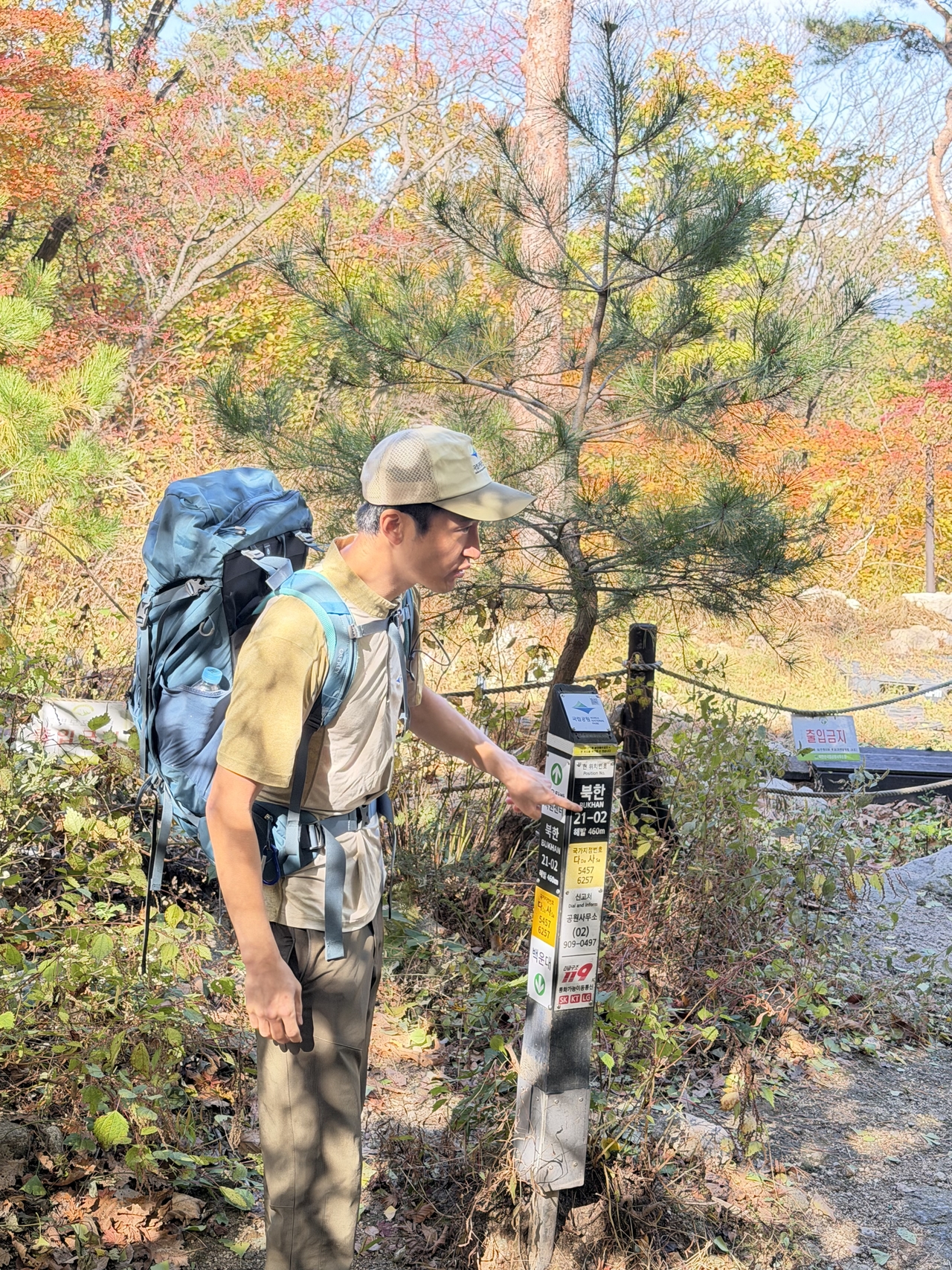
Safety infrastructure lines the route. Fire hoses are installed across the mountain so water can be relayed quickly from trucks that cannot climb the trails, according to ranger Lee Seung-il. About 240 multipurpose location signs stand every 200 to 500 meters, each with a number that hikers can give to rescuers when reporting an emergency or theft. Wireless chargers have also been placed along the trails for hikers whose phones run low.
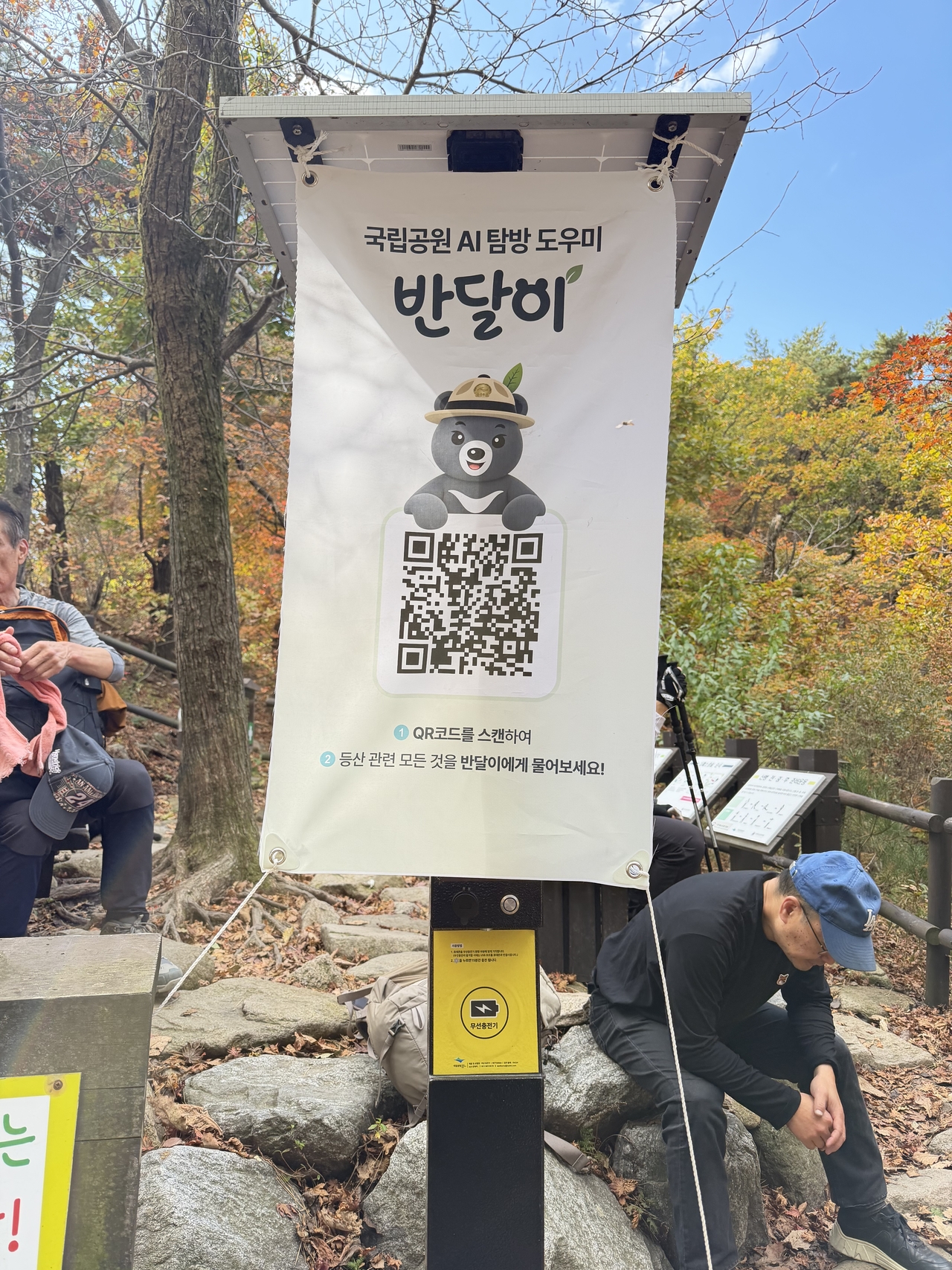
A QR code on trail signs opens a beta AI chatbot that explains each section through a voice and text avatar.
"Unlike blogs or general information online, the chatbot draws only on information from official sources. It can also show users their current location, and one of its main strengths is that it alerts them when they reach a dangerous section," Lee said.
Lee also demonstrated proper pole technique: The hand goes up through the strap from below before gripping; the pole is planted ahead in the direction of travel, and when pushing up to stand, it should be held vertically to avoid striking the hiker behind.
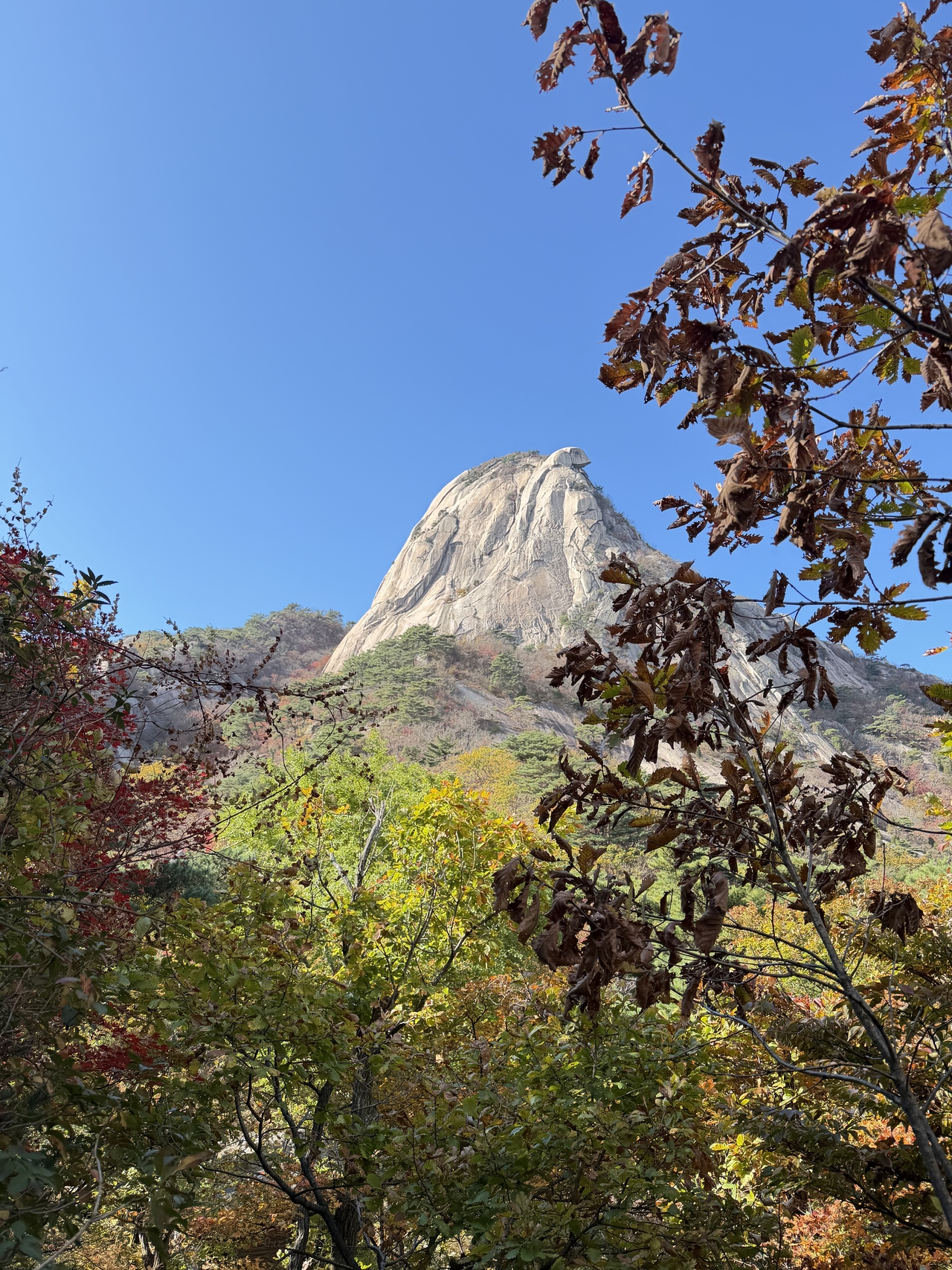
Across the valley rises Insubong, considered the mecca of Korean rock climbing. The peak has about 100 climbing routes, and more than 200 climbers can be on its face at once. Only fully equipped climbers who have registered in advance may attempt it.
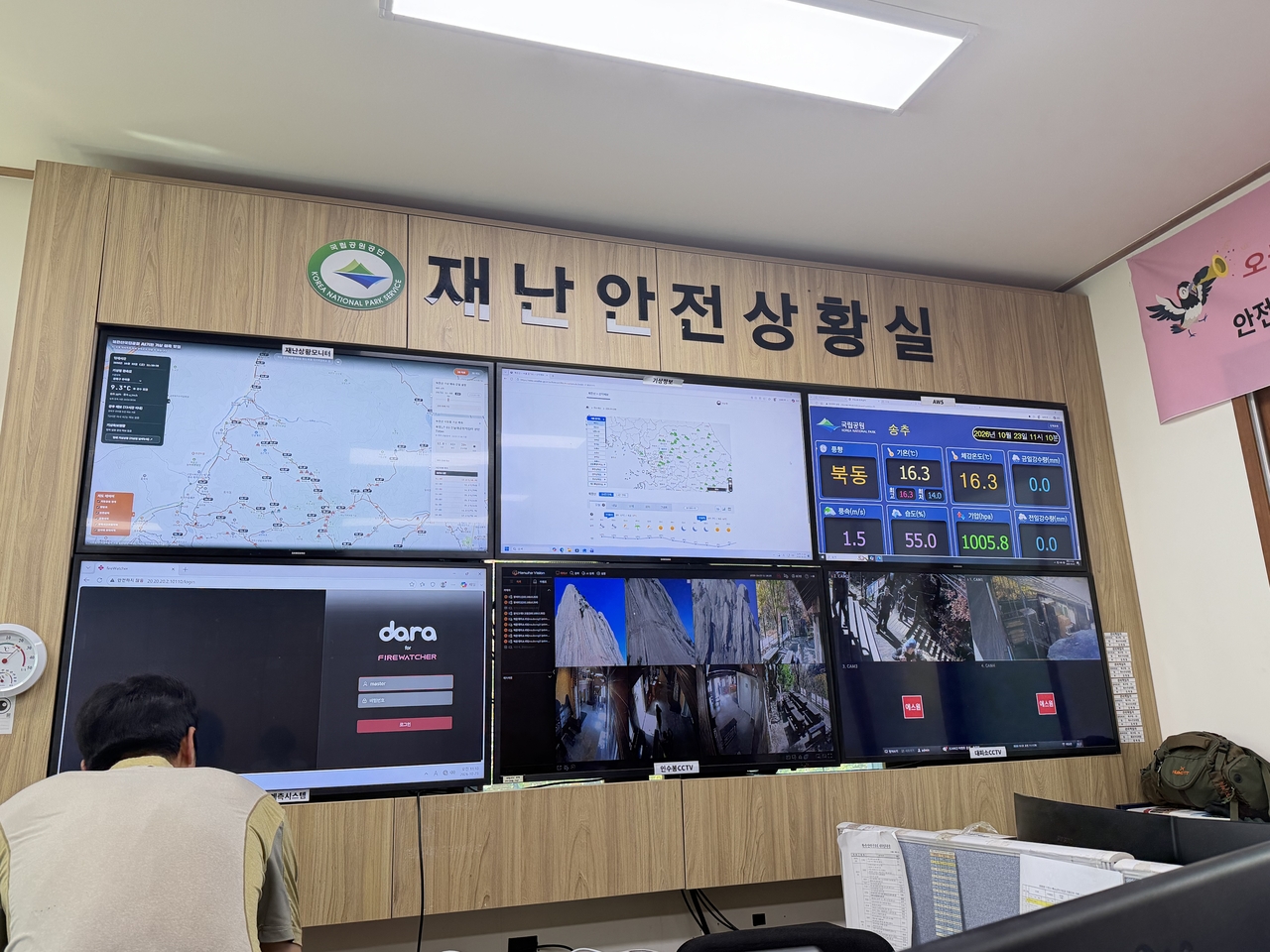
A disaster and safety situation room monitors the area by camera, and the park's special mountain rescue team sets out as soon as a problem appears. The team, on standby 24 hours a day and sharing information with 119 emergency services, also clears fallen trees and loose rocks from the trails. Rescuers evacuate injured hikers by helicopter or, when weather does not allow it, on foot.
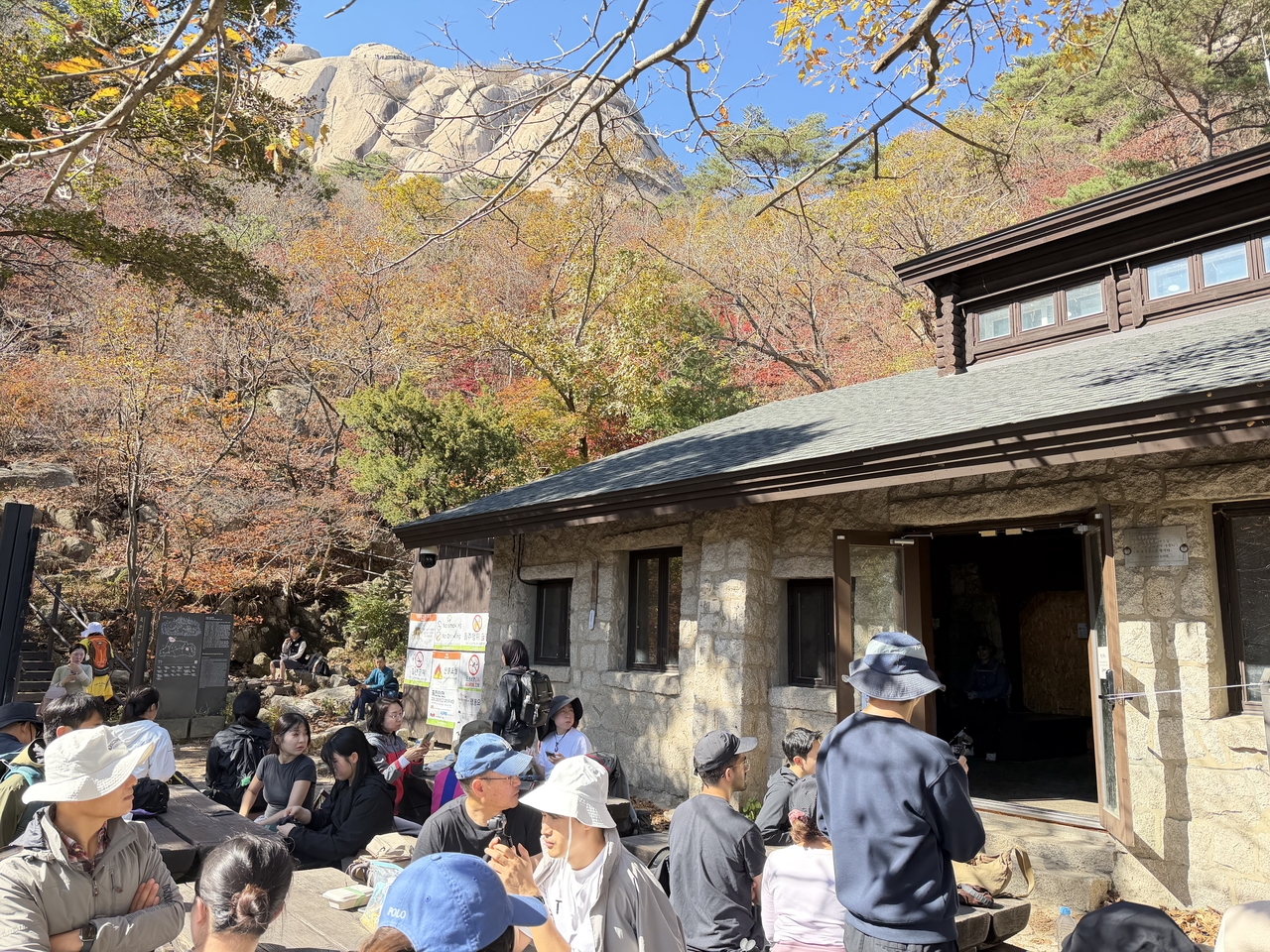
Korea's first mountain hut
Baegun Shelter, regarded as Korea's first mountain hut, sits at about 650 meters. Its history dates to 1924, when Lee Hae-mun set up a small hut that became a gathering place for climbers to rest, trade trail information and prepare for the next stage. The hut once sold food.
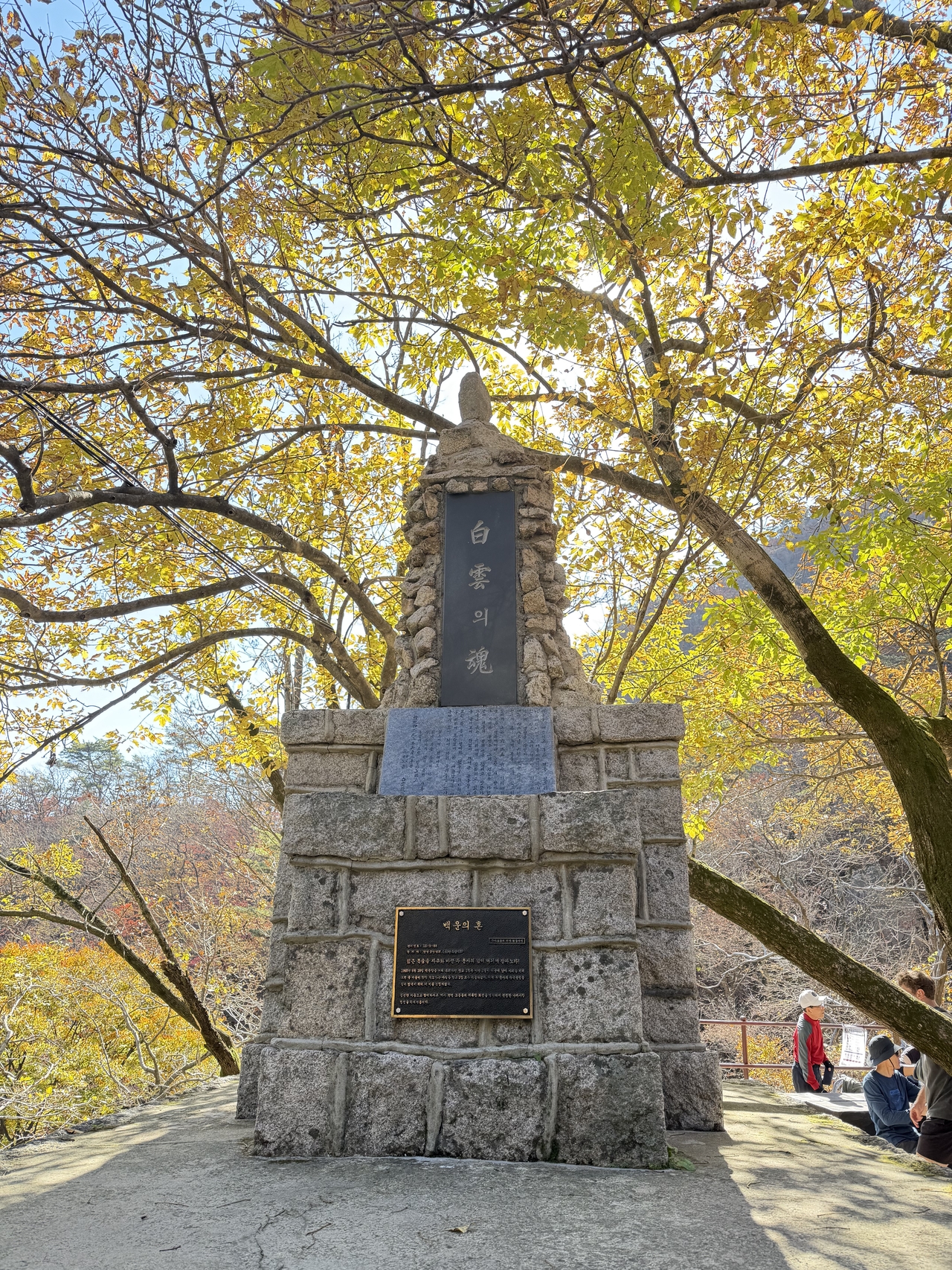
The building burned in 1992 and was rebuilt in 1998 with funds raised by mountaineers. Now state-owned, it houses exhibits on its history and on Korea's early mountaineering culture, along with a CPR training zone. A memorial next to the center honors South Korean soldiers who took their own lives in 1950 in grief over the fall of Seoul during the Korean War.
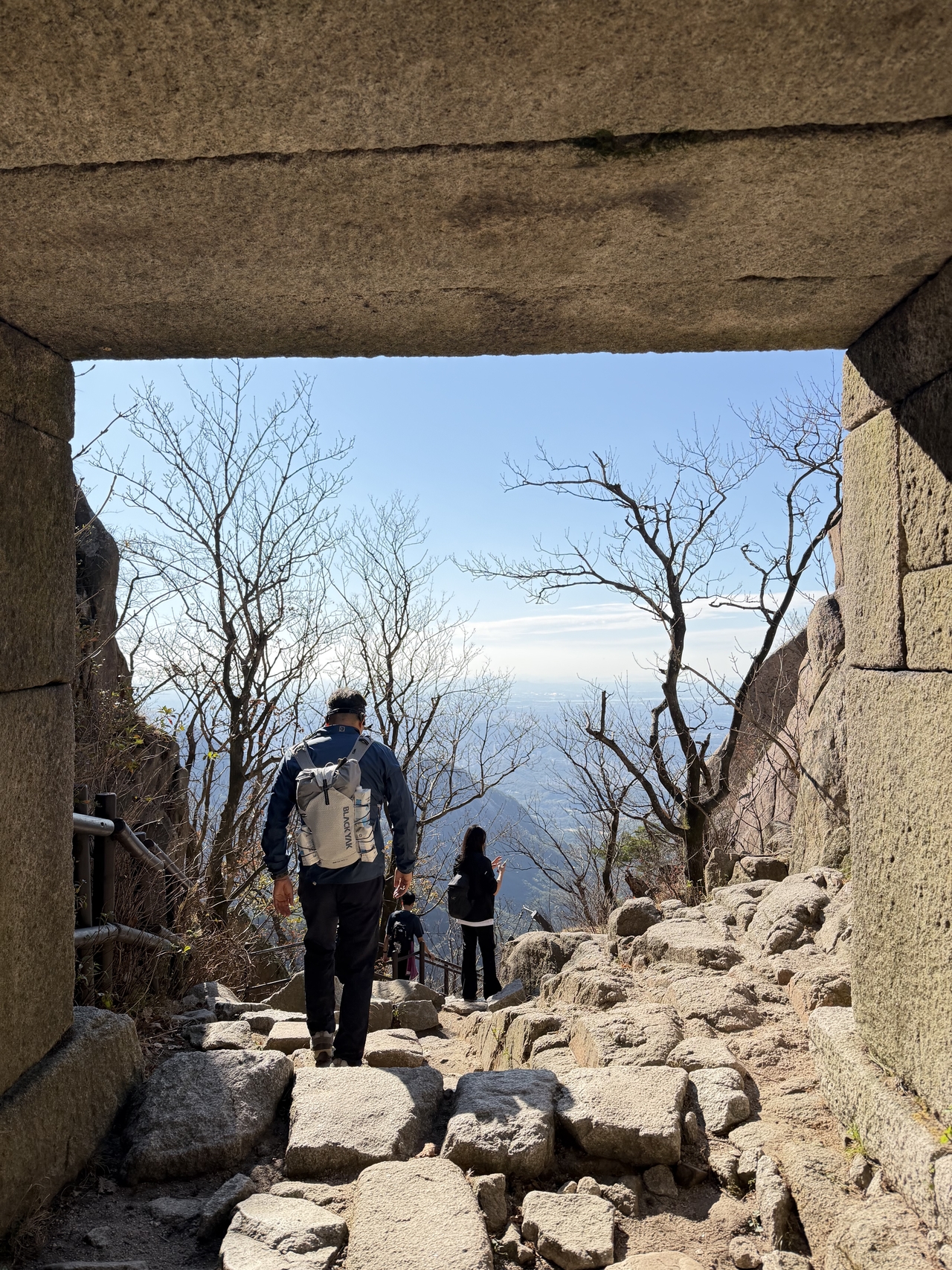
Further up, Baegunbongammun Gate sits between Baegundae and Mangyeongdae. Built in 1711, the 37th year of King Sukjong's reign, it is the highest gate of Bukhansanseong Fortress and served as a hidden passage for bringing in weapons, food and reinforcements in emergencies. Its ranger post is the highest staffed post in the park. The fortress is being pursued for UNESCO World Heritage listing.
The final scramble
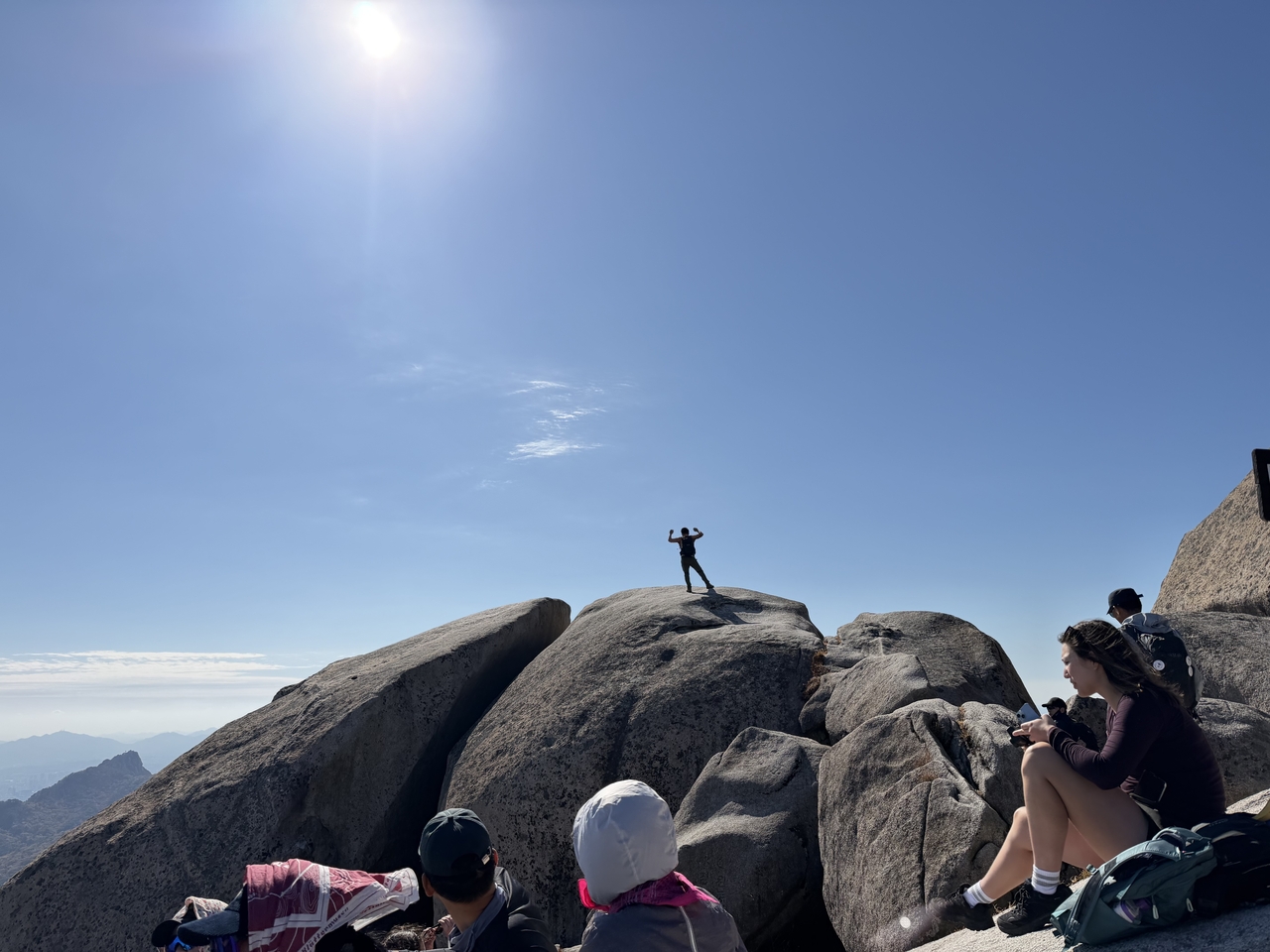
The last stretch from the gate is a rock scramble of about 20 minutes. Hikers need to find footholds cut into the stone and pull themselves up along steel railings anchored in the rock. Those with a fear of heights should be aware that the descent can be just as daunting.
The mountain was long known as Samgaksan, or "three-horned mountain," for its three peaks of Baegundae, Insubong and Mangyeongdae. Of the three, only Baegundae can be climbed by the general public without equipment.
At the top, hikers line up for photos with the flag or rest on Madangbawi, a broad rock just below the peak, taking in the city view.
A temple on the way down
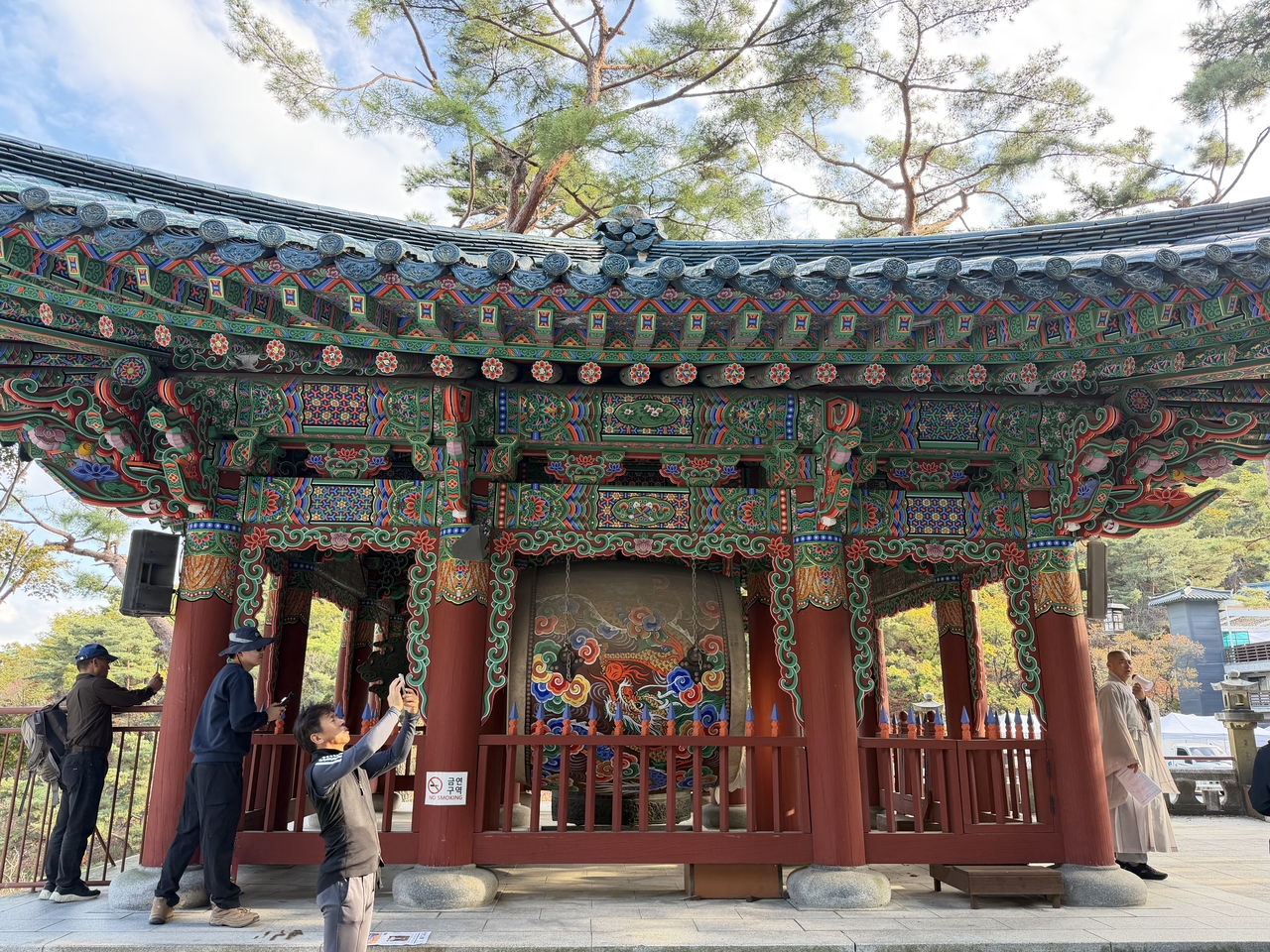
The descent leads to Doseonsa, a temple founded about 1,100 years ago in the late Silla period by the monk Doseon. According to legend, he carved the temple's large stone Buddha using only his walking staff, and the figure shows no chisel marks. In 1903, under Emperor Gojong, the temple was designated a national place of prayer. A memorial hall displays the relics and writings of the Ven. Cheongdam, a leading figure in modern Korean Buddhism.
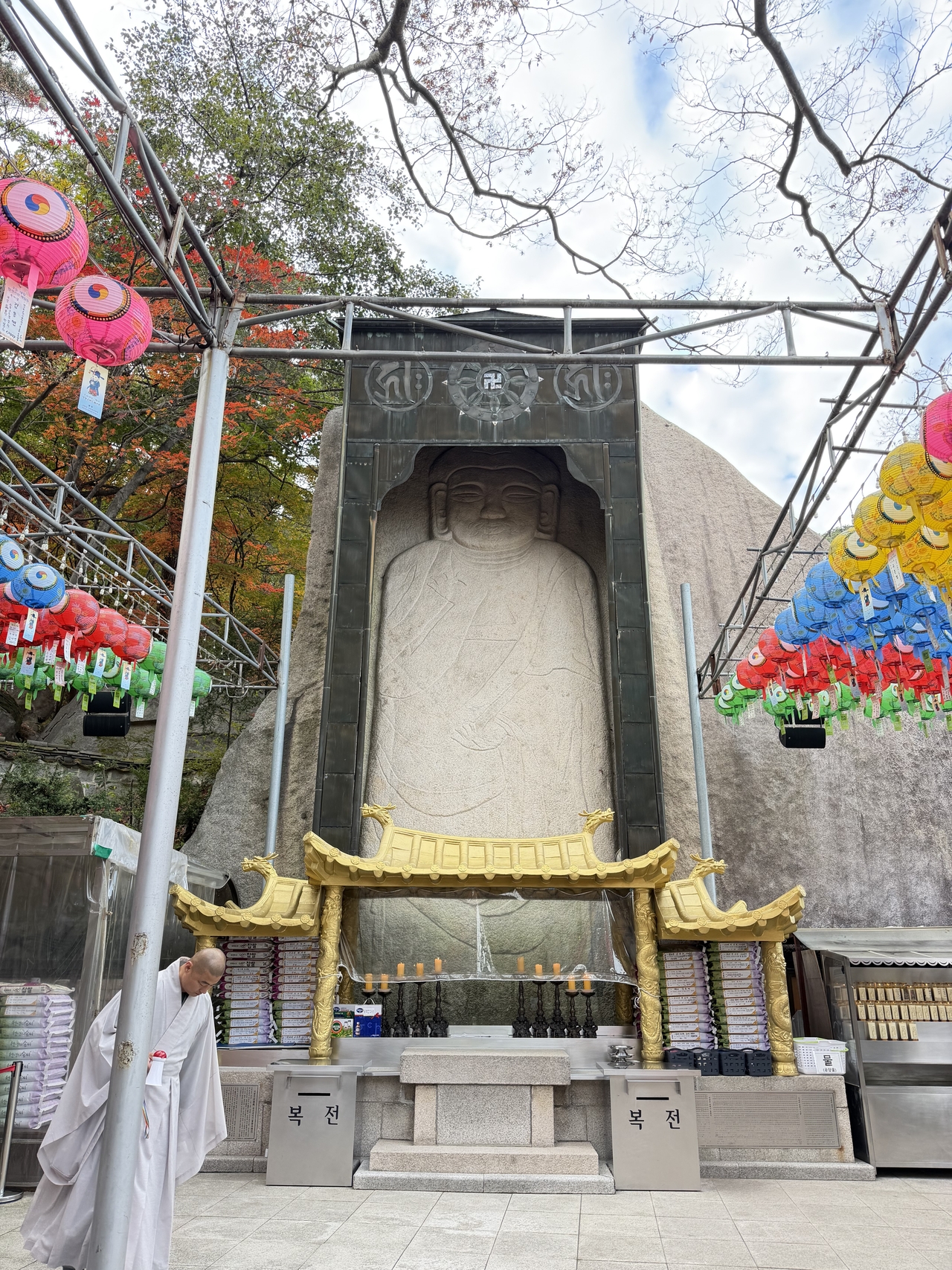
"The stone Buddha sits on an energy point of Bukhansan, and the temple is famous as the best place for prayers to be answered. The emperor designated it as a place to pray for the country," said the Ven. Guwon of Doseonsa.
The temple runs guided programs for foreign visitors.
More to explore
Bukhansan offers other routes for visitors. Uiryeong-gil, once a road linking Seoul and Yangju, Gyeonggi Province, was closed for more than 40 years for military reasons after North Korean commandos infiltrated Seoul on Jan. 21, 1968. Its nature recovered during the closure, and the trail reopened to the public in 2009 with traces of former military facilities still visible along the way.
At the Bukhansan Nature Center, visitors can walk the forest where BTS member Suga once strolled. On Nov. 21 and Dec. 12, Sagimak Campground will host a 90-minute stargazing program with telescopes led by a park nature interpreter.
Reservations for park programs can be made at the Korea National Park Service's homepage.
Hikers are advised to stretch before setting out and to choose courses that match their fitness. Even the climb to Baegun Shelter is demanding, and hikers should bring enough water and snacks, proper hiking boots and an extra layer.
Go-go-ssing: Explore Korea is The Korea Herald's guide to lesser-known destinations, local stories and distinctive travel experiences. — Ed.
yoohong@heraldcorp.com