New rail packages pair the city's signature chicken dish with traditional liquor, craft beer, local dining and a nap in the forest
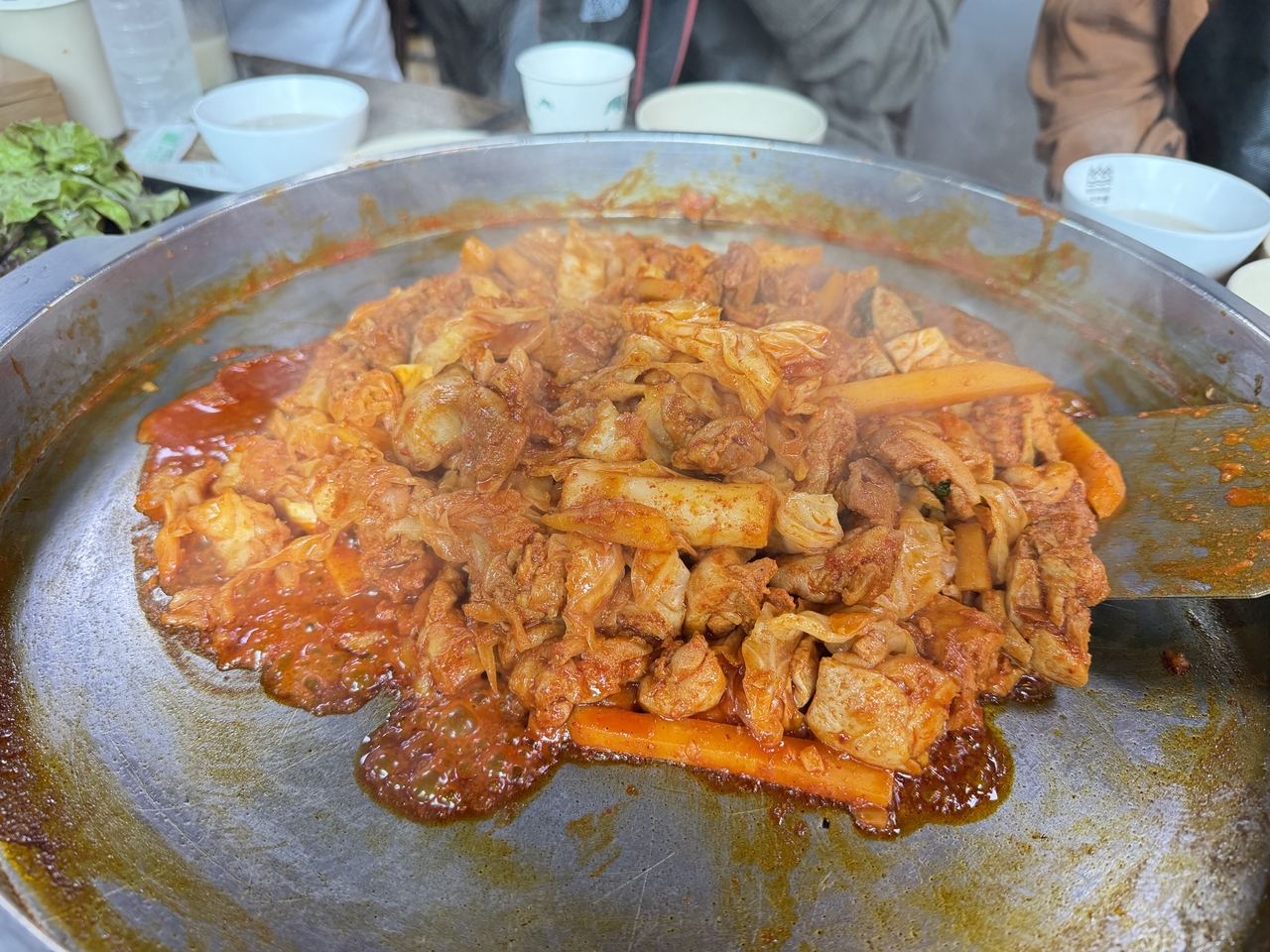
CHUNCHEON, Gangwon Province — In the 1960s, when beef and pork were hard to come by, people in Chuncheon, a Gangwon city 80 kilometers west of Seoul, sliced chicken, the cheaper option, and grilled it over charcoal.
By the 1970s, the dish had moved onto a wide iron griddle. Marinated chicken was stir-fried with cabbage, sweet potato and rice cakes, so a small amount of meat could feed a whole table.
The filling, inexpensive meal became a favorite of the many soldiers stationed around the city and of local students. Dakgalbi turned into something people gathered around and shared, usually with a bowl of makguksu, cold buckwheat noodles, and something to drink.
Chuncheon now wants that shared griddle to be a reason to stay the night.
Korail Tourism Development and the Chuncheon city government put the "2026 Chuncheon K-Chicken Belt" travel packages on sale llast week. The packages link dakgalbi with the city's traditional liquor, local dining, farm experiences and food businesses run by young entrepreneurs.
The lineup includes a day trip Oct. 16, timed to the Chuncheon Makguksu Dakgalbi Festival, with five themed courses priced from 67,000 won ($45) to 85,000 won. The overnight package, Chuncheon One Night Hansang, runs twice, Oct. 23-24 and Oct. 30-31, with up to 30 travelers per departure. Hansang refers to a full table of food laid out at once.
Liquor in family courtyard
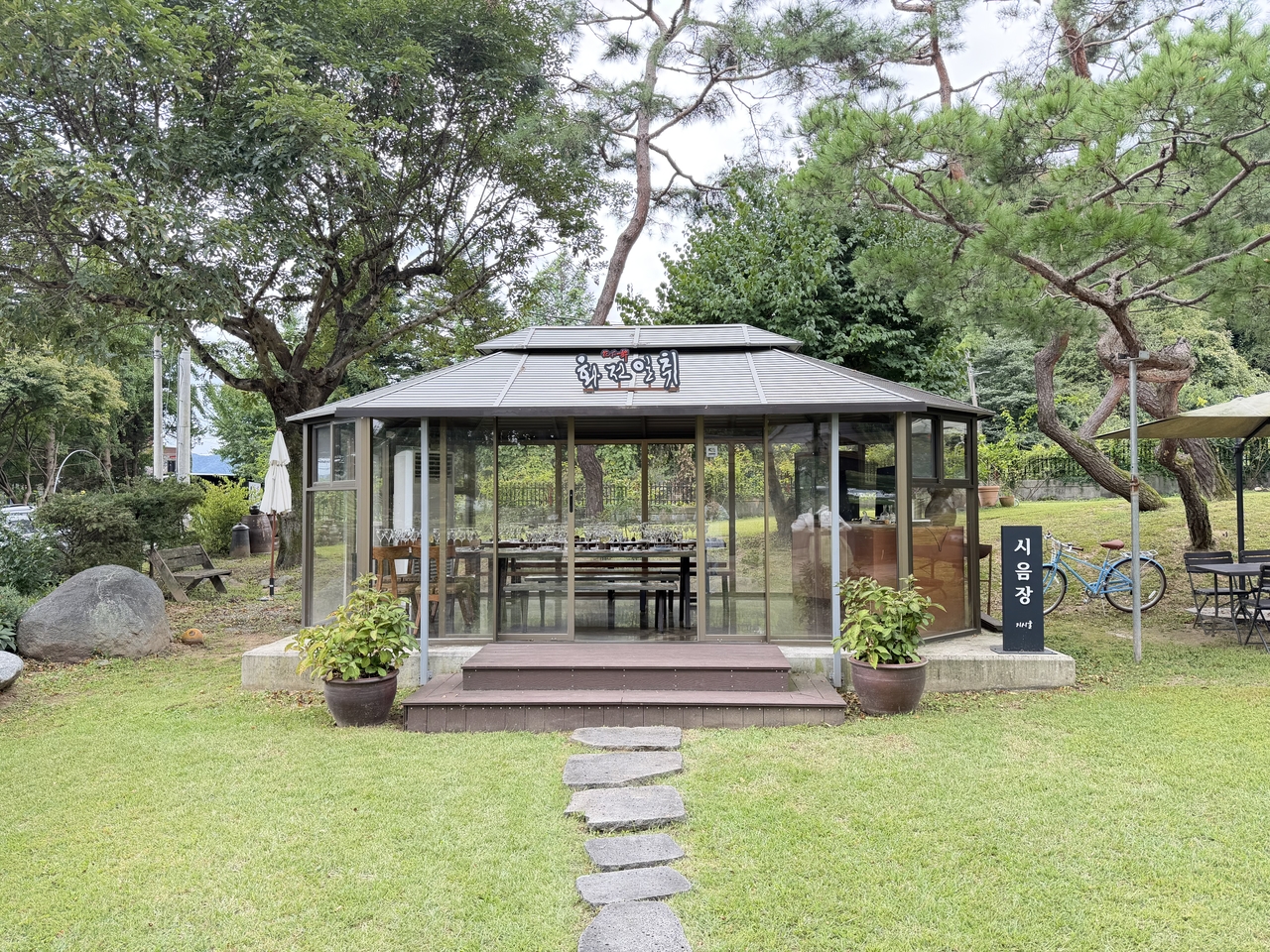
The two-day route opens with liquor. Jisiul Brewery operates out of a private home, and holds tastings in a glass-walled pavilion in the yard. The brewery makes takju, yakju, gwahaju and distilled soju.
Owner Yoo So-young made traditional tea for years. After her children left for college, she learned to brew under Park Rok-dam, head of the Korean Traditional Liquor Research Institute, and became so absorbed that she opened the brewery in 2020. She makes her liquor by hand in the old way: Fermented and aged, then distilled in a sojugori, a traditional earthenware still.
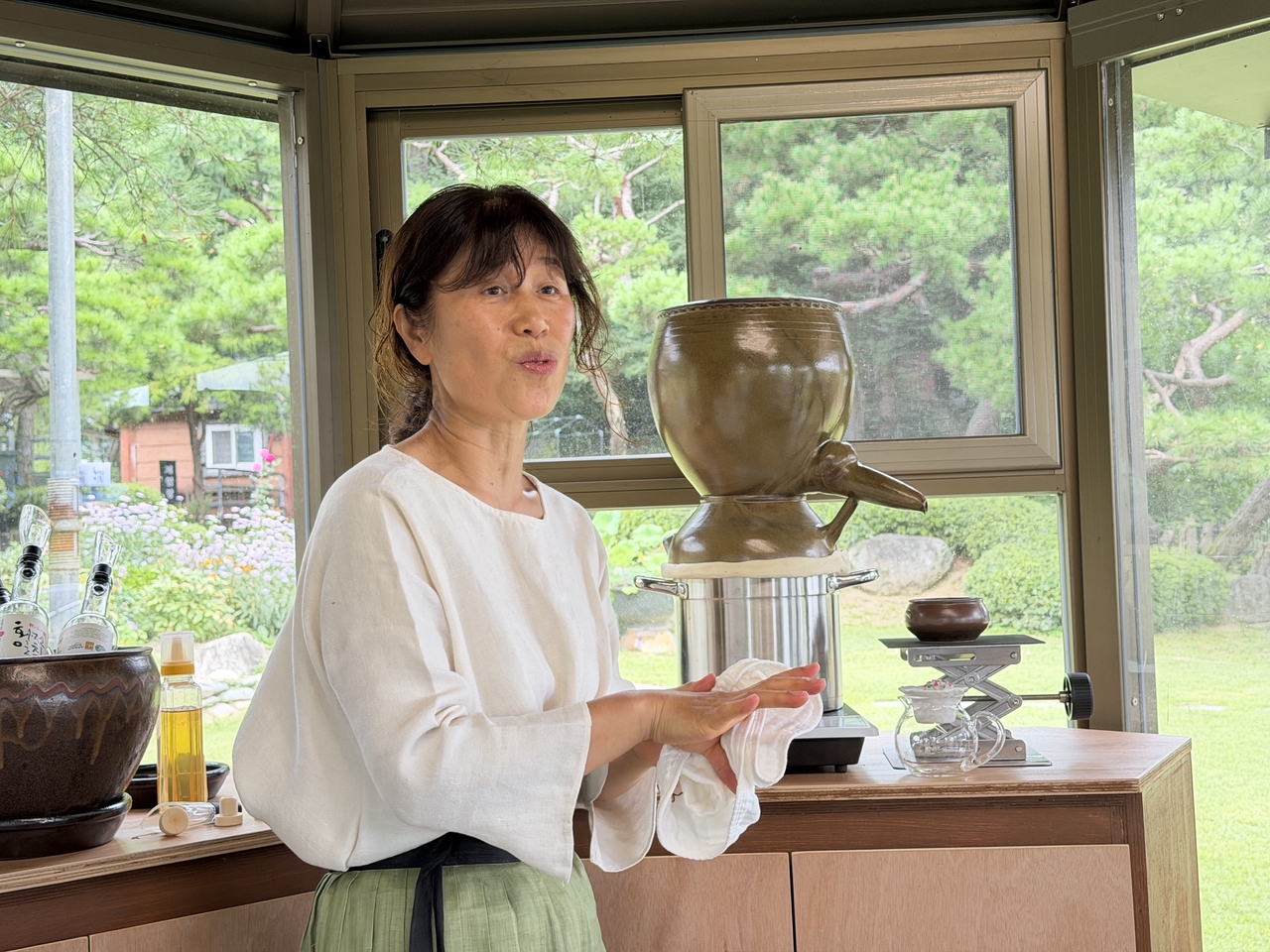
Her yakju, Hwajeonilchwi 15, is an iyangju, a liquor brewed in two stages. It is made only with domestic rice, water and traditional nuruk fermentation starter, with no additives. It is fermented for 100 days in earthenware jars and aged for two more months. The yakju, with floral and fruity aromas, gentle umami and a smooth finish, won the grand prize in the yakju and cheongju category at the 2026 Korea Liquor Awards.
The brewery also supplies Hwajeonilchwi Dongjeongchun, an 11 percent takju, exclusively to La Yeon, the Korean restaurant at The Shilla Seoul. It is not sold separately. Brewed with a large amount of rice and very little water, it is thick and sweet with a yogurt-like texture, and La Yeon serves it with dessert. Because each batch yields so little, Yoo brings it out at tastings only on rare occasions.
The full tasting covers five liquors: a 12 percent takju, a 15 percent yakju, an 18 percent gwahaju, and distilled soju at 38 percent and 52 percent.
Baekhwa, the 18 percent gwahaju, is the most memorable of the five. Gwahaju is fortified by adding soju during fermentation, and Baekhwa drinks like a sweet port. The takju, also a 100-day iyangju aged two months, is rich and soft, its sweetness balanced by fruit aromas and a bright acidity.
The drinks come with fruit, dried persimmons and jeonggwa, fruit candied in honey or syrup. The highlight is warm hwajeon, small pan-fried glutinous rice cakes topped with edible flowers. Yoo grows the flowers herself.
Private premium tastings cost 50,000 won per person and require a reservation at least two days in advance for groups of four or more. The package includes a three-liquor tasting and a sojugori distillation experience.
From griddle to cable car
Lunch is iron-pan dakgalbi at Ani Dakgalbi. The owner took over the restaurant from his mother-in-law, who ran it for some 20 years. The marinade is made in-house, and so are the noodles for the makguksu. The flavor is the familiar cheolpan dakgalbi, clean rather than heavy, and the service is warm.
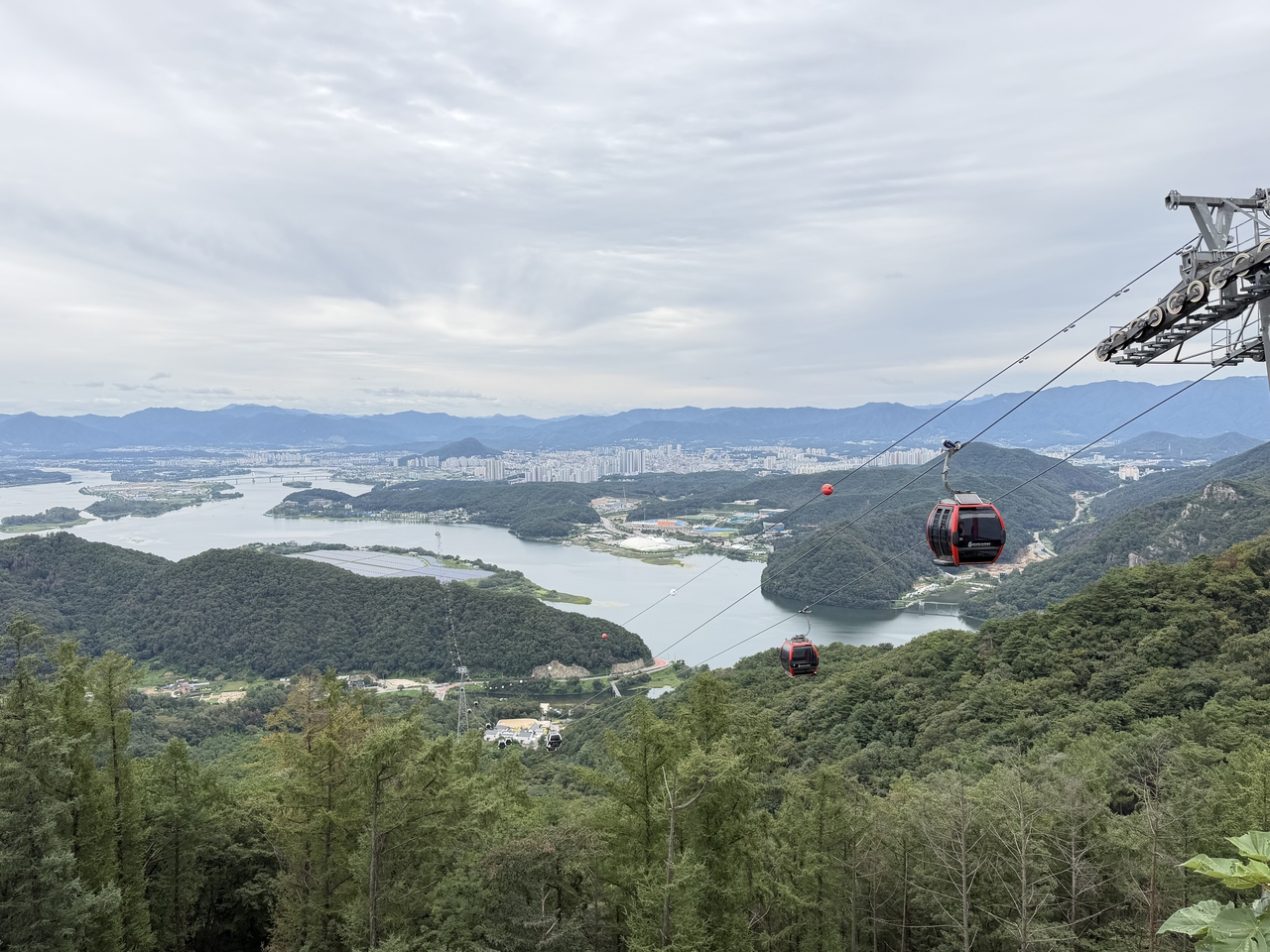
In the afternoon, the Chuncheon Samaksan Lake Cable Car runs from Samcheon-dong across Uiam Lake to Samaksan. At 3.61 kilometers, it is billed as the country's longest inland cable car. A cafe at the top overlooks the mountain and the lake.
Dinner in the woods
Dinner is at Hosoo, a Korean dining bar in a building that resembles a family home, tucked into a wooded village of storybook-style houses.
About 70 percent of the ingredients in its seasonal set menu are local. The dishes are neatly arranged, recalling royal court cuisine, and taste clean with real depth. Outside the package, Hosoo takes reservations only, for groups of four or more.
The package puts travelers up for the night near Gongjicheon, within walking distance of a sculpture park and the lit-up Uiam Park.
Hammock and a bowl of noodles
The second morning begins at the National Center for Forest Activities in Chuncheon.
Forest interpreter Jung Jong-tae said the surrounding valley stayed largely untouched because of its military history.
"There was a unit here that trained agents to be sent into North Korea, so outsiders were kept out and people left the forest alone. That is why it is so well preserved. Six kinds of oak can be seen here, water deer run around and wild boars show up, too," Jung said.
Along the trail, he points out plants such as the sancho, or Chinese pepper tree, whose leaves he said can be crushed and pressed onto the face to ward off mosquitoes.
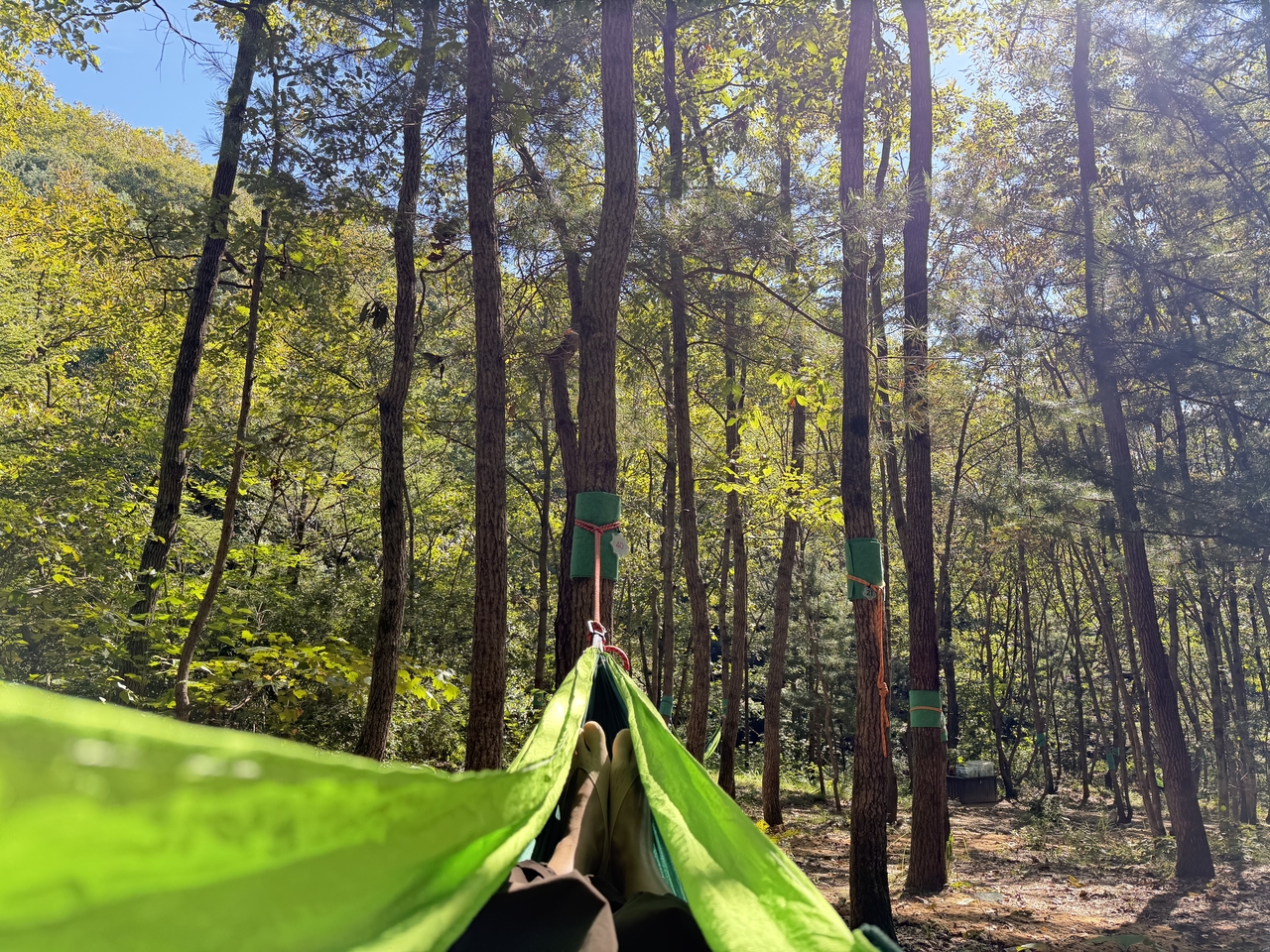
After the talk, each visitor receives a hammock to hang between trees of their choosing. The rest of the session is spent napping to the sound of the wind, with sunlight coming through the leaves.
Next is the Chuncheon Makguksu Experience Museum, where visitors press buckwheat dough into noodles, make their own bowl of makguksu and learn how the dish developed in the region.
Potato beer in an old church
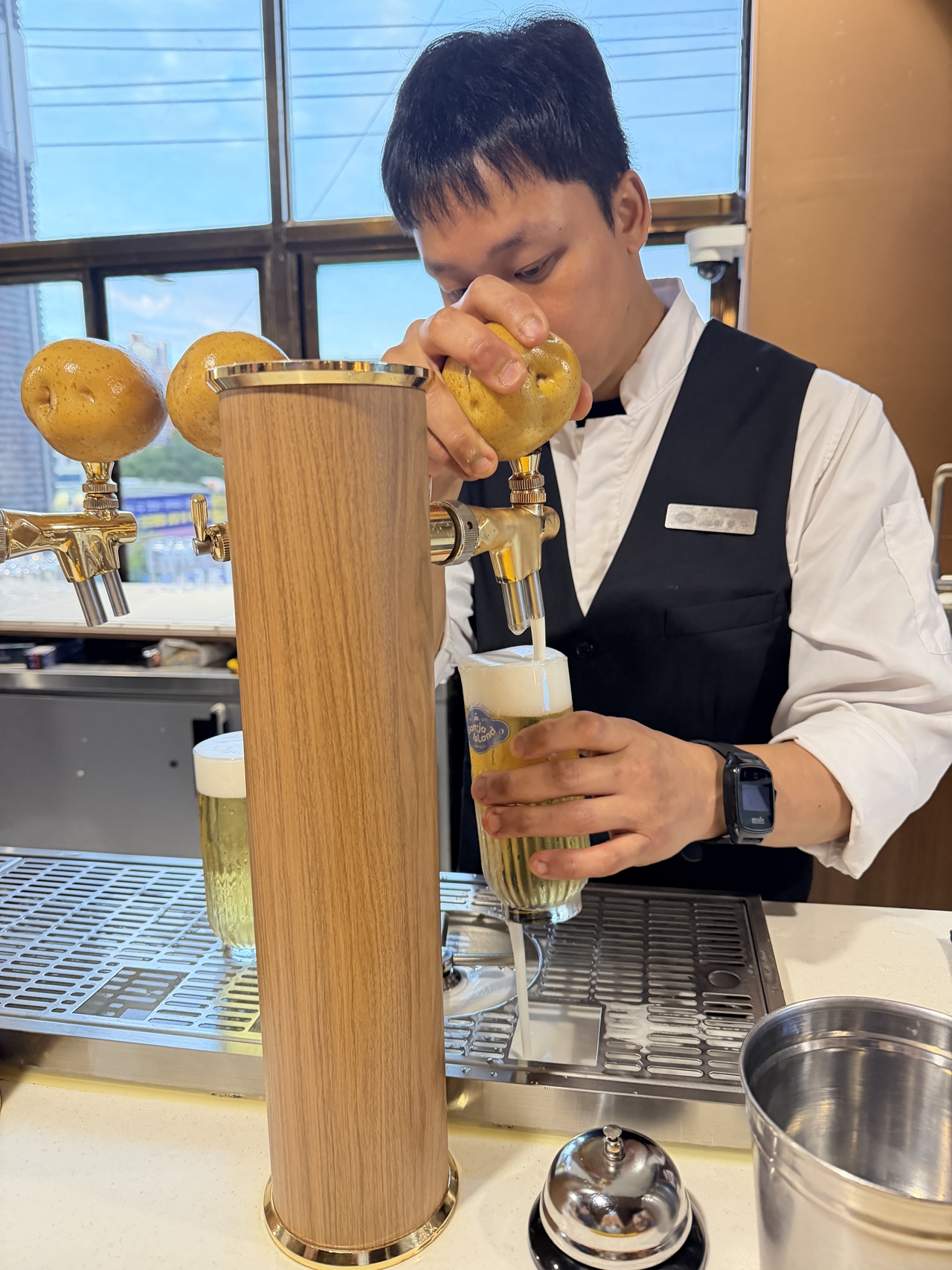
The trip ends at Gamja Island, a brewpub in a building that served as a church for about 30 years. Gamja means potato. The space has been redesigned around a ship, with the brewhouse on the first floor and a restaurant laid out like the inside of a vessel on the second.
The pub brews 16 beers. Its signature potato beer uses potatoes in place of barley and adds citrusy hops to a crisp lager base.
The second-most popular pour after the potato beer is a coffee stout made with coffee from Gangneung, with a deep roasted aroma and a smooth body.
The kitchen turns Chuncheon dakgalbi into a pizza. The standout is the crispy potato chicken, boneless domestic chicken thigh coated in potato flakes and fried until crunchy outside and juicy inside. Even on a weekday evening, the tables were filled with young locals.
Both departures of the overnight package, priced from 224,000 won per person, have sold out.
Spots remain on the day trips. Day trip prices ranging from 67,000 won to 85,000 won cover the train, buses, meals, experience fees and a guide.
The day trip can be booked on the Korail Travel website (www.korailtravel.com).
yoohong@heraldcorp.com