Gayasan National Park Nature Center pairs soundscape programs and loft cabins with a valley walk to Haeinsa
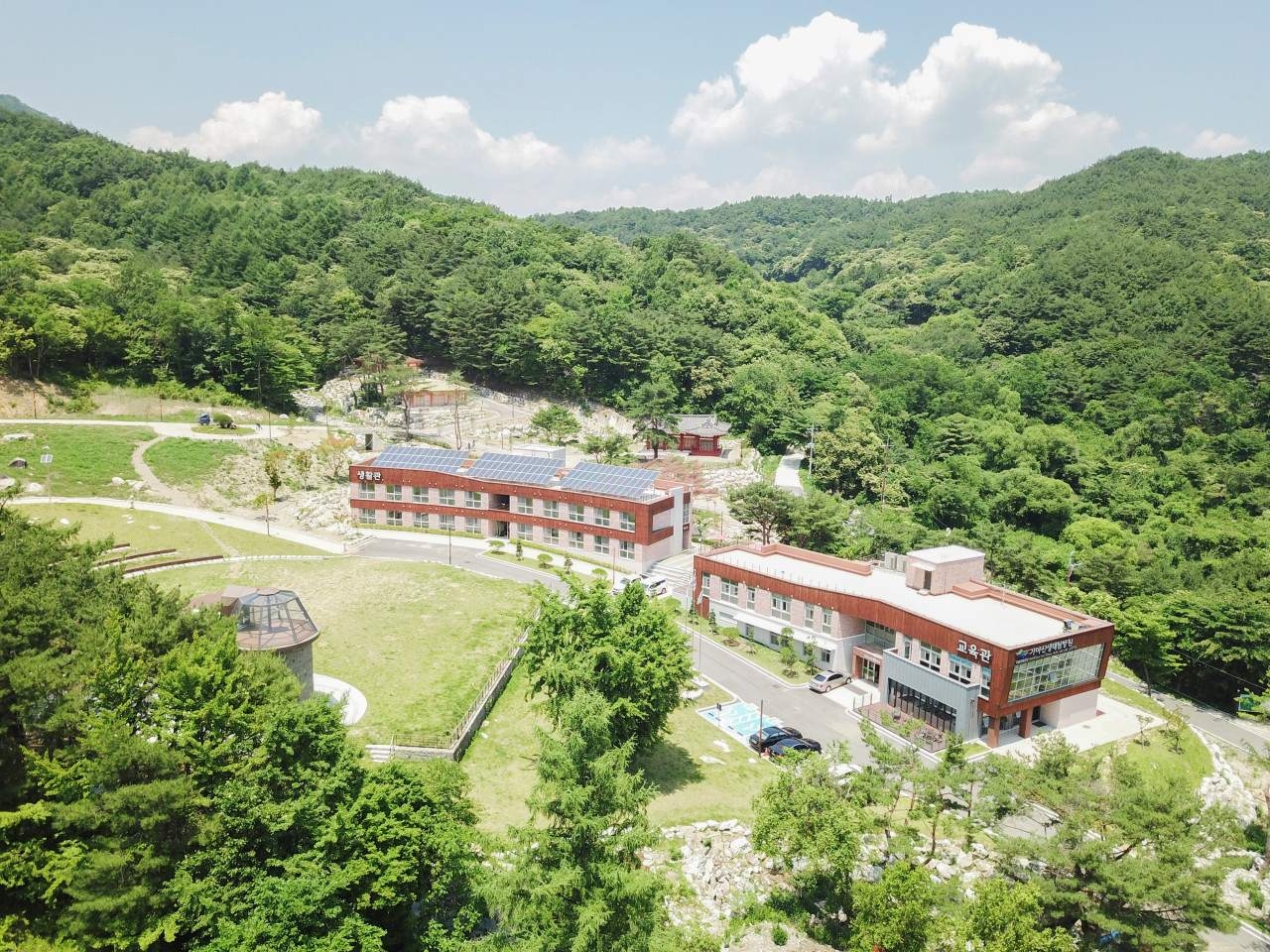
SEONGJU, North Gyeongsang Province — Every window in the classroom is open. A group of visitors lies on yoga mats with their eyes closed as a cricket starts up outside, then a bird, then the steady drone of cicadas. A singing bowl rings once, and the room goes quiet.
The exercise is the final stage of "Forest Sound Demon Hunters," a soundscape program set to run this fall at Gayasan National Park Nature Center. The center is one of 10 nature centers the Korea National Park Service runs nationwide, from the first in Bukhansan National Park to another in Jirisan, Korea's first national park. Each draws on its park's natural and cultural resources for eco-tourism, environmental education for younger generations, and training for nature interpreters.
Soundscape in the forest
The program begins in the center's education hall, where participants listen to recordings of the forest's creatures played from sound boxes. The list includes the Korean bush warbler, scaly thrush, woodpeckers and Daurian redstarts.
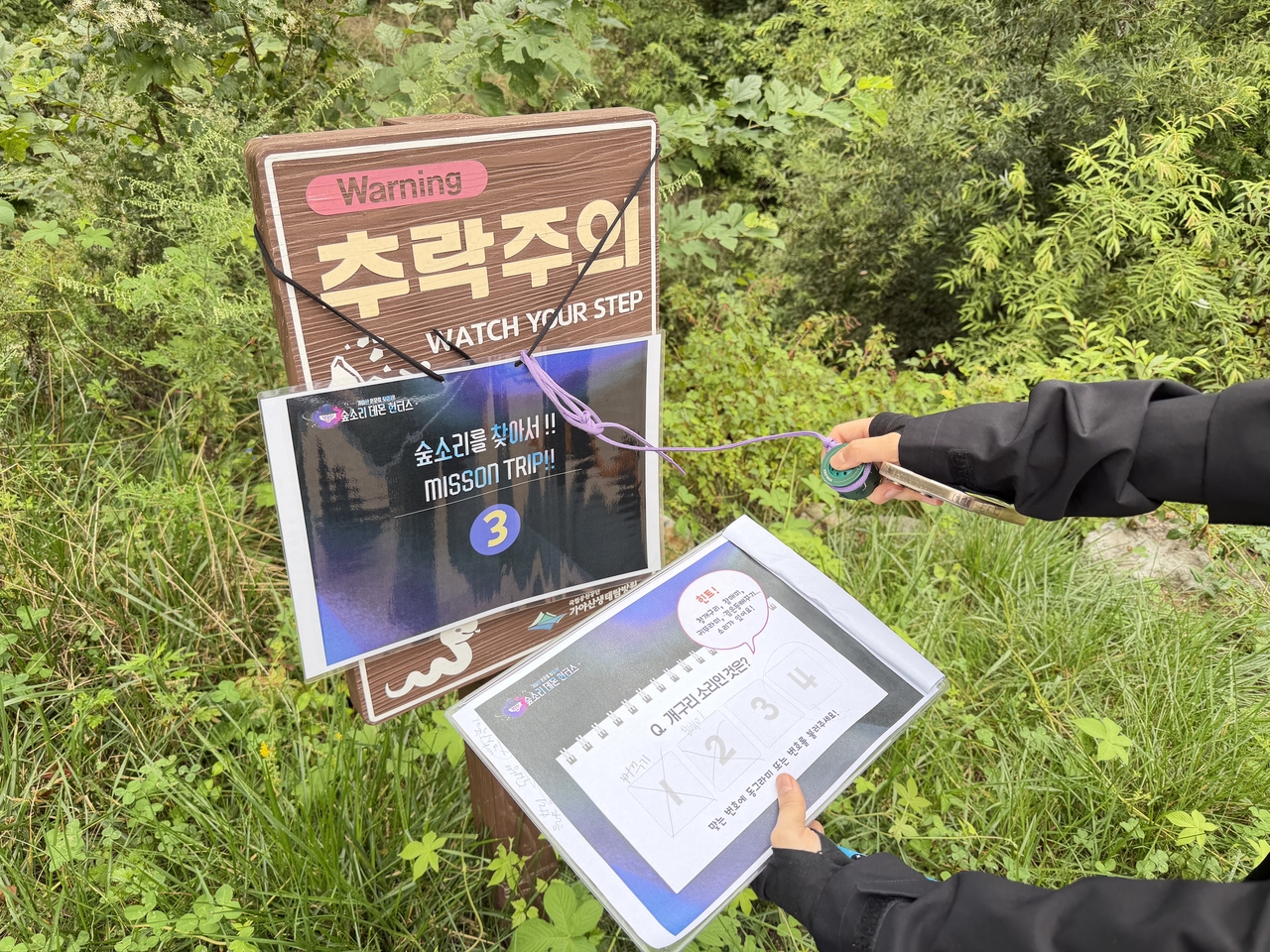
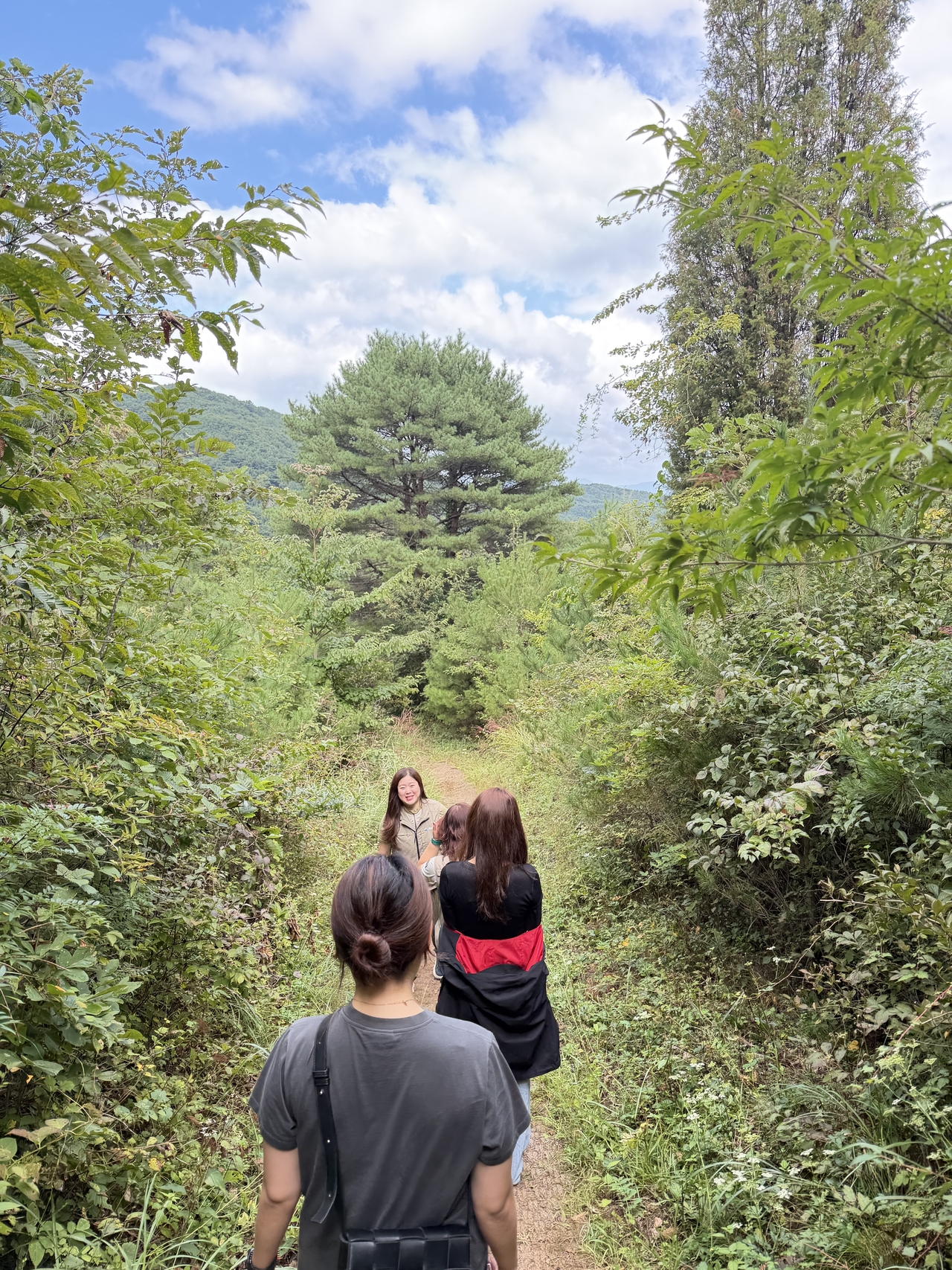
Participants then set out on a mission to four spots on the grounds, where they must decipher which creature is making which sound. The hunt follows an 800-meter nature trail that loops through land once used as grazing pasture.
"It's a good place for a walk in the morning, and in the evening, fireflies come out. These are fireflies that only live in mountain areas," said Shin Mi-yeon, a nature interpreter at the center.
Mongolian oaks grow thickly along the trail, and Shin stopped to hold up one of their oversized leaves.
"The leaves are bigger than a person's face, so people used to make masks out of them and play," she said.
At her feet, acorns lay scattered on the path, still attached to leafy twigs. They are the work of the acorn weevil, which lays its eggs inside an acorn and then snips the branch, letting the leaves act as a parachute to soften the fall. The larvae grow by feeding on the acorn. The park's flagship species, the leopard cat and the snow primrose, also make their home in these woods.
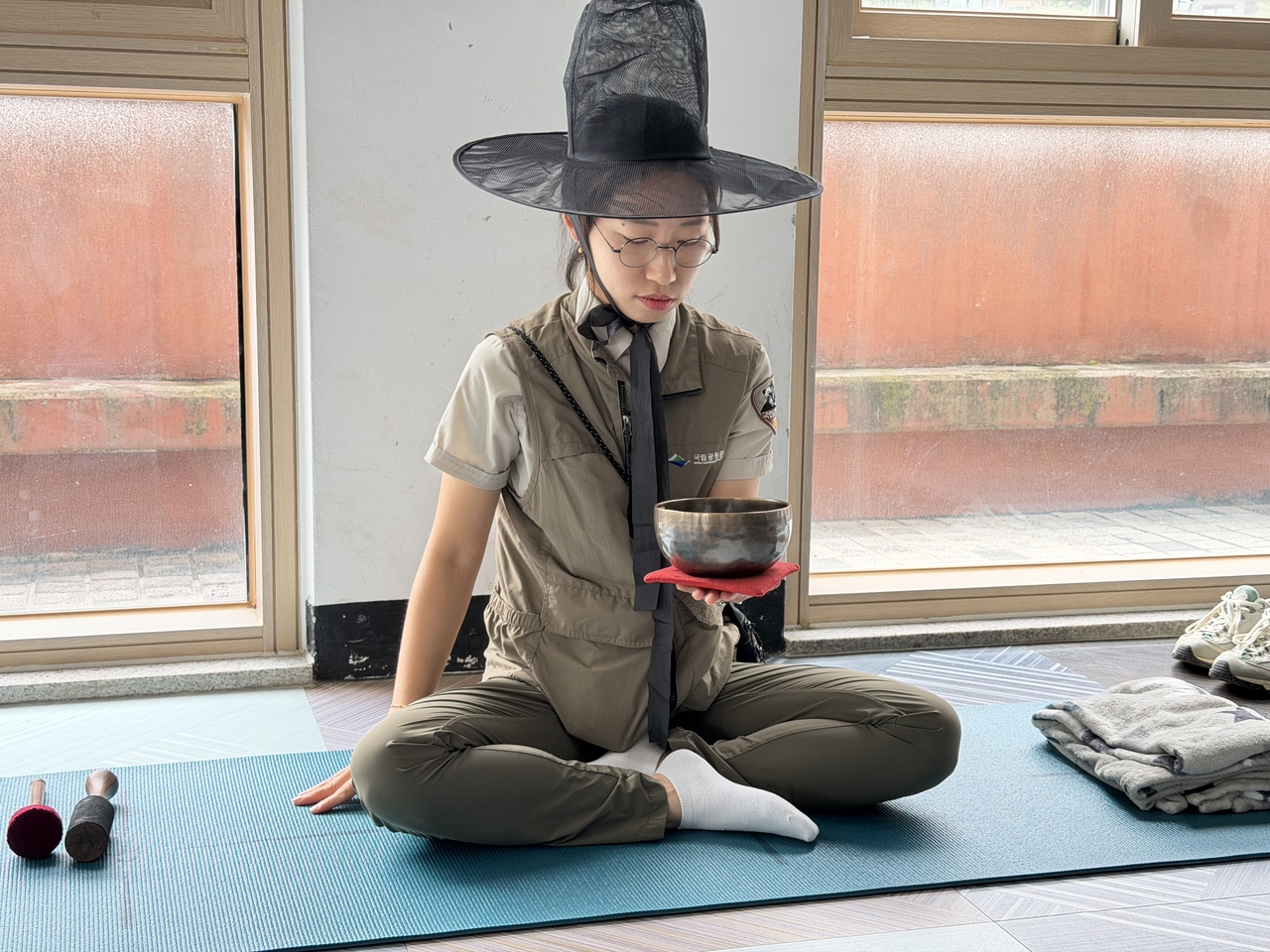
Back in the hall, the session closes with what the center calls "sound therapy." Participants lie still with the windows open and practice picking out individual sounds until the singing bowl brings the group to silence.
Programs change by season and cost 5,000 won ($3.67) per person.
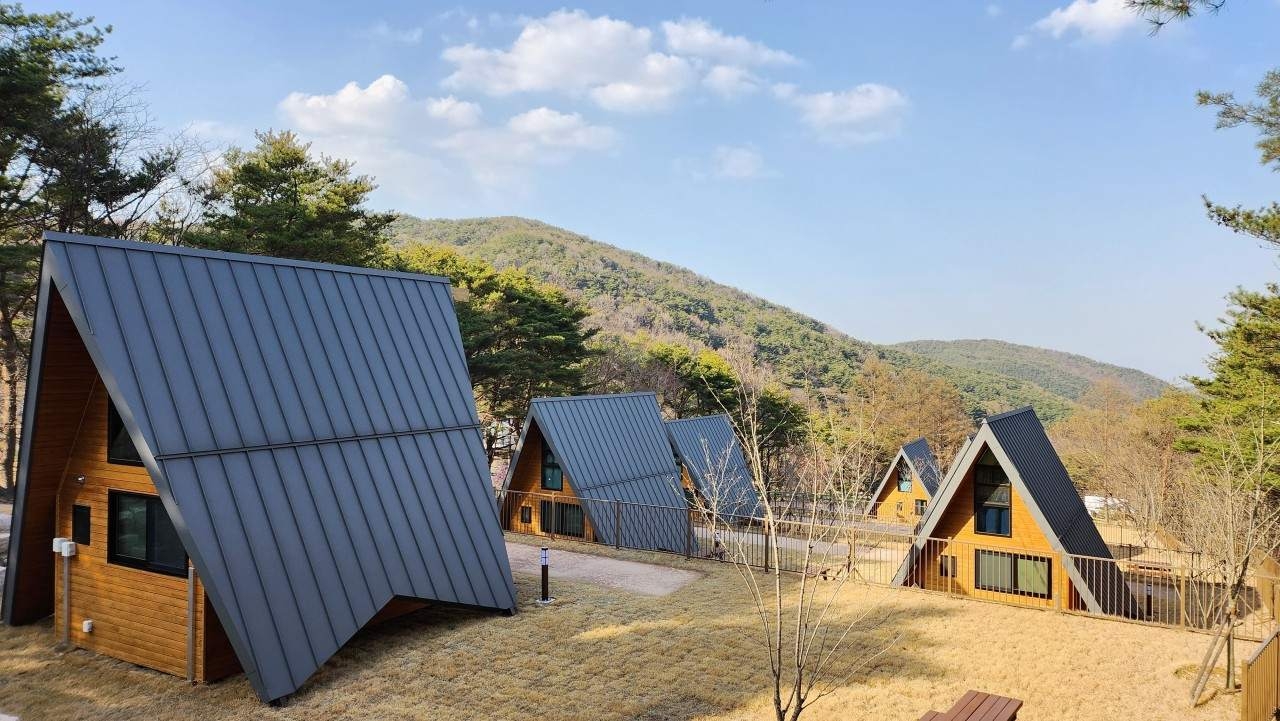
Teepee lofts and a yard for dogs
After a day in the forest, visitors can stay the night. Lodging ranges from a dormitory building with hotel-style three- and six-person rooms, complete with beds, vanities and private bathrooms, to stand-alone houses scattered across the grounds. For a stay that feels closer to the forest itself, the houses are the better pick.
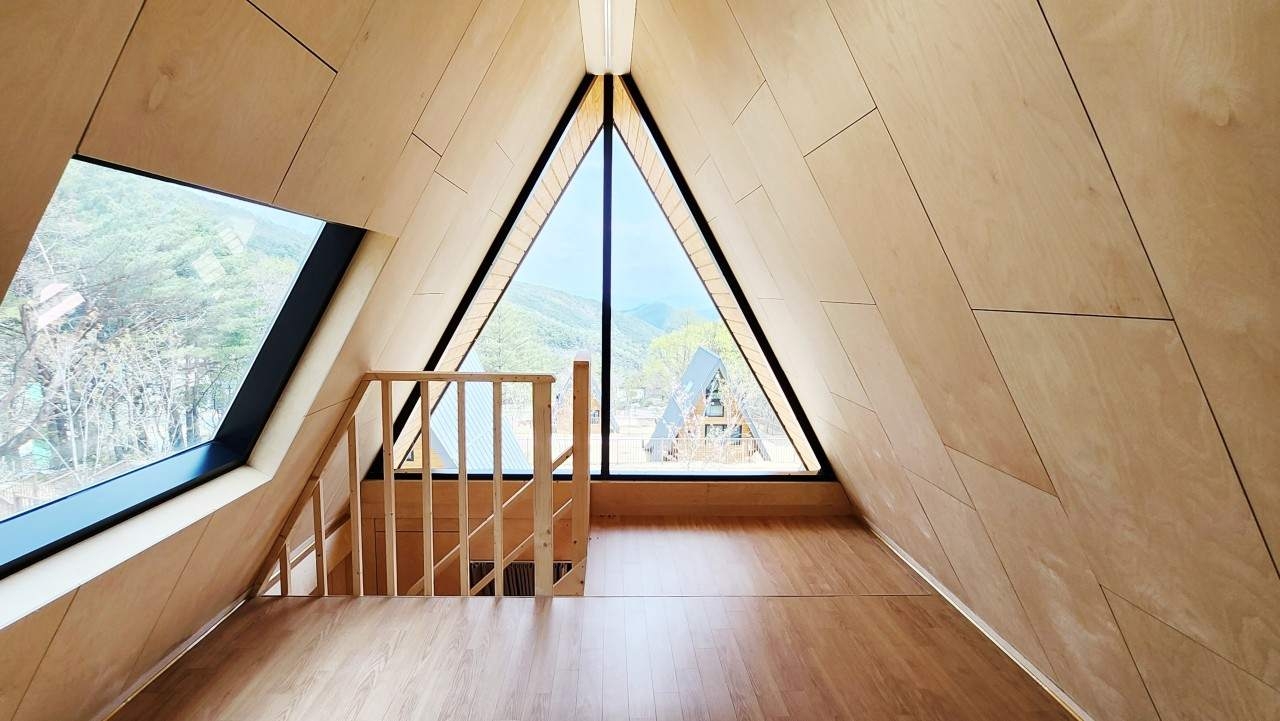
The standouts are Baramchae, a three-person room with ondol-heated floors, and Haneulchae, a two-story, A-frame house with a three-person ondol room downstairs and an attic loft above. Windows set into the loft's ceiling and walls offer a view of the stars at night and the surrounding peaks by day.
Two of the Haneulchae houses accept pets and come with a fenced yard where dogs can run off-leash. There is no weight limit, a rarity among lodgings in Korea, though guests must bring their own pet bedding and towels.
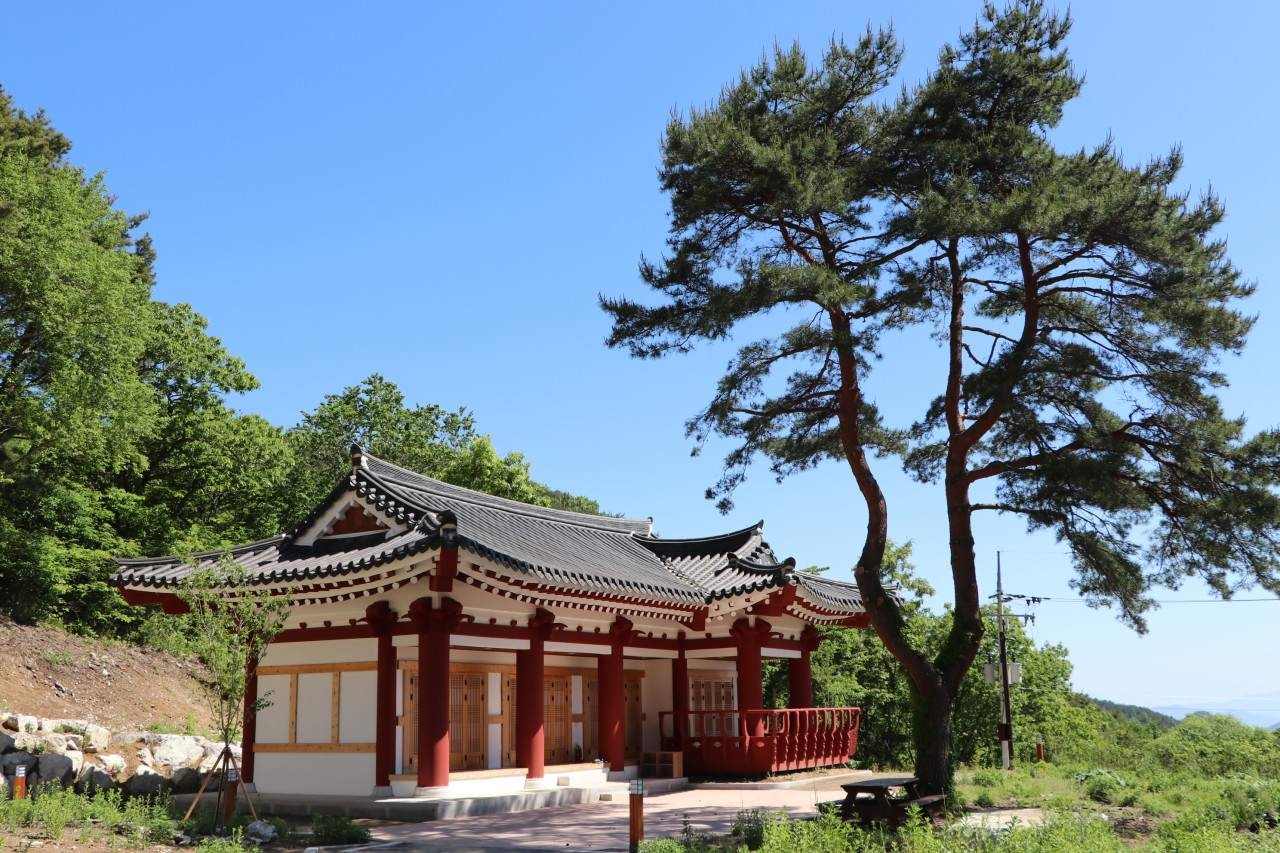
Larger groups of up to eight people can book a hanok decorated in traditional Korean style.
Rates are 50,000 won per night for a three-person room on weekdays and 60,000 won on weekends and during peak season. Six-person rooms cost 99,000 won and 120,000 won, and the eight-person hanok costs 132,000 won and 160,000 won. Check-in is at 3 p.m., and check-out is at 11 a.m.
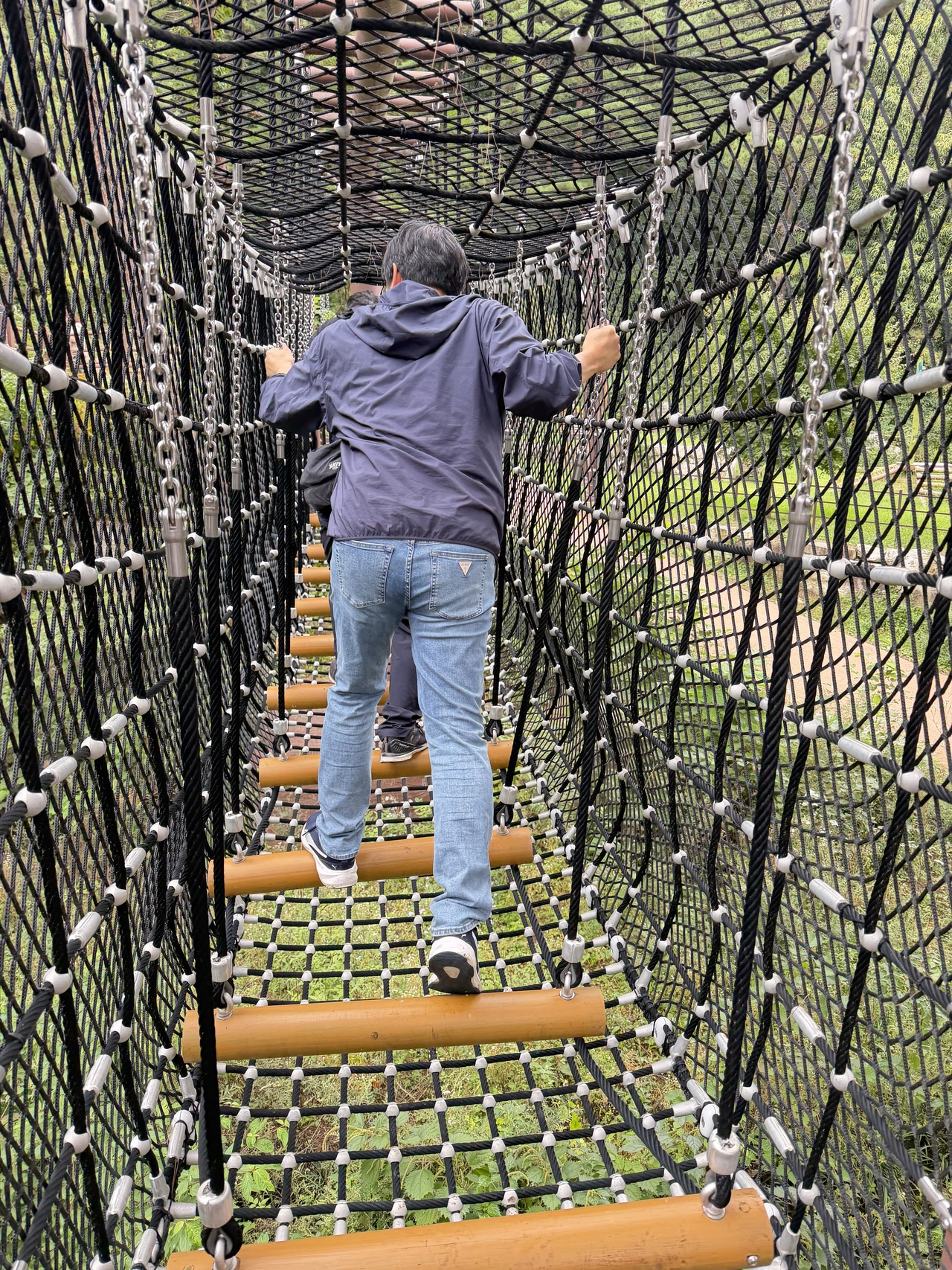
Nearby, a net playground with a giant trampoline and walkways strung high between the trees is built for adults as much as children.
The popular Haneulchae and Baramchae houses tend to book up quickly, but reservations open one month ahead of each date, so booking right when the window opens gives the best chance of landing one.
Reservations can be made online at Korea National Park Service's homepage by 2 p.m. the day before, if the rooms are available. Lodging can be booked only together with a program.
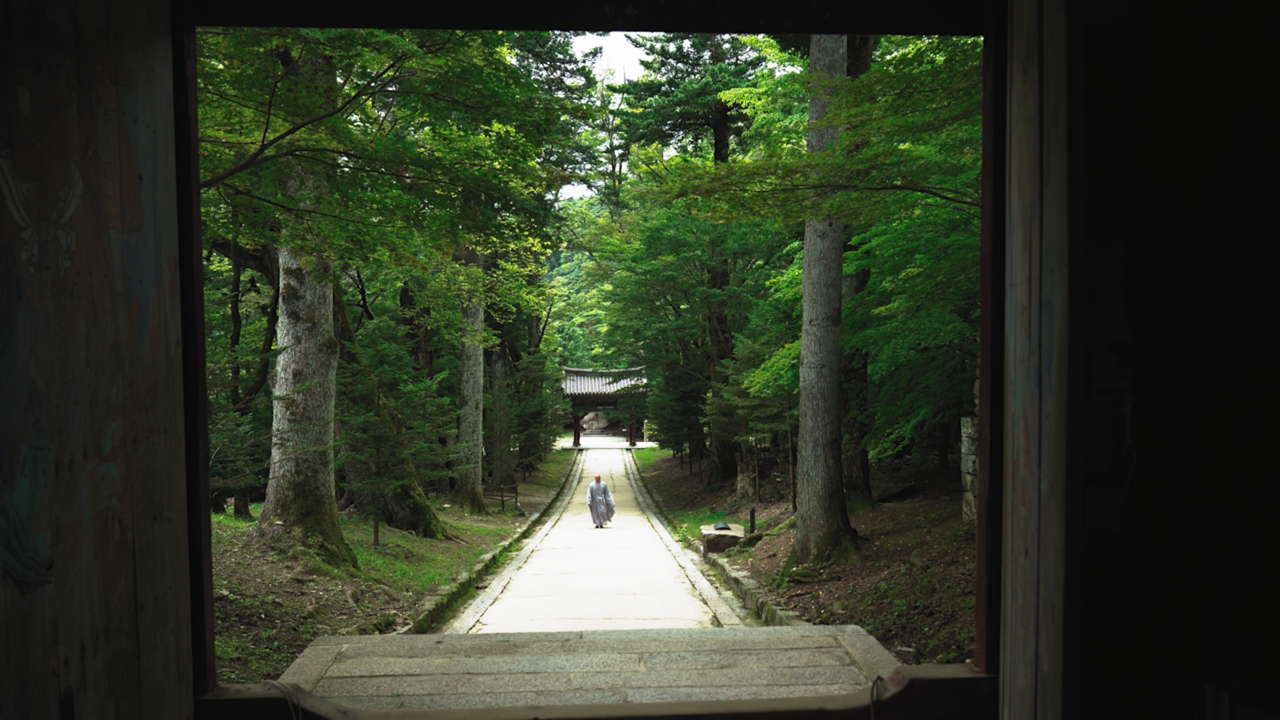
A walk to the temple of the scriptures
The center is only a small corner of Gayasan, designated Korea's ninth national park in 1972 and known for the rocky Manmulsang Ridge, Hongryudong Valley and Haeinsa, a temple more than 1,200 years old.
The gentlest way to see it is the low-altitude Gayasan Sorigil trail, which follows Hongryudong Valley for 6.2 kilometers from the Theme Park of the Tripitaka Koreana to the entrance of Haeinsa. The valley takes its name from autumn leaves reflected red in the flowing water.
"The 'so' in Sorigil is the same (hanja) character used in the word for coming back to life. The name means the road to paradise," said Park Na-young, a nature interpreter with the national park.
The trail opened in 2011 on what had been a path used only by woodcutters, and Park said it is popular with hikers who prefer to stay off the high ridges. Along the way, names are carved into boulders throughout the valley.
"Engraving names on the rocks here was a fad in the Joseon era. Until the 1970s, there was even someone who made a living carving people's names," Park said.
The trail ends at Haeinsa's first gate, Iljumun. From there, a gently curving path known as the Thousand-Year Road leads uphill.
"Visitors pass through three gates before meeting the Buddha," Park said.
The temple was laid out according to Buddhist numerology, with 108 steps between Iljumun and Sudarajang, one of the halls at the top that houses Haeinsa's greatest treasure.
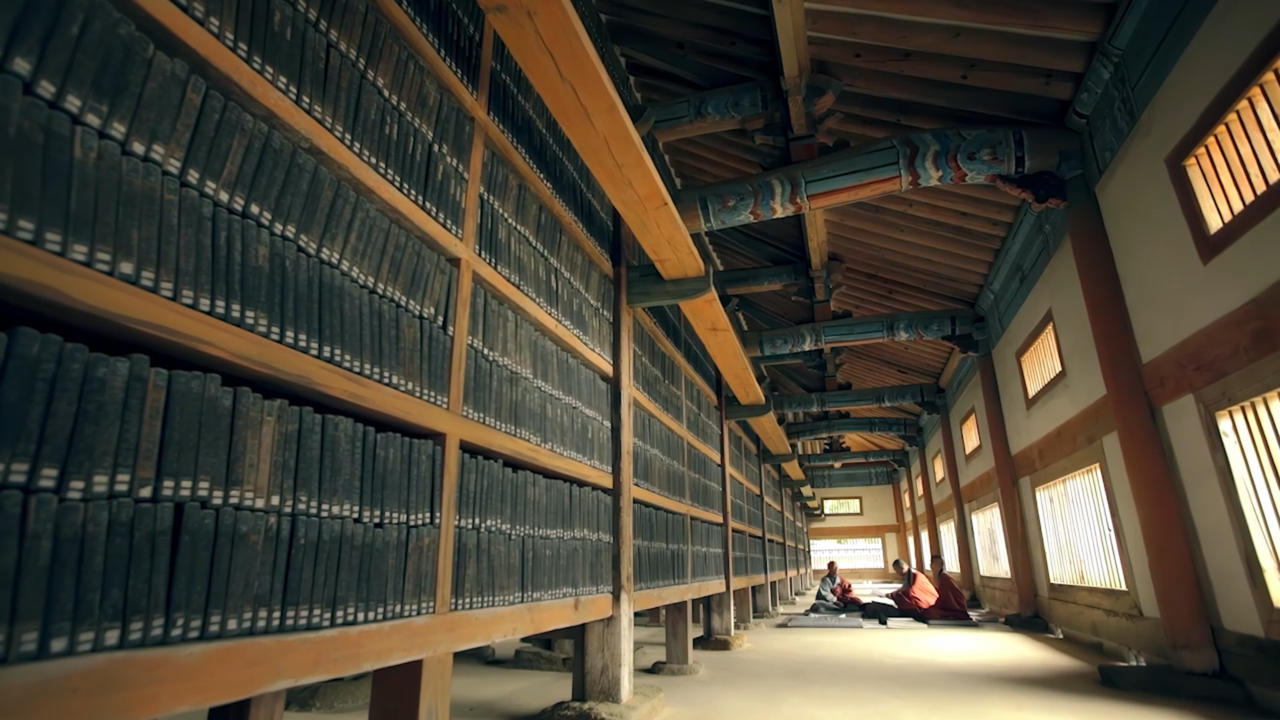
That treasure is the Tripitaka Koreana, a complete collection of Buddhist scriptures carved onto more than 81,000 wooden blocks from 1237 to 1248 as a prayer for protection during the Mongol invasions. It is considered the oldest and most complete surviving version of the Buddhist canon in classical Chinese and is known for its near-flawless accuracy. The woodblocks are on UNESCO's Memory of the World Register, and because the temple houses the scriptures, Haeinsa is one of Korea's three jewel temples, representing the dharma, or Buddhist teachings.
The 15th-century halls that store the blocks, Janggyeong Panjeon, are a UNESCO World Heritage Site. Windows of different sizes keep air circulating, and earthen floors mixed with charcoal, lime and salt regulate humidity, preserving the woodblocks for centuries without modern climate control. The courtyard of Janggyeong Panjeon opened to the public only in 2022.
"The temple keeps everything exactly as our ancestors built it," Park said.
Mountains with a temple attached
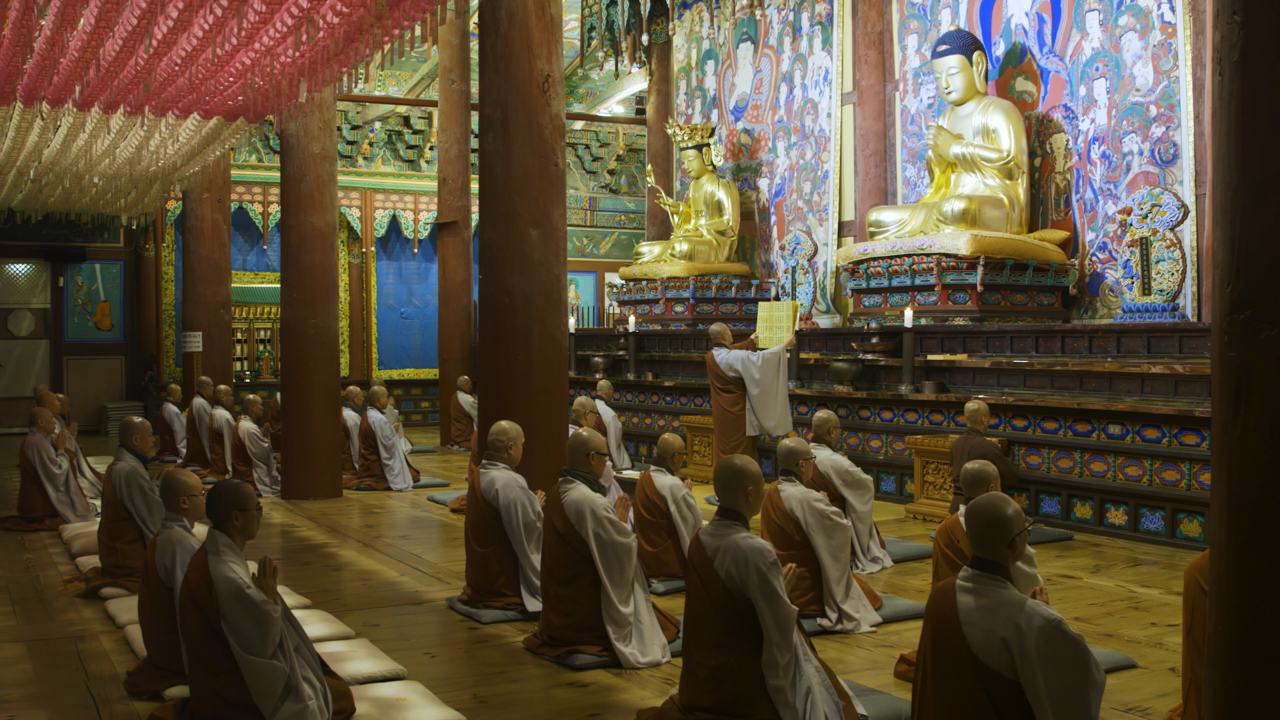
Haeinsa also draws a growing number of foreign visitors. The temple runs a temple stay program for international guests, and on a recent weekday, participants in temple robes were taking part in prayer sessions. Tourists from Latin America made up a noticeable share of the crowd.
Well-maintained trails with decks and wooden stairs, along with scenery that shifts with each season, are part of the draw. Hikers who arrive unprepared can borrow gear for free. The Korea National Park Service lends nine items, including hiking boots, trekking poles, backpacks, knee braces, first-aid kits, seat cushions, maps, crampons and hand warmers, at 20 mountain national parks' visitor centers.
For some, the temples are what set Korea's mountains apart.
"I've been to Seoraksan, and Gayasan today is my second. It seems like every famous mountain in Korea has a temple tucked into it. Visiting historic temples like this while hiking feels like something you can only do in Korea," said Javier, a tourist from Mexico.
yoohong@heraldcorp.com