

See-through glasses favor spatial computing, while 1 Pro+ AR glasses bring brighter 3D viewing
I pinched my thumb and index finger together in midair. A floating window opened; another gesture moved it aside. There was no monitor in sight, yet I was rearranging displays as if using a computer from a science-fiction film.
Switching glasses, I watched waves roll across a 3D seascape. A concert clip gave the scene unexpected depth.
The two demos served different purposes at a showcase by Chinese extended reality device maker Xreal in Seoul's Hongdae district Friday.
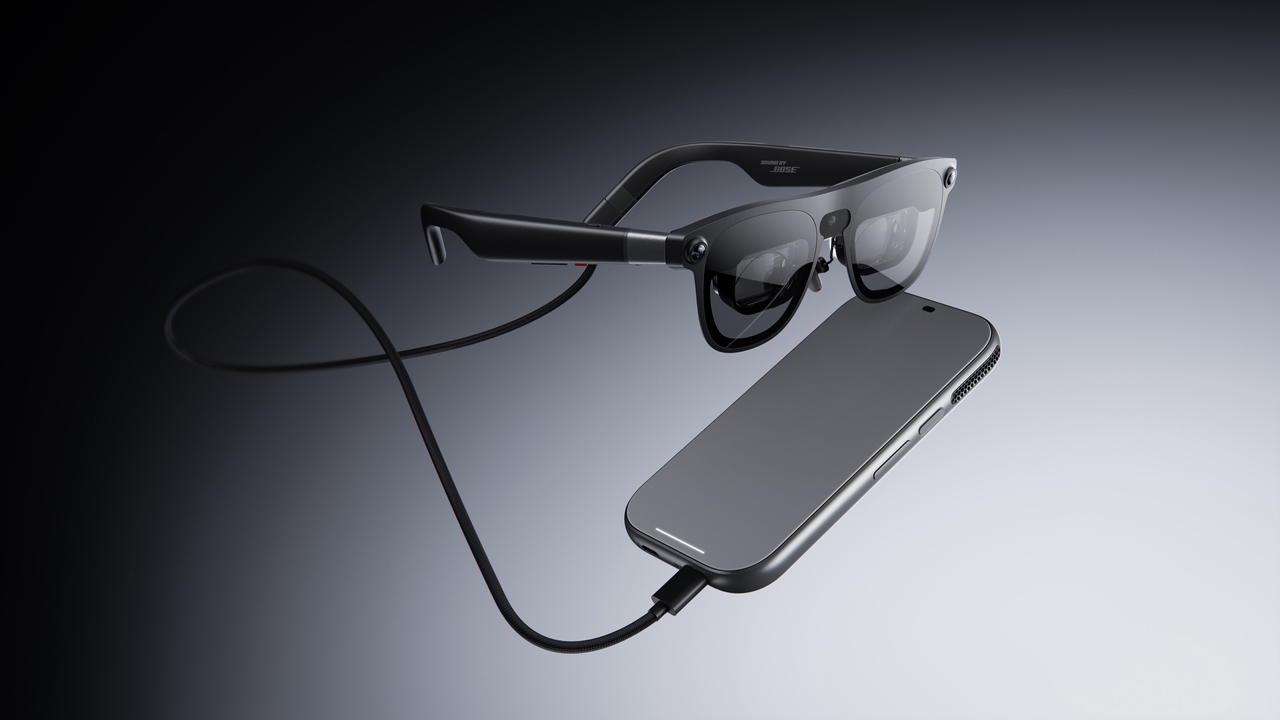
The Xreal's next-generation XR glasses, Aura brings apps and virtual workspaces into transparent glasses, while the Xreal 1 Pro+ augmented reality glasses turn connected devices into large virtual screens.
Lighter alternative, with strings attached
Aura invites comparison with Samsung Electronics' Galaxy XR, which I tested for The Korea Herald at its Seoul unveiling in October last year.
Galaxy XR's 545-gram headset initially felt surprisingly balanced. A 360-degree dance performance put me in the middle of a concert stage. I asked Google's Gemini to find a video, selected it with my eyes and started playback with a pinch. But only after about 10 minutes' use, the headset left red marks on my face.
Aura runs the same Android XR platform in a different form. Galaxy XR uses cameras to show the outside world on internal screens. Aura's transparent lenses let me see the room directly, with digital windows superimposed on it. Rather than entering a virtual world, I was adding screens to a real one.
Xreal says Aura can display up to five windows, run Android XR apps, mirror a laptop and take Gemini voice commands. The gestures were intuitive once I got used to them. Xreal also promises more than 150 XR experiences, including content from Naver's streaming platform, Chzzk. Whether five floating windows could replace a desk setup was less clear.
Samsung's display is sharper on paper, at 3,552 by 3,840 pixels per eye against Aura's 1,920 by 1,200. I could not compare the displays side by side. Aura weighs under 95 grams and was easier to slip on, but its thick lenses and chunky temples hardly resemble everyday eyewear.
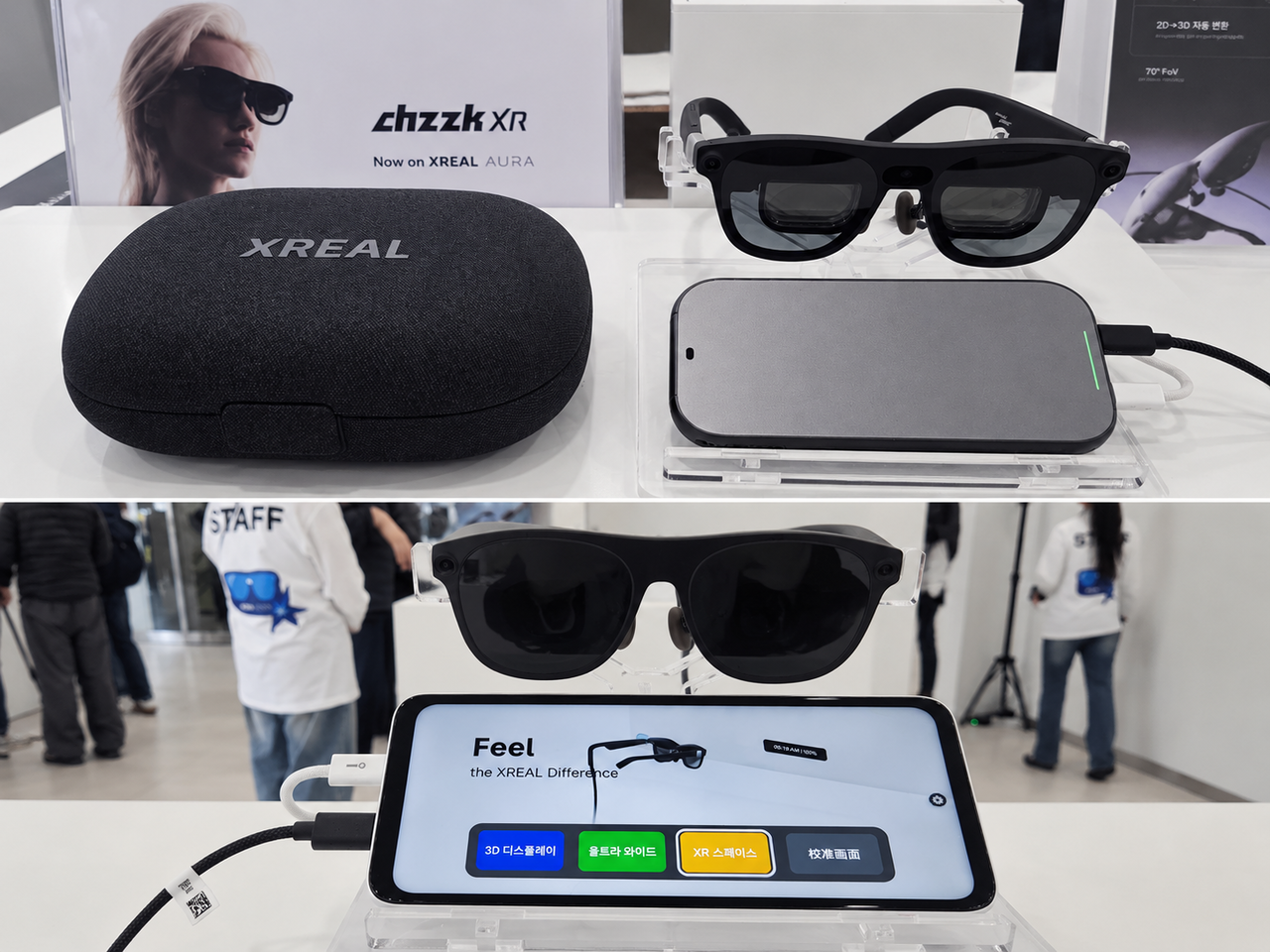
The lighter frame comes with a catch: Aura's main processor and battery sit in a separate, wired compute puck. Galaxy XR also uses an external battery, though its processor sits in the headset. Neither is untethered.
Aura costs 1.69 million won ($1,270) for 12 gigabytes RAM and 256GB storage, or 1.99 million won for 16GB and 512GB, discounted through December. That is 1 million won and 700,000 won less than Galaxy XR's 2.69 million won launch price, respectively. Korean sales began Friday, with shipments due in late November.
“This is a defining moment for XR. We built Aura for people who want the power of spatial computing without being removed from the world around them," said Xreal CEO Chi Xu. “Xreal Aura is finally here, and we're so proud to unlock new ways for people to work, watch, play and build."
Bigger screen, rather than a new computer
The 1 Pro+ AR glasses have a narrower job: It takes video from a compatible phone, laptop or gaming device over USB-C rather than running apps independently.
Its sea and concert demos had convincing depth, but unlike the Galaxy XR's 360-degree show, I was watching a floating screen, not surrounded by the performance. The concert clip, with performers seemingly closer than the stage behind them, was the more persuasive showcase of something I might watch at home.
Xreal says maximum perceived brightness has increased from 700 to 1,200 nits in certain modes, with AI HDR added. Real-time 2D-to-3D conversion now runs at 60 frames per second, up from 30.
I could not compare it directly with the older One Pro. Nor did the prepared clips tell me how well its 3D conversion would handle an ordinary YouTube video. Redesigned nose pads are meant to improve comfort, but the session was too short to test that claim.
The 1 Pro+ launched globally Oct. 15 at $599. A Korean release date and price have not been announced.
Galaxy XR surrounds the viewer, Aura adds screens to the room, and the 1 Pro+ makes videos bigger. All three impressed in brief moments. But the virtual screens were more enticing than the prospect of wearing them for hours, with another device and cable in tow.
yeeun@heraldcorp.com