

Automaker cuts 2026 sales target and operating margin outlook amid production disruptions, weaker global demand and rising costs
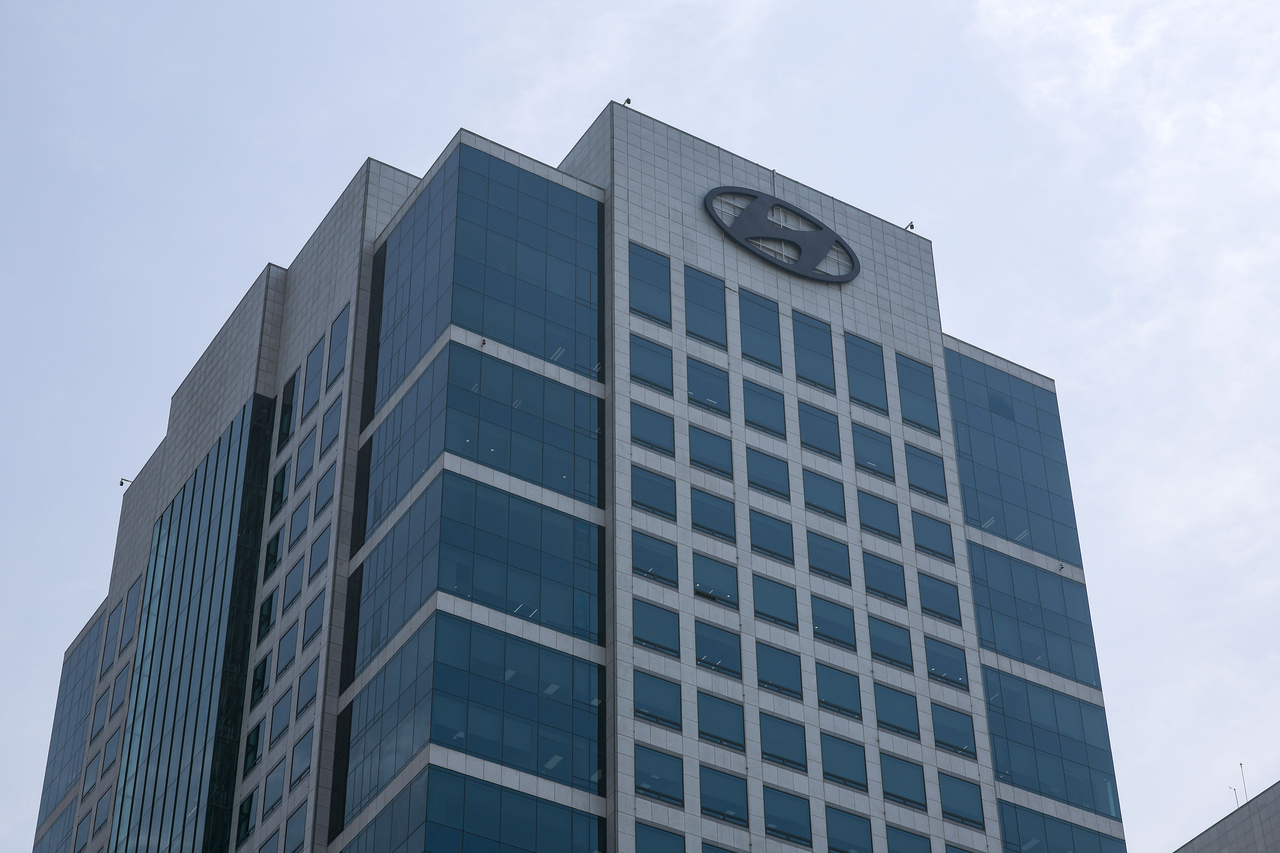
Hyundai Motor on Thursday said its third-quarter operating profit climbed 5.5 percent from a year ago, driven by strong hybrid sales and favorable exchange rates, even as labor strikes and weakening global demand weighed on vehicle sales and revenue.
South Korea’s largest carmaker posted an operating profit of 2.7 trillion won ($2.02 billion) for the July-September period, up from about 2.54 trillion won a year earlier, according to a regulatory filing.
Revenue fell 3.4 percent on-year to 45.11 trillion won, while net profit dropped 24.2 percent to 1.93 trillion won.
Despite lower sales, Hyundai improved its profitability thanks to expanded hybrid vehicles, cost-cutting initiatives and a weaker Korean won against the US dollar. Its operating margin increased by 0.5 percent point on-year to 5.9 percent.
The company said production disruptions at domestic factories due to a labor strike, fewer working days due to the Chuseok holiday and slowing global automotive demand weighed on overall sales during the quarter.
Hyundai sold 920,710 vehicles worldwide in the third quarter, down 11.3 percent from a year earlier. Domestic sales tumbled 27.2 percent to 131,468 units amid strike-related production disruptions, while overseas sales dropped 8 percent to 789,242 vehicles.
Electrified vehicle sales, including hybrids and battery electric vehicles, fell 2.7 percent on-year to 245,540 units as weaker EV sales offset continued growth in hybrids. Hyundai sold 69,117 fully electric vehicles and 167,414 hybrid vehicles, excluding plug-in hybrids, during the quarter. Hybrid sales increased by about 6,000 units on-year, lifting their share of Hyundai’s global sales to 18.2 percent, up 2.7 percentage points.
The stronger contribution from higher-priced hybrid models helped offset the effects of falling vehicle sales and disrupted production.
Looking ahead, Hyundai expects a tough road ahead, citing geopolitical uncertainty, intensifying competition, elevated raw material costs and continued pressure from US tariffs.
In response, the automaker lowered its full-year guidance to reflect the weaker operating environment.
The company revised its 2026 global whole sales target to 4 million vehicles from 4.16 million, citing slowing global demand, production disruptions and rising costs.
It also lowered its full-year operating profit margin forecast to the 5.5 percent to 6.5 percent range, down from its previous guidance of 6.3 percent to 7.3 percent.
Hyundai maintained its annual revenue growth forecast of 1 percent to 2 percent.
The automaker also lowered its planned investment in automotive business to 16 trillion won, down from the earlier 17.8 trillion won.
Hyundai Motor stressed that the adjustment does not signal a deterioration in its underlying competitiveness or earnings potential, but rather an adjustment to reflect raw material cost increases and production setbacks that were hard to expect earlier during the year.
The automaker said it would continue efforts to improve profitability through production normalization, new vehicle launches and companywide cost cuts, while responding flexibly to regional demand with a diversified lineup of gasoline, hybrid and electric vehicles.
Separately, Hyundai announced a third-quarter dividend of 2,500 won per common and preferred share, in line with its shareholder return program unveiled in August 2024.
sahn@heraldcorp.com


