
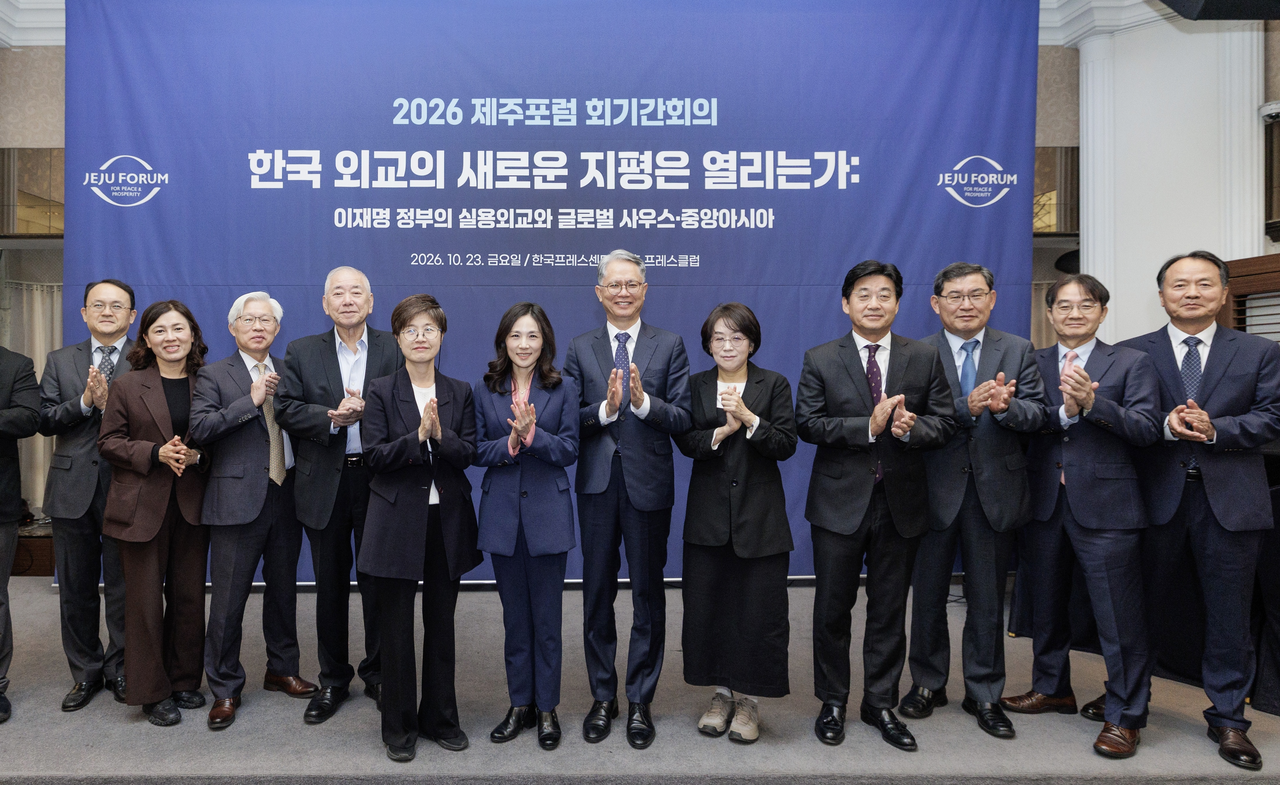
South Korea should convert its technological and industrial strengths into greater diplomatic influence while also delivering tangible benefits to its partners, officials and experts said at a meeting in Seoul on Friday.
The Jeju Forum Inter-Sessional Meeting, hosted by the Jeju Peace Institute at the Korea Press Center in Jung-gu, central Seoul, examined pragmatic diplomacy, cooperation with the Global South and follow-up measures to the inaugural Korea-Central Asia summit in September.
Experts proposed that Korea secure indispensable roles in global economic, technological and security networks to strengthen its bargaining power and strategic autonomy. They also called for binding agreements, more diverse negotiating channels with Washington, stronger economic diplomacy and more substantive and varied engagement with the Global South.
Institute President Kang Jeong-sik said diplomacy “must contribute directly to people’s lives,” emphasizing consistent principles and flexibility in responding to international change.
Second Vice Foreign Minister Kim Jina said President Lee Jae Myung’s pragmatic diplomacy seeks to protect national interests while remaining flexible in choosing cooperation partners and methods.
Korea should transition “from a country forced to make choices to one capable of influencing the choices of others,” she said.
Kim called for strengthening domestic capabilities, the U.S. alliance and partnerships with the Global South and Central Asia. Cooperation on critical minerals and supply chains should support both Korea’s economic security and its partners’ industrial development, she added.
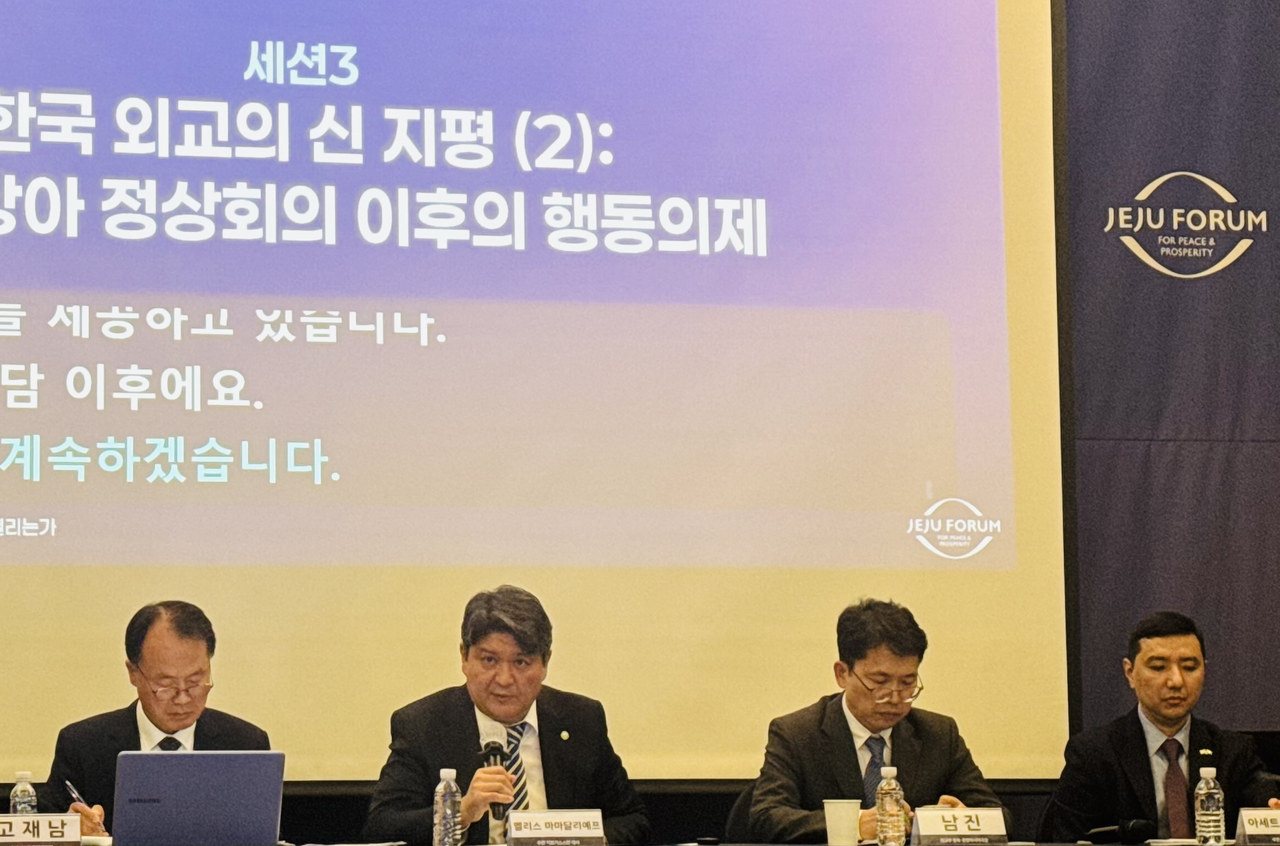
Responding to a question from The Korea Herald, Kyrgyz Ambassador Melis Mamadaliev urged Korea to accelerate engagement with Central Asia, saying other countries had already made significant progress in cooperation with the region.
“We hope that Korea will speed up,” he said.
Mamadaliev identified glacier loss and climate change as areas for closer cooperation. Rising temperatures threaten glaciers in mountainous Kyrgyzstan, he said, adding that the country was seeking international partnerships because it could not address the challenge through its own resources and capabilities alone.
Mamadaliev also invited international partners to the second Global Mountain Summit, known as Bishkek+25, scheduled for Oct. 21-23, 2027, in the Kyrgyz capital, to identify opportunities for joint action.
sanjaykumar@heraldcorp.com