
Hungary called for closer investment and technology ties with South Korea at a reception in Seoul on Thursday marking the 70th anniversary of its 1956 uprising against Soviet rule.
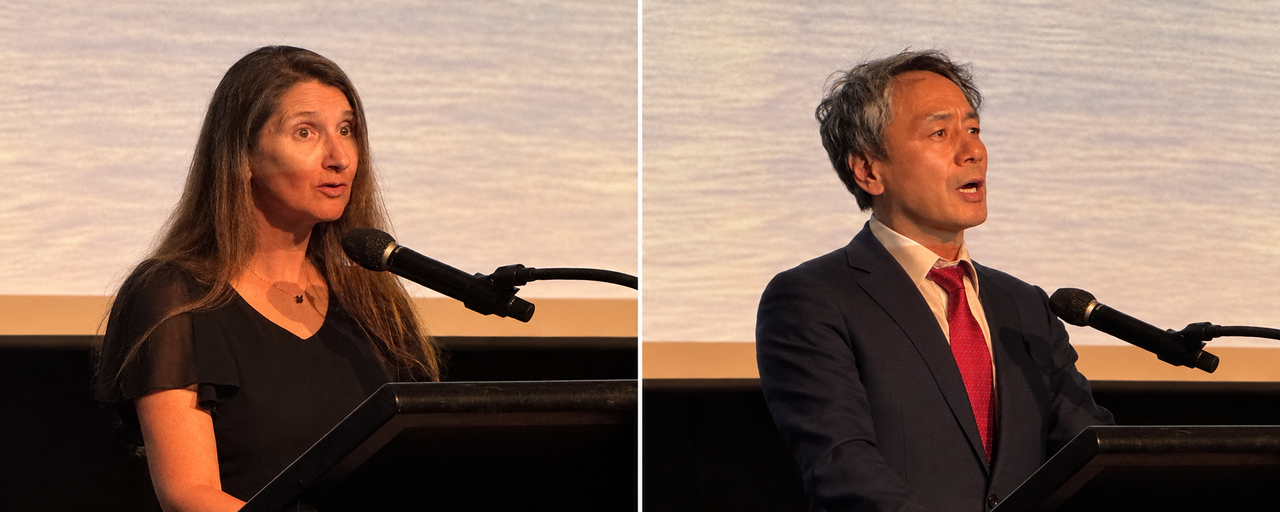
Anett Szelezsan, chargé d’affaires at the Hungarian Embassy, linked the uprising’s legacy to what she described as the countries’ shared commitment to democracy and human rights.
“Our nation was brave enough to stand up for freedom,” she said.
Soviet forces crushed the uprising, but it became an enduring symbol of resistance. Hungary transitioned to a multiparty democracy in 1989, held free elections in 1990 and saw the last Soviet troops withdraw in 1991.
Referring to the war in neighboring Ukraine, Szelezsan condemned aggression and urged mutual support among like-minded countries.
Her remarks came as Hungary’s government has moved away from former Prime Minister Viktor Orban’s Russia-friendly approach, expressing solidarity with Ukraine and designating Russia a national security threat.
Lee Yoon-seok, deputy director-general for European affairs at South Korea’s Foreign Ministry, drew parallels between the Hungarian uprising and South Korea’s democratization.
Hungary became the first country in Central and Eastern Europe to establish diplomatic relations with South Korea in 1989. The countries elevated their relationship to a strategic partnership in 2021.
Bilateral trade totaled about $4.7 billion last year, while cumulative South Korean investment in Hungary reached $6.4 billion, according to Lee.
About 300 Korean companies, including battery manufacturers, operate in Hungary, providing some 20,000 local jobs, he said.
Lee called for expanded cooperation in electric mobility and nuclear energy.
The reception, held at the Grand Hyatt Seoul in Yongsan-gu, coincided with the birthday of Hungarian composer Franz Liszt and opened with a piano recital by Hwang Yun-ha, president of the Korean Liszt Society.
During the event, Lee and Szelezsan highlighted the consecutive Nobel Prizes in Literature awarded to South Korea’s Han Kang in 2024 and Hungary’s Laszlo Krasznahorkai in 2025.
That evening, N Seoul Tower was illuminated in Hungary’s national colors — red, white and green — to commemorate the uprising.
sanjaykumar@heraldcorp.com