

Korea's only copper smelter considers cutting raw material purchases as record-low processing fees squeeze profitability despite soaring copper prices
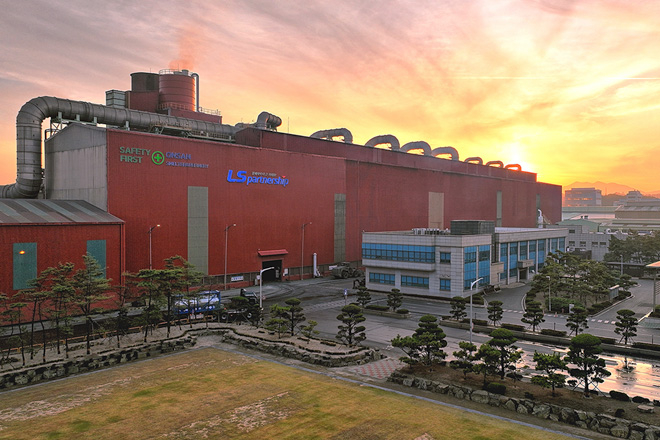
South Korean copper smelter LS MnM may cut copper concentrate purchases to protect profitability as a supply-demand imbalance drives processing fees to record lows, even as copper prices approach all-time highs.
The company said Monday it is reviewing plans to adjust raw material purchases and production levels depending on market conditions and processing margins.
LS MnM, South Korea’s only dedicated copper smelter, operates the Onsan smelter in Ulsan, with an annual production capacity of 680,000 metric tons of refined copper.
The announcement comes as miners, traders and smelters from around the world gather in London for LME Week 2026, which kicks off Monday, to assess market prospects and negotiate trading terms amid growing concerns over copper concentrate supplies.
Copper prices have recently surged toward record highs, yet treatment and refining charges, known as TC/RCs — the fees miners pay smelters to convert concentrate into refined metal — have fallen to historic lows, squeezing a key source of income for smelters.
The sharp decline stems from a growing imbalance between sluggish mine production and rapidly expanding smelting capacity, intensifying competition among smelters for limited raw materials.
The International Copper Study Group recently projected global copper mine production to grow just 1.3 percent this year, down from its April forecast of 1.6 percent and its October 2025 estimate of 2.3 percent.
Meanwhile, global copper concentrate production fell 2 percent in the first seven months of this year compared with the same period last year, driven by an 8.8 percent drop in Chile, the world's largest copper producer, and a 29 percent decline in Indonesia.
Smelting capacity, by contrast, has expanded much faster. According to ICSG data, global copper smelting capacity increased by roughly 3.4 million tons from 2024 to 2025, reaching 29.1 million tons.
In a March report, the International Energy Agency warned that declining ore grades, higher investment costs and long lead times for new mines are constraining concentrate supplies, even as rapid expansion in smelting capacity intensifies competition for raw materials.
Some overseas smelters have already moved to scale back operations.
Japan's Mitsubishi Materials announced in March that it would end concentrate processing at its Onahama smelter in April 2027. Another Japanese producer, Furukawa, reportedly plans to reduce refined copper production by about 3 percent from October 2026 to March 2027. In China, leading smelters have also discussed production cuts amid deteriorating market conditions.
Against this backdrop, LS MnM said maintaining production volumes by purchasing concentrate under unfavorable terms could further undermine profitability.
"Rather than maintaining throughput by purchasing raw materials on unfavorable terms, we are carefully considering how to protect profitability through reasonable adjustments to raw material intake," an LS MnM spokesperson said.
"Through flexible operations aligned with commercial terms, we aim to minimize the impact on earnings."
The company said it would review purchase terms, market conditions and operational efficiency before deciding whether to reduce concentrate intake.
To offset the impact of potential production cuts, LS MnM is considering increasing its use of recycled feedstock while improving the recovery of precious metals and other by-products. It is also seeking to diversify its revenue streams through its battery materials business.
Any reduction in copper concentrate processing could lower output of copper cathodes and sulfuric acid, two of the company's key products.
LS MnM said it would adjust sales volumes and supply plans flexibly while prioritizing stable supplies to key long-term customers.
"We will identify the best operating approach by considering not only profitability but also the impact on our customers and partners, so that supply chain stability is not compromised," the spokesperson said.
"We hope LME Week 2026 will provide an opportunity to broaden understanding of supply-demand imbalances in the copper concentrate market and help miners and smelters explore mutually sustainable commercial terms."
sahn@heraldcorp.com