
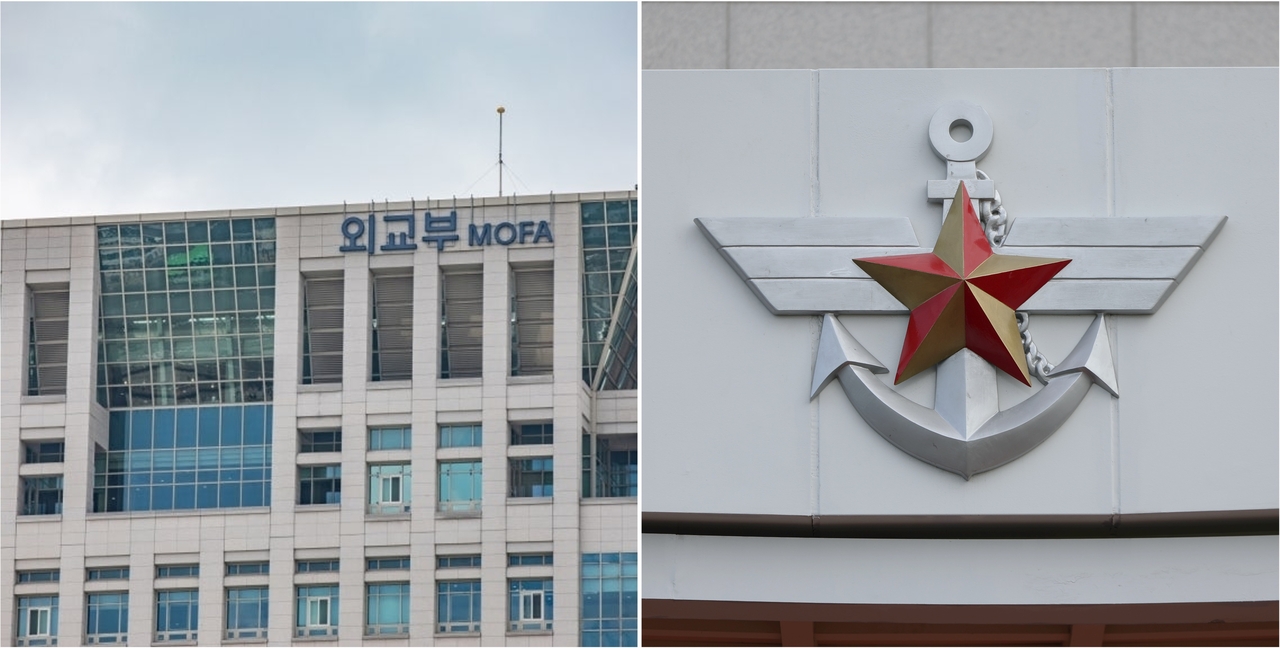
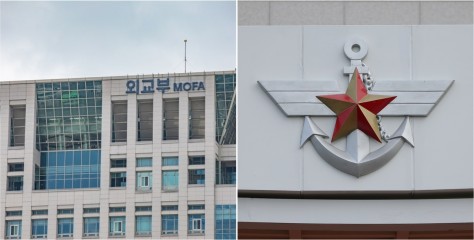
Plans to relocate South Korea's defense and foreign affairs ministries to Sejong have been met with caution from experts and resistance from the opposition bloc, who point to existing diplomatic and security infrastructure in Seoul.
On Tuesday, the government unveiled plans to, in stages, move 44 central government agencies still based in the greater Seoul area to Sejong by 2031.
The Defense Ministry's inclusion has drawn particular scrutiny, partly because the Joint Chiefs of Staff — which directs military operations — has been excluded from the relocation plan.
That has raised questions over crisis coordination among senior officials if the ministry moves from its current complex in Yongsan-gu, central Seoul, while the JCS and major wartime command facilities remain in the capital region.
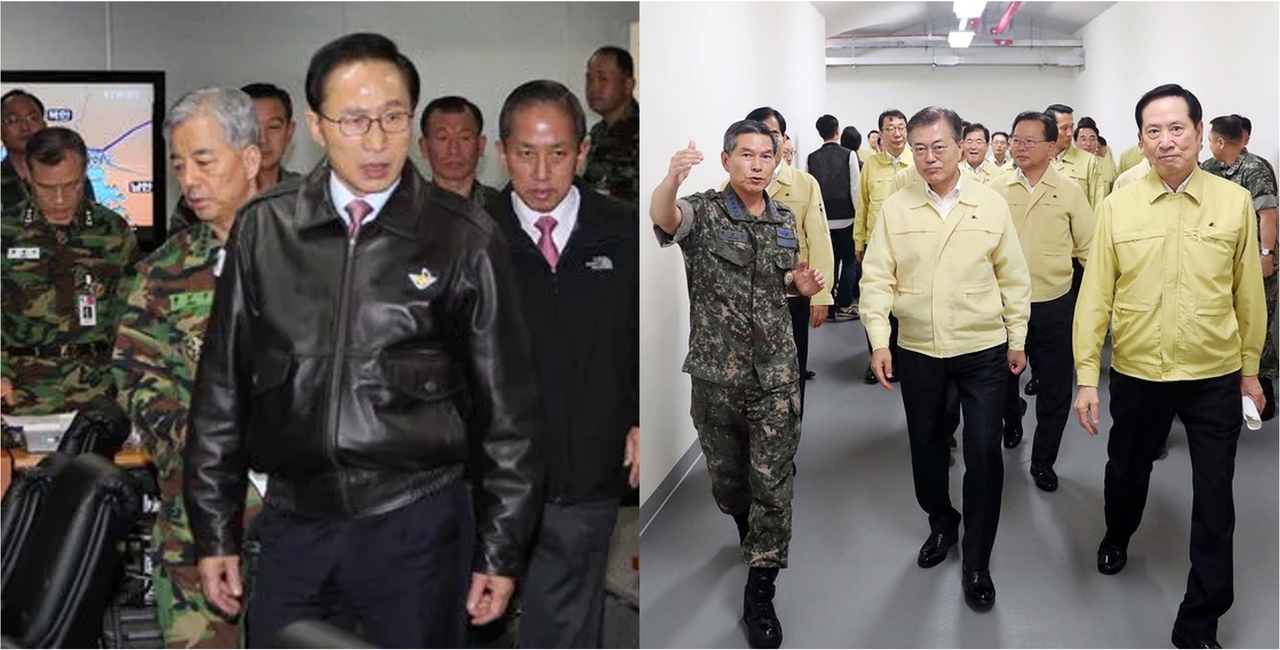
"In an emergency, the president, defense minister, JCS chairman, and other national and military leaders need to gather in an underground command facility and direct operations together," Shin Jong-woo, secretary-general of the Korea Defense and Security Forum, told The Korea Herald.
"If the presidential office, Defense Ministry and JCS are dispersed between Seoul and Sejong, it could make quickly establishing a command structure more difficult."
Shin also questioned what protected facilities would be available in Sejong in the event of a North Korean nuclear attack.
"North Korea's nuclear weapons would be the biggest threat in a contingency," he said. "As far as is known, facilities such as B-1, B-2 and CP Tango are protected against nuclear attack, while the presidential NSC crisis center is not. If the defense minister moves to Sejong, the question is how that function would be provided there."
South Korea's major wartime command facilities are thought to be concentrated in and around the capital. B-1 is reportedly located beneath the Army's Capital Defense Command in Namtaeryeong, southern Seoul. CP Tango, a wartime command post for the South Korea-US Combined Forces Command, is thought to be in Seongnam, Gyeonggi Province.
The presidential National Security Council operates its crisis management center at Cheong Wa Dae in Seoul. Sejong is roughly 120 kilometers from Cheong Wa Dae as the crow flies, compared with about 20 kilometers between the Defense Ministry and CP Tango.
The plan has also drawn criticism from opposition lawmakers.
"As Seoul's legal status as the capital becomes more uncertain, security concerns will also grow," Rep. Ahn Cheol-soo of the main opposition People Power Party said.
"Current South Korea-US defense operational plans are premised on the absolute defense of Seoul," Ahn said, warning that moving diplomatic and security organizations and personnel away from the capital could give North Korea "grounds to miscalculate that South Korea might abandon Seoul in an emergency."
Rep. Joo Ho-young of the same party also warned that rapid communication among wartime leaders could be critical in a divided country technically still at war.
"Relocating the Defense Ministry without thorough security measures could even be seen as giving up the defense of the capital," Joo said.
Cost of relocation
The relocation would also require the government to decide whether and how to reproduce highly protected military facilities in Sejong.
No dedicated wartime command bunker in Sejong has been publicly identified, and detailed plans for such facilities have yet to be disclosed.
A military official familiar with the South Korean military's contingency plans highlighted the cost involved.
"Moving a highly sensitive facility like B-1, with all the protection and communications systems it requires, would cost an astronomical amount," the official said on condition of anonymity. "If it stays where it is, the defense minister would have to travel more than 100 kilometers from Sejong to Namtaeryeong in an emergency."
The Defense Ministry, however, rejected suggestions that the relocation would necessarily create a command vacuum.
"There is no requirement that the president, defense minister and JCS chairman always be physically together. It depends on the situation," a ministry official said on condition of anonymity.
A separate military official said there was "no rule requiring all senior government and military leaders to gather in one place," adding that concentrating them in one location could itself create risks. Major command centers are also connected through secure communications and video conferencing, the official said.
The plan is also far from finalized. Existing law exempts the defense, foreign and unification ministries from relocation to Sejong, meaning legislative changes are required first.
"The necessary legislation has not even passed yet," the ministry official said. "It is difficult to predict at this point exactly how the relocation would be carried out."
Military officials also pointed to the Combined Forces Command's relocation as an example of how greater physical distance can gradually reduce day-to-day interaction among institutions.
CFC headquarters moved from Yongsan to Camp Humphreys in Pyeongtaek in 2022, separating it from the Defense Ministry and JCS, which had previously been located nearby.
"When CFC was in Yongsan, the Defense Ministry and JCS were nearby and frequently weighed in when they disagreed with parts of operational planning," another military official said. "Since it moved to Pyeongtaek, there has been a sense that the command has more room to operate independently."
The official said the experience suggests that moving the Defense Ministry away from both the presidential office and the JCS could similarly weaken routine interaction over time, even if formal command and communications channels remain intact.
Diplomatic hurdles
The Foreign Ministry faces a separate problem: Seoul remains the center of South Korea's diplomatic community, with 118 embassies based in the capital.
Ahn said consultations with foreign governments when urgent diplomatic issues arise could become challenging if the ministry relocates while foreign missions remain in Seoul.
A Foreign Ministry official also pointed to protocol concerns, noting that foreign leaders generally arrive through airports in the capital region and that major hotels, embassies and diplomatic events are concentrated in Seoul.
For instance, US President Donald Trump stayed at the Grand Hyatt Seoul during his 2019 visit, while Chinese President Xi Jinping stayed at the Shilla Seoul during his 2014 state visit.
"Much of our diplomatic, business and consular work would still be in Seoul," an official at a foreign embassy said on condition of anonymity. "Moving the embassy to Sejong would not necessarily make practical sense."
In a statement, the Foreign Ministry said it was "actively communicating with relevant agencies and exchanging views" over the relocation plan.
Decades-old push
The drive to shift government functions out of Seoul dates to former President Roh Moo-hyun's push for a new administrative capital. The Constitutional Court blocked the plan in 2004, ruling that Seoul's status as the capital amounted to a "customary constitutional" norm.
The plan was later scaled back, leading to the creation of Sejong as an administrative city and the relocation of ministries beginning in 2012.
The Lee administration has renewed the push, with a second presidential office in Sejong scheduled for completion in 2029. But a full relocation of the presidential office remains a more complicated issue, as the 2004 Constitutional Court ruling effectively tied Seoul's status as the capital to the Constitution, meaning a complete move of the seat of the presidency would likely require constitutional revision rather than an ordinary law.
Under the latest plan, the remaining agencies are to move in phases through 2031.
flylikekite@heraldcorp.com
![[World Class] HUFS bets on Songdo, AI to redefine what a global university can do](https://wimg.heraldcorp.com/news/cms/2026/10/18/news-p.v1.20260930.7e4dbeacfc1d4d16848c0e2a441c04e6_R.jpg?type=h&h=120)