
New Delhi, INDIA -- Hyundai Motor Group Executive Chair Chung Euisun pledged to invest $15.5 billion in India over the next seven years during talks with Prime Minister Narendra Modi, building on the momentum of the automaker’s newly opened manufacturing facility in Pune, Maharashtra.
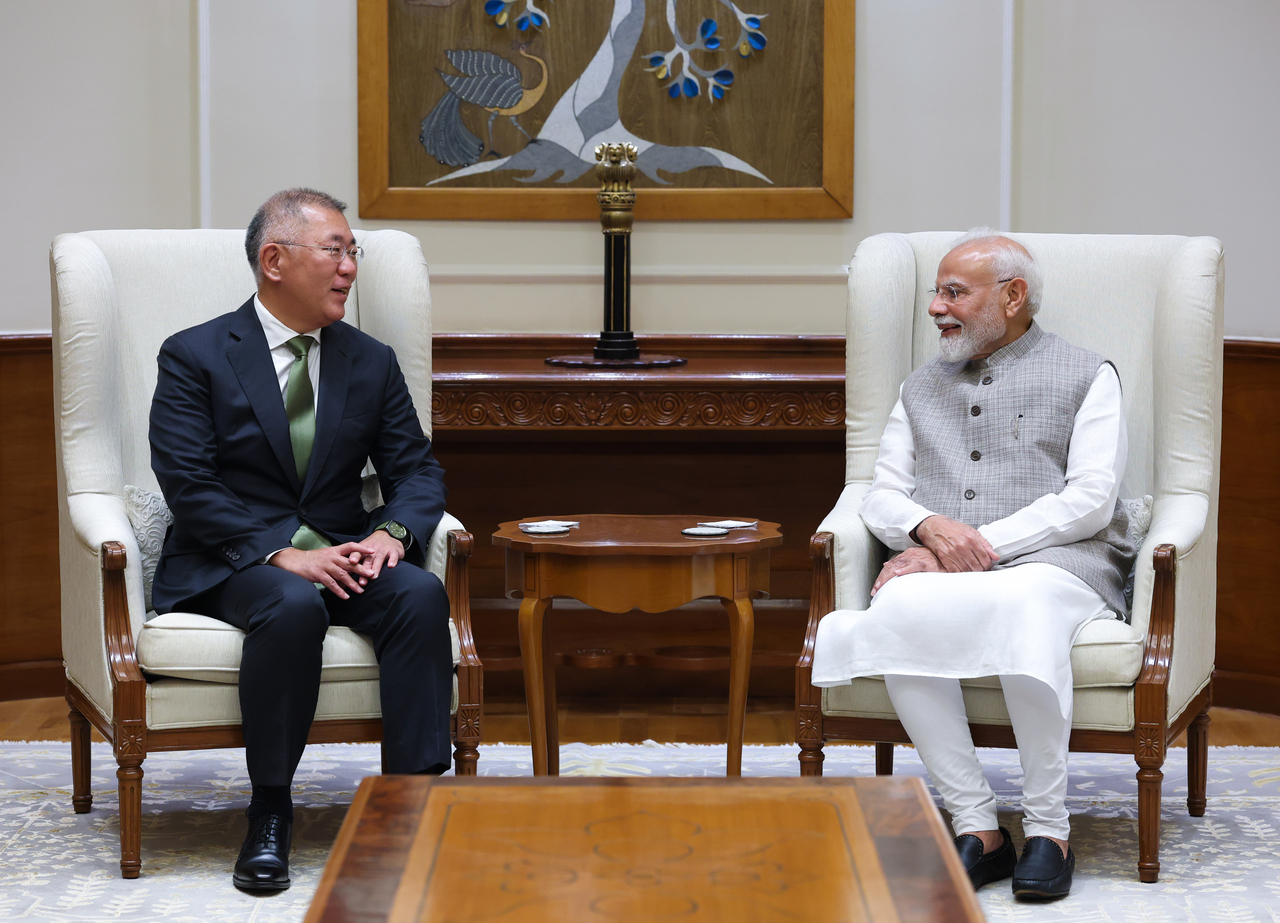
The company said Tuesday Chung met with Modi earlier in the day at the Prime Minister’s office in New Delhi, where the two discussed utilizing funds into building new production facilities, scaling domestic R&D, strengthening local supply chains and exploring future mobility solutions.
The meeting marked the eighth encounter between Chung and Modi, underscoring their ongoing dialogue regarding India’s industrial transformation and Modi’s “Make in India” and “Viksit Bharat 2047” national development agendas.
Under the investment package, Hyundai plans to significantly elevate its local R&D capabilities by expanding engineering infrastructure and recruiting top-tier Indian talent to accelerate the development of localized products and technologies.
The group is also deepening ties with Indian firms. In partnership with two-wheeler manufacturer TVS Motor Company, Hyundai has developed an electric three-wheeler prototype, targeting commercial launch by late 2027. In addition, it will expand into broader mobility services, auto financing, electric vehicle charging networks and end-of-life vehicle recycling.
To coordinate these initiatives efficiently, the South Korean auto giant will establish a dedicated investment arm in India to identify strategic opportunities, forge partnerships with local firms and invest in the broader automotive ecosystem.
Chung told Modi that Hyundai has grown alongside India over the past 30 years since first entering the market in 1996 and is now preparing for its next major milestone. “With the operational launch of the Pune plant, Hyundai Motor Group has secured an annual production capacity of 1.4 million units,” Chung said.
In addition to the Pune facility, Hyundai operates two plants in Chennai, alongside Kia’s manufacturing hub in Anantapur.
This expanded capacity provides a strong buffer against high auto tariffs imposed by India -- which range from 70 to 110 percent -- while enabling Hyundai to meet the country’s surging demand for automobiles.
India is the world’s third-largest auto market after China and the US, with its passenger vehicle segment projected to expand by nearly 15 percent from 4.57 million units in 2025 to 5.25 million in 2026.
Chung also highlighted India as a strategic gateway to Global South such as the Middle East and Africa, citing its competitive production costs and geographical proximity to expand exports.
Beyond business expansion, Chung emphasized the group’s commitment to corporate social responsibility activities, including social contributions totaling approximately $110 million between 2016 and 2025 across Hyundai, Kia and Hyundai Mobis.
hyejin2@heraldcorp.com