

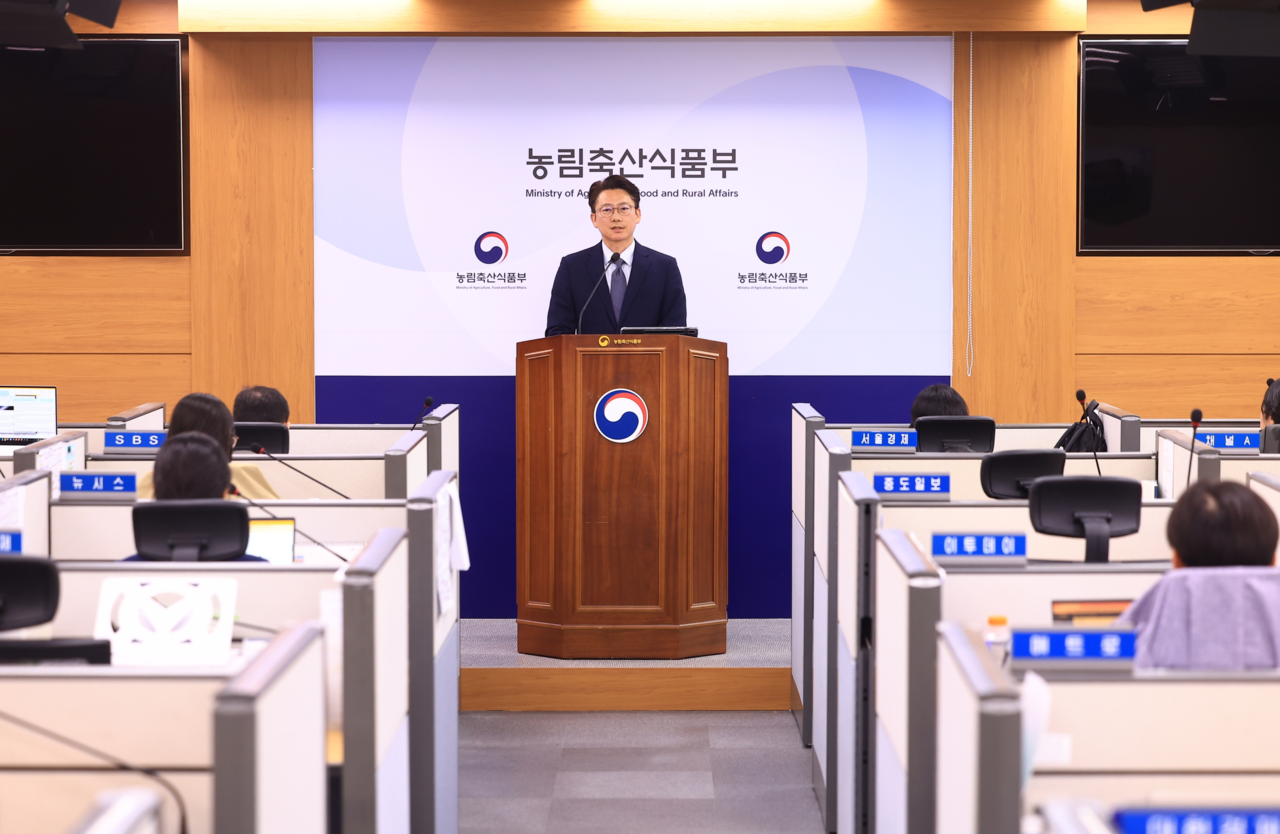
SEJONG — South Korea’s Agriculture Ministry said Monday it was considering legal action over social media posts about Brazilian egg imports as it stepped up efforts to counter what it described as maliciously distorted information about its policies.
The Ministry of Agriculture, Food and Rural Affairs said misleading claims about egg imports and a farmland survey continued to circulate on YouTube, Instagram and other platforms despite its repeated explanations through statements, interviews and social media posts.
The ministry said it was reviewing possible legal proceedings against three posts it considered particularly serious and malicious. It did not identify the accounts or specify potential legal grounds for the action.
The dispute over Brazilian eggs initially drew scrutiny from news outlets and lawmakers, who questioned their higher import costs compared with eggs from other countries and the use of public funds to offset the gap between import costs and domestic selling prices.
The ministry defended the imports as a limited trial intended to establish a Southern Hemisphere supplier ahead of potential disruptions caused by highly pathogenic avian influenza.
Brazilian eggs accounted for 0.8 percent of total egg imports, the ministry said. The purchase price was 178 won per egg, with additional costs including payments to South Korean airlines for transportation and tariffs collected by the government, it added.
The ministry refuted posts alleging that 80 billion won ($60.2 million) in taxpayer money had covered losses on Brazilian egg imports, as well as allegations of kickbacks and political motives. It characterized those claims as false.
It also rejected posts portraying the farmland survey as an effort to force land sales and bring farmland under state ownership.
The ministry distinguished parliamentary scrutiny and news reporting from posts on individual social media accounts. Lawmakers’ questions are part of their oversight role, it said, while established procedures allow the government to seek corrections or pursue mediation over news reports.
Correcting claims on individual accounts is more difficult, the ministry said, adding that platforms rarely accept its removal requests.
It said dedicated staff were monitoring misleading posts and that it planned to establish a reporting center. For serious cases, the ministry said it would seek removal of posts and review legal action against their publishers.
A ministry spokesperson said distorted information was undermining public trust and causing confusion, pledging greater transparency and communication.
shinyb@heraldcorp.com