Automaker draws on 15 years of electrified vehicle servicing experience to prepare technicians for new plug-in hybrid SUV, with focus on service quality
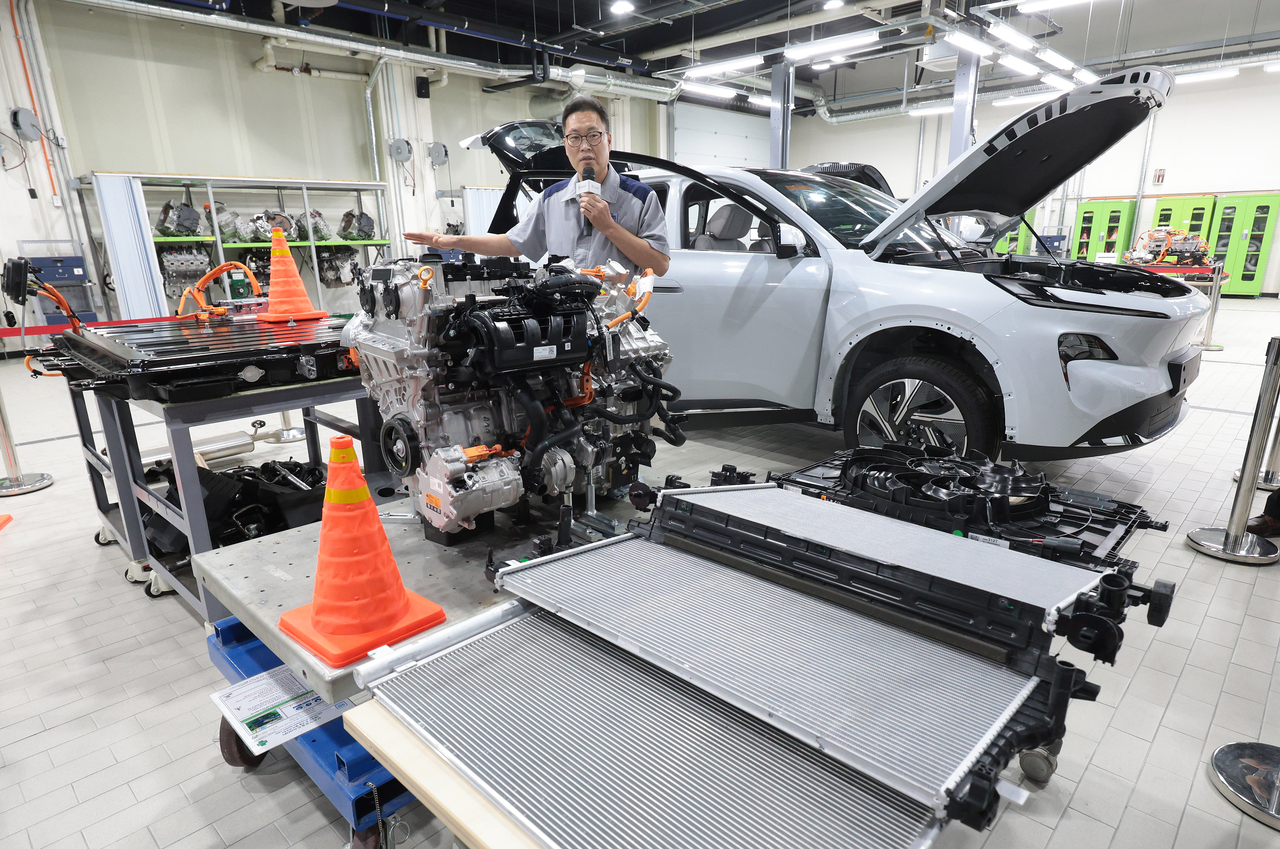
BUPYEONG, Incheon — Inside GM Korea’s service training center at its Bupyeong plant, two Buick Electra E7 SUVs were parked side by side. One was fully assembled, while the other partially dismantled to show its inner workings beneath its body.
Laid out separately in front of the disassembled plug-in hybrid SUV were its 1.5-liter gasoline engine, electric drive unit and high-voltage battery, offering technicians a chance to study the parts they would soon be servicing.
Bright orange cables and warning signs flagged high-voltage systems, while exposed cooling components, including additional radiators, showed how electrified vehicles depart from gasoline-powered cars.
This is what technicians encounter when they arrive for training at GM Service Training Center. Established in 1996, the center moved to its current location at the automaker’s Bupyeong headquarters in 2023, when it underwent a major renovation.
Today, the facility serves as a training hub for GM's nationwide network of 381 service centers, with five specialized instructors providing classroom instruction and technical training.
"We take these vehicles apart so technicians can see and touch the components themselves," said Kim Yoon-yong, a veteran instructor at GM Service Training Center who spent more than two decades working as a technician. “When technicians repair vehicles in the field, they often work on specific parts, so they don’t have many opportunities to see all the components that make up a vehicle.”
Five vehicles were on display inside the classroom, ranging from the GMC Canyon and new Buick Electra E7 to luxury models such as the Cadillac Escalade IQ and GMC Hummer EV. The diverse lineup allows technicians to gain hands-on experience with different powertrains and vehicle systems.
15 years of electrification expertise
The extensive training shows how GM is gearing up for the roll-out of the Electra E7, a plug-in hybrid SUV that will be Buick’s first model in South Korea, with sales set to begin in November.
Though plug-in hybrids are relatively new to GM Korea's lineup, the automaker has serviced electrified vehicles for 15 years, beginning with the 2012 Alpheon eAssist hybrid. Working on models from Spark EV, to Bolt EV and to the GMC Hummer EV, technicians already have skills in electric motors, battery management and high-voltage repairs.
The center conducts more than 30 training sessions annually, covering new models, skill-based courses and on-site instruction. GM said a cumulative 1,409 technicians have received electrified vehicle maintenance training between 2012 and 2026, including 369 who completed intensive-high-voltage training over the past five years.
GM noted that its technicians have carried out high-voltage battery replacement in approximately 13,000 vehicles.
"Our goal is to pass on the technical knowledge and training we receive from GM globally to technicians across our service network, ensuring that customers nationwide receive the same consistent level of repair service," said Park Jung-su, director of service operations and customer experience at GM Korea.
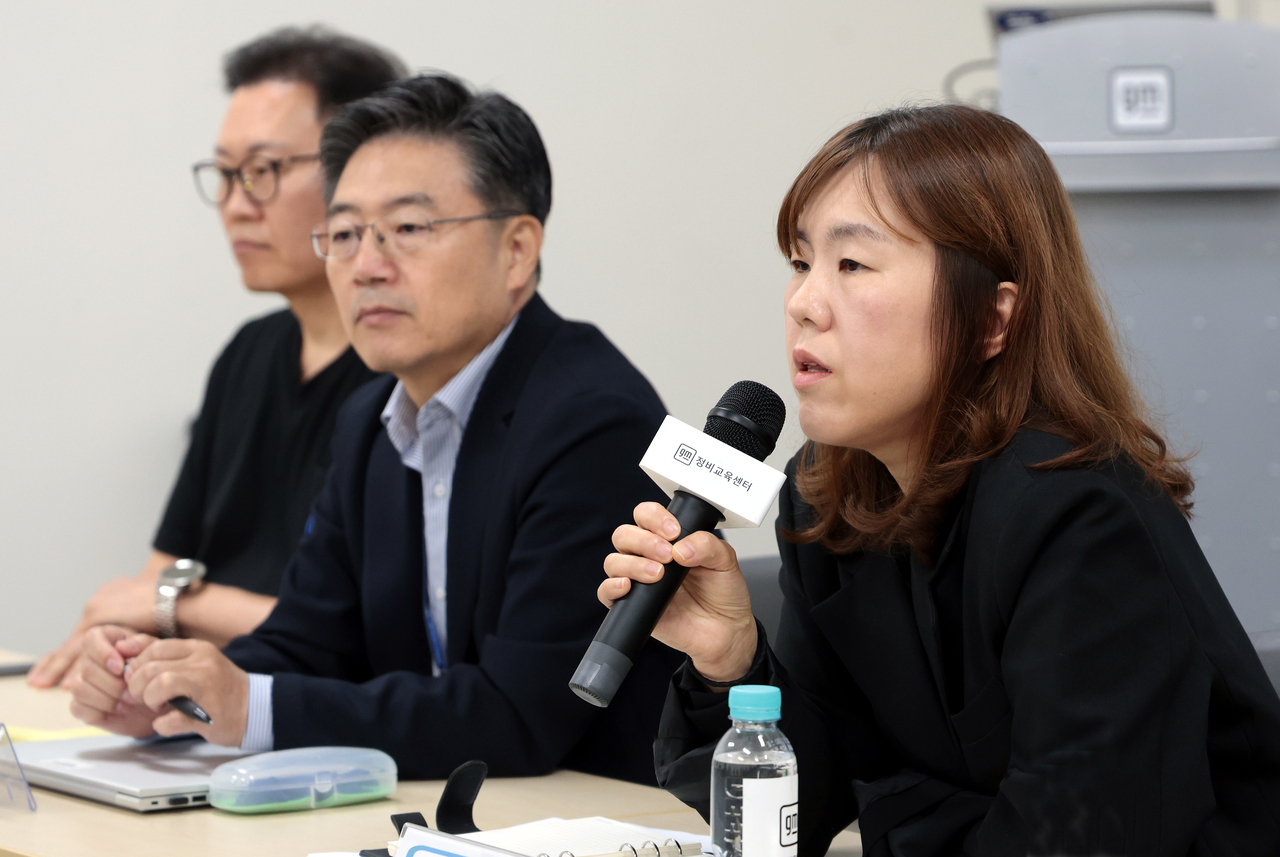
Its 381 service centers nationwide include 266 that service only Chevrolet and 115 that handle both Chevrolet and Buick, and 53 of them are equipped for high-voltage repairs. GM also maintains a network of 201 parts distributors.
Rather than aggressively expanding the network, GM is turning its attention to modernizing existing facilities and improving the quality of customer interaction.
"We don't believe we lack service centers," said Nho Jung-hwa, director of field force division at GM Korea. "We don't plan to increase the overall number. Instead, we're focusing on improving the quality of the existing network."
Choi Eun-young, executive director leading customer care and aftersales at GM Korea, said the company prioritizes customer retention as a key performance indicator, measuring whether owners continue visiting autorized service centers for up to seven years after purchase.
"Retention is a very important indicator for us," Choi said. "GM Korea maintains a higher customer retention rate in comparison to GM globally."
Parts availability is another critical factor, Choi said, explaining that GM Korea aims to maintain a 95 percent availability rate, meaning if there are 10,000 parts, it has 9,500 of them available, including components for older vehicles that have been on the road for more than a decade.
sahn@heraldcorp.com