Chipotle's first Asian location has drawn hourslong lines in Seoul, fueled by curiosity, social media and urge to try what everyone is talking about
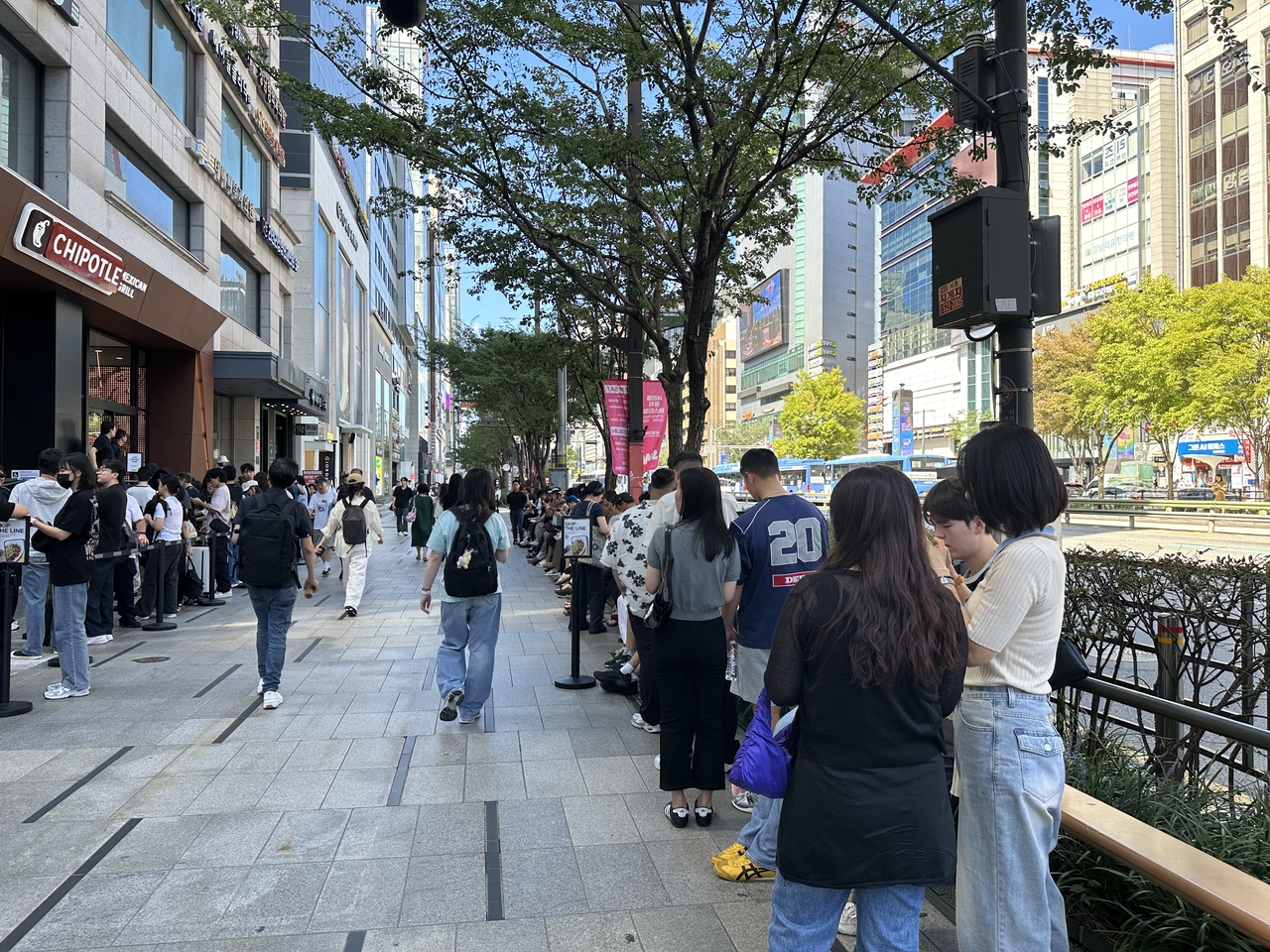
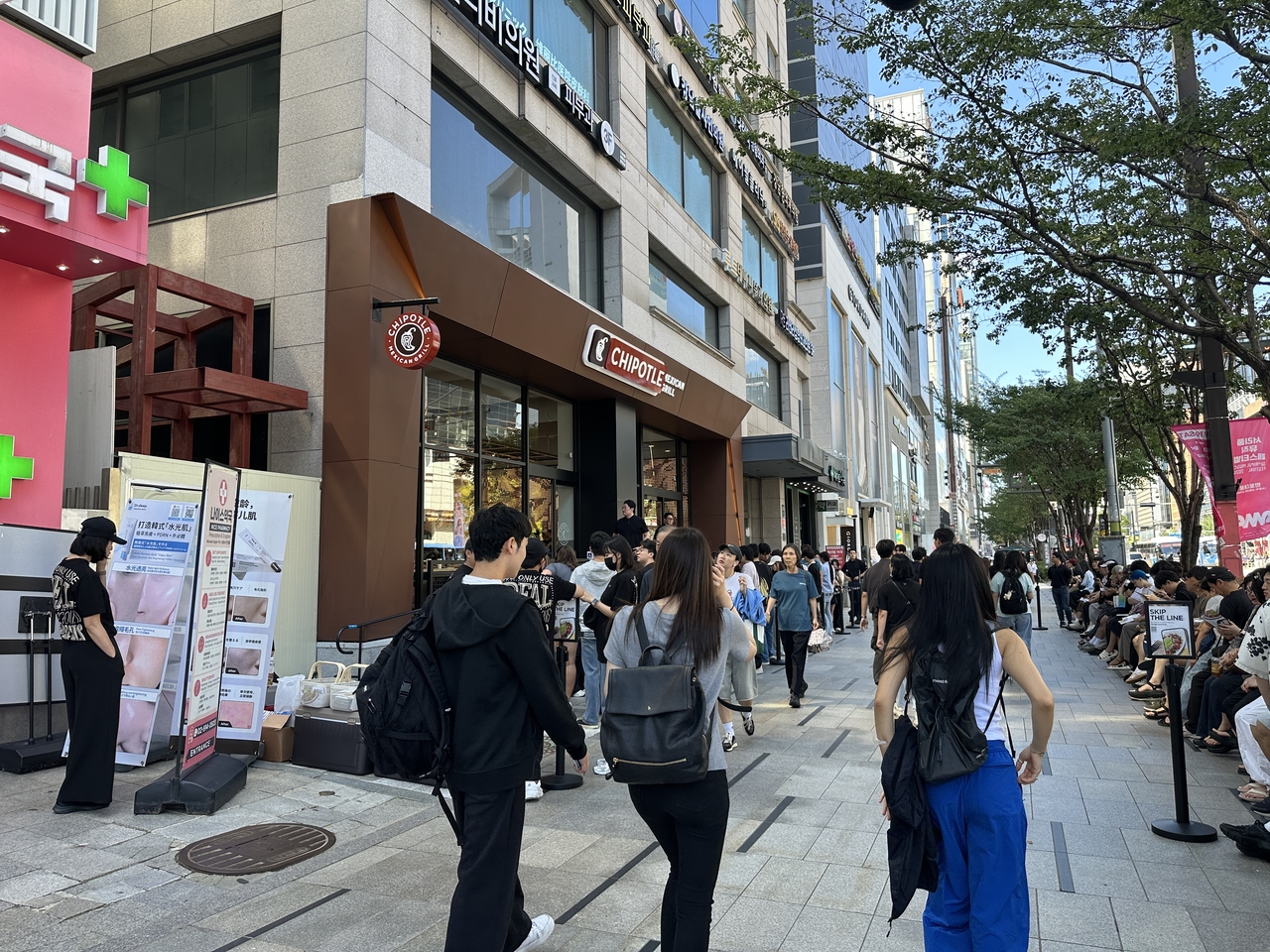
At lunchtime in southern Seoul's Gangnam, the line for a burrito bowl stretched down the block.
Nearly a week after Chipotle opened its first Asian location in Seoul on Sept. 2, customers were still being told to expect waits of up to two or three hours. On Sunday, some 150 people were counted in line by 11 a.m., stretching more than 50 meters.
For some of those waiting, however, the food was only part of the point.
"We've got to keep up with what's trending," said university student Kim Min-ju, who was waiting with her friend Kim Eun-seo. Neither had tried Chipotle before.
"So we thought, why not give it a try? We were curious."
The pair had been waiting for around 20 minutes and expected another hour before reaching the restaurant.
Their reasoning was echoed by others in line: Chipotle was new, it was all over social media and, perhaps most importantly, everyone else seemed to be trying it.
"I think social media (reels) have a lot to do with it," said office worker Park Su-yeon, who had come with her colleague Kim Hye-rin.
"When something comes up once or twice and people hear, 'Oh, this is trending?' they think, 'Then I should try it too,'" she said. "They might not even know exactly what it is, but they come and experience it first."
Korea has seen this before
For anyone who remembers the Korean debuts of Shake Shack and Five Guys, the scene outside Chipotle may feel familiar.
When Shake Shack opened its first Korean restaurant in Gangnam on July 22, 2016, around 1,500 people had gathered before opening, with some arriving the night before. Despite temperatures exceeding 34 degrees Celsius, the line remained about 150 meters long throughout the day.
The new Chipotle is now directly next to that first Shake Shack, putting two of Gangnam's most talked-about franchise debuts side by side.

Seven years later, yet another American franchise known for its burgers and shakes, Five Guys, reproduced the phenomenon. Some 300 to 400 people were waiting before its first Gangnam location opened at 11 a.m. on June 26, 2023. The first customers had begun lining some 12 hours earlier.
Echoes of those openings could be heard outside of Chipotle. As passersby took in the line, some recalled the chaos surrounding the other franchises' debuts, while some seemed to recognize a familiar cycle of hype.
"Let's come back in about a year," one passerby joked to a friend.
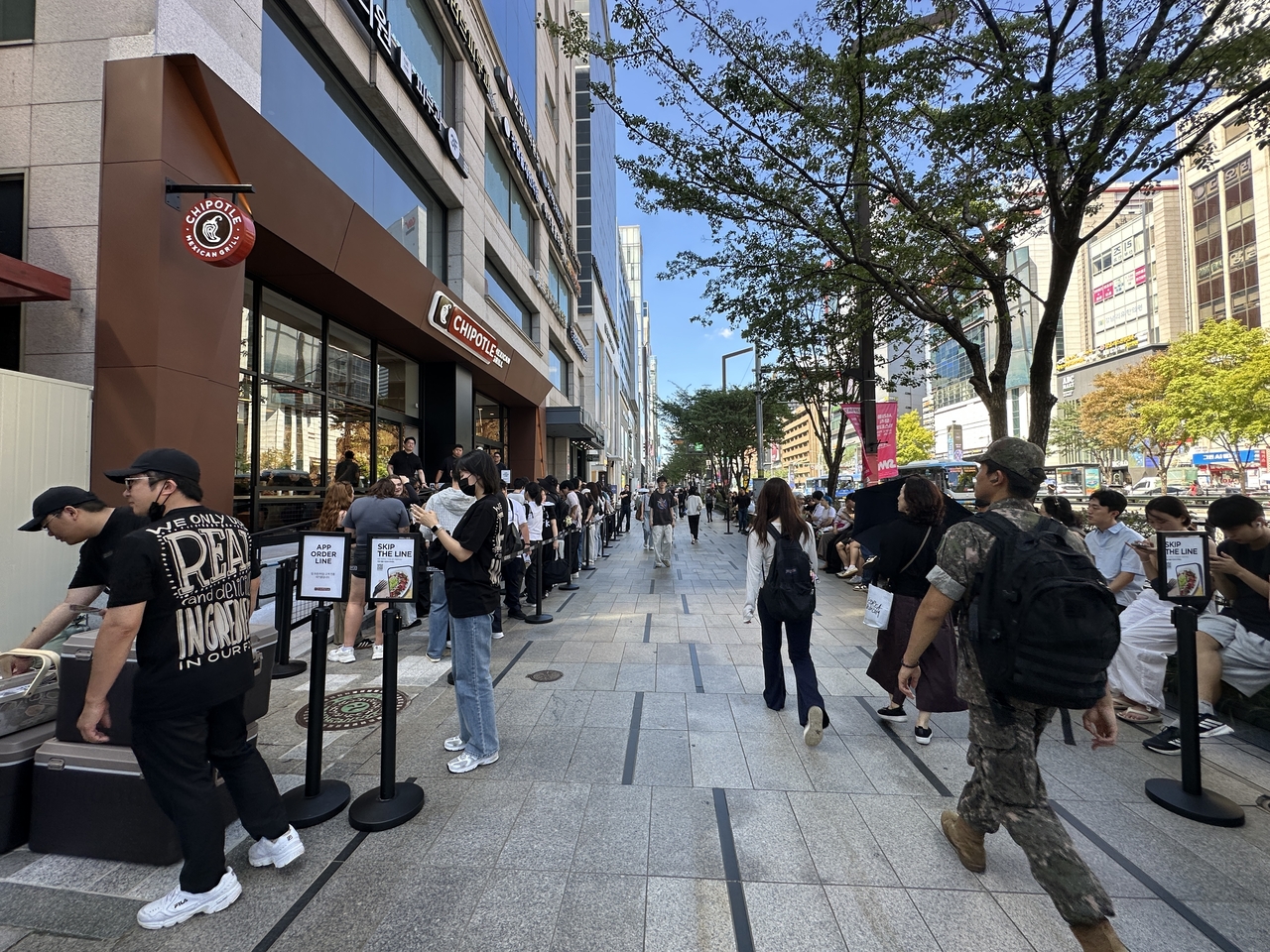
Chipotle's first-day line reportedly reached around 100 meters, with customers arriving from the morning for its noon opening. Reviews describing waits of as long as three hours quickly circulated online.
The visible line may not tell the whole story, however. Customers were invited to "skip the line" by scanning a QR code and ordering for pickup, although the service was available only on iPhones at the time of The Korea Herald's visit. Staff said an Android version was not yet working — a notable limitation in South Korea, where roughly two-thirds of smartphone users are on the Android platform.

But the crowds interviewed by The Korea Herald suggested that the willingness to wait was not necessarily a reflection of the anticipation of the food itself.
"I came without any expectations," officer worker Park said. "I just thought it would be ordinary Mexican food."
For Lim Chae-hwan, who does not live in Seoul and had come to the city to meet a friend, the wait was partly an opportunity to finally try a foreign franchise he had been curious about.
"I've always been interested in foreign food, and it was a franchise I had wanted to try for a while," Lim said.
Asked why new foreign restaurant launches are able to generate such lines in Korea, he pointed to a mixture of novelty and familiarity.
"Some people are curious because it's a foreign franchise that is unfamiliar in Korea," he said. "Then there are people who have tried it abroad, liked it and want to have it again."
For some visitors, however, Korea's penchant for long lines around the latest craze has become something of an attraction in itself.
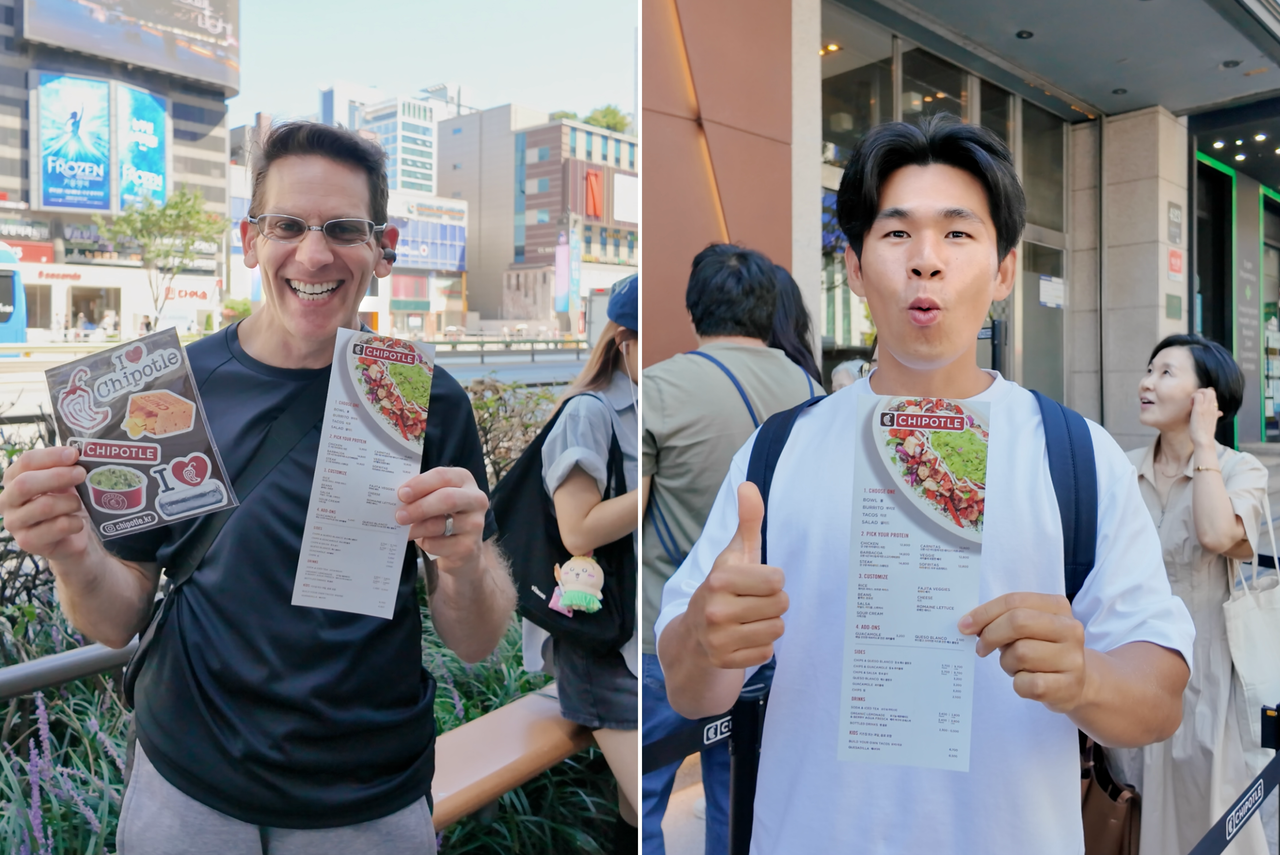
Saul Milgram, visiting from California with his son, found himself waiting for a restaurant he has "down the street" from his home.
"My son is really into Korean culture, and we're just exploring everything," Milgram said. "He said, 'Oh, we need to go and check it out.' So here we are."
His son had been traveling in Korea for five weeks before starting college in California and, according to Milgram, wanted to take part in whatever Koreans were excited about.
"I think it's just anything that Koreans are getting excited about, he wants to participate," Milgram said. "It's all for fun. We have time, so no big deal."
Asked whether waiting that long for Chipotle was actually worth it, Milgram laughed.
"Of course not. I'd rather have Korean food."
What happens when the line disappears?
Whether the crowds translate into lasting demand is another question.
Some of those waiting predicted the frenzy would be short-lived. Kim Eun-seo and Kim Min-ju gave it about a month. Park and Kim estimated one to three months, particularly as more locations open.
Chipotle itself is already preparing for that next stage.
The company plans to open two additional Korean restaurants by the end of this year before expanding to Singapore in the first half of 2027. Its second and third Korean locations are slated to open at Shinsegae Department Store's Gangnam branch and The Hyundai Seoul in Yeouido, respectively.
For Chipotle, Korea is more than another overseas market. CEO Scott Boatwright has described the country as a market that will help establish how the company grows across Asia, citing Korean consumers' interest in food quality, sourcing and preparation.
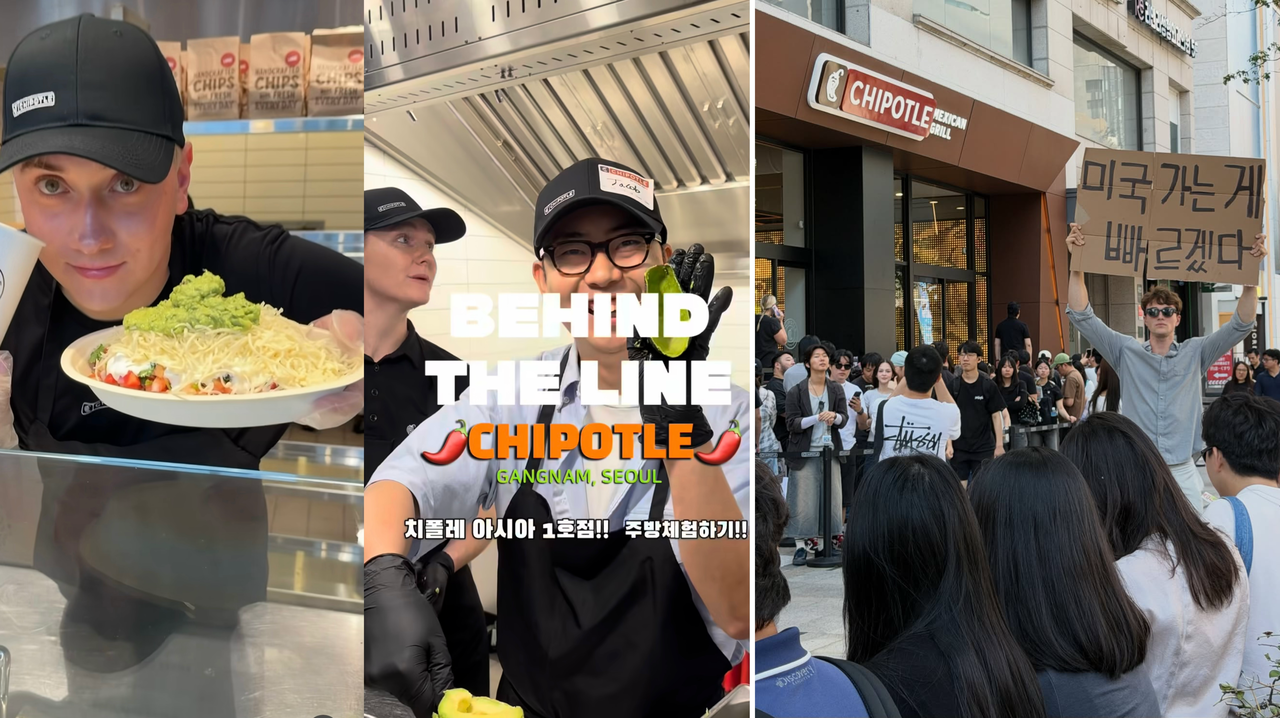
Chipotle also leaned heavily into creator marketing around its launch, inviting influencers and Korean chefs behind the counter to experience the restaurant's kitchen operations firsthand.
Beyond the brand-led push, memes poking fun at the hourslong waits spread across social media. Creator Adam Novak went viral for a post showing him outside the store holding a sign written in Korean that read, "It'd be faster to go to America."
The challenge will be turning the people willing to wait two hours for the newest thing into people willing to return once it is no longer new.
But Park believes the food itself could have an advantage.
"Koreans live on rice," she said, referring to the Korean expression "bapsim," the idea of drawing energy or strength from rice and a good meal.
Chipotle's rice-based bowls, generous portions and ability to choose ingredients could make it an easy fit, she said. She also pointed to the protein-heavy options as potentially appealing to younger consumers increasingly interested in what they eat.
"I think it'll do well," Park said. "Especially among younger people."
tammy@heraldcorp.com