Multicultural job seekers navigate language, child care and workplace rights
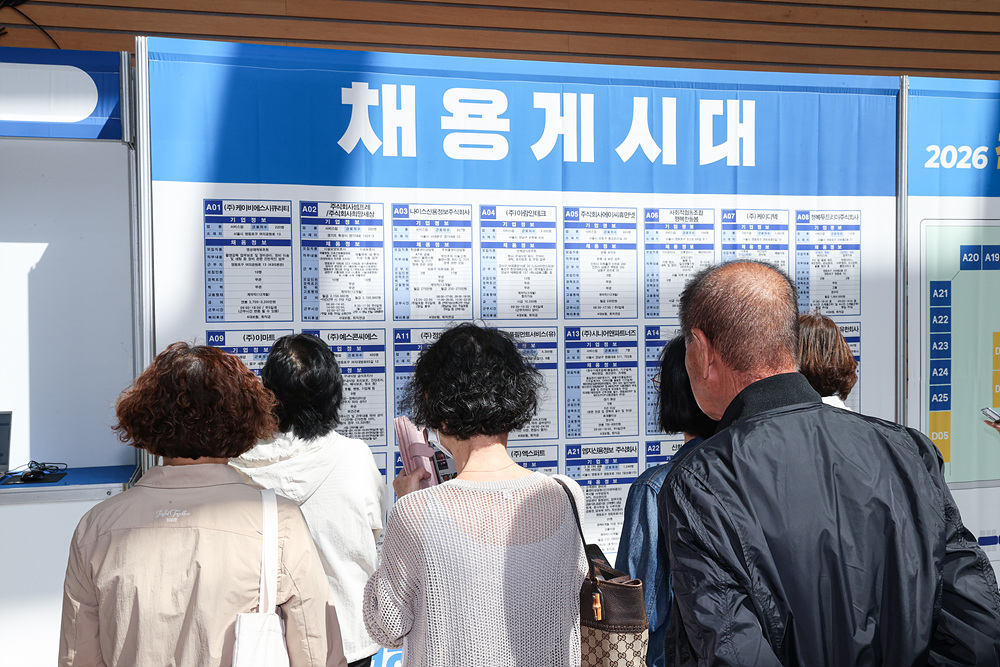
Twenty-five companies were interviewing job seekers at a Seoul job fair Thursday, but Jin Hong Yu first wanted to know which jobs were within her reach.
“I'm here to find out what jobs are available for me as a foreigner,” said Jin, a Chinese national in her late 30s married to a Korean. “It's not easy to find one when my Korean isn't at a native level.”
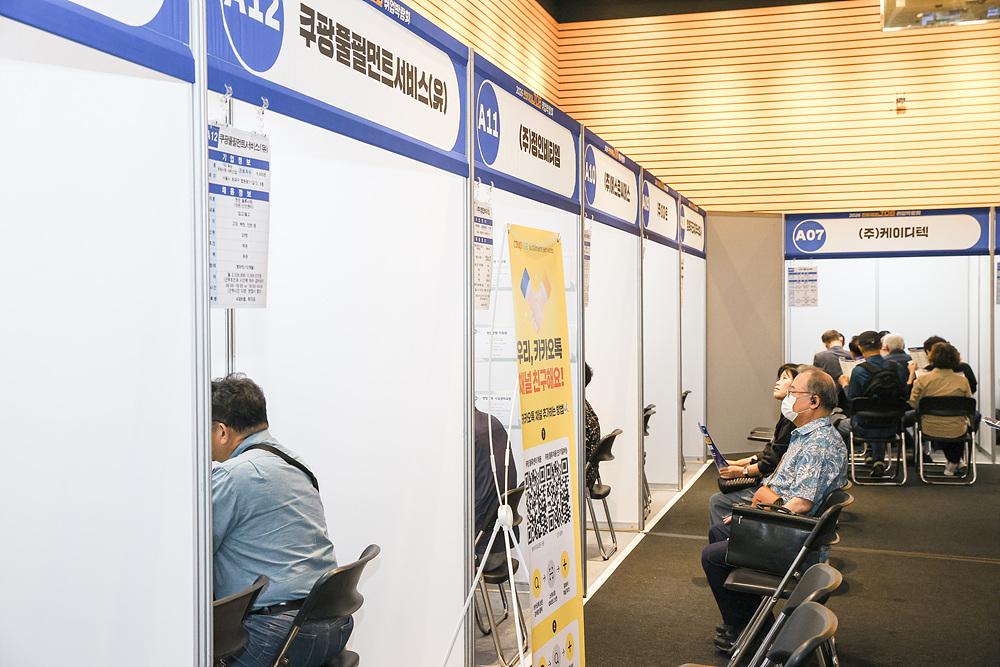
The Cheonhajeil Job Fair, hosted by the Yeongdeungpo-gu Office, brought together employers including Emart, McDonald’s Korea and Coupang Fulfillment Services for one-on-one interviews with prospective workers.
At a career support booth run by the Yeongdeungpo-gu Family Center, members of multicultural families sought advice, took quizzes on workplace rights and sampled fragrances selected according to their stress levels.
Their conversations with The Korea Herald revealed concerns ranging from language barriers and unfamiliar employment contracts to working hours that conflict with child care.
Language barriers
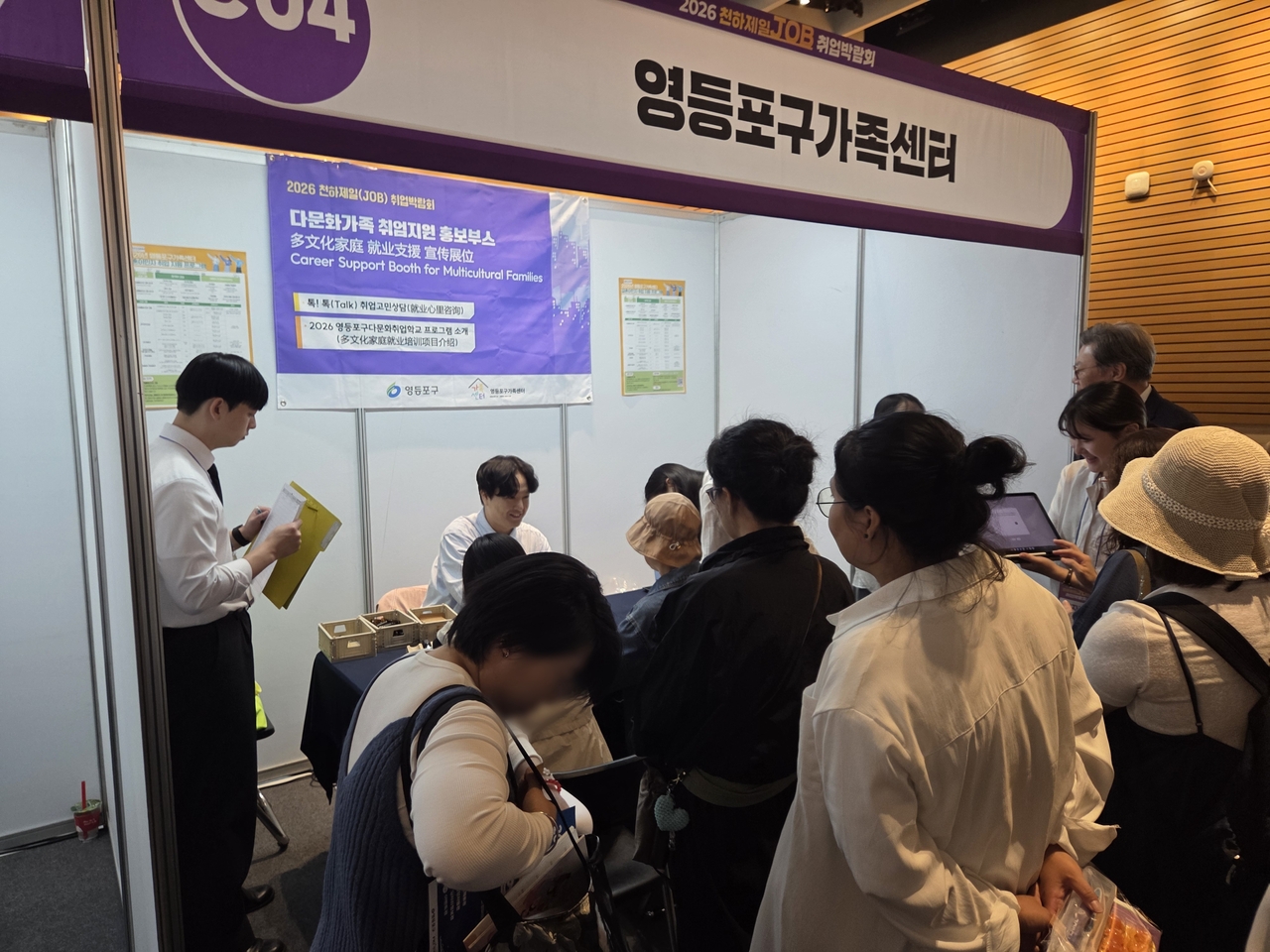
Language was a recurring concern among visitors to the booth, particularly those with experience in customer-facing jobs.
Jin said foreign job seekers can find themselves at a disadvantage from the interview stage.
“If you're a foreigner, you basically start with 20 points deducted because of the language,” she said. “The way we express things is slightly different, so it's difficult to speak with absolute fluency.”
For Li, 33, who asked to be identified by a pseudonym, fluency involves more than pronunciation or intonation. Understanding loanwords quickly can be particularly challenging, as their pronunciation and usage in Korean may differ from those in the original language.
Having worked in duty-free retail and sales before joining Hanwha Life, she said, “There is always a slight delay in understanding common loanwords.”
“Even a slight request for clarification can make a big difference,” she said. “Even if you fully understand Korean culture, it hardly makes a difference if communication doesn't work at a native level.”
Zhao, 47, who also asked to use a pseudonym, said she continues studying Korean both to improve her employment prospects and to communicate with her Korean husband and their child, who mainly speaks Korean.
Workplace rights
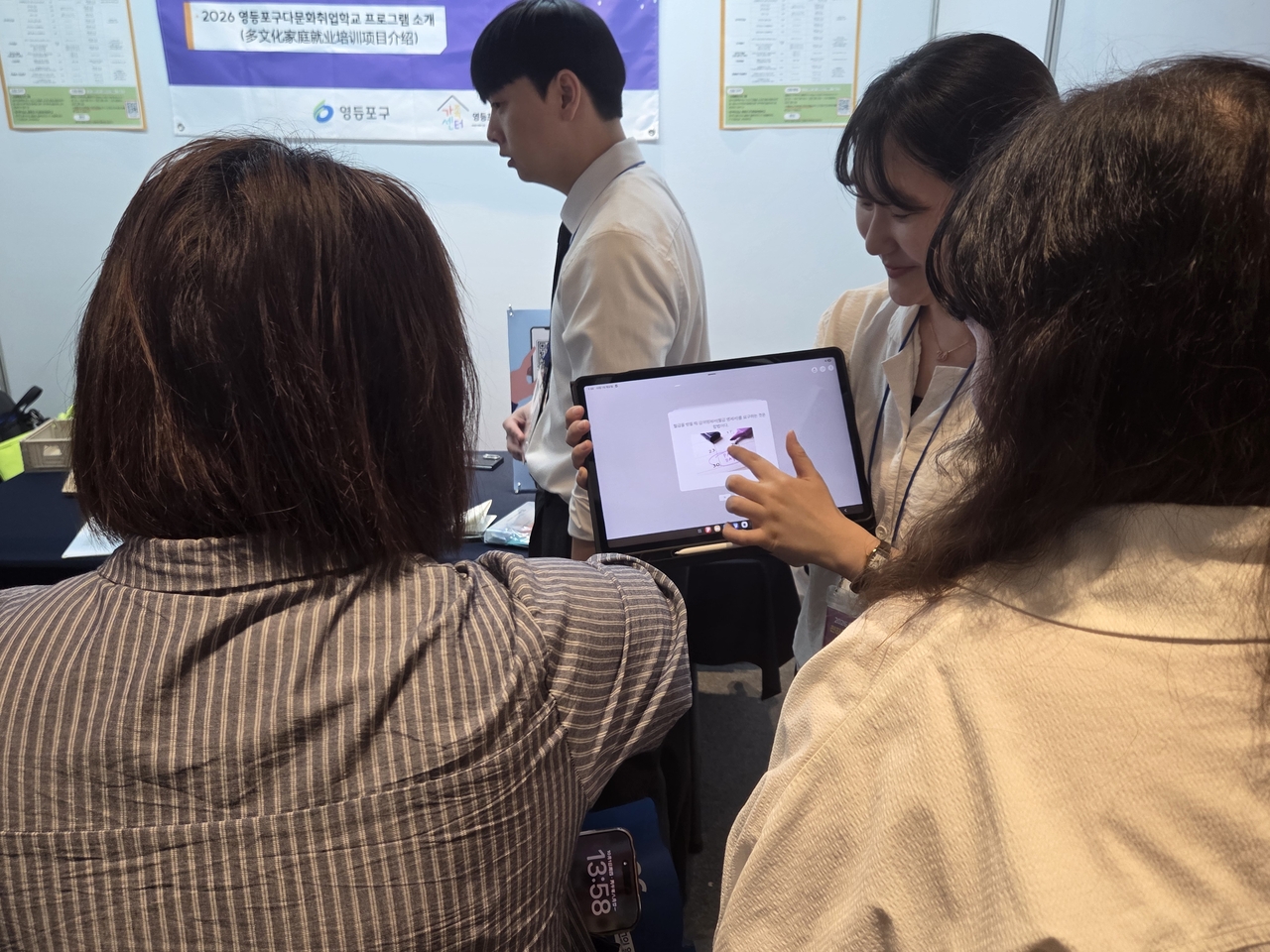
Language can also become a problem when foreign workers have to understand Korean labor laws, employment contracts and workplace rights.
"There are many people who don't know even basic rights that we take for granted," a staff member at the Family Center's booth said.
The booth offered visitors short quizzes on workplace-related issues, including unemployment benefits, industrial accident insurance and wage statements.
For people with relatively strong Korean skills, some of that knowledge can be acquired through work experience.
"I think I picked up the legal parts naturally as I worked," said Li, who spoke in Korean throughout the interview.
However, understanding documents such as employment contracts was a completely different issue, even for fluent Korean speakers like Li.
"Usually, you just sign where they tell you to sign, do what you're told and start working," she recalled.
Work-life balance
For visitors raising children, finding suitable working hours was as important as finding a job.
Jin said the late hours at her previous job made balancing employment and childcare difficult.
“What I normally do is duty-free retail and sales, but those jobs finish too late,” she said. “Then there's no one to look after my child. I want a job where I can finish earlier, leave work on time and have public holidays off.”
Cui Hong Shan, in her 40s, came to Korea in 2012 and is raising a son. She chose insurance work because its flexible hours made it easier to care for him, including taking him along when necessary.
But with more people entering the field and tougher market conditions, she said the work has become increasingly competitive. She is now considering what kind of job to pursue next.
shwang9@heraldcorp.com