100-kilowatt demonstration explores hydrogen as a way to store surplus power generated at sea
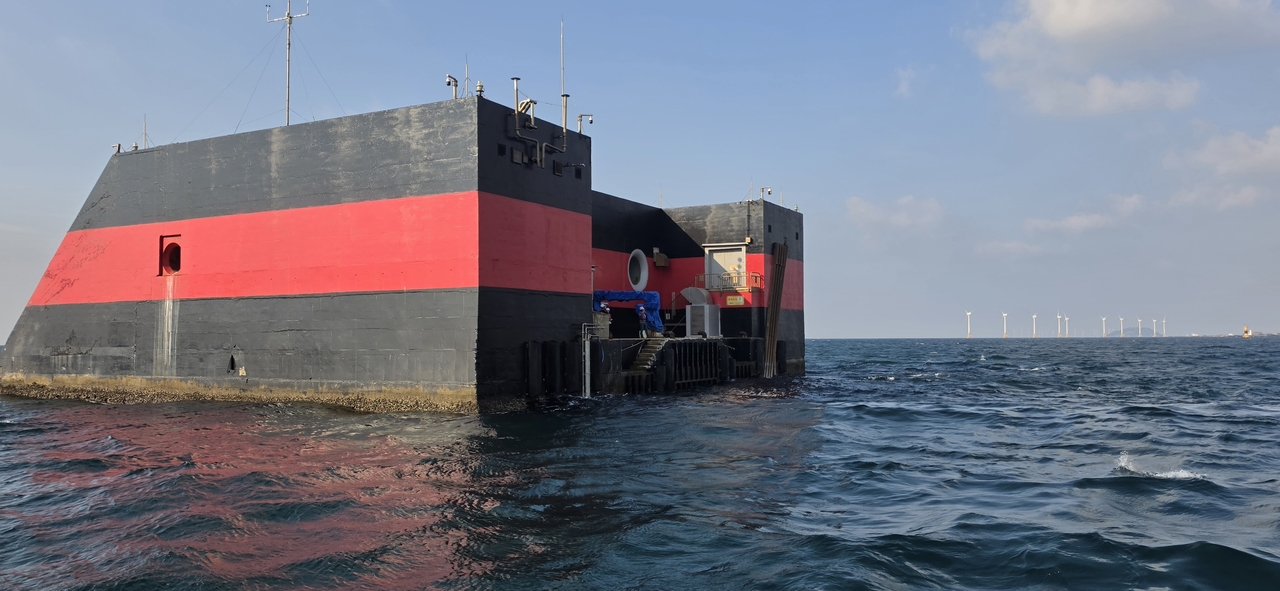
JEJU CITY — After 15 minutes of sailing through rolling waves, the boat approached a lone box-shaped platform standing in the sea off Jeju Island’s west coast.
Measuring 32 meters long and 23 meters wide, the concrete structure is anchored in water about 15 meters deep. It is the core of a wave energy test site operated by the Korea Research Institute of Ships and Ocean Engineering.
Researchers here are testing whether electricity generated at sea can be converted into hydrogen, providing a way to store renewable energy for longer periods without transmitting all of it to land.
The boat rocked so heavily during a media tour Monday that standing without holding onto something was difficult. Those waves, however, are precisely what make the area suitable for testing wave power.
Turning waves into hydrogen
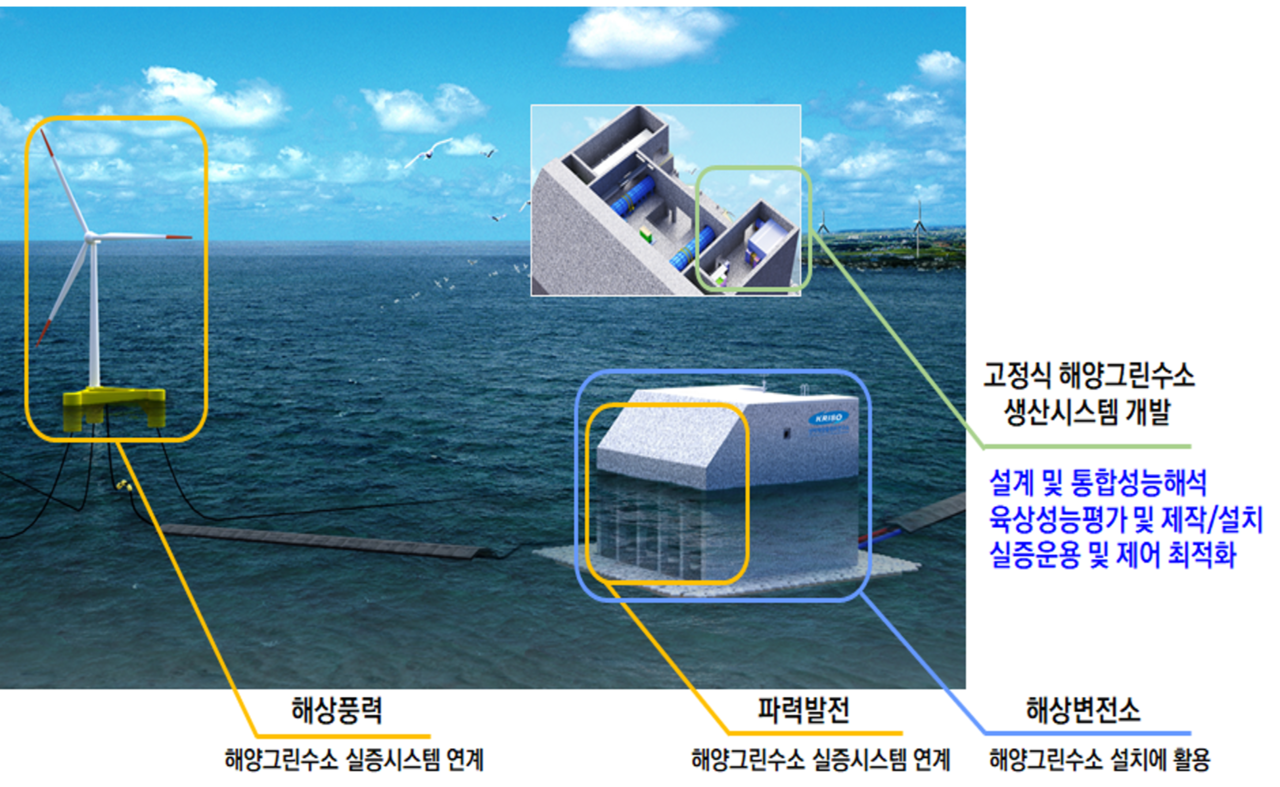
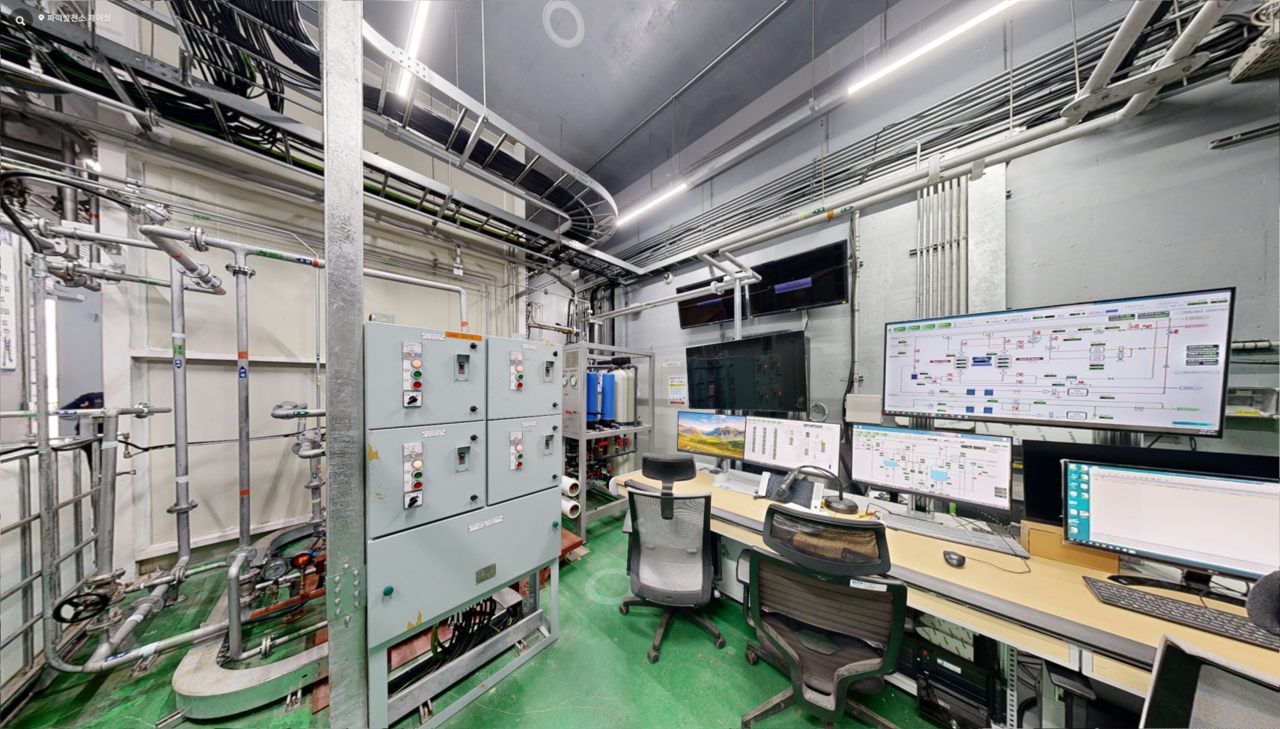
At the site, described by KRISO as Korea’s first offshore hydrogen production facility, researchers operate a 100-kilowatt water electrolysis system powered by wave energy.
Waves enter a chamber known as an oscillating water column, causing the water level inside to rise and fall. The movement creates airflow that turns a turbine and generates electricity.
That electricity powers an electrolyzer, which splits water into hydrogen and oxygen.
“Generating hydrogen at sea involves a series of processes, including purifying seawater, producing hydrogen from the water and cooling the generation equipment,” said Kim Kyong-hwan, a principal researcher at KRISO.
“We are also working on using the hydrogen generated here to produce electricity at the site by installing a hydrogen storage tank and fuel cell.”
The facility is exposed to strong northwesterly winds, with few geographical barriers to weaken the waves before they reach the site. Researchers use the conditions to test equipment under the variable and often harsh conditions found at sea.
Kim said Korea remains at an early stage of offshore hydrogen research compared with European countries that have conducted demonstrations at the 1-megawatt scale.
The Jeju platform also has four additional berths where wave- and wind-power equipment can be connected to an offshore substation for testing. Researchers said the hydrogen system being developed for wave power could eventually be paired with offshore wind farms.
When cables are not enough
As offshore wind farms move farther from land, connecting them to the grid becomes more expensive. Subsea cables must be installed and maintained over longer distances, and transmitting all the electricity they generate may require additional grid investment onshore.
“Offshore wind farms, including those being developed in the southwestern part of the mainland, are being built farther and farther from the coast, making it increasingly costly to install and maintain cables to transmit electricity to land,” Kim said.
“If we can convert and store that energy as hydrogen at the site, we can reduce our reliance on cables and lower the cost.”
That proposition comes with a significant trade-off.
Kim said converting electricity into hydrogen can consume or lose around 40 percent of the original energy. That makes hydrogen less efficient than directly using electricity or storing it in batteries over shorter periods.
Its potential advantage lies instead in storing large amounts of energy for extended periods, transporting energy from remote offshore sites, and supplying hydrogen as a fuel or industrial material.
Jeju offers a particularly useful setting in which to examine that trade-off. In the past, the island has had to curtail wind and solar generation when renewable output exceeded local demand and grid capacity. The completion of a third high-voltage direct-current link to the mainland in 2024, along with changes to Jeju’s electricity market, has since helped reduce forced curtailment.
But the island plans to continue expanding renewable generation and energy storage through 2030, making the long-term question of how to use surplus power increasingly important.
Hydrogen is therefore being tested as one alternative to batteries, expanded grid connections or more flexible electricity demand.
“Electricity also loses energy when transmitted over long distances through the grid, while storing electricity for long periods has its own limitations,” Kim said. “Hydrogen has advantages in those respects.”
Whether those advantages outweigh the energy loss and cost of producing hydrogen will depend on how far the technology can be scaled up and whether reliable demand emerges for the hydrogen produced.
The 100-kilowatt platform off Jeju is an early test of whether surplus renewable power can be converted into hydrogen instead of being curtailed.
forestjs@heraldcorp.com