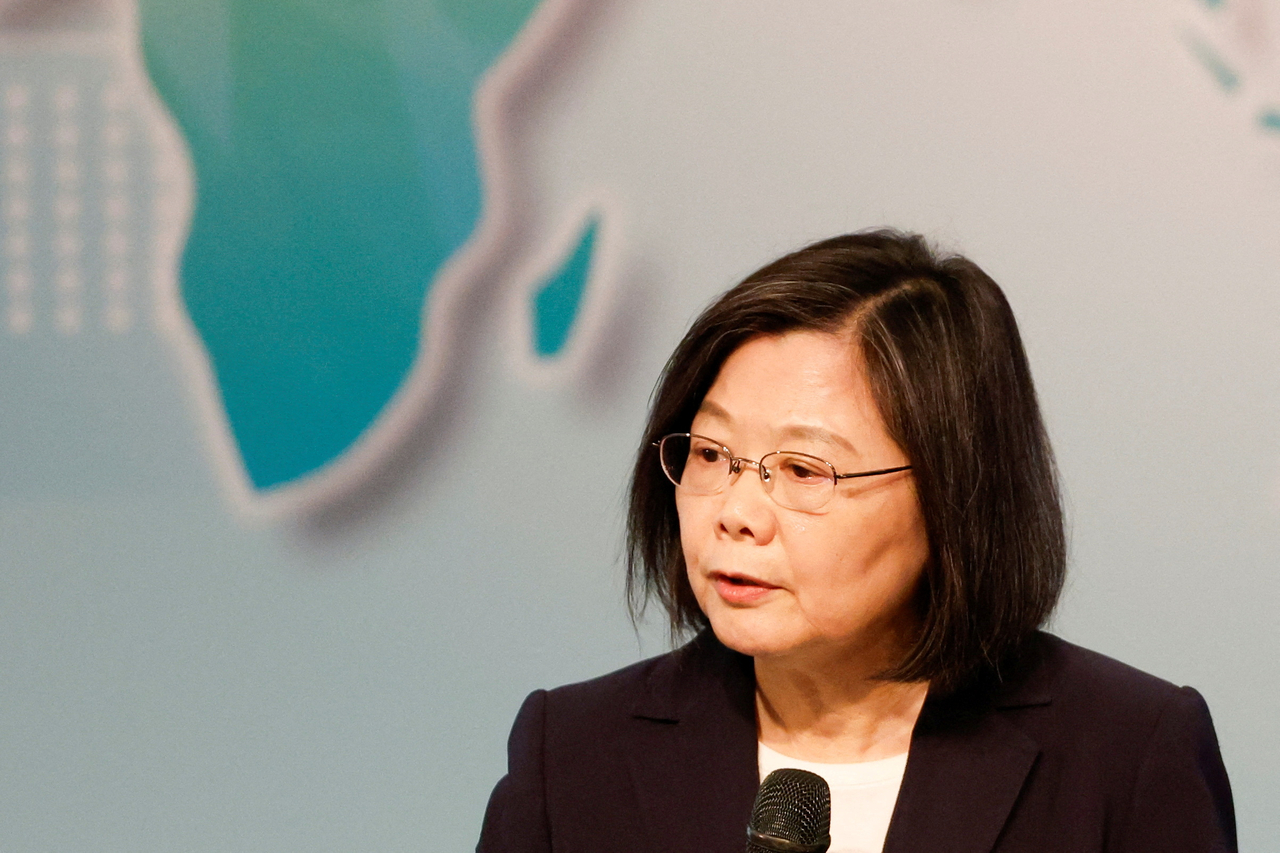
Former Taiwan President Tsai Ing-wen told a US audience Wednesday of China's "sustained" pressure in the form of activities like military patrols that stop short of open conflict but are aimed at altering the security environment.
Tsai was making her first trip to the US since leaving office two years ago, for a speech at a defense forum at Stanford University. Washington is Taipei's most important international backer, despite a lack of formal diplomatic ties.
Taiwan, which China views as its own territory, has to deal with a "particularly immediate" security challenge, she said, according to a transcript of the speech provided by her office.
"We face daily cyberattacks, cognitive warfare, information manipulation, economic coercion, and attempts to compromise our critical infrastructure," Tsai said.
"Chinese military aircraft and vessels also operate around Taiwan on a regular basis, while coast guard and other activities have become increasingly common around our waters."
Such "gray zone" activity is intended to impose costs, test Taiwan's responses and gradually alter the security environment around Taiwan, while avoiding the consequences of an open confrontation, she added.
"We have to respond to sustained pressure in ways that preserve our own confidence and freedom of action, while continuing to strengthen our capacity to defend ourselves should deterrence fail."
China's Foreign Ministry did not immediately respond to a request for comment. Its embassy in Washington this week reiterated that it "firmly opposes official interactions of any form between China's Taiwan region and the US."
China has never renounced the use of force to bring Taiwan under its control, though it says it would prefer peaceful "reunification."
Tsai's successor, Lai Ching-te, has yet to visit the US under the second administration of President Donald Trump.
Both Lai and Tsai reject Beijing's sovereignty claims. China has refused to speak to either of them.
Tsai said at Stanford that given Taiwan is deeply integrated into global technology and manufacturing networks, a serious disruption in the Taiwan Strait would be felt throughout the Indo-Pacific and beyond.
"Deeper cooperation with Taiwan therefore strengthens not only Taiwan's own security, but also the stability of the Indo-Pacific and the resilience of the wider democratic community," she added. (Reuters)