
New funding contest to open beyond current finalists as government separates advanced model development from industrial deployment
South Korea plans to split its homegrown artificial intelligence development program into two tracks next year: a frontier model project backed by 4.7 trillion won ($3.49 billion) in proposed government investment and a separate effort to deploy Korean models across industries.
The overhaul will open a new competition for frontier AI funding rather than automatically extending the existing support program for the two teams that survive the current selection process.
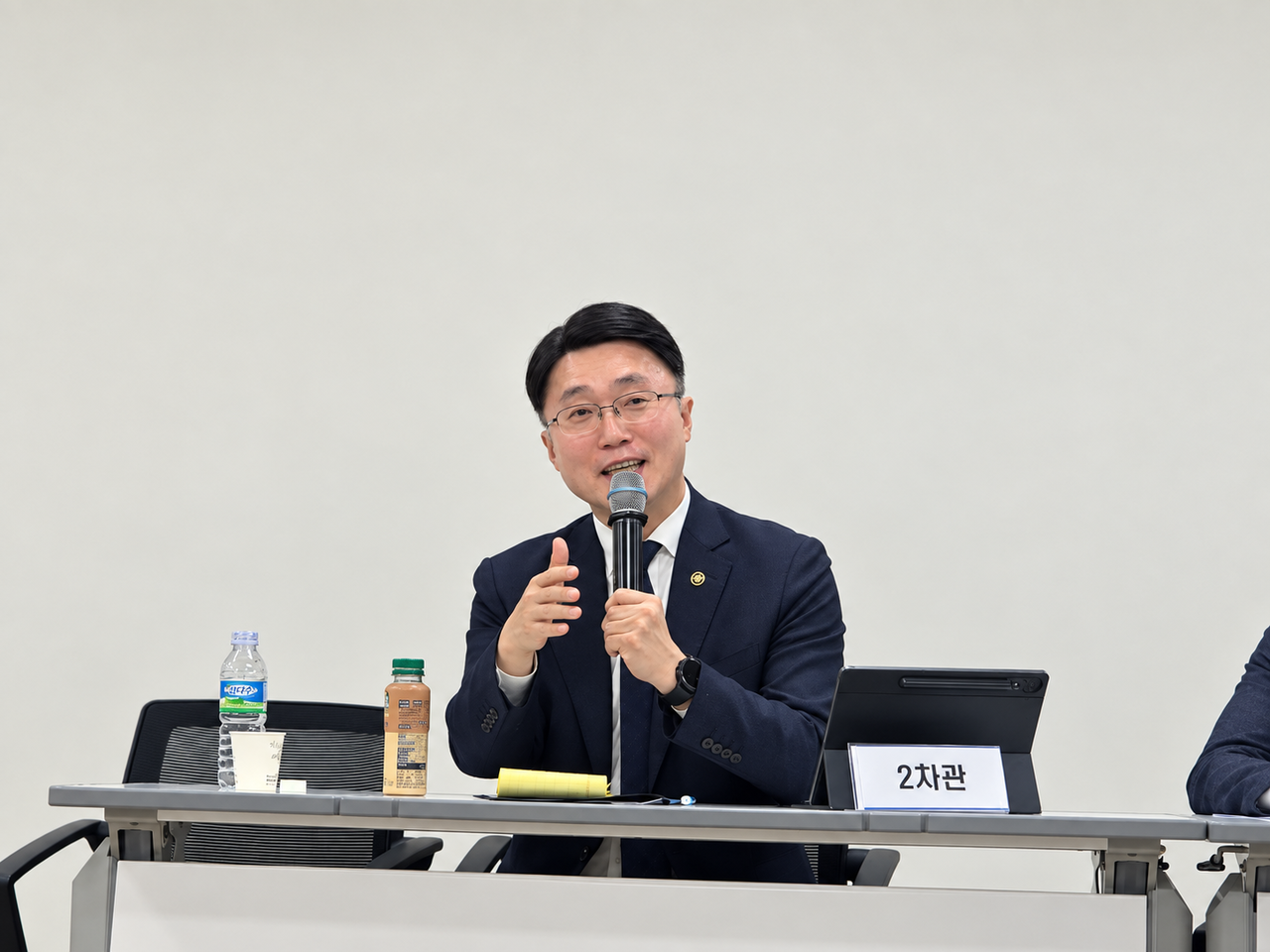
Second Vice Minister of Science and ICT Ryu Je-myung said Friday that the changes would raise the program’s technological ambitions while giving industrial applications a separate path.
“We will evolve the technology development goal toward frontier models, while separating industrial deployment into a new track,” he told reporters in Seoul.
Ryu rejected suggestions that the government was abandoning its independent AI foundation model project, known in Korean as Dokpamo.
“The goal of securing our own foundation model technology has not changed, and it will not be discontinued,” he said. “It will continue.”
The current competition among teams led by LG AI Research, SK Telecom and Upstage will proceed as planned, with two finalists to be selected after the third-stage evaluation.
“We will select two. That is certain,” Ryu said.
Under the original plan, the two surviving teams were expected to receive continued computing support through 2027. Instead, the government will launch a new frontier AI competition open to other companies, including startups.
The ministry is considering incentives for the finalists to recognize the resources they have committed, but Ryu said those measures should not distort the allocation of public funding.
“Participation should be open,” he said, adding that startups with strong technology and talent should have “fair and reasonable opportunities” to compete.
The government’s 2027 budget proposal earmarks 4.7 trillion won in equity investment for a top-tier homegrown model, with private capital expected to supplement public funding. The proposal remains subject to National Assembly approval.
Ryu said the current support, equivalent to roughly 1,000 high-end graphics processing units per remaining team, was insufficient to compete with frontier models.
“Investment on the scale of 1,000 GPUs is not enough to catch up with frontier-class models,” he said. “The scale has to be completely different.”
The investment structure remains undecided. Options include a consortium or a special-purpose company, with the ministry reviewing roles for major companies, startups and other investors.
Ryu said competing head-on with the largest US AI companies would be unrealistic. But Korea could aim to develop a model competitive with leading Chinese open models if the planned public and private investment materializes, he said.
The second track will support the use of Korean-developed models across industries, giving smaller or specialized models a path to market without requiring frontier-scale computing resources.
The ministry is also preparing to allocate about 29,000 GPUs the government has purchased or is bringing online. A distribution plan is expected by year-end.
The current competition’s third stage runs through January, with results expected around mid-February. The government plans to open the new frontier competition after parliamentary approval of the 2027 budget, expected in December, with the program potentially starting as early as March.
yeeun@heraldcorp.com


