
After failed operation involving five water-spraying vessels, authorities to try nets Friday
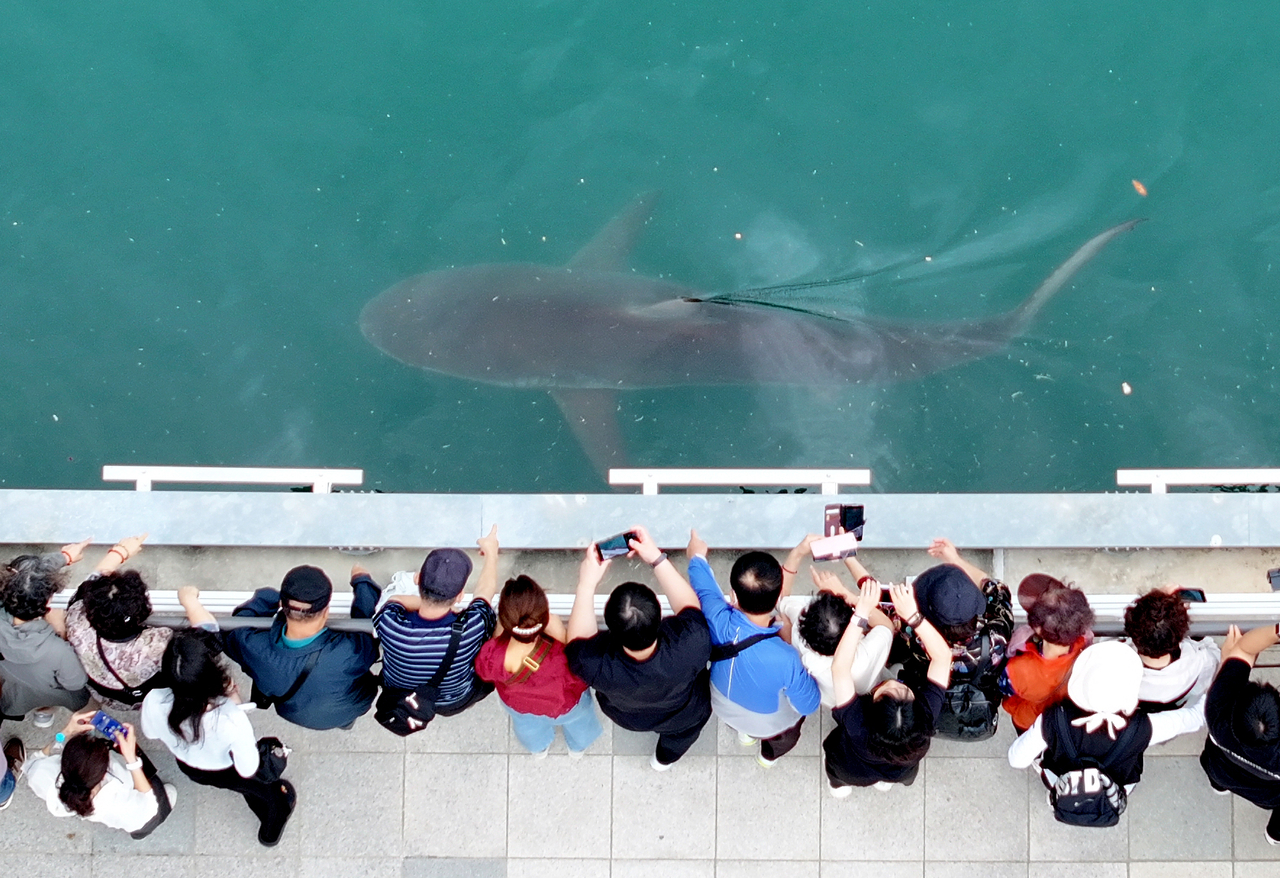
Rescue efforts for a 3.5-meter-long shark stranded at North Port Waterfront Park in Dong-gu, Busan, were called off Tuesday after rescuers failed to guide it toward the sea.
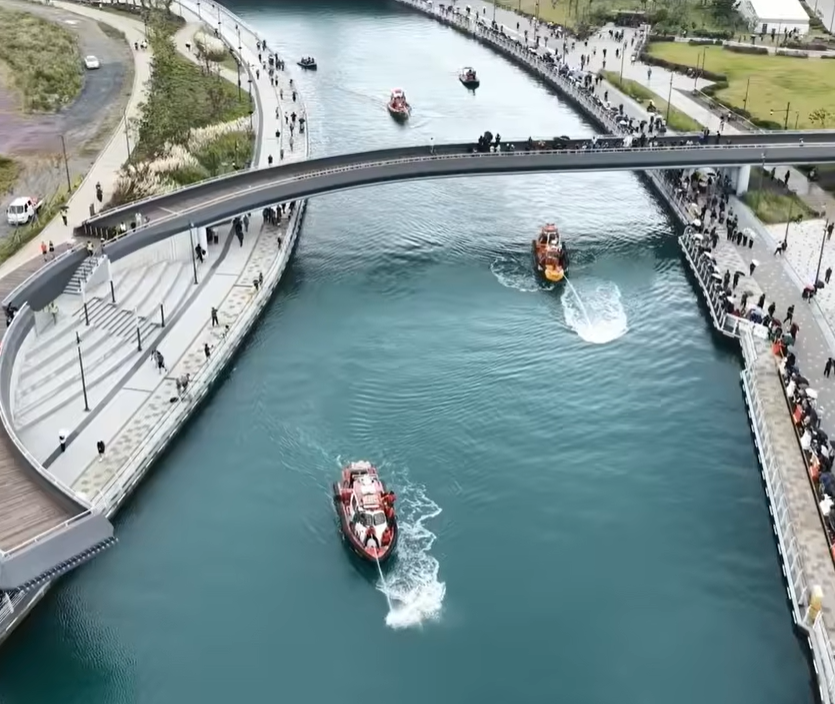
The operation, which involved using water pumps to guide the shark out of the artificial waterway, began at 10 a.m. and continued until around noon before being temporarily suspended. A second attempt resumed later in the afternoon but ended at 3:30 p.m. without success.
Five vessels were deployed in the operation, which was jointly organized by the Busan city government, the Busan Coast Guard, the Busan Fire and Disaster Headquarters and other agencies. The vessels included a 4.6-ton patrol boat and a 3-ton rescue boat.
Crews sprayed water behind the shark to create foam, noise and vibrations, hoping the disturbance would prompt it to move away from the vessels and head toward the open sea.
But the shark repeatedly swam back behind the vessels or disappeared beneath the surface.
Officials said they observed no signs of health problems in the shark during the rescue operation.
The rescue drew on a 2004 case in Massachusetts, where a great white shark stranded in a salt marsh was guided back to sea. The shark, measuring more than 4 meters, had been trapped for about two weeks, attracting attention from scientists and tourists.
The city plans to make another attempt Friday using a specially designed net to guide the shark back to sea.
First spotted in a narrow canal at Busan’s North Port on Sept. 18, the shark had drawn 568,800 visitors to the area as of Monday. It was soon given the affectionate nickname "Bukang-i," referencing the Korean name for the North Port, Bukhang.
As Bukang-i has grown into a local attraction, Busan has decided to make the shark an honorary city ambassador. The decision came after 91 percent of roughly 8,200 respondents to a city-run Instagram poll supported the proposal.
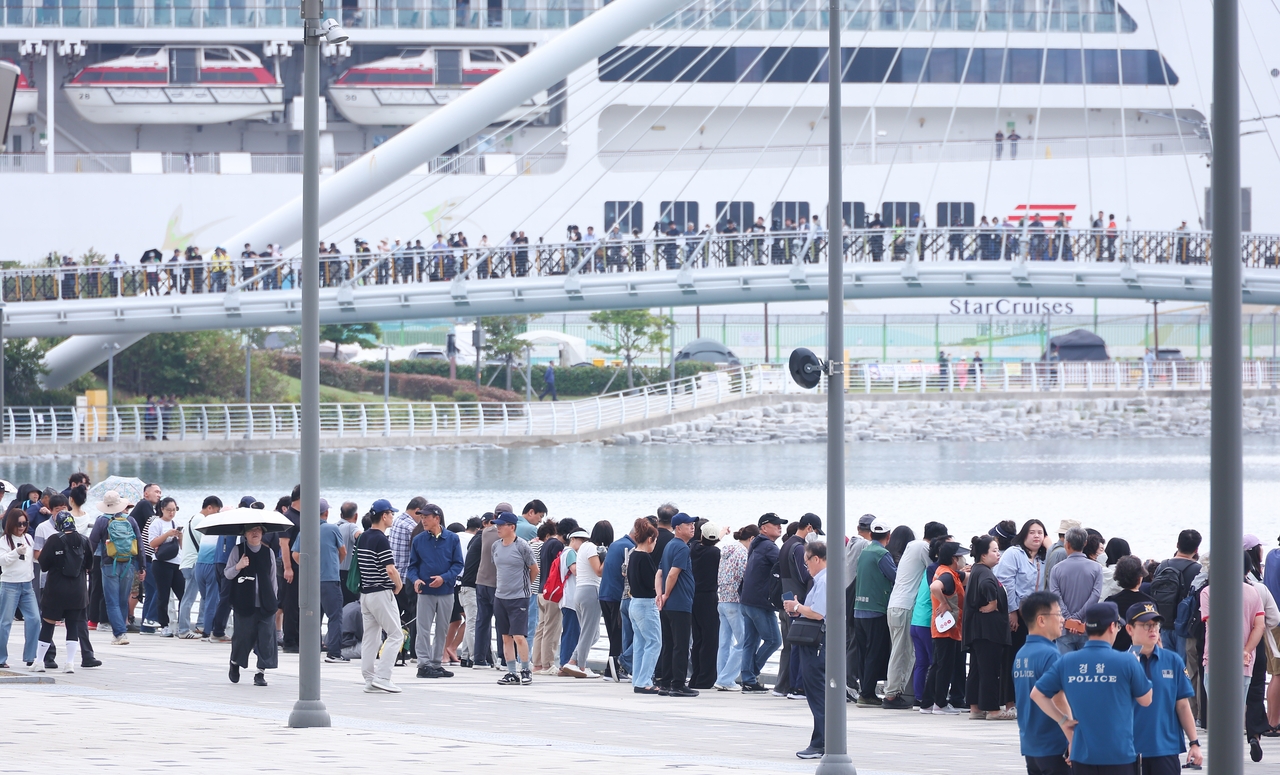
Some question whether the shark should be left to find its own way back to sea. Experts, however, warn that prolonged confinement in the shallow, narrow waterway could put the animal at risk of death and say intervention is necessary.
"Dusky sharks, the species Bukang-i belongs to, hunt for prey in waters as deep as 100 meters. It is not healthy for a wild animal like this to remain in such a confined channel for an extended period," said Ji Hwan-sung, a researcher at the National Institute of Fisheries Science.
The park’s artificial waterway stretches about 1.5 kilometers and is only 30 to 60 meters wide. Its depth ranges from about 2.5 meters at low tide to 4 meters at high tide.
cjh@heraldcorp.com


![[Exclusive] S. Korean Embassy to US woos Trump allies to expedite skilled visa talks](https://wimg.heraldcorp.com/news/cms/2026/09/29/rcv.YNA.20260924.PGT20260924167001009_R.jpg?type=h&h=120)
![[Exclusive] Enhypen to return with new album in November, agency confirms](https://wimg.heraldcorp.com/news/cms/2026/09/29/news-p.v1.20260929.41760e88b0f048fcb5fa3e0dd9b75524_R.jpg?type=h&h=120)