The proposed 6.3-gigawatt gas-fired power plant in Encinal, Texas, is welcome news. As the first project under the $350 billion Korea-US agreement, it could create opportunities for Korean businesses and strengthen the alliance’s economic security cooperation. However, committing $22.3 billion in public capital requires rigorous feasibility assessment and public scrutiny.
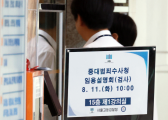
On Tuesday, the National Assembly’s Trade, Industry, Energy, SMEs and Startups Committee held a closed-door government briefing on the project. Negotiations may require confidentiality, but that does not explain why Koreans cannot receive a substantive account of the project’s economics and risks.
Article 38 of Korea’s National Finance Act generally requires preliminary feasibility studies for specified new projects costing at least 50 billion won ($37 million) and receiving at least 30 billion won in state financial support. A proposed $22.3 billion investment warrants rigorous scrutiny.
The government should clarify how these provisions apply to Encinal, whether it relies on an exemption, and explain the feasibility study’s scope and status, progress in securing electricity buyers and the due diligence on development partners.
If details cannot be disclosed publicly, lawmakers must examine them on their constituents’ behalf by posing three questions.
First, what do the projected returns in the feasibility study represent?
The government reportedly expects $43 billion to $45 billion over 20 years from a $22.3 billion investment, calling that amount sufficient to cover investment and financing costs. Does that amount represent revenue, net income or distributions payable to Korea, including principal repayment?
Consider an illustrative calculation using $47 per megawatt-hour, consistent with Pexapark’s April 2026 ERCOT North Hub solar power purchase agreement valuations of approximately $46-$48. A 6.3-gigawatt Encinal plant operating at an assumed 85 percent capacity factor would generate approximately $44.1 billion in gross sales over 20 years, assuming constant prices and installed capacity.
That aligns with the government’s estimate of the Encinal project at $43 billion-$45 billion, but the calculation measures only gross revenue. Solar energy prices may differ from those of gas-fired generation, yet they provide us with comparable projections for the energy market. The illustration raises more serious questions about the feasibility study’s financial projections.
The feasibility study should identify the author, the commissioning party and the independent reviewer. Its discounted cash flow analysis should disclose the discount rate, the project and investor internal rates of return, as well as the expected distributions to Korea.
Lawmakers should review the feasibility study to determine how construction delays, higher costs and weaker demand affect those outcomes.
Second, what supports the revenue forecast and where does the power purchase agreement stand?
Korean reporting indicates that a power purchase agreement has not been secured, with the government targeting one in 2027. A binding PPA or other credible revenue arrangements are central to assessing the commercial case. Without adequate protection, projected returns remain exposed to electricity prices and uncertain demand. That uncertainty warrants a substantive explanation.
Lawmakers should determine how much projected revenue depends on unsigned contracts. What minimum contractual protections must be secured before construction begins? Would lower selling prices jeopardize viability and require additional Korean public capital?
Before making a final funding commitment, the government must answer fundamental questions: Which parties will purchase the electricity? At what price and for how long? Who bears the risk of higher fuel costs, construction overruns or buyer default? Even a signed PPA requires an assessment of creditworthiness, termination rights and payment security.
Lawmakers should review PPA negotiations and proposed terms before making major funding commitments. They should determine who bears the development costs if no acceptable buyer is found and whether Korea can suspend further investment if agreed-upon conditions are not met.
Third, can the participating companies fulfill their contractual obligations?
Lewis Energy Group, Related Digital and NextEra have been named in reports about a development agreement. The government should explain each company’s role, financial contribution and relevant experience. Experience in gas supply, data center development or power generation should align with the company’s proposed responsibilities.
For a $22.3 billion project, reputation and political connections alone are insufficient. Legal and financial due diligence must assess comparable completed projects, delivery against budgets and schedules, operating performance and the financial capacity of the entity and its parent company. Their combined resources and enforceable commitments must be sufficient for this scale. A strong performance bond is also required as a guarantee of their contractual obligation.
Lawmakers should review the government’s assessment and ask how the capability gaps will be addressed.
To address these questions, lawmakers should establish a subcommittee of independent industry and financial experts. The subcommittee should examine the feasibility study, proposed PPAs, partner capabilities and other conditions affecting investment success. Reviewers should disclose any relevant conflicts of interest and have access to complete documentation.
Commercially sensitive details may require protection, but Koreans should receive a substantive summary of findings, risks and funding conditions.
Getting Encinal right matters for subsequent investments: proposals for eight nuclear reactors and the Alaska liquefied natural gas development. The government and lawmakers must test the economics and determine how risks will be managed before committing public funds. Public trust in subsequent investments begins with credible answers to the first proposal for a 6.3-gigawatt gas-fired power plant in Encinal, Texas.
- - -
Man-Ki Kim
Man-Ki Kim is a professor at the KAIST Graduate School of Future Strategy, specializing in global public procurement, defense acquisition innovation and global strategic trends. He also serves as a senior adviser at Yoon & Yang LLC. The views expressed here are the writer’s own. -- Ed
khnews@heraldcorp.com