
Period: Early Iron Age
Materials: Metal — copper alloy
Dimensions: L. 13.5 cm
Designation: Treasure 1823
Early communities of the Korean Peninsula first began using metal objects during the Bronze Age, 10th to 4th century BCE. These early metal objects were made of bronze, an alloy consisting of copper and smaller proportions of tin, zinc, and lead.
Producing bronze objects was a complex process that required molds, so only the most elite members of a society could own them. Thus, such objects served either as symbols of authority or as ritual implements.
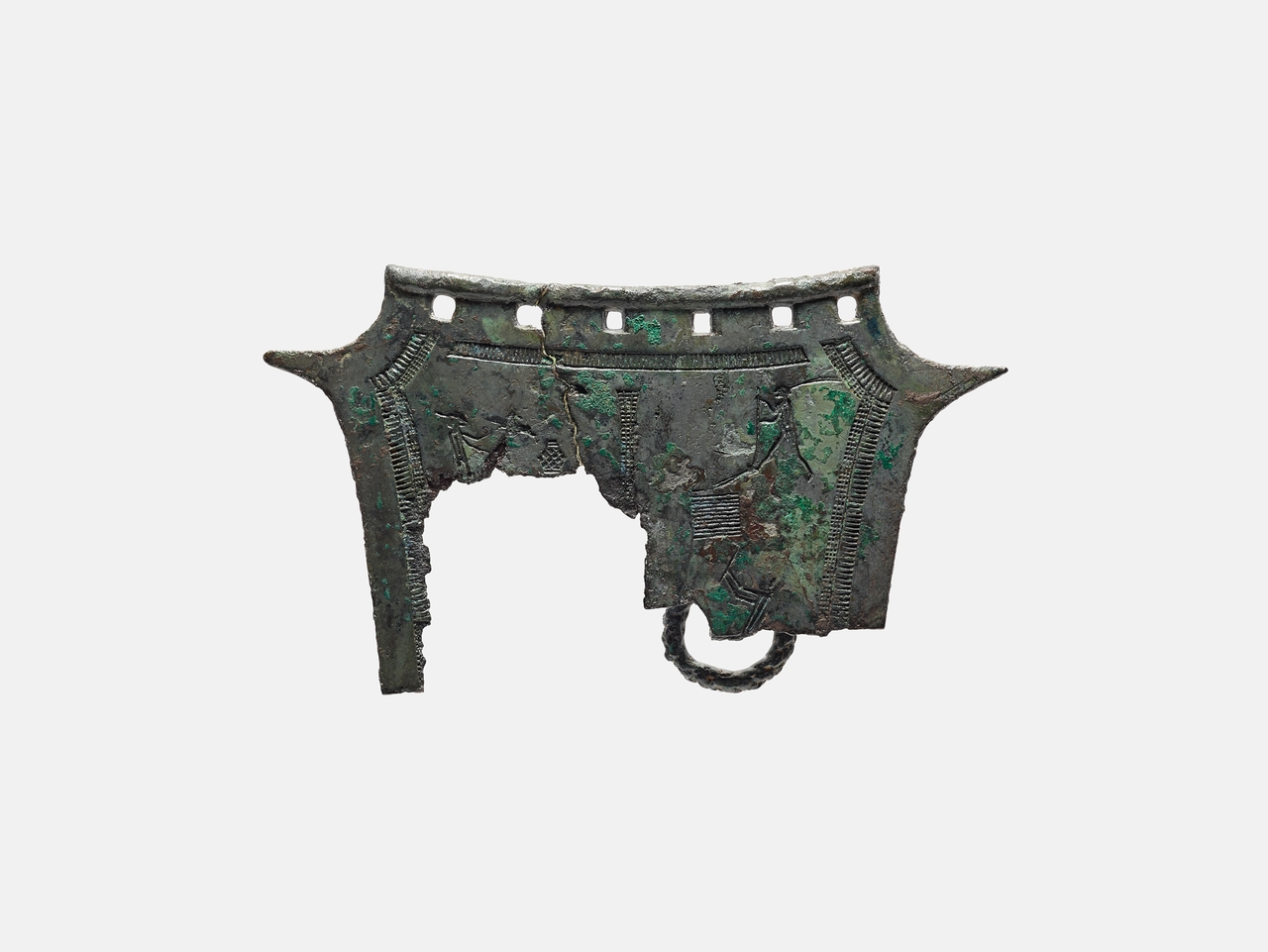
This particular bronze artifact from Daejeon has six square holes along its upper edge, and the holes show traces of wear which indicate that the object was probably hung using cords or strings.
The front of the artifact is engraved with agricultural scenes, in which a nude man, who has what appears to be a large feather in his hair, is tilling a field. Another man raises a hoe over his head, and a third puts something into a jar. The opposite side of the artifact is engraved with two trees showing birds perched in their forked branches.
Experts believe the image of the naked tiller represents the farming community’s hopes for a good harvest, and the birds in the trees are likely associated with the Korean tradition of setting up guardian poles, or sotdae, in villages, as symbols of the villagers’ prayers for peace and prosperity.
Based on the holes and the engravings, this bronze artifact was probably a ritual object that was perhaps hung from a tree during farming rituals.
mjcha@heraldcorp.com