
LG Electronics is positioning robotic actuators — the joints that drive robots — as a next-generation growth engine, with the company nearing what could be its first major order from a global technology giant.
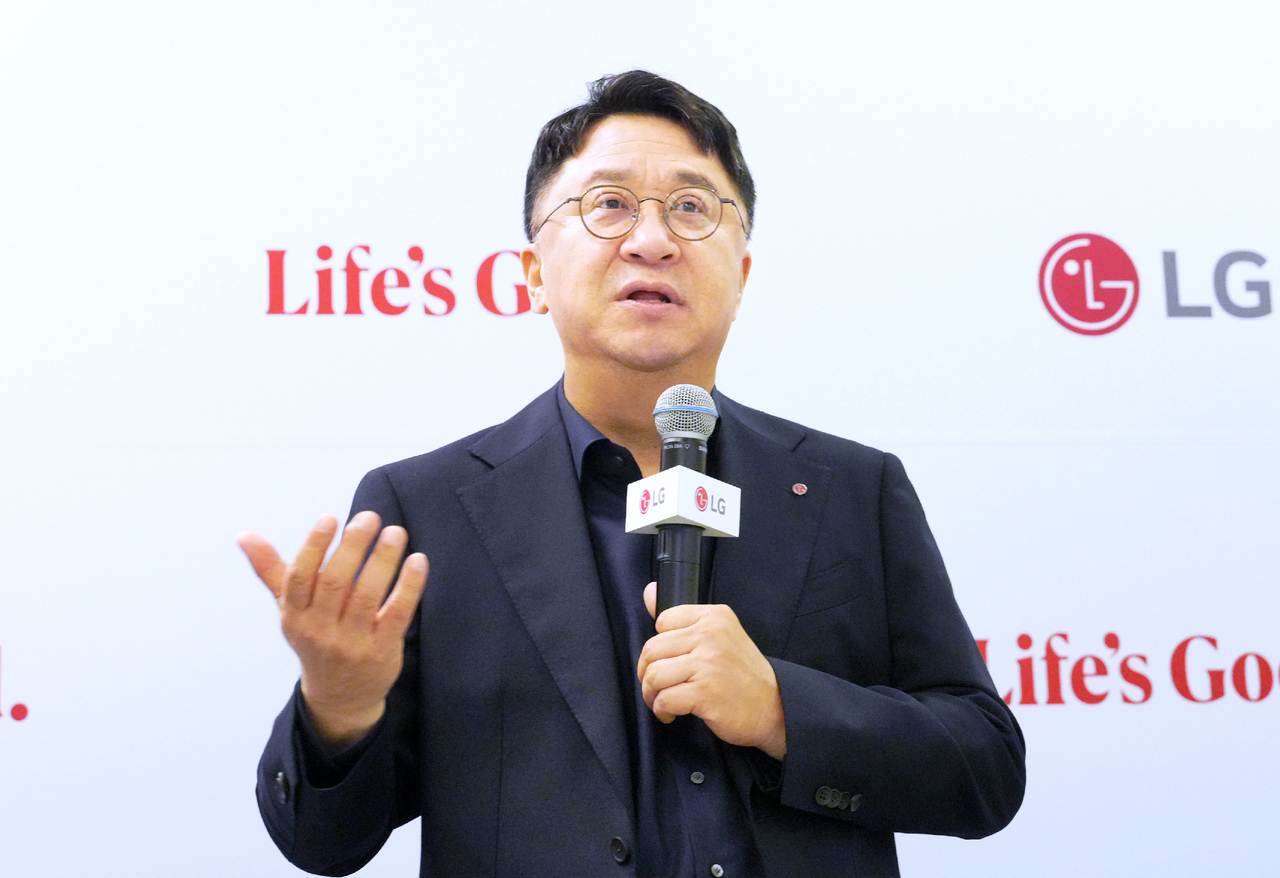
Baek Seung-tae, head of LG Electronics' home appliance business, said the company has developed actuators that are more efficient, lighter and cost-competitive than rival products, and it is preparing for mass production, Saturday.
"We are pursuing orders from several big technology companies," Baek said during a press conference held on the sidelines of IFA 2026, a major electronics trade show in Berlin.
"Nothing has been finalized yet, but with one company we have only a final meeting next month. We want to be able to announce an order soon."
LG Electronics unveiled its LG Axium actuator brand earlier this year, leveraging motor, drive-control and component-design capabilities developed through its home appliance operations.
Anticipating its robot actuator business to reach a scale comparable to air conditioning compressors — a major growth product for its business in component solutions — within one to two years, LG said it is preparing to build a fully automated production line at its facility in Changwon, South Gyeongsang Province, by the end of this year.
LG's actuator business is closely tied to its broader robotics strategy. Baek expects demand for physical artificial intelligence, including humanoid robots, to surge from 2030, with LG planning to deploy humanoids at its Tennessee plant and Changwon smart factory before expanding into homes once safety is established.
As the components that generate power and precisely control movement, actuators could account for 60-70 percent of total robot costs, according to industry estimates.
"An actuator consists primarily of a motor that generates force, a reducer that transmits it and a driver that controls it," Baek said. While LG has yet to develop its own reducer technology, LG is considering both internal development and sourcing from outside suppliers, the chief added.
Showcasing its home robot CLOiD, which uses wheel-based autonomous-navigation technology, LG said it is preparing for a range of robot designs, including wheeled machines and bipedal form.
On the industry landscape, Baek said Chinese appliance-makers may find it increasingly difficult to rely solely on low prices to gain market share. China's three largest appliance companies had achieved annual cost reductions of about 10 percent, he said, but their costs rose during the first half of this year.
"Chinese companies will not be able to continue with low-price strategies indefinitely if they want to expand their global market share," Baek said.
LG has been strengthening its underlying competitiveness by reshaping its supply chain and making use of China's manufacturing ecosystem. The company operates 12 production sites in 10 countries and has improved its resilience through flexible adjustments across those facilities, Baek added.
Beyond components, LG is expanding its business-to-business appliance operations. Its builder-focused built-in appliance and commercial laundry businesses have each grown revenue by more than 40 percent annually over the past three years. In North America, built-in sales rose about 45 percent annually, while commercial laundry sales increase about 41 percent, the company said.
In Europe, the company is doubling its specialist builder sales force to accelerate growth, while expanding its premium built-in appliance brand SKS and LG Built-in Package offerings. It intends to increase built-in appliance displays to 3,000 outlets by year-end.
It is also strengthening its commercial laundry lineup with machines above 20 kilograms, supplying Thailand's Trendy Wash chain and expanding partnerships in the Philippines. In Europe, LG is promoting high-efficiency appliances as it targets leadership in the region's home appliance market by 2030.
herim@heraldcorp.com