Korean doctor builds lifelong haircare for foreigners across globe
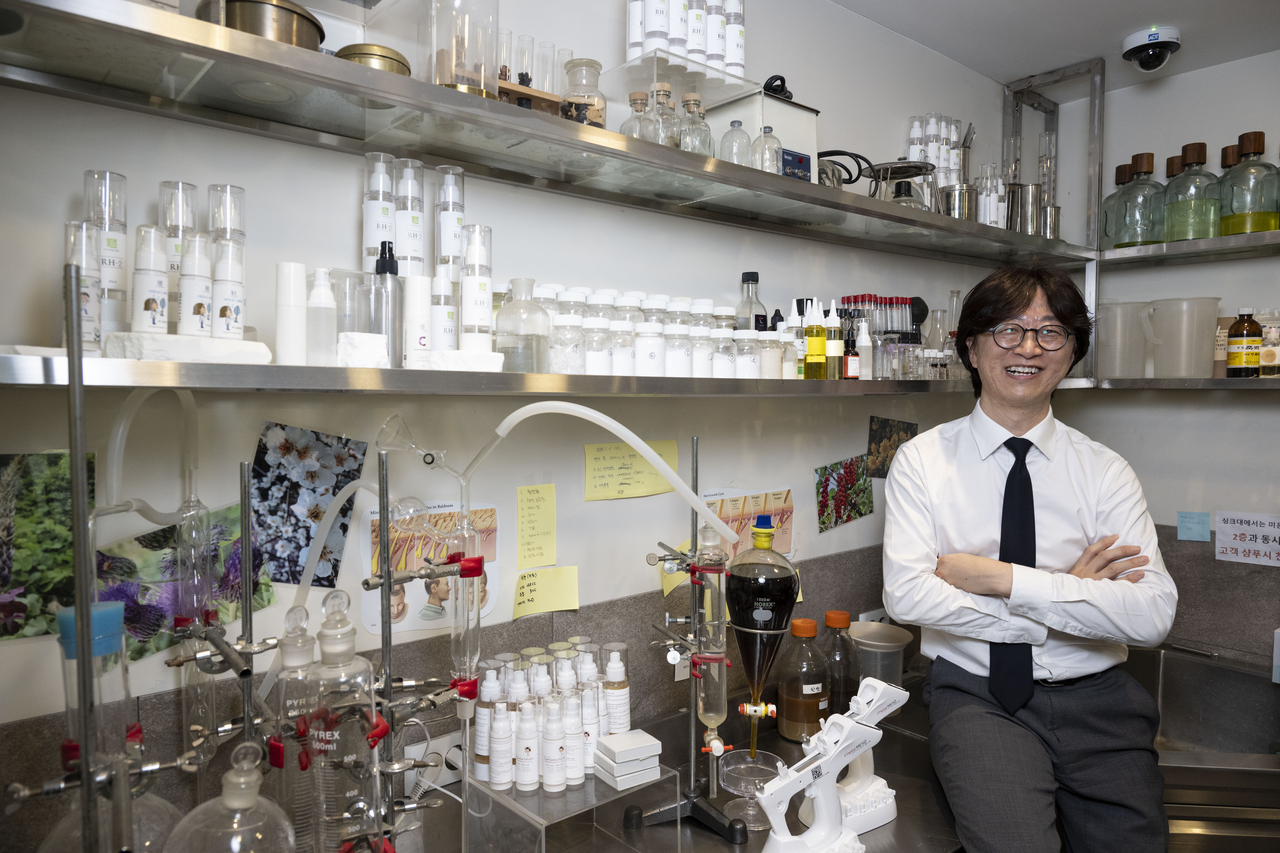
When Lee Moon-won opened his clinic in Seoul in 2005, he made an unusual decision for a Korean medicine practitioner: He would treat hair loss.
"At the time, there were hardly any medical institutions specializing in hair loss, not only in Korea but globally," said Lee in an interview with The Korea Herald at his office in Seoul on Aug. 27.
"The purpose was to treat only hair loss and use purely natural ingredients for treating it."
Twenty-one years later, that narrow focus has taken his clinic far beyond its original market.
Lee Moon Won Korean Medicine Clinic treated 5,707 foreign patients from 95 countries throughout last year, according to its internal medical records. That was more than double the 2,716 patients from 63 countries in 2023. Over the past three years, over 13,000 foreign patients from 103 countries visited the clinic.
Foreign patients began arriving quietly around 2011. Before the COVID-19 pandemic, the clinic saw roughly 100 foreign patients a year. Although the post-pandemic surge was dramatic, Lee says the clinic has done little traditional marketing overseas.
"They're not coming because we've advertised," he said. "Most of the people who come to us are really coming through word of mouth."
That includes patients who have already visited the clinic recommending it to friends and relatives back in their native countries.
The clinic's foreign patients are notable for another reason: roughly 80 percent have been women for the last three consecutive years. People in their 20s and 30s have accounted for about 60 percent.
Lee believes that points to a gap in the existing hair-loss treatment market.
"This is not a marketing figure. It is a clinical signal," he said. "Women around the world are looking for natural treatments without hormonal side effects."
The clinic's treatment philosophy has remained largely unchanged since its opening, with Lee saying its prescriptions do not contain finasteride, steroids or minoxidil. He sees that consistency as one reason the clinic has resonated with overseas patients.
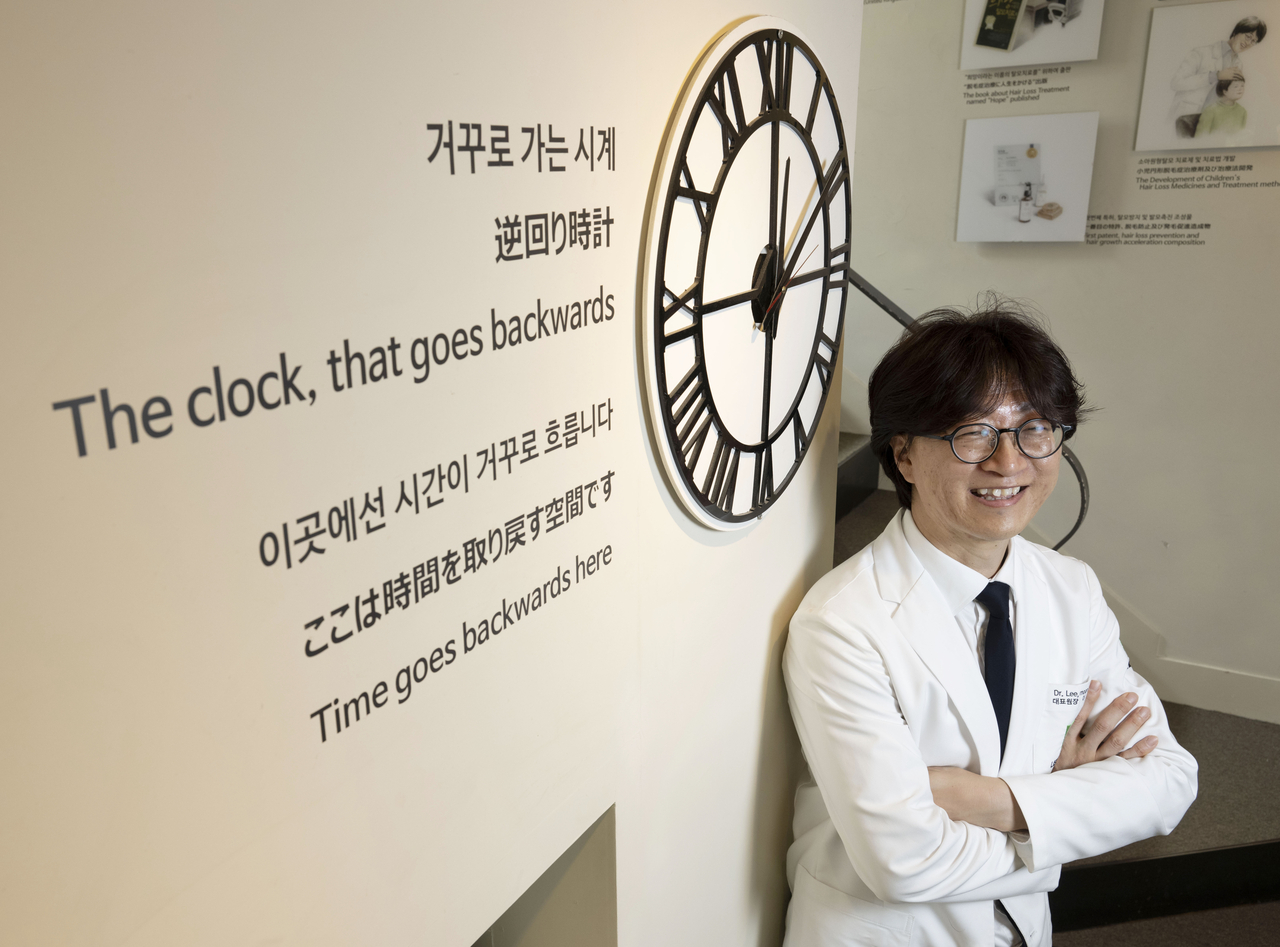
The clinic's global presence began with two patients Lee came across during the very early stage of his career as a Korean medicine doctor.
While treating patients for other conditions, Lee said, two women separately told him that their hair had stopped shedding after taking herbal medicine prescribed for back pain.
"I was curious," he recalled. "I was in graduate school at the time, so I asked my professor about it."
The professor encouraged him to investigate whether the medicine contained something that could affect hair loss. Lee conducted experiments and said the results were better than he had expected. That experience eventually pushed him toward specializing in hair loss.
Over time, his research moved beyond adapting traditional prescriptions toward identifying Korean natural ingredients that could have applications in hair and scalp care.
Lee sees locally sourced ingredients as a way to give Korean medicine a more distinctive identity overseas. He pointed to the familiarity of scalp oils in parts of India and the Middle East, asking why a Korean ingredient could not occupy the same space.
"If we can introduce an ingredient that is distinctly Korean and let people around the world know about it, I think that could be part of my role," he said.
His work eventually developed into what he calls "Super Hair" research, centered on Korean native plants and herbs. The clinic now says it holds 11 patents, including Patent Cooperation Treaty application patents under the World Intellectual Property Organization.
One example is an oil derived from the fruit of the Korean Torreya tree. Lee has applied for a patent for the ingredient, which he said showed potential for suppressing scalp inflammation and helping with hair loss. The application remains under review.
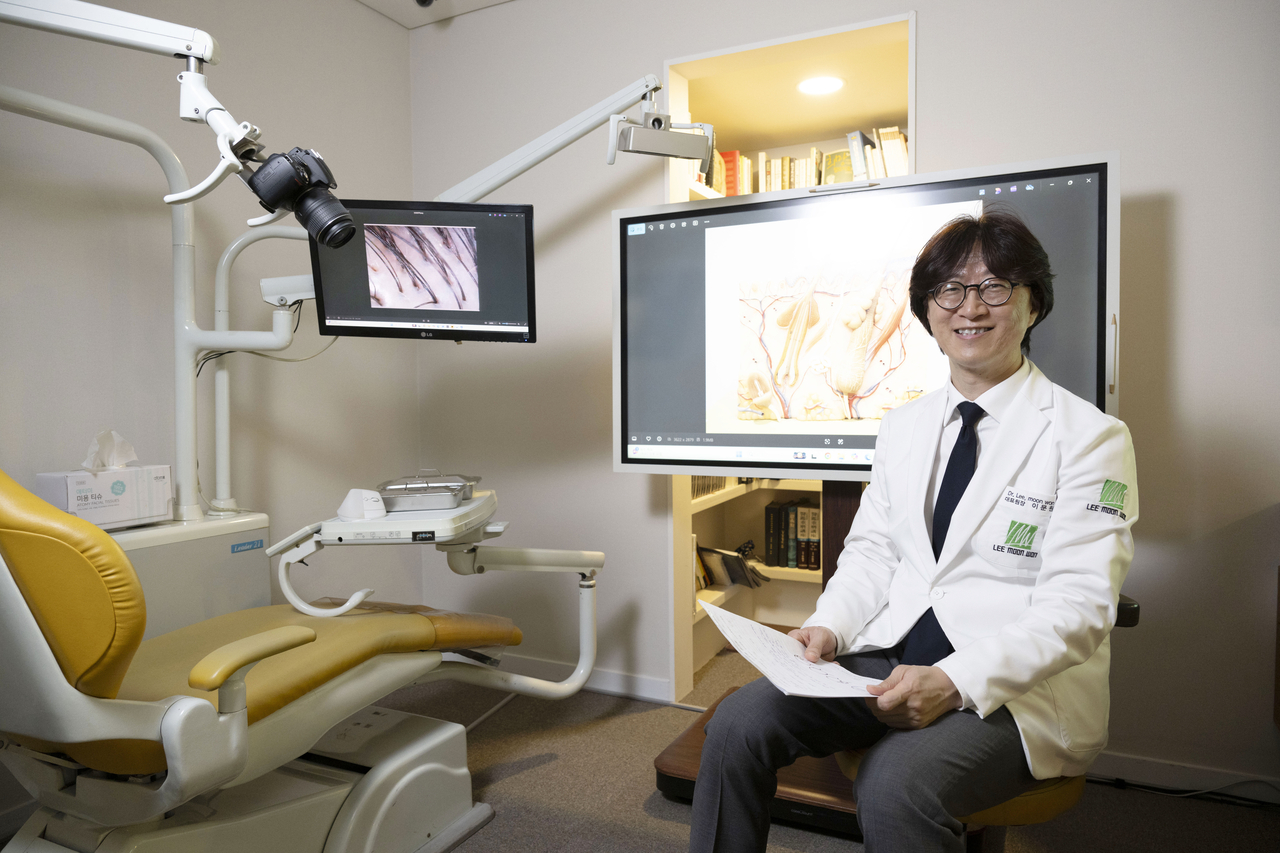
Lee's globalization strategy also extends beyond ingredients. He argues that medical tourism should not end when a patient boards a flight home.
"I think the wellness industry is trapped by a problem of space," he said.
"If you have to come to Seoul to receive treatment, that is a tourism product, not wellness. True wellness has to continue after the patient gets on a plane and goes home."
That philosophy has prompted the clinic to develop a combination of remote consultations, international prescription delivery and its Body Recording System, which tracks patients' scalp and hair conditions and treatment histories over time.
The approach is becoming increasingly necessary as demand outstrips the clinic's physical capacity.
Lee said the clinic was now receiving more requests than it can accommodate in person, prompting it to expand remote care. For online consultations, patients submit photographs, medical records and test results beforehand, after which doctors conduct a roughly 15- to 20-minute consultation. Prescriptions of Korean medicine can then be shipped overseas through international carriers.
The more important point, he argues, is continuity. Hair loss, in his view, is not a condition that can be treated once and forgotten.
"At your next visit, you take the same photos, check them and compare," he said. "If you've improved, you continue what you're doing. If you've worsened, you need to do something more. And if things are stable, you can live without worrying."
That long-term relationship may help explain why 21.5 percent of the clinic's foreign patients returned last year while patients from 57 countries visited for three consecutive years.
He framed the repeat visits as evidence that the clinic is becoming more than a tourism destination.
"The instinct of overseas travel is to go somewhere new," he said. "Even so, 1 in 5 patients comes back to the same clinic the following year. This is not tourism. They come back because they experienced the results of treatment."
The clinic's growing international following has also brought official recognition. In June it was selected as one of 20 wellness tourism destinations specializing in attracting foreign visitors by the Korea Tourism Organization as the only Korean medicine institution among the selections.
"Prevention, nature and personalization," he said. "The global wellness market wants these three things now. Korean medicine has practiced them for 2,000 years. ...The global trend is catching up with Korean medicine. We didn't change to fit the trend."
That belief also informs his ambitions for the next generation of Korean medicine practitioners.
Lee sees his clinic as a kind of proof of concept — evidence that a Korean medicine specialist can build an international patient base without abandoning the discipline's traditional foundations.
"When I look at foreign patients, I realize how much potential we have," he said. "Why are we staying hunched over here? Why aren't we properly showing our strengths? ... If Korean medicine clinics become known for being good at treating hair loss, then someone else can go to another country and do something different."
hwkan@heraldcorp.com