
Unclear rules leave Samsung, SK hynix waiting to see whether their $41 billion in US projects will qualify for relief
Build chips in America or pay to sell them there.
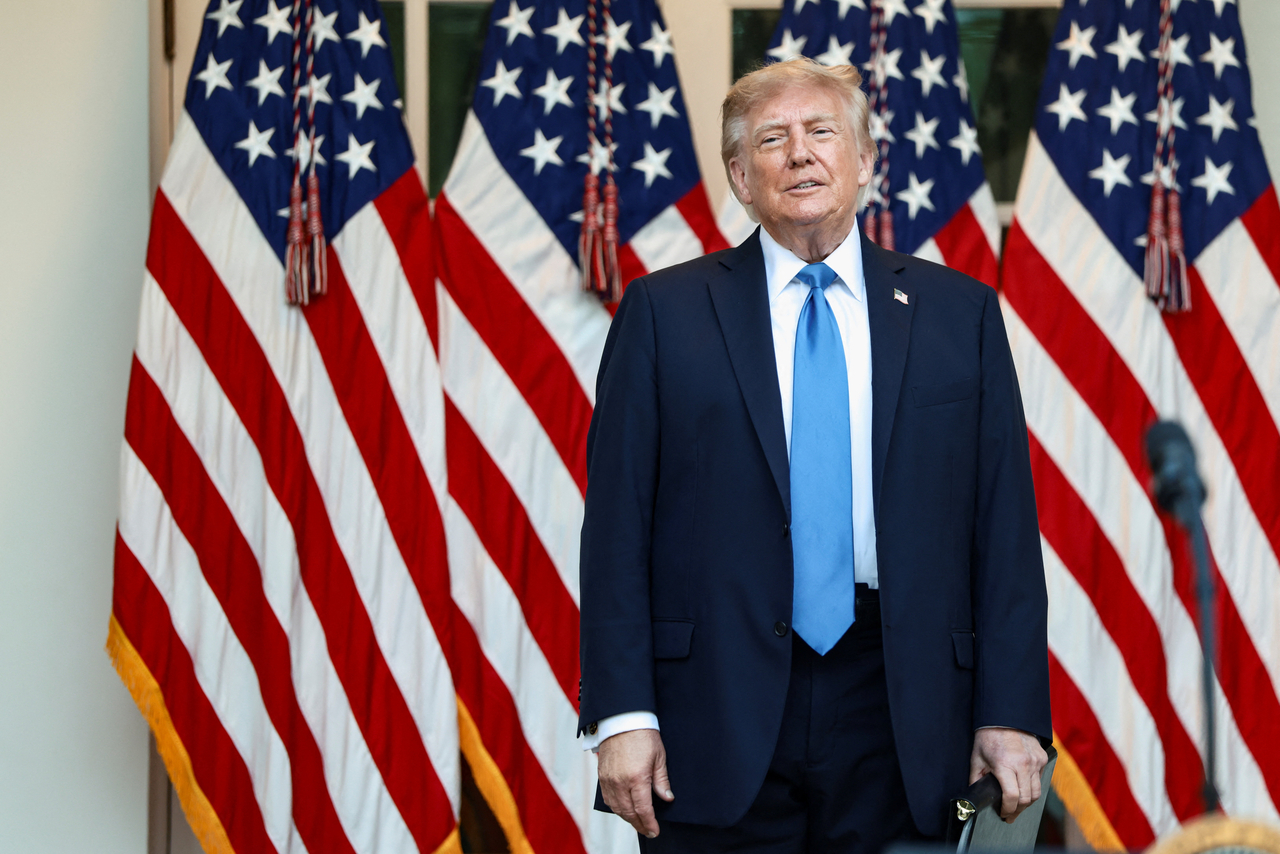
US President Donald Trump's administration has revived its push for targeted semiconductor tariffs, raising pressure on Samsung Electronics and SK hynix to expand US production or face duties on chips made overseas.
Commerce Secretary Howard Lutnick said companies manufacturing in the US would receive tariff relief, while those relying on foreign production should expect to pay.
“What you’re going to see is targeted, thoughtful tariff policy that basically says, if you build here, you don’t pay,” Lutnick told CNBC on Wednesday. “But if you don’t build here, expect to pay to enter the greatest market in the world.”
He did not disclose which products would be covered, what rates would apply or when the policy could take effect.
Lutnick said tariff pressure had helped secure $1.2 trillion in US chip investment commitments, including projects by TSMC and Micron. While he did not mention Samsung or SK hynix on Wednesday, he said in July that the Korean memory chipmakers should expand production to address AI-related shortages and build plants in the US.
What counts as US production?
The remarks revive a tariff threat that has hung over global chipmakers since US President Donald Trump began his second term. Washington imposed a 25 percent duty on a narrow group of advanced chips in January but has yet to finalize a broader second phase covering more semiconductor imports.
South Korea’s presidential office said the plan remained unsettled.
“Specific details have not yet been finalized, to our knowledge,” a presidential official told reporters Thursday. “The government plans to closely monitor related developments and consult closely with the US to prevent any adverse impact on Korean companies.”
Politico reported that Lutnick favors duty-free import quotas linked to companies’ planned US production. Officials are also weighing country-specific tariffs and guidance for major chipmakers, as well as extending the duties to chip-powered products such as laptops, gaming consoles and data-center servers.
The production-linked quota resembles Washington’s Taiwan deal, which permits duty-free imports of up to 2.5 times planned US capacity during construction and 1.5 times completed capacity afterward.
For Korean chipmakers, it is too early to assess the policy’s impact because its unsettled details could determine whether their existing US investments provide meaningful relief.
Samsung and SK hynix have committed more than $41 billion to US semiconductor projects. Samsung plans to invest more than $37 billion in Texas, including its Taylor foundry complex, while SK hynix is investing more than $4 billion in an HBM packaging and research facility in Indiana.
It also raises questions about whether Washington will count advanced packaging and R&D in the same way as front-end chip production. If exemptions are based on US wafer output, SK hynix’s Indiana investment alone may not be enough.
Other details, particularly how Washington treats chips embedded in finished products, will also be critical.
Much of Korean chipmakers’ output consists of memory incorporated into other products before reaching the US. Korean-made high bandwidth memory, for example, is often shipped to TSMC in Taiwan and packaged with Nvidia-designed processors before US technology companies import the finished AI accelerators or servers.
Other memory chips arrive inside consumer electronics assembled in Southeast Asia, raising questions about whether tariffs would cover components, finished goods or both.
“The impact could vary significantly depending on the policy’s details, making it difficult to assess how Korean companies will be affected,” an industry official said. “Companies are reviewing the issue closely, particularly how their US investments may be recognized in determining tariff relief.”
Seoul and Washington are also discussing a $350 billion investment package tied to their broader tariff agreement, comprising $200 billion in strategic investments and $150 billion in shipbuilding cooperation. Seoul is concerned that Washington could treat the package separately from Samsung’s and SK hynix’s existing US projects, potentially exposing Korean companies to additional investment demands for semiconductor tariff relief.
A tariff lever before China summit
The renewed tariff push appears aimed at pressing key semiconductor players such as Korea and Taiwan to accelerate US production while strengthening Washington’s negotiating position with Beijing, said Shin Won-kyu, a research fellow at the Korea Economic Research Institute.
"This is less a new policy than a renewed signal that Washington intends to use tariff offsets to accelerate semiconductor investment in the US," Shin said. "Broader action has been difficult to implement quickly because steep duties risk disrupting US supply chains and downstream industries."
The timing is also significant ahead of Trump’s tentatively planned Sept. 24 summit with Chinese President Xi Jinping. Washington has so far kept many semiconductors and electronic products outside its broader tariffs while it develops targeted measures under Section 232. Raising the prospect of duties now gives the administration room to either impose them or offer further relief as part of an agreement with Beijing, Shin said.
"Even if broader tariffs are difficult to impose immediately, keeping the tariff option on the table gives Washington additional negotiating flexibility, including the possibility of extending existing relief," he said.
Samsung’s and SK hynix’s US investments will likely be considered, but the impact depends on what qualifies as domestic production and how exemptions are structured, Shin added.
herim@heraldcorp.com

![[Exclusive] Dongguk to launch college exclusively for international students in 2028](https://wimg.heraldcorp.com/news/cms/2026/10/19/news-p.v1.20261018.8b8b5d36af3a48228705dabb67c46f95_R.png?type=h&h=120)