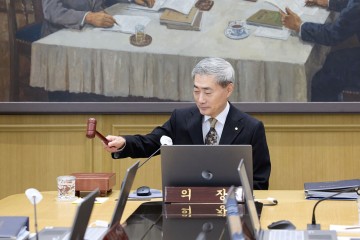

People Power Party Rep. Park Sang-woong has questioned why fewer than two-thirds of officers found guilty of offenses related to their duties were given heavy punishment.
Data obtained by the conservative opposition lawmaker from the Korean National Police Agency showed that 209 police officers were indicted over the past five years for offenses including falsifying public records, leaking investigative information and using violence during investigations.
Judges handed 112 of them heavy disciplinary action, including dismissal, removal from office, demotion or suspension, while 62 received either minor disciplinary action or lesser measures.
The remainder either had their cases dropped for technical reasons or are awaiting a ruling. None were acquitted.
Of those who got relatively light punishments, 41 received minor disciplinary action such as reprimands or pay cuts, while 21 were given warnings, cautions or other measures that did not amount to formal disciplinary punishment.
Proceedings are still underway for 30 officers. Five others were not disciplined because the statute of limitations for disciplinary action had expired, they had retired or their employment had otherwise automatically ended.
Of the 209 officers, 178 were sent to formal trial, while another 31 were subject to other forms of disposition, such as summary proceedings.
Leaking police secret the most common violation
By year, 2021 saw the largest number of indicted officers at 44, followed by 41 in 2024, 37 in 2022, 36 in 2023 and 34 in 2025. Another 17 officers were indicted between January and July this year.
The most common charge was leaking official secrets, involving 70 officers, all of whom were sent to formal trial.
There were 32 charges of violating the Personal Information Protection Act, and 27 charges of leaking information from the police criminal justice information system or accessing or processing it without authorization.
Thirty-one cases involved charges of falsifying or using falsified official documents, while 20 charges were for falsifying electronic public records. There were 23 charges related to abuse of authority by officials during the performance of their duties, 20 for abuse of official authority and 10 of dereliction of duty.
Another seven charges were for destruction of evidence and 10 for harboring or assisting offenders. As some officers faced multiple charges, the figures for individual offenses add up to more than the total number of officers indicted.
“Leaking investigative information, falsifying public records and using violence during investigations are serious offenses in which police officers abuse powers entrusted to them for criminal purposes,” Park said.
“The disciplinary standards and review process should be comprehensively examined so that the outcomes of criminal investigations and disciplinary action do not become disconnected in cases involving duty-related crimes.”
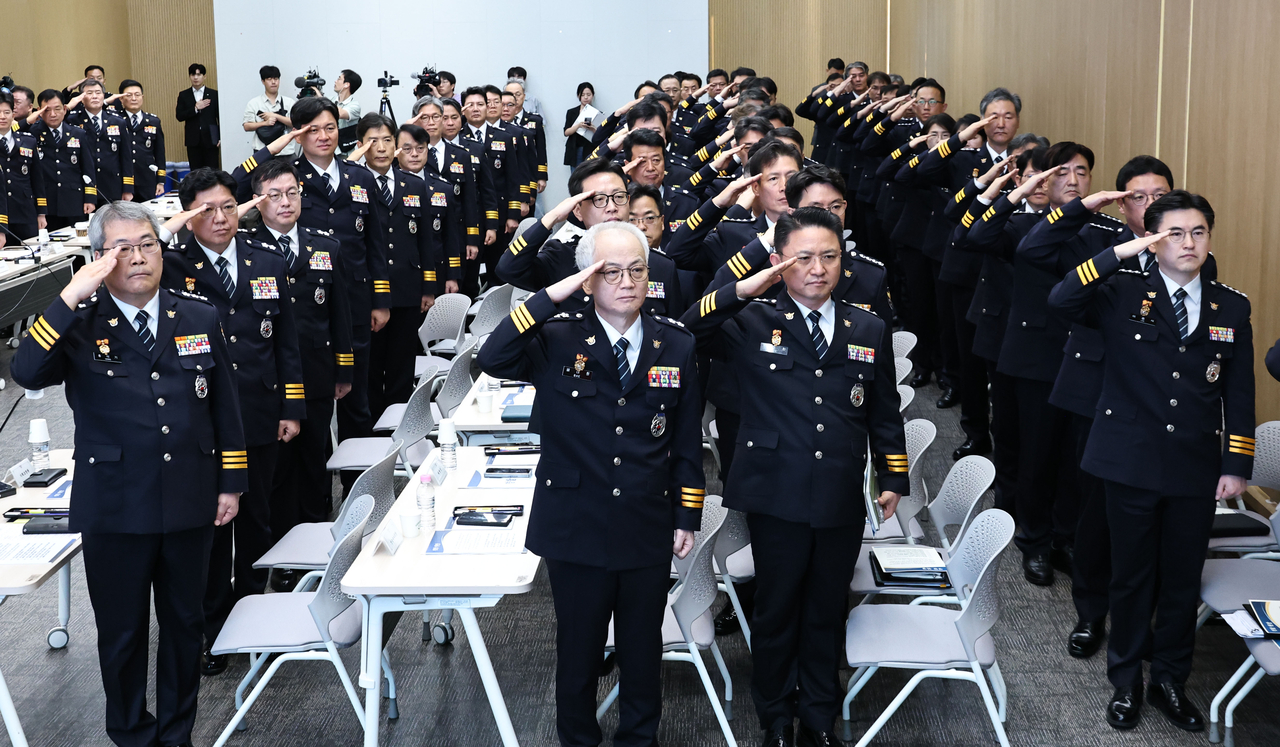
Acting National Police Agency Commissioner General Kim Jong-chul also called for stronger internal controls at his first nationwide meeting of senior police officials since taking office, held Wednesday, amid a series of botched investigations and misconduct cases involving police officers.
“If we lose the public’s trust, the police lose their reason for existence,” Kim said.
He pledged that reforms would “not end with words” and ordered swift improvements across the police force’s investigative capabilities and internal control system.
seungku99@heraldcorp.com