
Leading candidates refrain from taking a clear stance, but civic groups urge debate on where they stand on the decade-long issue
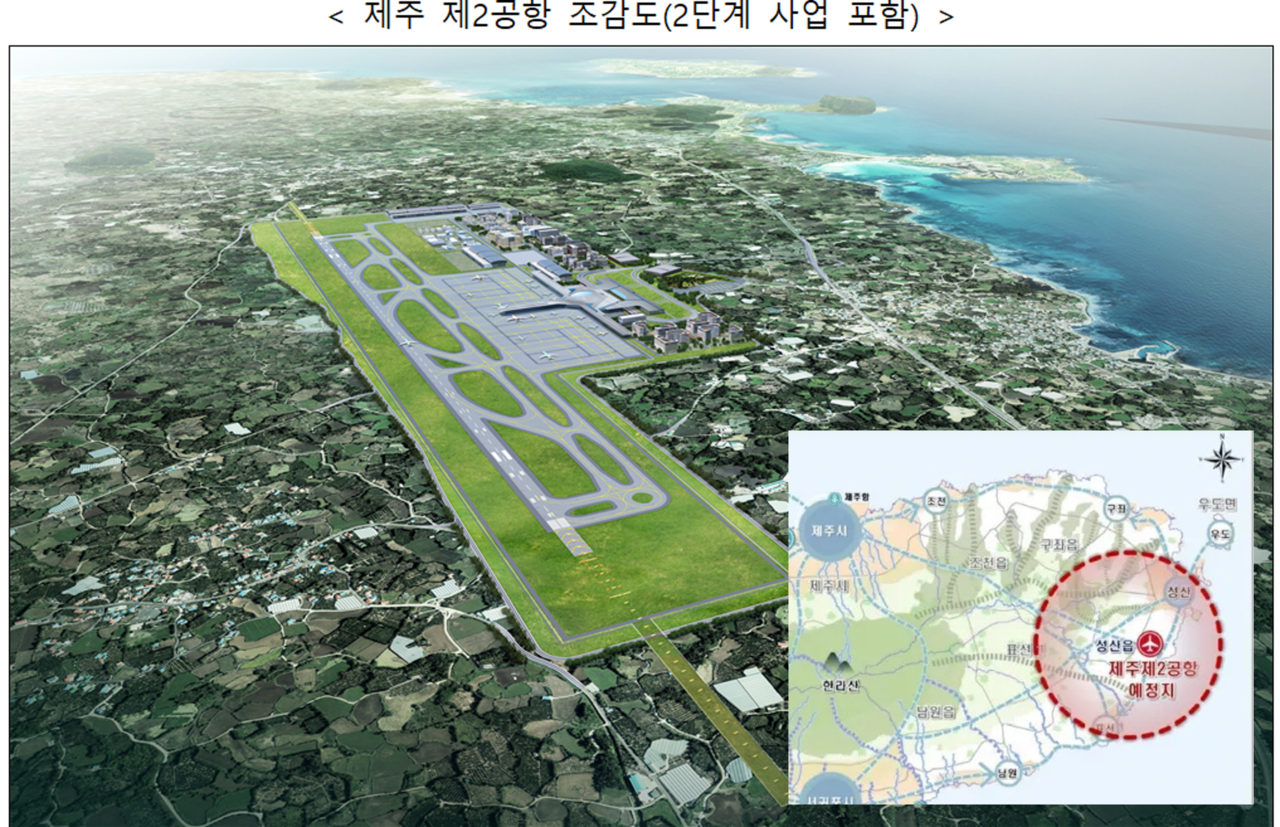
Conflict surrounding the construction of a second airport on Jeju Island is intensifying, as leading candidates for Jeju governor avoid taking a clear stance and civic groups ask major parties to clarify their position on the issue.
Public opinion on the matter has been sharply divided for more than a decade, between the need to ease the island’s chronic air traffic congestion and the efforts to preserve its unique natural environment.
Intensifying clash
On Wednesday, a civic group opposing the project held a press conference at the Jeju Provincial Council and called for the plan to be scrapped, citing environmental and safety concerns.
“In February and March, large flocks of rooks inhabited Udo, posing a high risk of bird strikes as the habitat lies within 8 to 13 kilometers of the planned airport site,” the group said. “However, the strategic environmental impact assessment made no mention of the birds, which indicates serious flaws and poor oversight in the assessment.”
In contrast, another civic group supporting the project held a press conference at the same venue a day earlier, urging the government to proceed with construction without adding further procedures.
“A second airport is a key national infrastructure project for Korea’s aviation safety system and future air travel demand,” the group said. “It should not be swayed by political circumstances or temporary public opinion.”
The standoff has continued since the government first announced plans in 2015 to complete the new airport by 2025. Though the project has yet to break ground, opinions among Jeju residents have become increasingly polarized.

Stalled for over decade
The second airport project has remained a major fault line in local politics since the central government designated a site near the island’s eastern coast for the new airport in 2015.
The project gained momentum under the administration of former President Yoon Suk Yeol, with the completion of the strategic environmental impact assessment and the official announcement of the basic development plan in 2024.
But after Yoon’s removal from office, and amid intensifying local disputes, the project has effectively stalled.
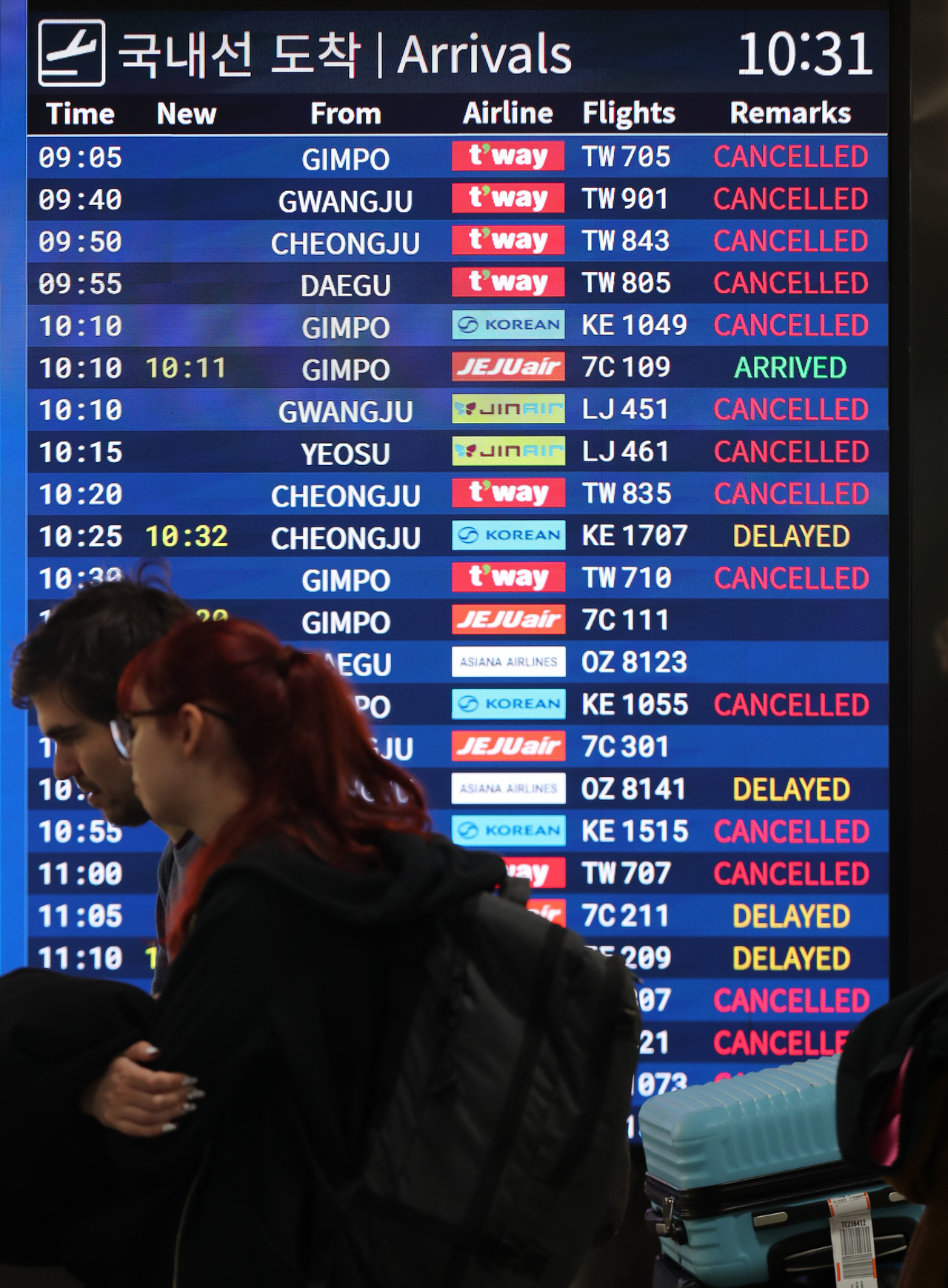
The push for a second airport stems from chronic overcrowding at the existing Jeju Airport near Jeju City.
The route linking Jeju and Seoul’s Gimpo Airport has long ranked among the world’s busiest air routes, with more than 13 million passengers recorded in 2024, according to International Air Transport Association data.
According to the Ministry of Land, Infrastructure and Transport, a total of 31.3 million passengers used Jeju Airport in 2019, and demand is expected to continue growing amid rising global visitor numbers. The airport can currently accommodate about 31.8 million passengers after years of expansion and renovation work.
The overcrowding has also raised safety concerns. By 2022, six takeoffs and landings were being scheduled within five-minute intervals during peak hours.
However, public opinion over the project remains sharply divided. According to a joint survey conducted earlier this year by five Jeju-based media outlets, 46 percent of respondents supported the construction of a second airport, 49 percent opposed it and only 5 percent were undecided as the middle ground continued to shrink.
Concerns of overtourism and the project’s impact on nearby farming and livestock industries have been raised, but the loudest opposition centers on fears that construction could damage the island’s volcanic terrain, underground water resources and nearby migratory bird habitats.
Bird strike concerns have also come under even greater scrutiny following the fatal Jeju Air crash near Muan International Airport in 2024.
Politicians remain cautious
Reflecting the complexity of the issue, major candidates in the upcoming gubernatorial election are hesitant about whether to push ahead with or block the project.
Wi Seong-gon of the ruling Democratic Party of Korea said in an interview with local media on Monday that procedures such as a local referendum are needed to determine residents’ actual views before deciding whether to proceed with the project.
Moon Sung-yu, a preliminary candidate from the main opposition People Power Party, said last Friday that a neutral verification system should be introduced to reassess whether proper standards are being met on key issues such as bird strikes, aircraft noise and groundwater protection.

forestjs@heraldcorp.com