
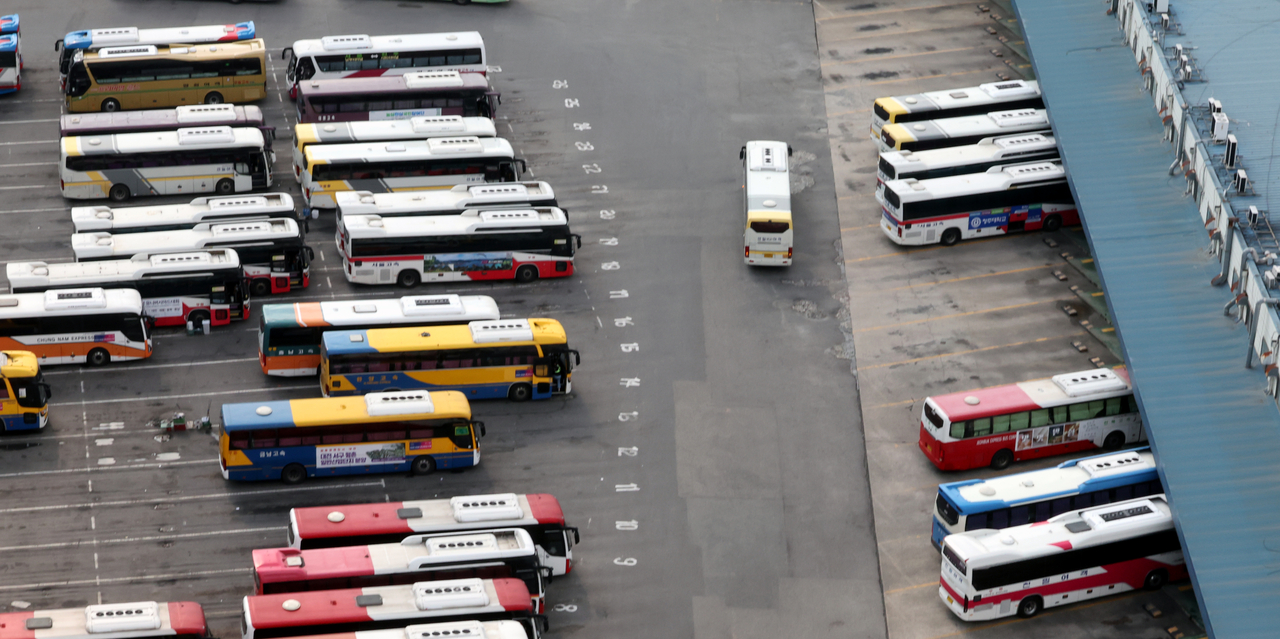
Jeong, a woman in her 60s, once had a direct bus for her trips from Yongin to Ulsan. Now she travels more than an hour to Seoul to catch a train — if she can get a ticket.
The bus service between the two cities ended during the COVID-19 pandemic. Jeong, who makes the trip several times a year, said reduced services from nearby cities have left her with few convenient alternatives.
“Trains are often sold out on weekends, even when I try to book three weeks in advance,” she said. “People going to hospitals, traveling for work or taking trips all seem to rely on the same limited train services.”
Falling passenger numbers have been accompanied by a steady reduction in intercity and express bus routes across South Korea.
For operators, running fewer services as demand declines may make financial sense. For travelers who still need those routes, it can mean a longer trip or fewer choices about when to leave.
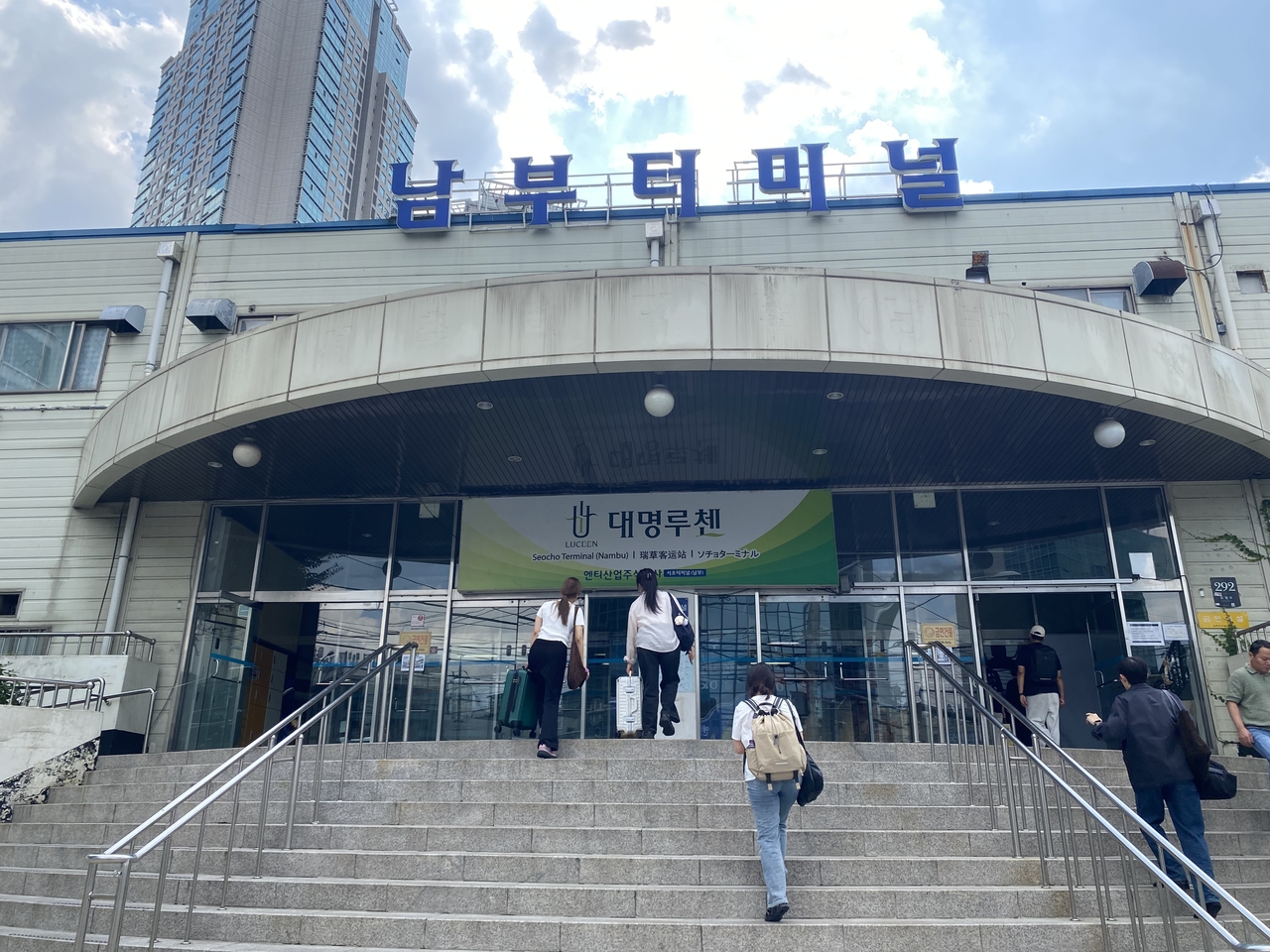
The strain is visible at Seoul’s Nambu Terminal, whose operator has expressed an intention to return its business license to the Seoul Metropolitan Government, citing financial difficulties.
The terminal’s possible closure follows a series of shutdowns at regional bus terminals.
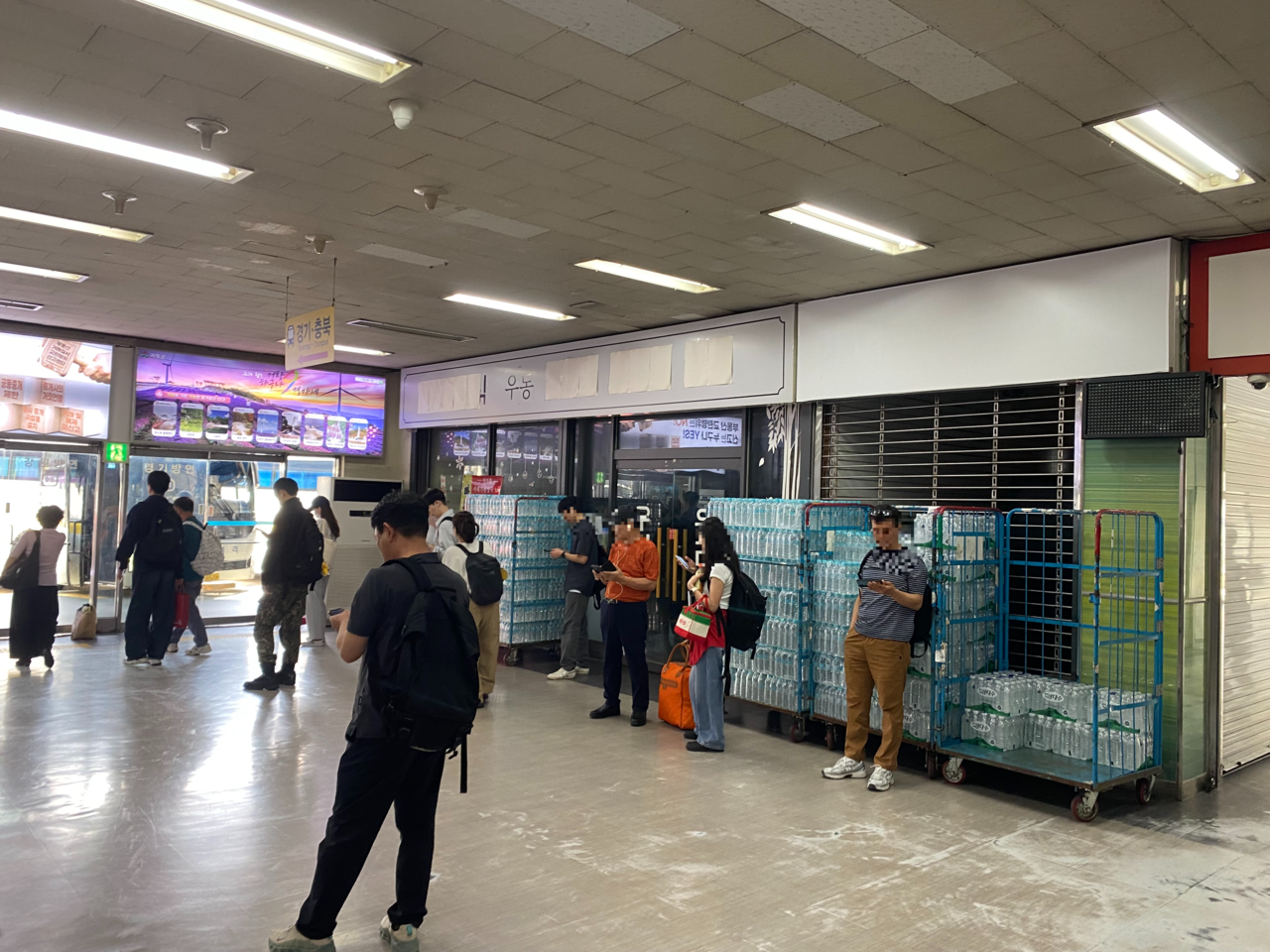
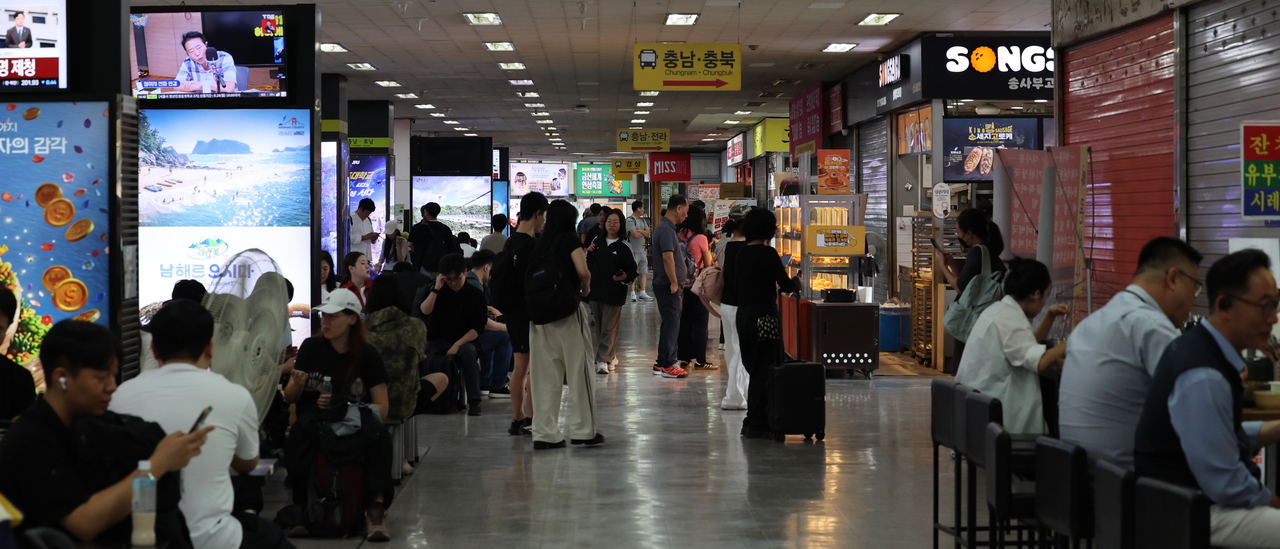
Ahead of Chuseok last week, travelers carrying luggage and boxes filled the benches at Nambu Terminal. Yet nearly 20 shops stood vacant, with traces of old signs still visible. Only about five appeared to be open.
“It’s Chuseok, so there are still this many people. But on ordinary days, it’s hard to find passengers here,” said a bus driver waiting for passengers bound for destinations in Gyeongsang Province.
The driver, who has worked at the terminal for more than 10 years, said its bus routes had fallen by about half compared with the late 2010s. A passenger in her 70s, surnamed Paik, recalled a busier terminal a decade ago.
“People used to stand packed across the entire waiting hall before the holidays,” Paik said.
Nambu Terminal has served as a major intercity bus hub since its predecessor began operating in 1968. It moved to its current site in Seocho-gu, southern Seoul, in 1990.
Smaller network
The number of intercity and express bus routes fell 30.1 percent, from 4,584 in 2015 to 3,203 last year. The network had more than 5,000 routes two decades ago.
Passenger numbers have also dropped, though over a different period: from 283 million in 2005 to 118 million last year, a decline of 58.2 percent.
Trains and passenger cars have gained a larger share of passenger transportation. The share for trains rose from 15.5 percent in 2013 to 18.2 percent in 2023, while the share for passenger cars grew from 54.7 percent to 60.2 percent in the same period. But a train or car does not offer every traveler a practical replacement for a lost bus route.
In Gangwon Province, the number of intercity bus routes fell from 413 in 2019 to 202 in June 2024. The cuts have raised particular concern for residents of less-populated areas, where other transportation options can be limited.
“If routes are eliminated based solely on profitability, the result could be to accelerate regional depopulation,” said Rep. Cho In-cheol of the Democratic Party of Korea. “The government should urgently come up with special measures to maintain public transportation infrastructure, such as making the essential-route system more effective.”
Kang Kyung-woo, a transportation and logistics engineering professor at Hanyang University, said rail services need enough long-distance passengers to be financially viable — a threshold that can be difficult to meet where demand is dispersed. He called for expanding demand-responsive transportation and maintaining different forms of bus service in underserved areas.
“Passenger rail requires a certain level of long-distance demand to be economically viable. In Korea, where regional demand is dispersed, it is not easy to secure that level of demand in many areas,” Kang said.
“Transportation policy has largely been built around metropolitan areas and railways,” Kang said. “We also need to consider the role of various bus services in improving accessibility in underserved areas.”
forestjs@heraldcorp.com