Hyundai’s latest tie-up builds on Chung Euisun’s broader vision to deepen the automaker’s Indian footprint
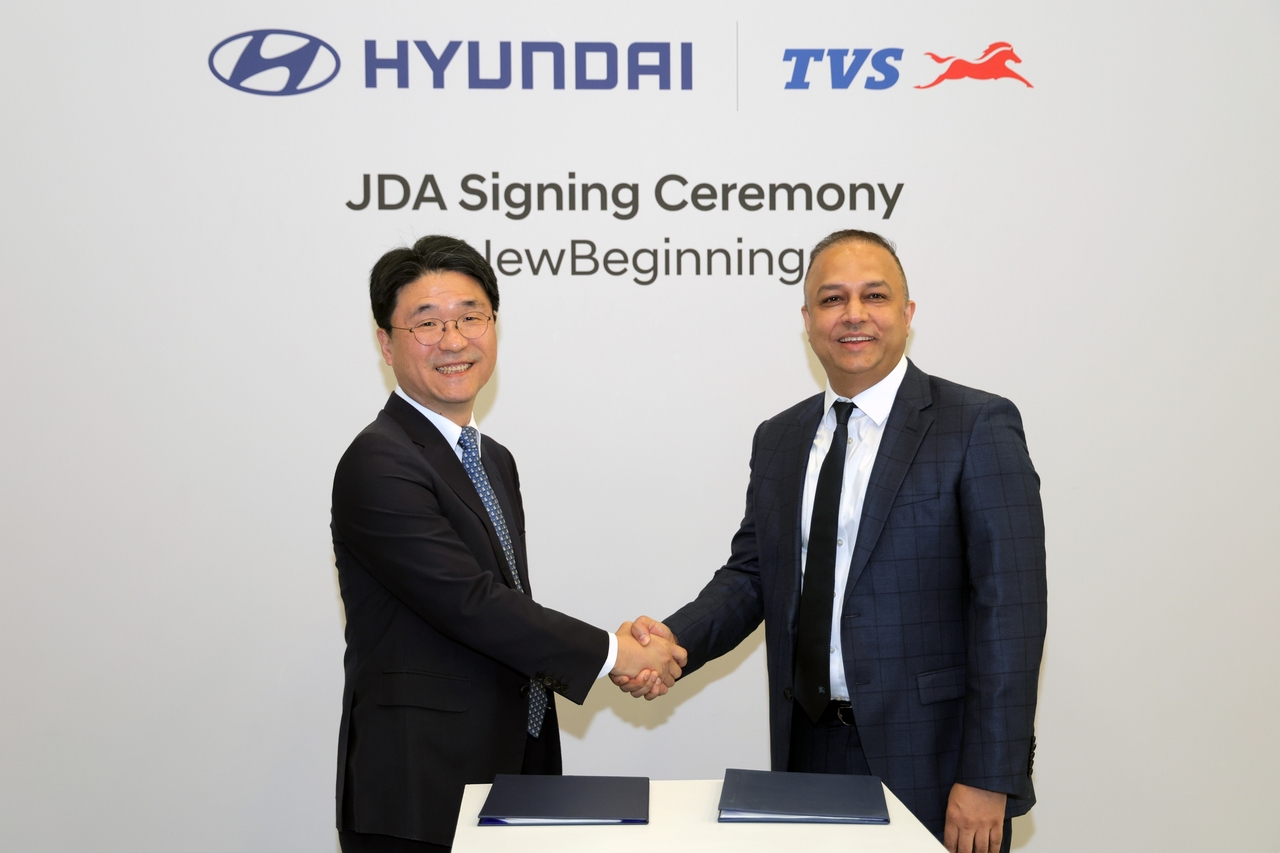
Hyundai Motor and TVS Motor Company, one of India’s leading motorcycle manufacturers, have partnered to co-develop and launch electric three-wheelers for the Indian market, marking a further step in the South Korean carmaker's localized mobility strategy.
Hyundai Motor said it signed a joint development agreement with TVS Motor Company on Monday at the Bharat Mandapam Convention Center in New Delhi.
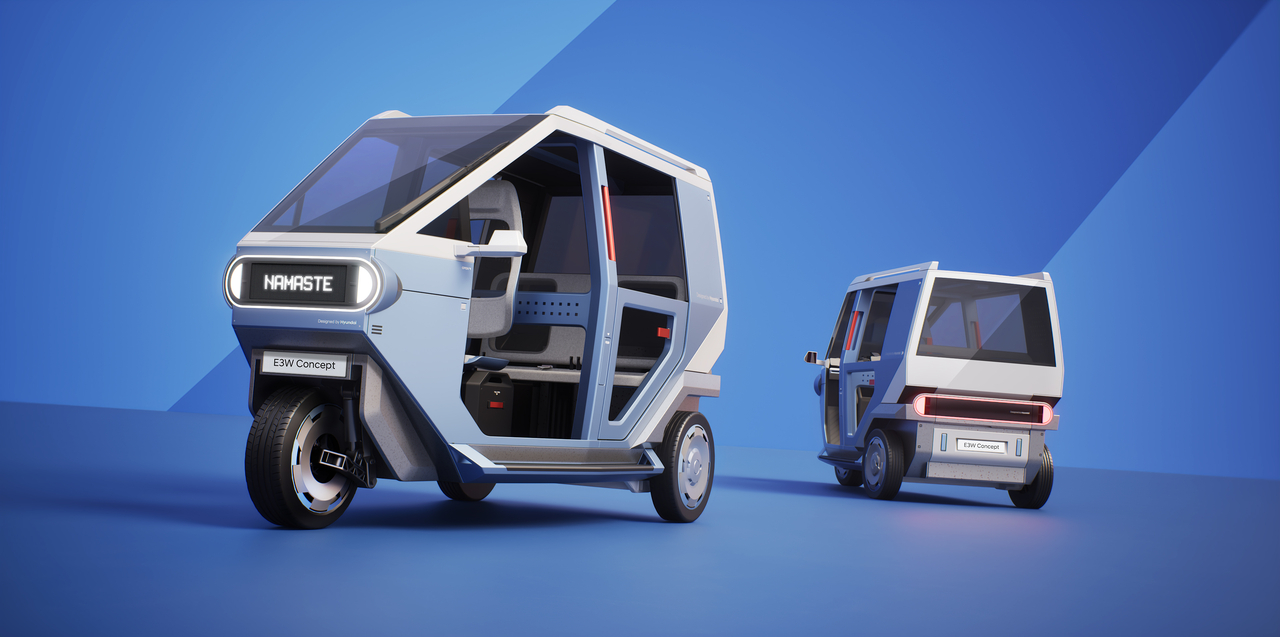
Under the arrangement, Hyundai Motor will lead the engineering and design of the electric three-wheeler, or E3W, leveraging its advanced mobility technologies. TVS will oversee manufacturing, sales and after-sales service.
India is the world’s largest market for three-wheelers, which are widely used for urban logistics and short-distance transportation.
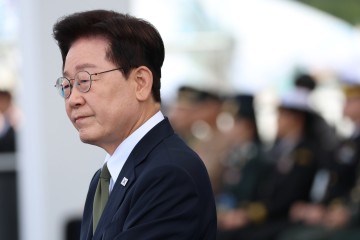
The agreement was announced as President Lee Jae Myung visited India for a summit with Prime Minister Narendra Modi, where both leaders pledged to nearly double bilateral trade and deepen economic ties.
Hyundai Motor Group Executive Chair Chung Euisun was also part of the business delegation that accompanied Lee to India. At a state luncheon hosted by Modi on Monday, Chung shared plans to complete the integrated R&D center in India by 2028. He personally invited Modi to attend the opening ceremony of the company's third plant later this month, according to Cheong Wa Dae.
The latest partnership with TVS is viewed as the culmination of Chung and Modi's long-running vision to create India-tailored green mobility.
The project traces back to 2018 when Modi and Chung — then the group’s vice chair — met during the Korea-India Business Forum in New Delhi.
At the time, Modi stressed the need for safe and environmentally friendly transportation that could improve India’s challenging traffic and transportation conditions. Chung responded by ordering a review of new mobility solutions for the Indian market, according to Hyundai.
Since then, Hyundai has been working to develop green mobility for India. The effort gained further momentum in 2024 when Chung visited India for the initial public offering of Hyundai Motor India, the largest-ever listing in India, which raised $3.3 billion. Chung met with Modi and shared Hyundai’s future mobility vision and discussed the design direction of a new vehicle.
Hyundai later unveiled concept models of an electric three-wheeler and a micro four-wheeler at Bharat Mobility Global Expo last year, while also announcing plans to collaborate with TVS.
“Hyundai Motor Company has long explored ways to contribute to improving India’s transportation environment as a key market, and our collaboration with TVS Motor is a strategic decision rooted in that effort,” said Ko Joong-sun, senior vice president of corporate strategy & planning at Hyundai Motor. “We hope the co-developed E3W enables broader access to safer and more sustainable transportation for people across the country.”
“The Joint Development Agreement marks an important step in our partnership with Hyundai Motor Company and advances our shared ambition to develop electric three-wheeler solutions,” said Sharad Mishra, president of group strategy at TVS Motor Company. “By bringing together complementary strengths — including our electric three-wheeler platform, engineering expertise, and deep understanding of customer needs — we are well-positioned to deliver purpose-built products for India and additional markets.”
The companies also plan to locally source and manufacture key components in India, a move that they said would bolster the country’s automotive supply chain and create jobs.
After the E3W's Indian launch, the companies will consider expansion into other markets where three-wheelers are widely used.
India is one of Hyundai’s most critical markets, serving as a key global production base for the Korean automotive giant.
Hyundai announced last year it would invest $5.1 billion in India by 2030 and launch 26 new models. It also announced plans to make India a key global export hub, targeting 30 percent of its total exports to come from the country.
sahn@heraldcorp.com