Fin.K.L, Fly to the Sky lead revival fueled by nostalgia at home and new fans abroad

Some of the biggest names that shaped Korean pop music in the late 1990s and early 2000s are stepping back into the spotlight, adding momentum to a retro revival already sweeping through popular culture.
First-generation girl group Fin.K.L announced in September that it is resuming full-group activities for the first time in about 21 years, while R&B duo Fly to the Sky has confirmed plans to return after releasing its last album in 2019. Jewelry, another defining girl group of the early 2000s, also reunited onstage last month, with members Park Jung-ah, Lee Ji-hyun, Cho Min-ah and Seo In-young performing together on television for the first time in 20 years.
K-pop reunions are nothing new. But the cluster of high-profile returns comes as Y2K culture, a revival of turn-of-the-millennium trends, remains fashionable and audiences are discovering older Korean pop music through routes that did not exist during the artists' heyday.
Old songs, new listeners
For Korean listeners who grew up with these acts, nostalgia is an obvious draw. Younger listeners, meanwhile, are encountering songs from earlier generations through short-form videos, remakes and performances by current idols.
An industry official pointed to Riize's recent cover of T-ara's 2009 hit "Bo Peep Bo Peep" at its third-anniversary fan meeting and the group's 2024 song "Love 119," which samples 2000s indie band Izi's 2005 hit "Emergency Room."

"When current K-pop groups mention or perform songs by earlier-generation artists, I think that helps bring them back into the conversation," the official said, adding that short-form platforms such as Instagram Reels have given older songs another avenue to reach younger listeners.
Music critic Lim Hee-yun sees the phenomenon as part of a broader reaction to an increasingly fragmented media environment.
"In the past, there was what we call a monoculture. People watched the same television programs and shared common interests, trends and cultural currents," Lim said. "Now that media consumption has become fragmented, particularly with so much short-form content, there seems to be nostalgia for something more unified, larger and established."
Those who experienced the music firsthand respond to reunions with familiarity and loyalty, he said. Meanwhile, those too young to remember the original era can encounter the same music without that nostalgia attached.
The economics of a comeback have changed as well. Social media allows artists from earlier generations to identify and reach existing fans far more efficiently than in the past, Lim said, lowering one of the hurdles to promoting concerts or new content after years away.
Kang Soo-jin, head of production cooperation at Kakao Entertainment, said more acts from previous generations are considering returns behind the scenes.
"These were fandom-based acts. Their fans have simply gotten older, but the powerful fandoms they had still exist," Kang said Wednesday. "Until recently, there weren't many successful comeback examples, so I think artists hesitated. But now we're seeing those examples."
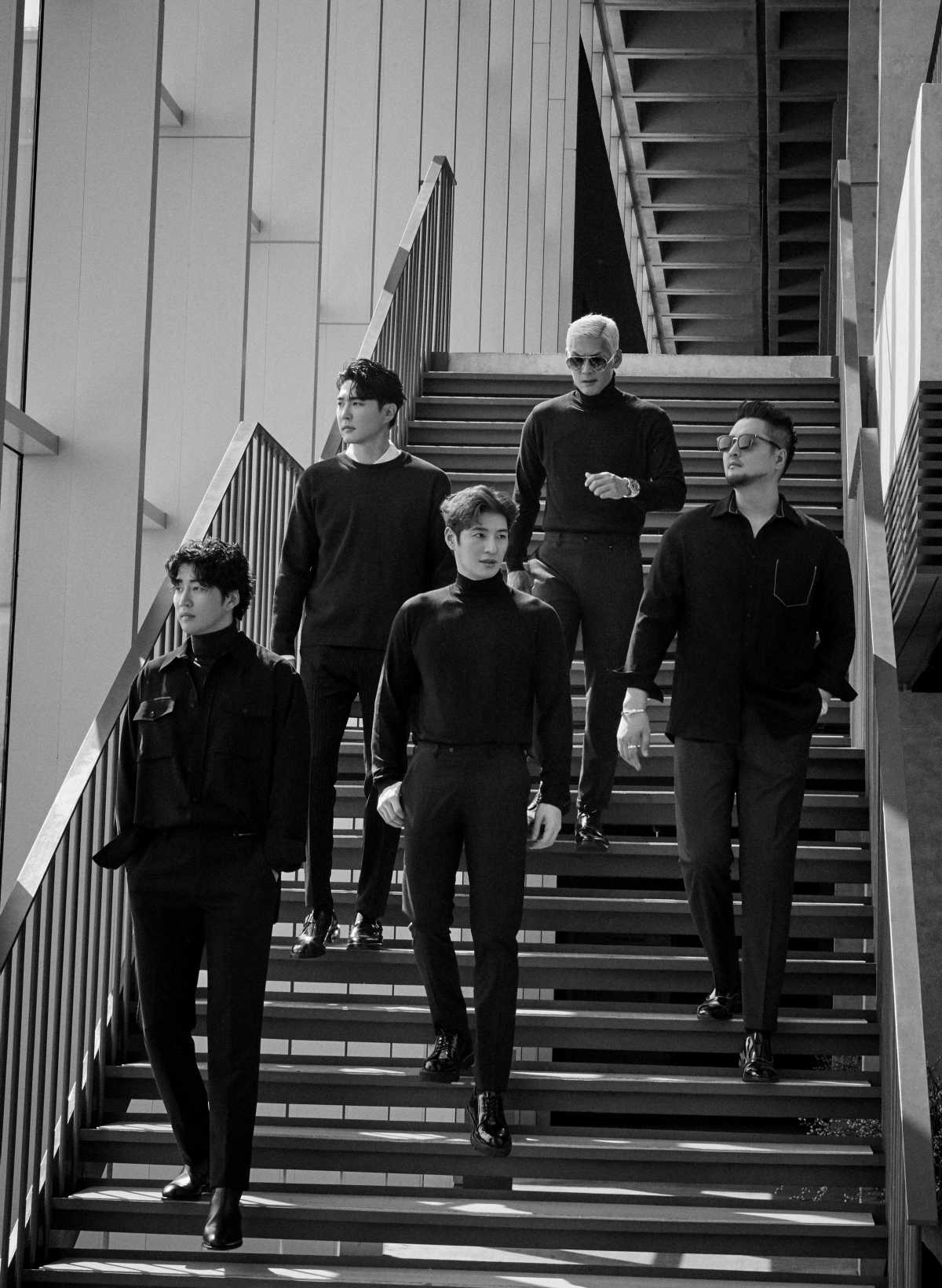
One such example is the first-generation boy group g.o.d, which has continued holding full-group concerts years after reuniting, with all five dates of its 2025 Seoul and Busan concerts selling out.
Beyond nostalgia
Perhaps the biggest change, however, is that the potential audience no longer stops at Korea's borders.
Kang described the global rise of K-pop — from Psy to BTS and subsequent generations — as creating a "gravitational pull" that draws overseas listeners deeper into the genre's history.
"K-pop didn't suddenly fall from outer space," Kang said. "Overseas fans start wondering who the legends of the past were and searching backward. They might start with reaction videos to BTS or Aespa and then gradually discover famous K-pop artists from earlier generations."
Kang said he has seen overseas K-pop reaction videos on YouTube featuring older Korean acts such as g.o.d and Park Hyo-shin and even received a request for a Psy autograph on behalf of a teenage fan abroad.
Fin.K.L's return goes beyond the kind of one-off reunion that groups from earlier eras have sometimes staged. After reuniting and releasing a song in 2019, the four members are now embarking on sustained activities, with agency Gemstone E&M saying the group plans music, performances and other projects over roughly the next two years.
Not every act can expect the same reception. Lim said international interest in K-pop's history may provide another opportunity, but only a handful of groups, such as Big Bang, have enough recognition to expect substantial demand on that basis alone.
The potential audience for these returns, however, is no longer limited to the fans who were there the first time. It now includes younger Koreans encountering the music years later and overseas listeners tracing K-pop back through its earlier generations.
"Korean fans approach them through nostalgia, while global fans approach them as something fresh," Kang said. "I think those two forces are coming together."
jaaykim@heraldcorp.com