Global Thinkers: Municipal Excellence
Wonju is attempting something unusual for a midsized Korean city: redefining its global relevance not through large-scale construction or branding, but by reorganizing its culture and economy around participation and long-term industrial capacity.
City officials describe this shift as a structural transformation rather than a promotional initiative — a realignment that ties outdoor culture, foreign tourism, research-driven industry and emerging artificial intelligence ecosystems into a single developmental trajectory.
Within the Global Thinkers framework, Wonju’s strategy aligns with two key categories: the Global Culture Gateway badge, which evaluates how effectively a city channels international inflows into sustained cultural engagement, and the Global Economic Connector badge, which measures whether a city can position itself as a conduit linking national strategies to global economic networks.
Global Culture Gateway
Converting visitor inflows into sustained cultural participation
Wonju’s cultural strategy begins with a simple premise: The city’s most distinctive asset is its walkable geography. Instead of viewing outdoor events as temporary attractions, the city is using them as the foundation of a long-term cultural ecosystem rooted in mobility, landscape and international exchange.
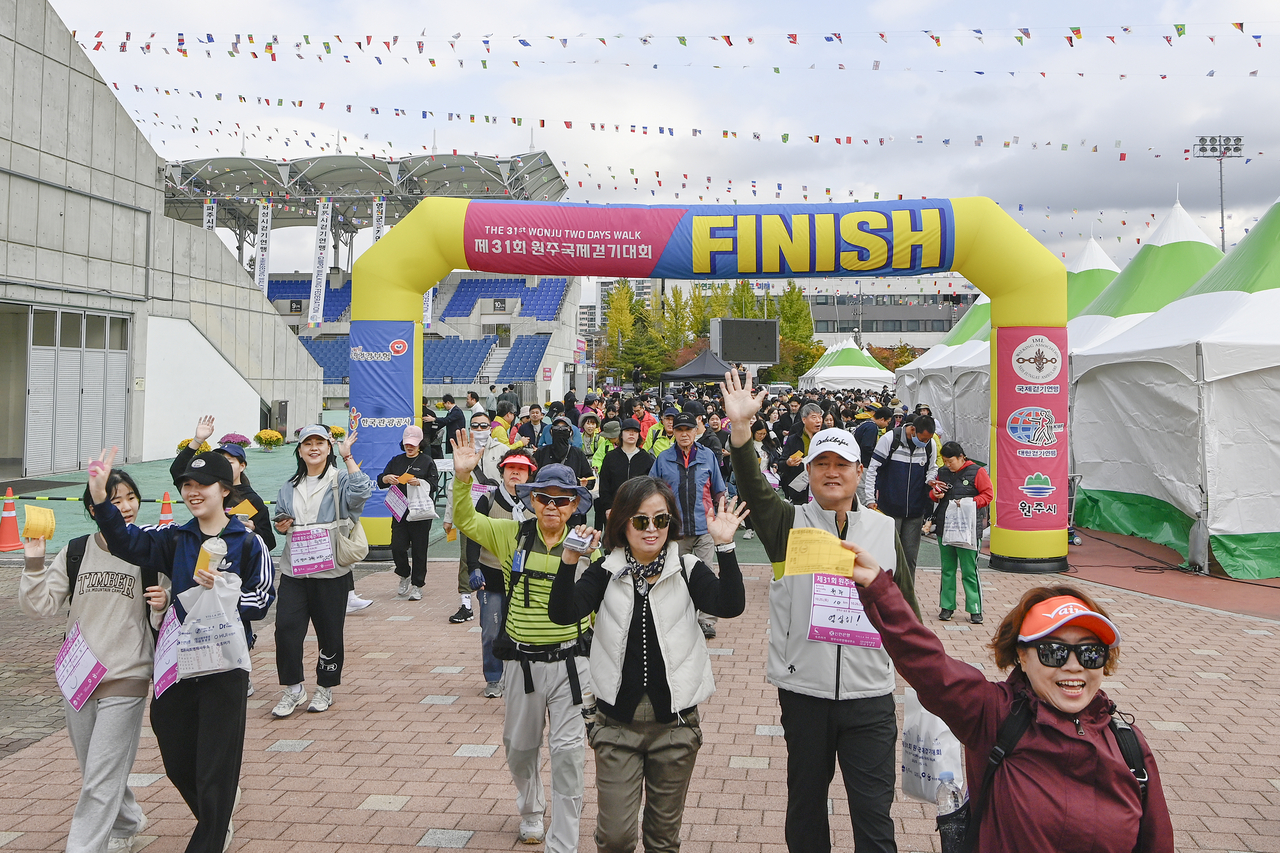
At the center of this effort is the Wonju International Walking Festival, one of Korea’s longest-running global outdoor events. Known internationally as the Wonju Two Days Walk, the festival is accredited by the International Marching League — placing Wonju among just 26 officially recognized walking cities worldwide.
Local officials view this certification as more than symbolic. They say it is part of global infrastructure that enables an annual inflow of international walkers who return year after year, embedding the city into a long-term global circuit.
Over its 31 editions, the festival has expanded into a two-day cultural platform that blends landscape tourism with structured programming. Participants select from 5-, 10-, 20- or 30-kilometer courses that pass through Oksunbong, Chiaksan foothills and other signature terrain.
Foreign participation has risen sharply. After the pandemic, overseas walkers increased from 145 in 2023 to 913 in 2024 and 942 in 2025. City officials interpret this rise as evidence that Wonju’s outdoor culture is gaining traction not because of marketing, but because the walking festival functions as a reliable, internationally accredited system.
This influx is supported by a fast-growing foreign group tourism model, particularly through coordinated programs with the Korea Tourism Organization.
In 2025, approximately 700 visitors from Beijing, Qingdao, Shenyang and Shanghai in China traveled to Wonju through integrated packages combining the walking festival with the 2025 Wonju Mandu Festival. Their itineraries included festival participation, food experiences, traditional market visits and literary programs.
Local officials highlight that these tourist groups are not arriving for shopping-oriented day trips, but are participating in city-curated programs that integrate outdoor culture and local heritage.
As a UNESCO Creative City of Literature, Wonju also leverages international networks with cities such as Iowa City in Iowa, Dublin, Manchester in England and Prague. These partnerships expand the city’s cultural reach and reinforce its model of linking outdoor mobility with intellectual and creative engagement.
Global Economic Connector
National R&D zone powering Korea’s next industrial transition
If culture is the foundation of Wonju’s identity, economic transformation is its long-term survival strategy. The city contends that its emergence as a Global Economic Connector is driven by a structural reorganization of its industrial base — one that positions Wonju at the center of Korea’s semiconductor, digital health care and AI transformation efforts.
The turning point came with the Ministry of Science and ICT’s designation of the Gangwon R&D Special Zone at the end of 2025. Spanning 5.5 square kilometers across corporate districts, six industrial complexes, universities and research institutes, the cluster is the largest innovation cluster in Gangwon Province.
The designation guarantees 100 billion won annually ($69 million) in national support, enabling full-cycle innovation: from research to testing, demonstration, regulatory support, commercialization and market deployment.
Companies receive extensive benefits: tax reductions up to 100 percent, regulatory sandbox exemptions, eased construction rules, preferential access to public assets and dedicated funds for technology verification.
Wonju has also reshaped its internal governance to match this industrial scale. An economic bureau and a dedicated investment promotion division were established, along with a one-stop enterprise support task force that compresses monthslong administrative processes into roughly 30 days. The goal is to remove friction so that investment commitments convert rapidly into operational projects.
Simultaneously, Wonju is building one of the country’s most ambitious ecosystems for AI transformation, or AX.
The 2026 digital health care AX transition master plan, supported by 10 billion won in national planning funds, is designed to evolve into a multiyear national initiative exceeding 1 trillion won. The plan aims to redesign how hospitals, device companies and health-data institutions transition into AI-based operations.
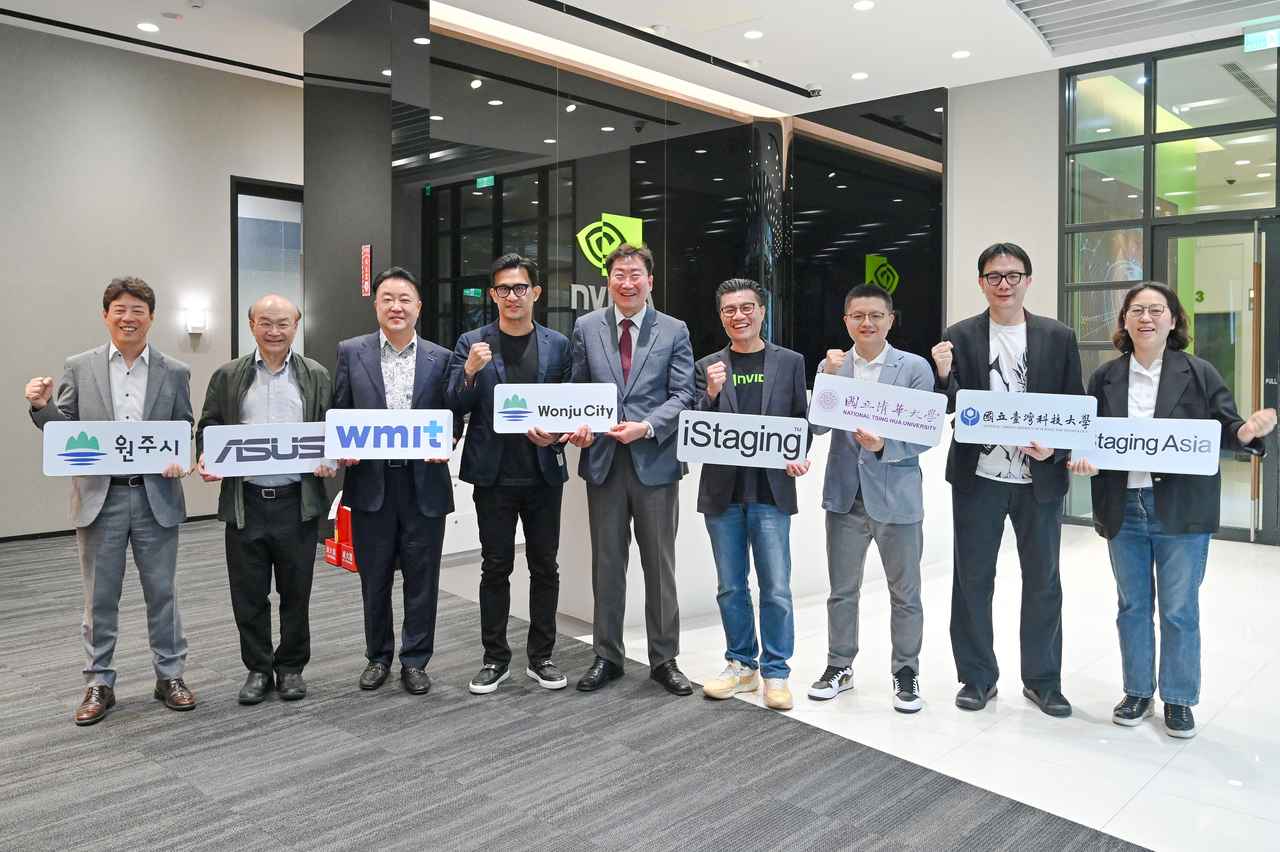
Another key anchor is the Nvidia Education Center, which recently expanded from a 12 billion won Ministry of Land proposal into a 35 billion won national AI workforce hub under the Ministry of Science and ICT.
With over 2,000 square meters of training space in Innovation City, graphic processing unit servers, more than 100 AI-ready workstations and 3D/4D simulation facilities, the center will train around 300 professionals annually from this year. Programs are being developed with global partners and will be linked to local universities through non-degree and graduate pathways.
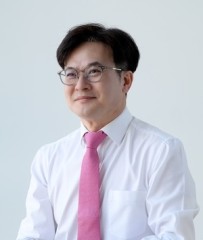
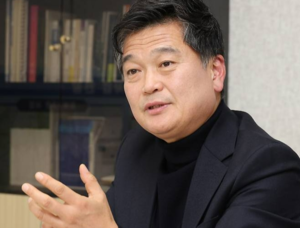
Mayor Won Gang-soo describes these efforts as long-term infrastructure for the next phase of Korea’s industrial evolution.
“Our goal is to build an economy where companies want to invest and a semiconductor industry city that can compete globally,” he said. “The cycle between industrial vitality and citizen well-being is at the center of what we aim to strengthen.”
A city reorganizing its cultural and economic function
Wonju’s trajectory stands out because it is not based on speculative future projects, but on operational systems already visible on the ground.
Its cultural ecosystem is growing through internationally accredited outdoor events, structured group-tour programming, literary exchanges and a rising foreign visitor base. These developments support the city’s argument for the Global Culture Gateway badge: that Wonju is converting international inflows into repeatable, sustained cultural participation anchored in nature, wellness and creative engagement.
Its economic model, built on national R&D infrastructure, investment-attraction reforms, semiconductor scaling and a comprehensive AX ecosystem, supports the city’s case for the Global Economic Connector badge: Wonju is becoming a bridge linking national industrial priorities with emerging global technologies.
The city does not claim to be a finished global hub. It instead argues that the groundwork has been laid — culturally, industrially and institutionally — for a midsized Korean city to evolve into a globally connected node.
The Korea Herald, in collaboration with Herald Business, examines the present and future of local governments in a new series titled "Global Thinkers: Leadership Excellence," an assessment and certification program evaluating the international competitiveness of local governments.
Participating municipalities are recognized with badges representing five core elements used to gauge excellence: attracting investment, incubating talent, fostering tourism, improving living standards and strengthening connections with other global cities. — Ed.
jychoi@heraldcorp.com