
With over half of Koreans having used ChatGPT for search in the past three months, local platforms are moving fast to link AI to shopping and payments before portal traffic erodes further

New survey data shows more than half of South Korean internet users have used ChatGPT at least once in the past three months for search, confirming an ongoing trend away from the country’s long-dominant portal-based platforms like Naver.
According to OpenSurvey’s AI Search Trend Report 2026, published this week, 54.5 percent of Korean respondents said they had used ChatGPT to search for information at least once over the past three months. This figure, based on a survey of 2,000 men and women aged 10 to 59, reflects a sharp rise from 39.6 percent in March 2025.
Google’s Gemini also showed strong growth, with usage more than tripling from 9.5 to 28.9 percent during the same period.
In contrast, traditional platforms are gradually losing ground. Local search giant Naver’s usage fell from 85.3 to 81.6 percent, while YouTube dropped from 78.5 to 72.3 percent.
These figures reflect any usage within a three-month window, not exclusive or primary use.
According to the same survey, “knowledge acquisition” is now the top reason for using search services in Korea, overtaking “location-related information” for the first time. Users increasingly turn to AI tools for productivity-related tasks such as summarizing texts, answering complex questions, or assisting with work and study.
Crucially, user loyalty is consolidating around AI ecosystems. Among ChatGPT users, 77.2 percent said they would rephrase their question if the initial response was unsatisfactory, while only 32.4 percent said they would return to conventional search services. Nearly 30 percent now opt to try a different AI model instead. This suggests that generative AI is becoming the default entry point for online search, not just a secondary tool.
“The real shift is where people act,” said an industry official who requested anonymity. “Generative AI encourages users to ask in full sentences, which naturally leads to learning and transactions, not just link-hopping.”
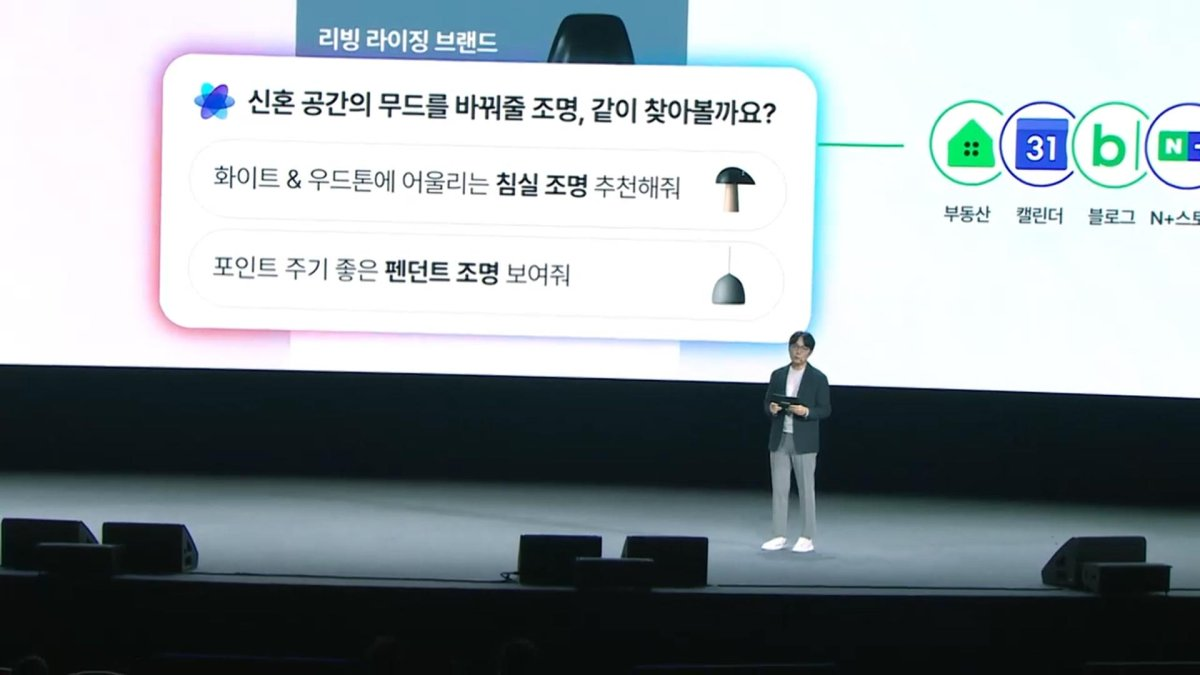
In response, Korean platforms are pivoting toward AI integration to retain users. Naver, the country’s largest search engine, plans to roll out an “AI Tab” in the second quarter, combining search, shopping, reservations and payments within a unified interface. Its AI Briefing feature, which condenses information into quick summaries, now accounts for over 20 percent of all Naver queries.
Kakao, while not a search engine, also plays a central role in Korea’s digital ecosystem as the operator of KakaoTalk, the country’s dominant messaging app. Through KakaoTools — a platform that connects ChatGPT with services like maps, ride-hailing, calendars and payments — Kakao is trying to embed AI into daily user flows. The company is also expanding integrations with third-party platforms, including Olive Young and Musinsa, aiming to turn KakaoTalk into a transaction-enabled AI assistant.
Globally, between November 2024 and 2025, Google’s organic traffic to over 2,500 sites already fell by 33 percent globally and 38 percent in the US, according to Chartbeat data cited by the Reuters Institute.
Gartner forecasts that traditional search volumes will decline by 25 percent by the end of 2026, as users continue to turn to AI-native interfaces for direct answers rather than link-based results.
mjh@heraldcorp.com


