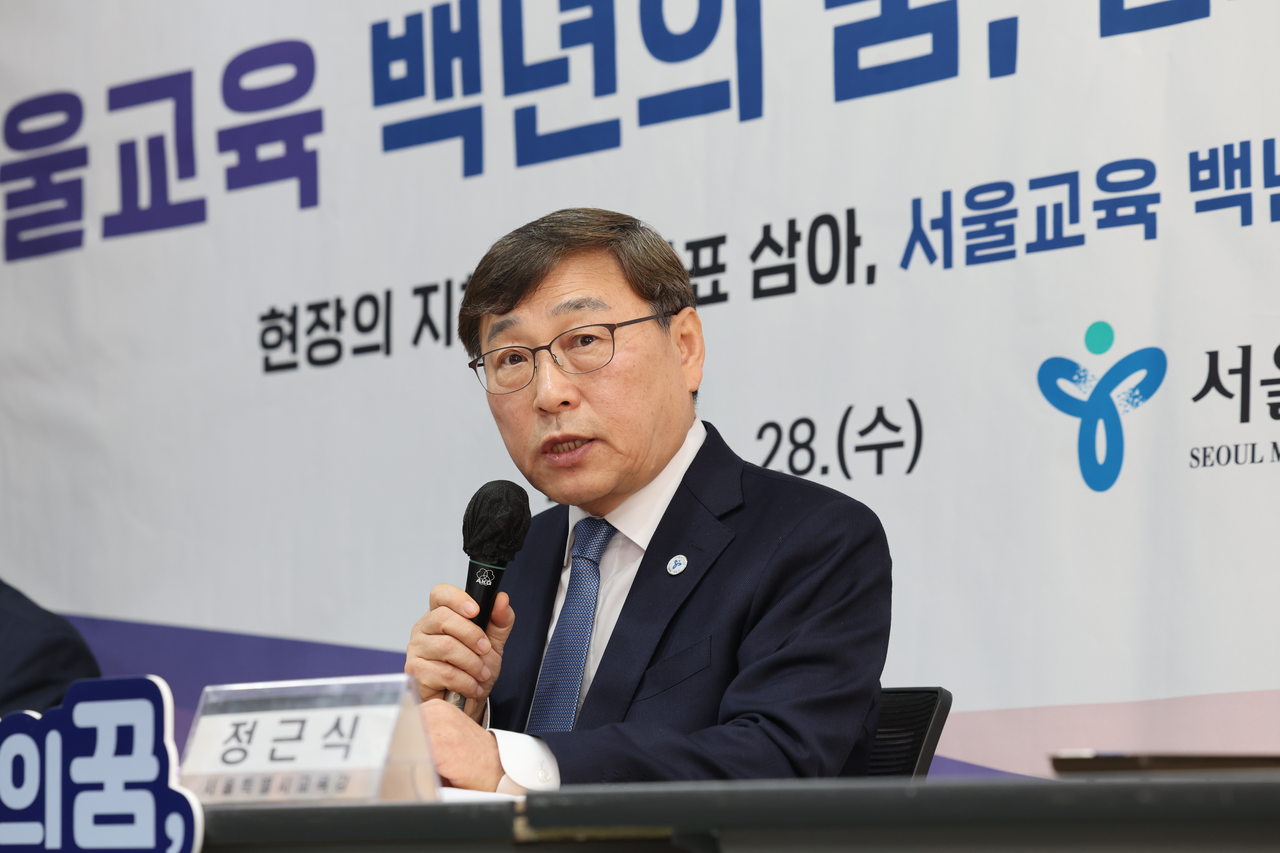
Seoul Education Superintendent Jung Geun-sik on Wednesday pledged to reshape classrooms for the artificial intelligence era and expand education subsidies for 3-year-olds, setting out the city's 2026 vision for cultivating future-ready talent.
Building on that pledge, the Seoul Metropolitan Office of Education mapped out a broader reform blueprint for the 2026 academic year, saying it will strengthen accountability-based learning, expand future talent programs and create a safer school environment.
At the office’s New Year press conference, Jung said the agenda is aimed at “laying the foundations of education that future generations will remember,” describing the new policies as the first step toward what he called a 100-year dream for Seoul’s schools.
Jung noted that last year’s initiatives focused on long-term efforts to improve student mental health, adjust the college admissions framework and embed artificial intelligence-based learning tools.
“The education office will not simply roll out new policies every year,” he said. “We will carefully review and refine existing policies so they can continue and evolve into the next phase.”
Strengthening accountability education
As part of its 2026 agenda, the Seoul education office said it would expand accountability education, a framework that identifies key stages in a student’s development as critical intervention points, allowing authorities to provide tailored support.
Jung said it would expand the number of city-funded diagnosis centers to evaluate learning gaps early and support students’ academic development. The city will also strengthen operations of a one-stop support hotline and regional education welfare centers.
In addition, the city plans to establish five new schools for students with special needs. The policy package also includes expanded support for students from multicultural and migrant backgrounds.
Beginning in 2026, the education office will introduce AI-based real-time interpretation and translation tools to better assist students and families with limited Korean proficiency. Officials also said they are pushing to launch Seoul's second Multicultural Education Support Center, covering the northern and central districts of the city.
Nurturing future-ready talent
As part of its efforts to nurture what it called "future-ready" talent, the city said it would expand education in AI and digital fundamentals, beginning with assessments and personalized guidance for students.
The city said it will expand AI aptitude tests for students, while continuing teacher seminar programs aimed at training 1,300 teachers in AI literacy, effectively assigning at least one such teacher to each school.
Jung also vowed to lay the groundwork for free kindergarten education by expanding child care subsidies for parents with 3-year-old children. In addition, the city plans to operate bridging programs linking kindergarten and elementary education to ease students’ transition between the two stages.
The office said it would expand humanities curricula and debate programs, while increasing the use of AI-based evaluation tools for short- and long-form written responses.
Creating a safe school environment
Jung's policy plans for 2026 included the implementation of a comprehensive mental health support system encompassing prevention, early detection, intervention and recovery.
Starting in 2026, the office will hire 50 additional counselors each year, with the goal of placing at least one in every school within five years.
The school-based mental health support program will expand regional support centers from seven to 11, while counseling and treatment subsidies for high-risk students will increase by 200 percent compared to 2025.
Jung said the city will also expand the “restorative reflection period” program to elementary schools in 2026, allowing students time and guidance to reflect on behavioral issues and repair relationships.
In implementing these policies, Jung stressed the need to move away from a knowledge-centric education model toward one that strengthens core competencies.
All policy operations, Jung said, will follow a bottom-up approach, prioritizing feedback from schools and educators in the field.
“We will take responsibility for both speed and direction (of policy), never forgetting that the sole compass guiding every step is our students,” Jung said.
“Together with the people and the education community, Seoul education will open the next 100 years.”
seungku99@heraldcorp.com