At the Grand Theater of the Sejong Center for the Performing Arts in Gwanghwamun — the country’s largest performance venue with 3,022 seats spanning three tiers — the audience typically watches from their seats in the dark.
On Sunday and Monday, the center inverted this dynamic with "Reading & Listening Stage."
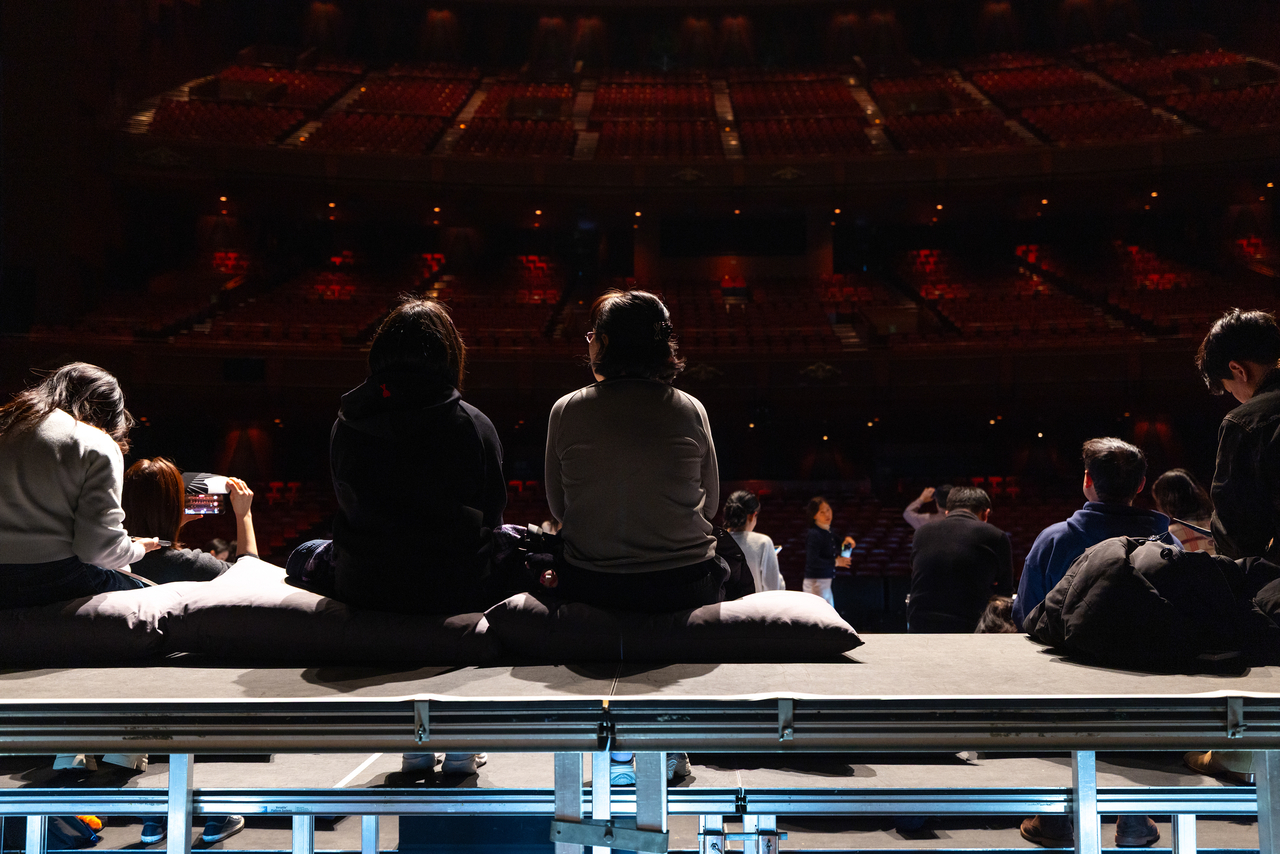
Instead of filling the auditorium, participants were invited to sit on the stage itself. Facing the cavernous, empty hall where thousands of eyes usually stare back, they experienced the theater's acoustic and spatial grandeur in solitude.

Stepping onto the stage from the wings reveals the full scale of the auditorium. The sudden view of the vast, empty seating tiers provides a stark contrast to the usual audience perspective, offering a rare glimpse of the commanding vantage point that performers face — a shift that adds a profound new layer of depth to the theatergoing experience.
The atmosphere was defined by four immersive soundscapes — Gaze, Loss, Consolation, and Joy — featuring works by John Cage, Beethoven, Schubert and Piazzolla. For music lovers, the experience is unparalleled — far removed from the background ambience of a cafe or the limitations of home speakers. In the vast, silent theater, the sound takes on a physical weight, feeling as if the music itself is embracing the body.
This year’s "Reading & Listening Stage" marks a significant evolution from last year’s "Listening Stage," adding a literary dimension that invites the audience not only to listen but also to read and reflect within the theater's embrace.

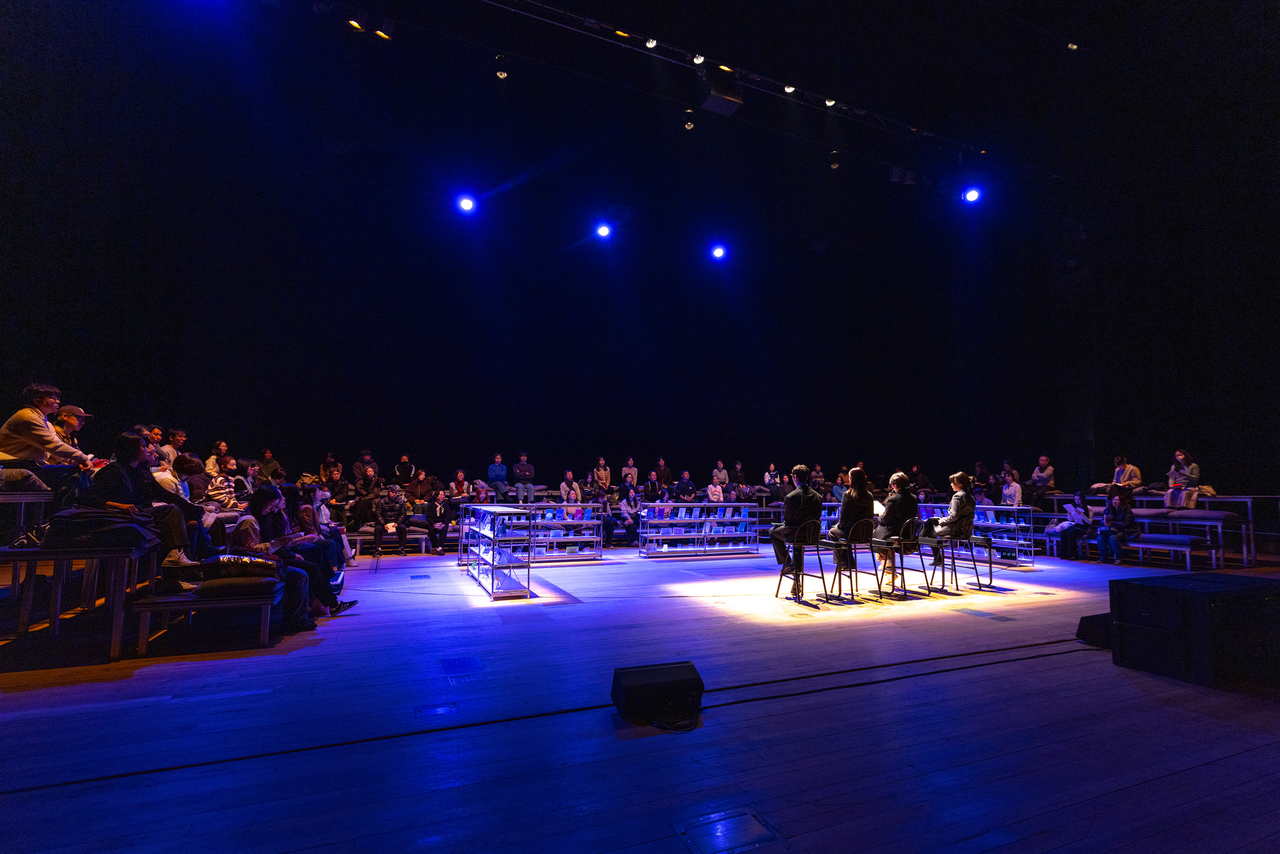
Neatly displayed on bookshelves lining the stage were 27 poetry collections published by Munhakdongnae. While some visitors simply immersed themselves in the sound, others reached for these colorful volumes to read on the cushioned tiers. To further deepen the experience, the program also featured "Art Dialogue," a series of 30-minute talks where poets and performing artists explored the creative intersections between their crafts.
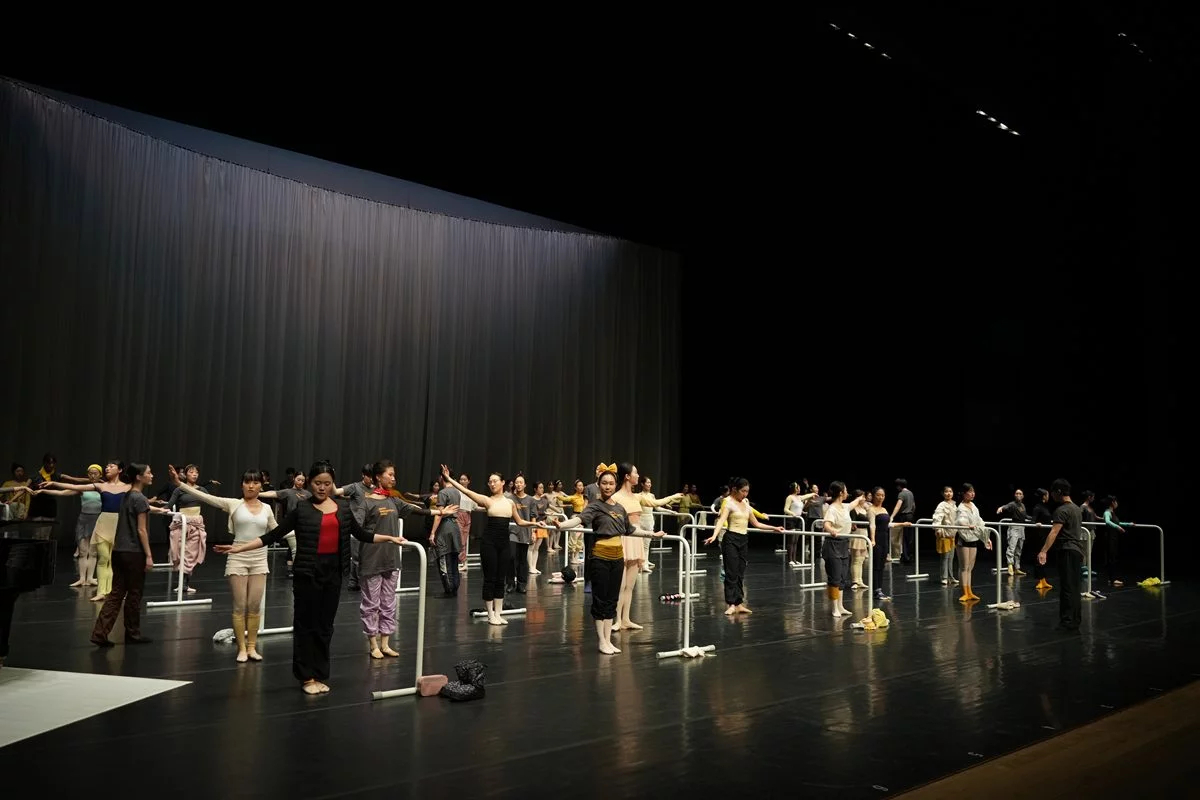
A few days ago, the stage transformed once again, this time for movement rather than stillness. A group of 50 ballet lovers had the rare chance to take the stage through "Grand Ballet Day," hosted by the Seoul Metropolitan Ballet, one of the Sejong Center’s resident companies. The program invited participants to experience the venue not as spectators, but as performers. Taking a ballet class on a stage so prestigious that it remains a coveted dream even for professional dancers, while gazing out at the 3,000-seat auditorium, was a truly special moment for everyone involved.
But why does the Sejong Center open a massive venue designed for thousands to groups of fewer than 100?
According to Ahn Ho-sang, CEO of the Sejong Center, the initiative is about redefining the venue's role.
“Sejong Inspiration is a process of proving that the theater is a ‘culture and arts platform’ where one experiences the diversity of art and expands their senses, going beyond a place simply for watching performances,” Ahn said. Sejong Inspiration is a curated, boundary-pushing program at the Sejong Center.
He added his hope that through "Reading & Listening Stage," viewers would "step out of their daily routines and experience a resonance of new senses.”
Furthermore, these curated events serve as creative "teasers" for upcoming performances. The musical selection was not random; alongside the literary curation, it served as a deliberate preview designed to build anticipation and context for the main schedule. Audiences seem to have embraced this bold endeavor, with tickets for the program selling out almost immediately after their release.
gypark@heraldcorp.com