Alignments of holidays, weekends can result in extended breaks in Korea

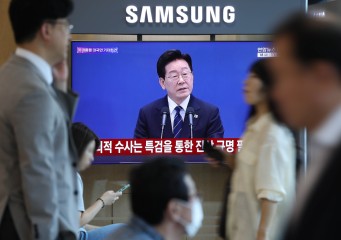
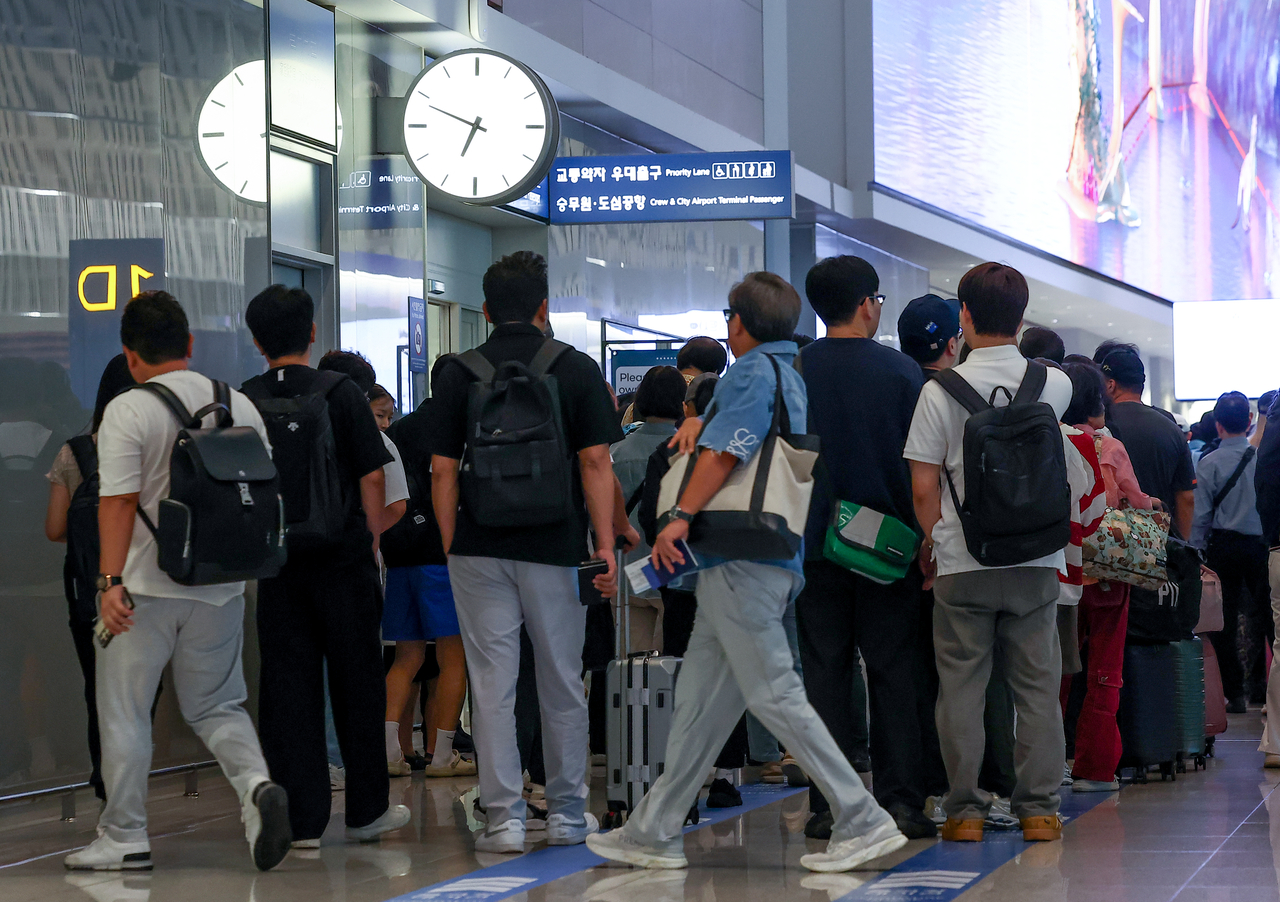
South Koreans are enjoying a seven-day break in October as a result of a rare combination of consecutive holidays and a weekend.
While the standard length of the Lunar New Year (Seollal) and Chuseok holiday is three days, these observances follow the lunar calendar and can occasionally align in a way that results in an extended break.
So what's the outlook for long holidays in the next 10 years?
Lunar calendar and substitute holidays
Chuseok is also known as "Korean Thanksgiving," but its meaning is, in a sense, almost the opposite -- wishing and praying for a bountiful harvest and honoring ancestors. This is why it's held at a time traditionally just before the autumn harvest -- on Aug. 15 of the lunar calendar, to be exact.
But Korea and most of the world now use the Gregorian calendar, meaning Chuseok falls on different dates each year. This year's Chuseok is on Oct. 6, but it was on Sept. 17 last year, and next year will be on Sept. 25.
Because of this, not every Chuseok holiday provides the same amount of consecutive time off. This year is special because it lines up with National Foundation Day (Oct. 3), Hangeul Day (Oct. 9) and the weekend.
Next year, for example, the Chuseok holiday will be from Thursday to Saturday, meaning Koreans will have four days off through Sunday.
Had the Chuseok break included Sunday, instead of Saturday, the following Monday would have been designated as a "substitute holiday" -- an extra day off granted when a national holiday falls on a Sunday or overlaps with another holiday.
Not all holidays are eligible for the substitute holiday system. For example, if Memorial Day (June 6) or New Year’s Day (Jan. 1) falls on a Sunday, no substitute holiday is given. This is because they are classified as “legally designated holidays” rather than “national holidays,” the latter of which in Korean literally means “a day to celebrate a joyous occasion for the country.”
Next decade's longest and shortest Chuseok
In 2027, Chuseok falls on Sept. 15, a Wednesday, which means people in Korea are off work Tuesday through Thursday and return to work on Friday ahead of the weekend.
The dreaded working Friday could turn into a "temporary holiday," which refers to a day designated as a holiday by the government on special occasions. But the decision to give the public a day of leisure is completely up to the administration.
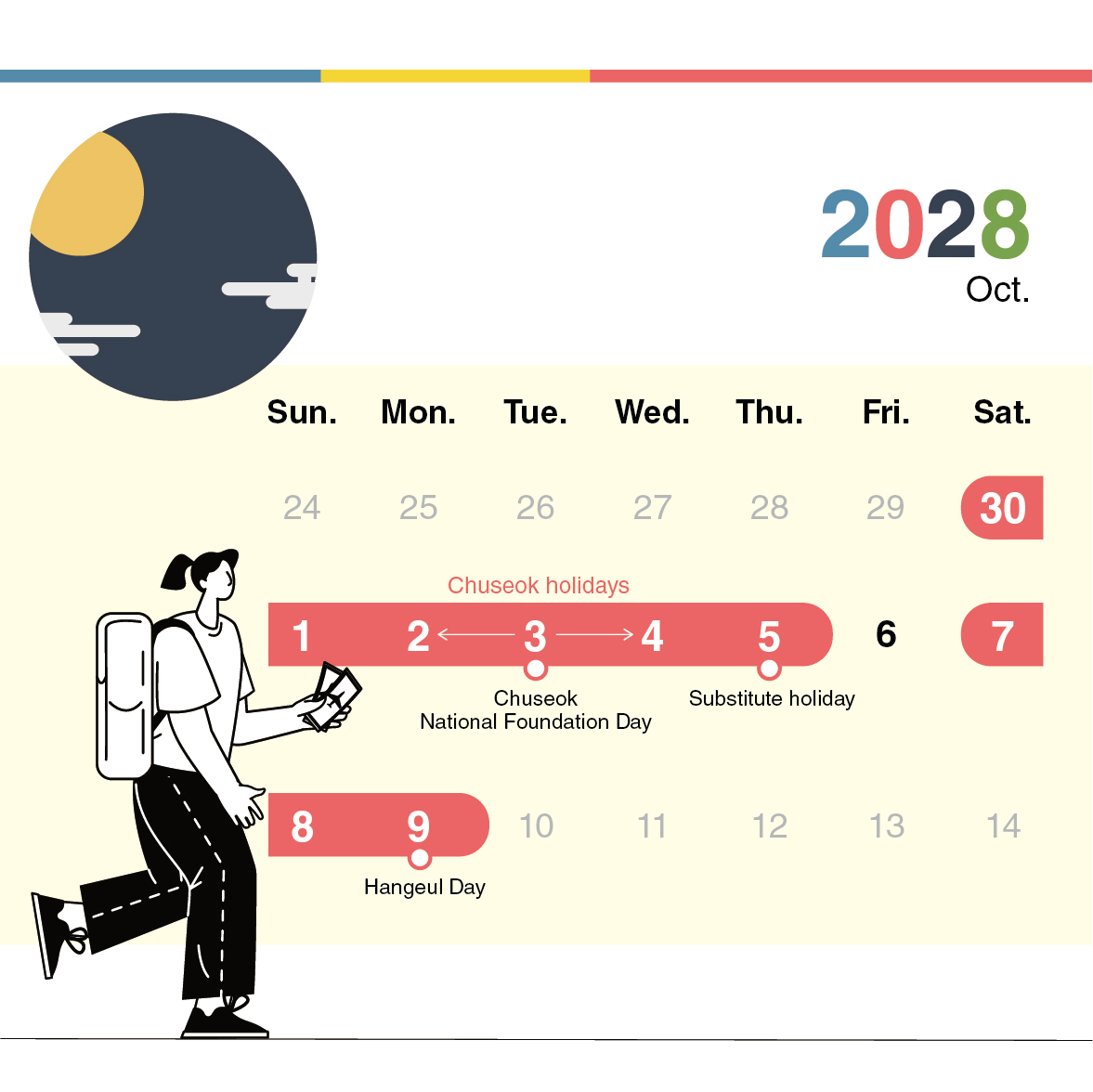
It appears that the longest Chuseok in the next decade will be in 2028. That year, Chuseok falls on Oct. 3, creating a six-day break from Sept. 30 (Saturday) through Oct. 5 (Thursday). Oct. 5, not normally a holiday, will be designated as a substitute holiday for National Foundation Day, which will coincide with Chuseok.
This means the nation will enjoy six consecutive days from Saturday, work for a single day, and have a weekend off. It could become an extremely rare 10-day break if the government decides to designate Oct. 6 (Friday) as a temporary holiday. If it does, the holiday will connect with the next weekend and Hangeul Day on Monday, Oct. 9.
That's happened only once, in 2017, when the combination of Chuseok, the National Foundation Day, Hangeul Day, and back-to-back weekends resulted in an unprecedented 10-day break. It could have occurred this year, but the government decided not to designate a temporary holiday.
As for the shortest Chuseok, when the holiday overlaps with the weekend, it could be a four-way tie between 2026, 2029, 2032 and 2035. Unless the government changes the law, workers will lose a day off. In those years, the possibilities range from starting on a Thursday to starting on a Saturday, so pick your poison.
Next shot at a 10-day break in 2044
The government does not usually designate more than one temporary holiday within a certain period, which means the next realistic chance at a 10-day break after 2028 would be in 2044. After that, there will likely not be another chance -- for the rest of the century.
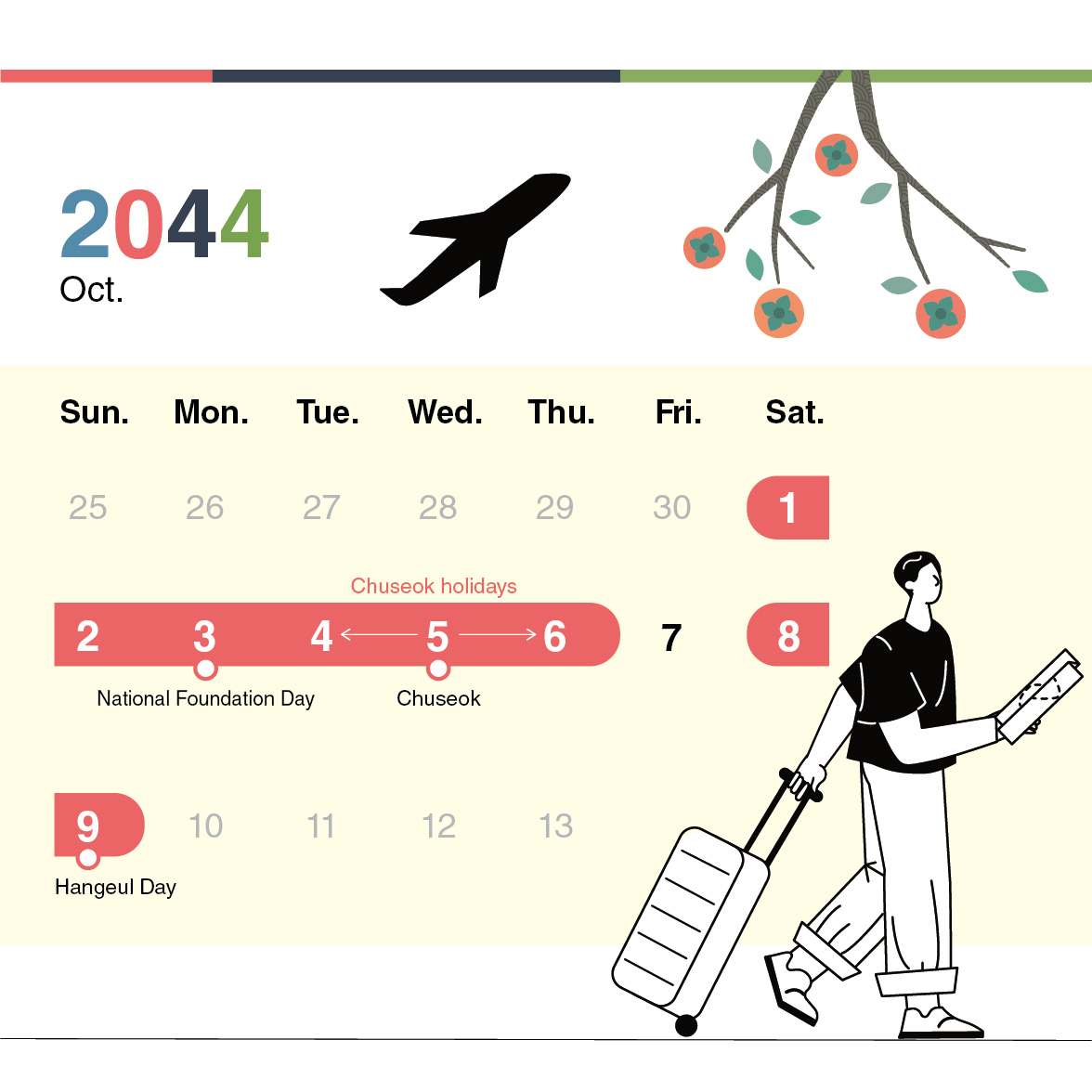
While a 10-day super-break might not occur again in our lifetimes, there will be periods of extended rest of three to five days over the years. Next year's Chuseok holiday will give us one less day off than usual, but the Lunar New Year in 2026 will be from Monday to Wednesday, giving us a decent five-day break combined with the weekend.
There will be eight occasions next year when holidays fall just before or after the weekend, and checking those dates will help with vacation planning.
minsikyoon@heraldcorp.com