
Plane warned of bird strike 5 minutes before crash landing
The South Korean government confirmed Sunday that the plane in Sunday's deadly crash received a "bird strike" warning minutes before it struck the fence at the airport, regarding its investigation on what caused the one of the worst air traffic tragedies in the country's history.
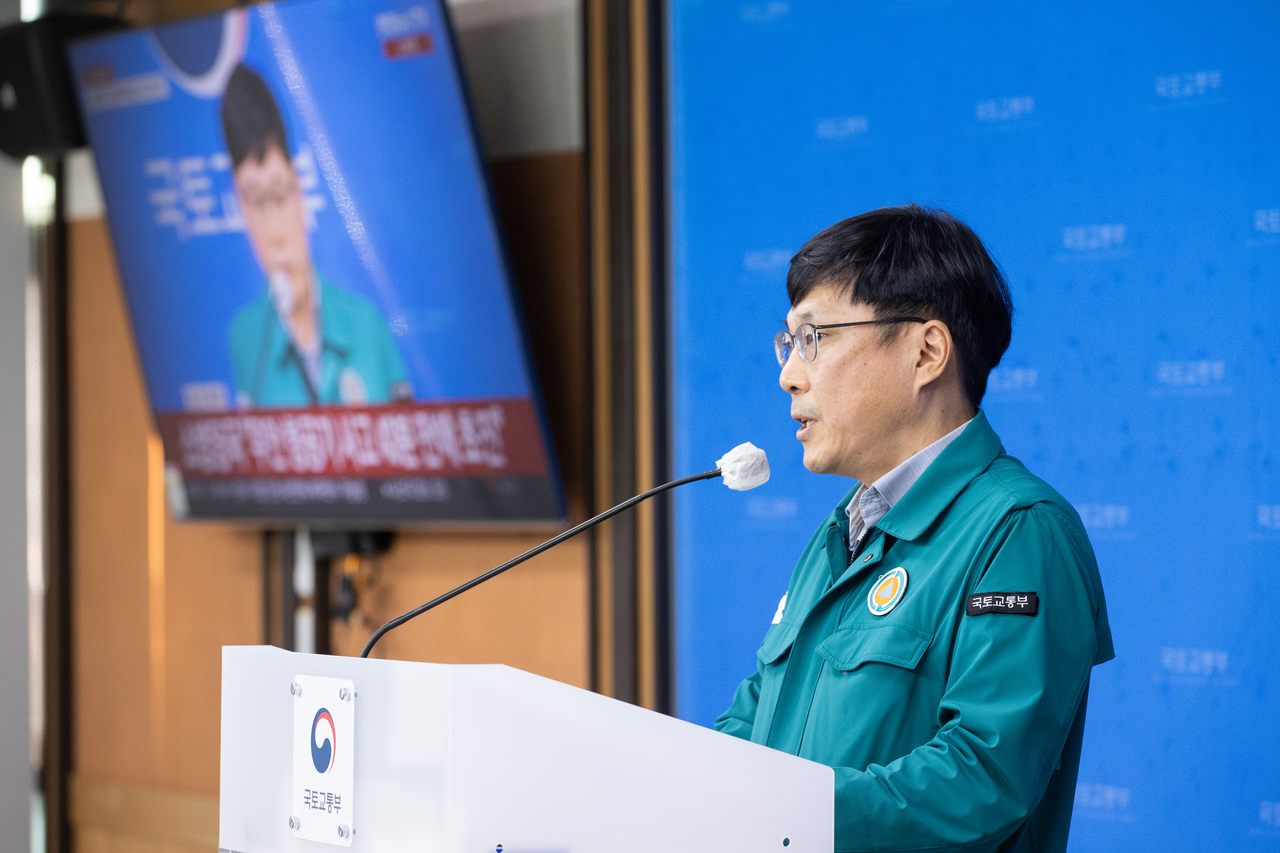
Jeju Air 7C 2216 received the warning from the control tower of the Muan International Airport at around 8:54 a.m. Minutes later, the pilot sent mayday call, said Ju Jong-wan, director of aviation policy at the Ministry of Land, Infrastructure and Transport.
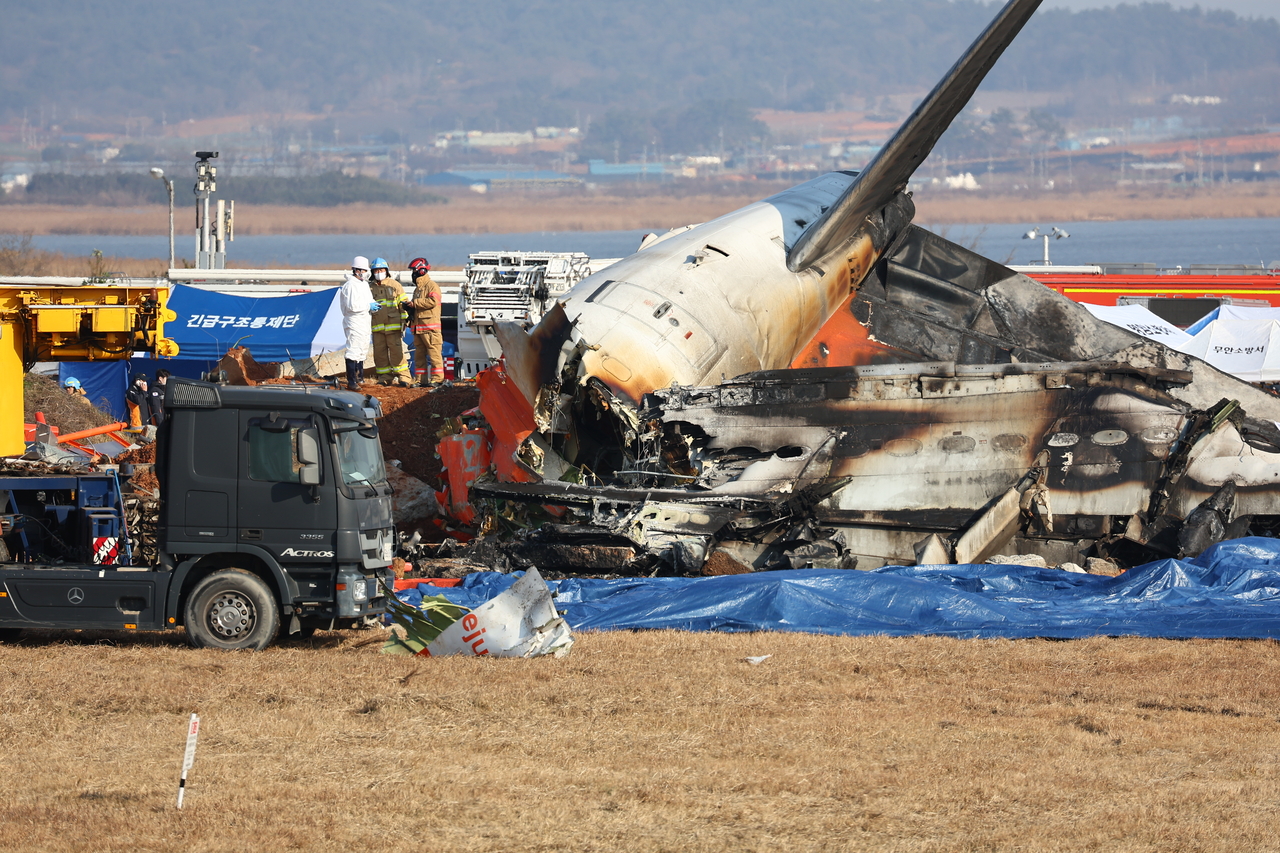
The pilot attempted a landing without deploying the landing gear at around 9:03 a.m., leading to the plane overshooting the runway and colliding into the perimeter fence.
"The (pilot) received the bird strike warning while attempting the landing for the first time, after which the pilot issued a mayday call. ... It was confirmed that the control tower authorized the landing on the opposite side (of the initial landing spot), which the pilot accepted," Ju explained at a 3 p.m. briefing.
The pilot and the co-pilot of the aircraft had logged 6,823 hours and 1,650 hours of time flying commercial flights, respectively, according to the ministry.
The ministry official refrained from pinpointing the exact cause of the accident, saying the investigation was still ongoing. He said that the plane catching fire after the crash landing is why the casualty numbers are so high.
One of the two confirmed survivors, both flight attendants, told the rescue officials that they thought the cause of the accident was caused by bird strike. The two survivors are being treated at hospitals in Mokpo, South Jeolla Province, some 20 kilometers south of the airport where the tragedy occurred.
At least 176 people had been confirmed to have died in the crash landing as of 6:10 p.m., according to the National Fire Agency, out of 175 passengers and six crew onboard.
Ju dismissed speculations that the relatively short runway at the Muan International Airport contributed to the tragedy in any way.
"The runway is 2,800 meters long and has been used by C-type airplanes. ... It would be safe to assume that the length of the runway is not why the accident occurred," he said.
C-type aircraft refers to the International Civil Aviation Organization's categorization of aircraft with a wingspan between 24 meters and 36 meters. The plane in the crash was a Boeing 737-800, which has a wingspan of 35.8 meters.
While officials are cautious about pinpointing the exact cause of the accident, testimony from eyewitnesses led many to believe that it was caused by a landing gear malfunction possibly from a collision with birds. It was reported earlier that one of the passengers on the ill-fated aircraft had sent a family member text messages to that effect while onboard, right before the plane attempted the landing at around 9 a.m.
An unconfirmed video of an airplane apparently having a small explosion in the air circulated online Sunday morning, with rumors that it was of the ill-fated Jeju Air flight. However, authorities said that they cannot confirm the authenticity of the video, and they were unaware of where the video came from.
Jeju Air 7C 2216 was en route to land at Muan International Airport after taking off from Bangkok, but overshot the runway due to an unconfirmed cause. It collided with the perimeter fence and ignited, leading to an explosion and fire.
Jeonnam Fire Service said earlier in the day that most of the people still unaccounted for appear likely to have perished in the accident.
minsikyoon@heraldcorp.com


