FRANKFURT (AP) ― European Central Bank head Mario Draghi opened the door wider for further stimulus on Thursday, saying the bank is laying the technical groundwork for new measures that it could deploy if needed. Stocks rallied and the euro slumped on the news.
The ECB did not announce any new monetary support programs after its governing council meeting. It left its key interest rate at a record low of 0.05 percent.
But Draghi jolted markets with his declaration that more measures were possible ― and that the ECB’s governing council was behind him, dismissing media reports he was facing resistance.
The euro fell to around $1.24, the weakest level since August 2012, when Draghi famously promised to do “whatever it takes” to save the euro. Monetary stimulus can weigh on a currency. Germany’s main stock index jumped 1.4 percent before edging back to a 0.7 percent gain.
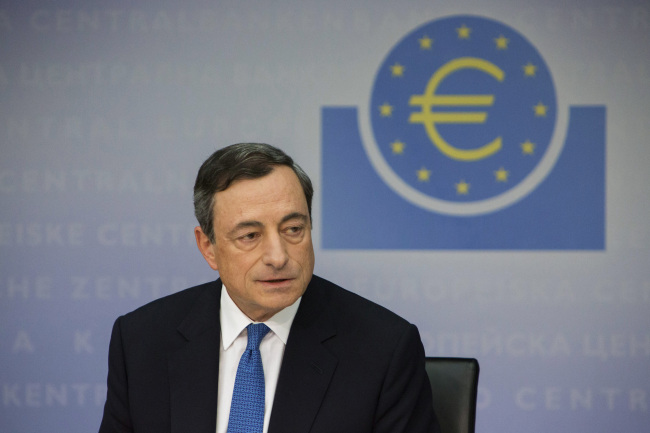
Draghi said the 24-member governing council has tasked staff “with ensuring the timely preparation of further measures to be implemented, if needed.”
Markets appeared to interpret that as a prelude to a program in which the central bank would create new money and use it to make large-scale purchases of government bonds from banks and financial institutions, as the U.S. Federal Reserve has done. Such a program, dubbed quantitative easing, or QE, can boost stocks, lower market interest rates and, eventually, help growth and company profits.
Draghi left open, however, exactly what new measures were under consideration. The ECB has discussed large-scale bond purchases in one way or another for months but held off. The question now is whether Draghi and the ECB will finally go ahead as eurozone economic indicators continue to disappoint.
Analyst Christian Schulz at Berenberg Bank saw a 60 percent chance that the ECB would announce in December that it will purchase corporate bonds, not government bonds. That could have a stimulus effect while avoiding charges the ECB is bailing out indebted governments by buying their bonds.
Joerg Kraemer, chief economist at Commerzbank, expects the ECB to launch government bond purchases at the start of next year. “This will make virtually no change to low growth and low inflation, but will help highly indebted countries and their banks,” he wrote in a note to investors.
koreaherald@heraldcorp.com