Seoul is adding venues and ambitions, chasing a model that is already under pressure. City needs to decide what kind of fashion capital it wants to be
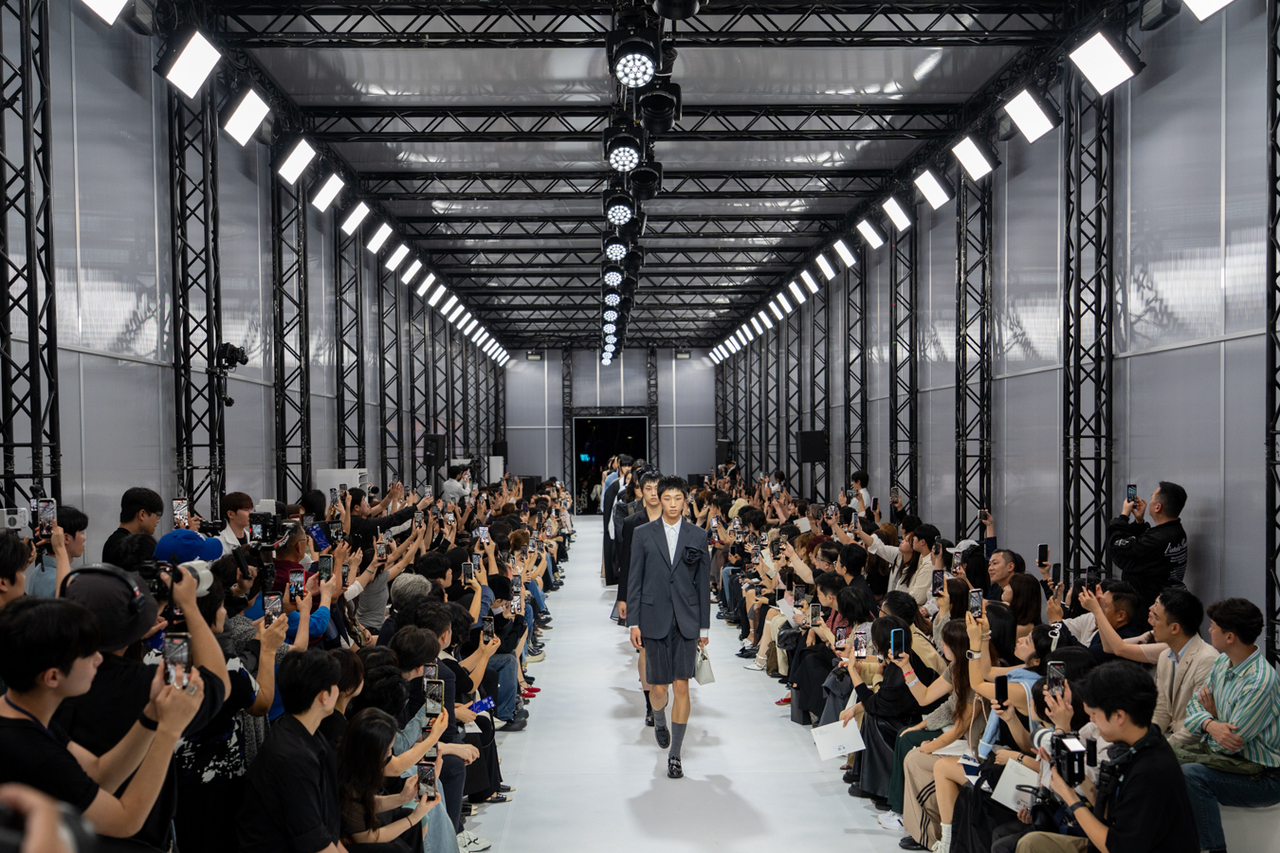
The biggest change at Seoul Fashion Week this season was a second location.
For the first time, the event split between Dongdaemun Design Plaza and the World Park at Lotte World Tower in Jamsil, a site intended to bring fashion closer to shoppers and tourists.
The 2027 spring-summer edition, which closed Sunday, was also the most ambitious version yet. Kimhekim, which built its international reputation at Paris Fashion Week beginning in 2019, held its first show at Seoul Fashion Week, backed by Adidas. Pieces on the Jamsil runway carried QR codes linking to Lotte Department Store's online mall.
But the new location offered an awkward picture of Seoul's ambitions. The runway was set inside a small temporary structure in a garden. Anyone arriving for the spectacle of a major international fashion week found something considerably less impressive than the DDP hall it was meant to complement.
The rest of the week had the same quality of an ambition arriving under-resourced. A K-lifestyle street at DDP paired 18 brands, barely even heard of, with street food, beauty and wellness, an obvious play for foreign visitors. It sat largely empty. So did the trade show floor.
Park Sun-hee, a professor of fashion design at Ewha Womans University who has attended nearly every Seoul Fashion Week show for years, noticed the difference.
"A few years back, there were plenty of buyers and the trade show venue was packed. This time I stopped by in between the shows, and it was nearly empty," she said.
The decline is visible beyond the exhibition hall.
When Seoul Fashion Week moved into DDP in March 2014 as the building's inaugural event, entertainers walked the runway and famous names filled the front row, helping draw media attention. Fewer of those names turn up now.
The schedule has contracted, too. The 2014 edition ran 81 shows across its main and emerging-designer programs. This season, DDP hosted 17 designer runways and eight presentations.
So Seoul Fashion Week faces a difficult question: If the event is becoming more ambitious, why does it feel less consequential?
Designers Seoul needs
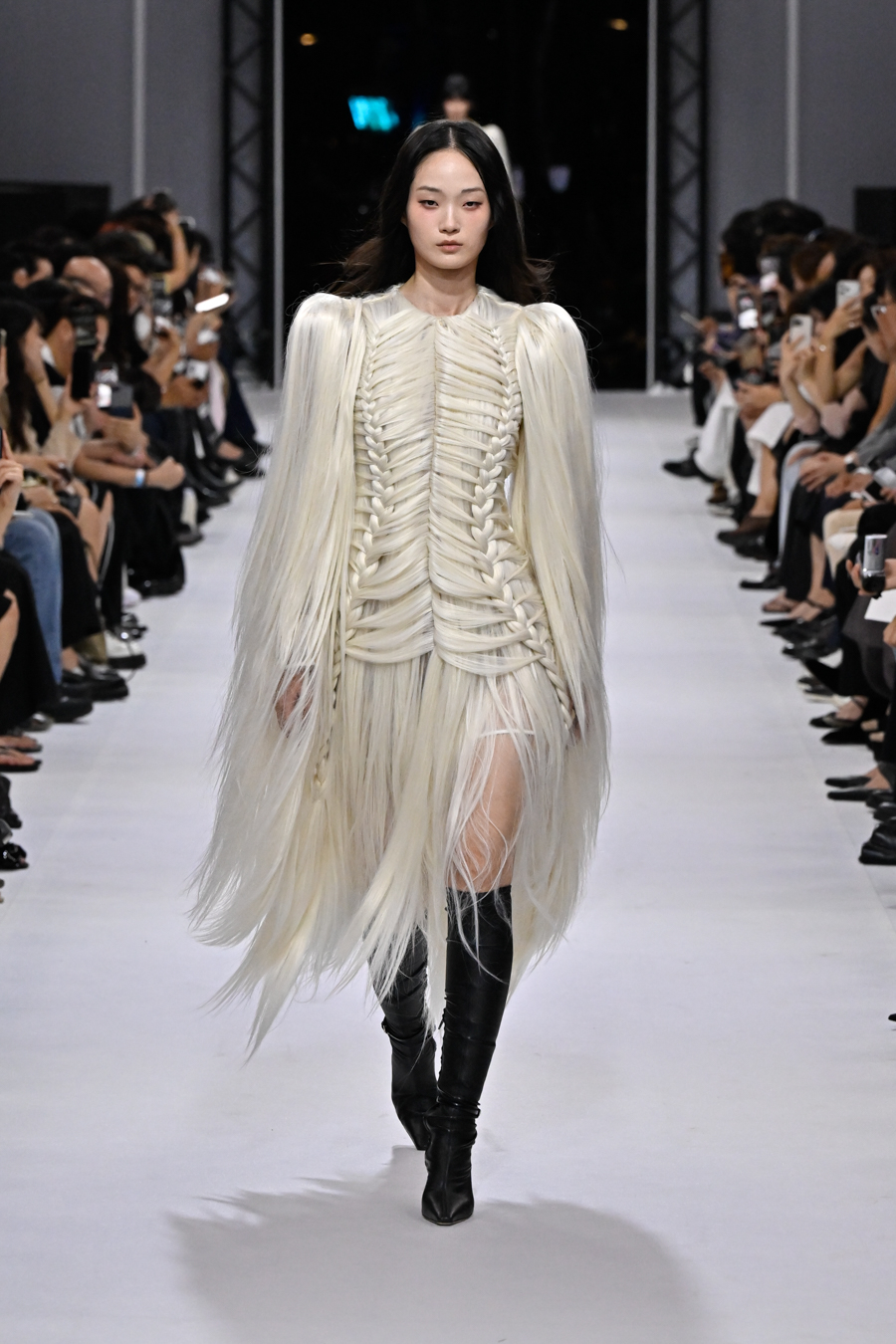
The most serious problem is not an empty trade-show floor; it is that some of Korea's strongest designers are not showing in Seoul at all.
Several Korean labels with international profiles choose overseas fashion weeks instead. Park sees the decision less as a rejection of Seoul than as a matter of economics.
"Doing both is financially difficult, so they have no choice but to pick, and they end up showing overseas. The desire to stand on the stage where global designers stand shoulder to shoulder is simply stronger," she said.
That is a problem Seoul Fashion Week cannot solve by adding another venue.
A fashion capital needs its strongest designers to believe that showing at home is essential. If Korean designers see Paris, Milan or New York as the places where they can build international credibility, Seoul Fashion Week is asking the world to pay attention to a platform that some of its own leading designers cannot afford to prioritize.
There is a longer-term cultural cost, too.
"Because Seoul Fashion Week promotes Korean designers, students learn names like Doucan, HolyNumber7 and Ulkin. It isn't right that young people only know foreign designers. Ours are genuinely excellent," Park said.
Kimhekim's appearance this season is a notable counterexample. But its return came with Adidas as a global partner, Lotte as a commercial partner and a runway outside the usual DDP setting.
It shows what is possible. It also shows how much support is needed to make Seoul competitive.
Chasing a model already under pressure
There is a complication: Seoul Fashion Week is not the only fashion week losing some of its old power.
Designer Lie Sang-bong, who marked his 40th year with a collection this season, is blunt about the destination Seoul has been chasing.
"London and New York, which used to do so well, have fallen off quite a bit. Milan isn't what it used to be either. Fashion has hit another wall globally," he said.
The traditional fashion-week system is under pressure as major brands reconsider the cost and value of showing within official calendars.
That should not reassure Seoul. It should make the city rethink the race it is trying to win.
If the established fashion capitals are struggling, becoming a smaller version of them is hardly a compelling strategy.
Yet, Seoul Fashion Week aspires to become the fifth major fashion capital — after New York, London, Milan and Paris — when it does not need to.

Build the ecosystem, not just events
A fashion capital needs an ecosystem: Designers want to show there, buyers come to place orders, media follows because the brands matter, consumers pay attention, and successful designers give the next generation a reason to participate.
Seoul has many of those ingredients, but they are not yet reinforcing one another.
Hong In-soo, a professor at Esmod Seoul, argues that the answer is not another venue but a stronger fashion product.
"What matters is a direction that is commercial, that people feel in daily life, where someone looks at it and thinks, I want to wear that," he said.
That means supporting designers who can build brands, not simply collections, and reaching consumers where they actually discover fashion: through social media, entertainment and online commerce.
This may be where Seoul has an advantage that the traditional fashion capitals do not.
Park argues that Korea should stop trying to follow Western fashion.
"If we have been the tail of Western fashion until now, this is a good opportunity to become the head," she said.
Consumers already responding to Korean music, dramas and cosmetics are concentrated across Asia, including China, India, Singapore and the Philippines. Seoul has a cultural connection to those markets that Paris, Milan or New York cannot easily manufacture.
Korea's strengths in digital technology and artificial intelligence could reinforce that advantage, she added, giving Seoul a chance to build a fashion system around K-culture, Asian consumers and digital commerce rather than simply copying the Big Four.
Seoul Fashion Week opened ahead of the Big Four this season.
Being first on the calendar is one thing.
The harder question is what Seoul wants to be first at.
yoohong@heraldcorp.com