Port of South Louisiana nears approval of $400m bonds for building cargo terminal
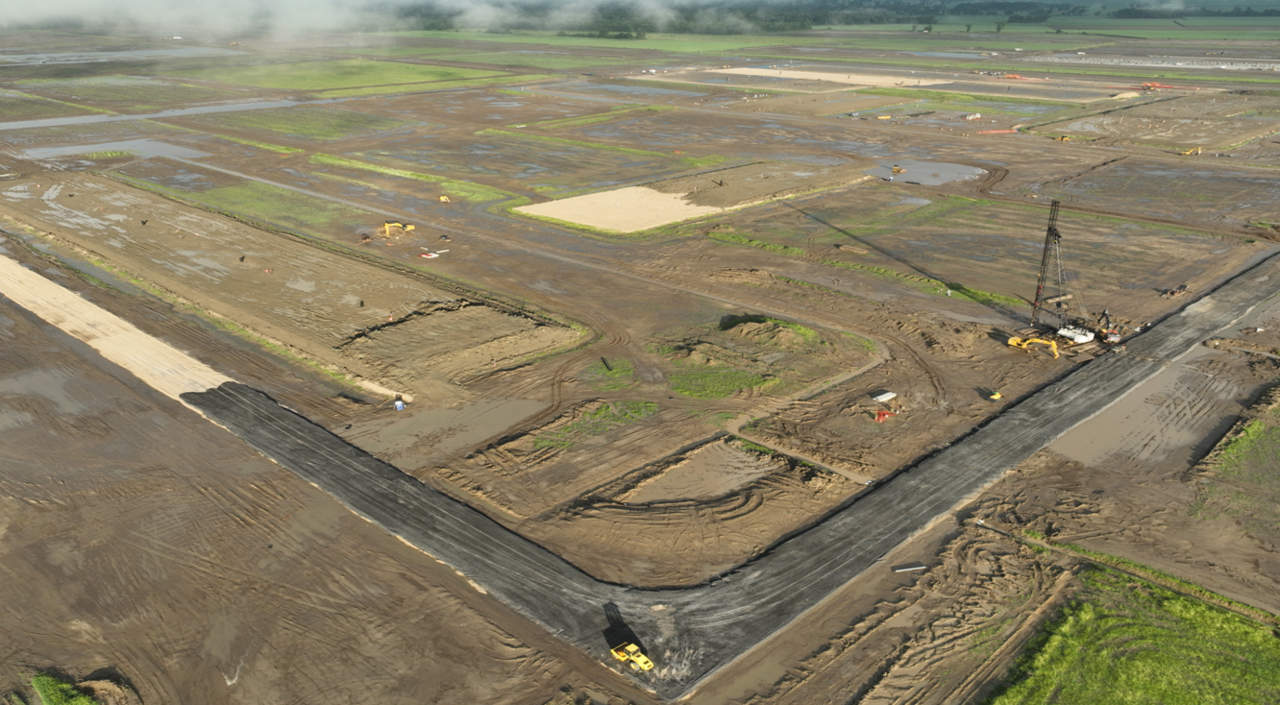
Hyundai Steel and Posco’s $5.8 billion electric arc furnace project in Louisiana has cleared a major hurdle as the local port authority resumed a $400 million financing program halted by environmental litigation.
With the funding back on track, the South Korean steelmakers are expected to accelerate efforts to establish their local production base — a strategic foothold designed to circumvent the US’ 50 percent tariff on imported steel — aiming to start commercial operations by 2029.
Port financing gets greenlight
According to media reports Sunday, the Port of South Louisiana will hold a public hearing at a special port commission meeting on Wednesday on issuing up to $400 million in bonds to build port facilities for Hyundai-Posco Louisiana Steel.
The hearing was originally set for the commission’s regular meeting on Nov. 17. However, residents and environmental groups then sued, claiming the port authority did not properly notify the public in issuing the bond. A Louisiana state court granted a temporary restraining order on Nov. 16 and the hearing was postponed.
A day later, the court dismissed the case as premature because the commission had not yet given the bonds final approval. The port authority rescheduled the hearing a week after the dismissal.
“This ruling reinforces what we have maintained throughout this process: the Port of South Louisiana acted properly and in accordance with its responsibilities,” said Julia Fisher-Cormier, executive director of the Port of South Louisiana, in a statement. “This is great news for Louisiana and allows us to take the next step with this historic project.”
The $400 million port bond is part of an up to $900 million bond package approved by the Louisiana State Bond Commission in September, with the remaining $500 million allocated for the mill’s production facilities.
Strategic gateway
Industry watchers say the port is central to the mill’s raw material supply chain and production cost competitiveness.
According to data released by Louisiana Economic Development last year, Hyundai-Posco Louisiana Steel plans to import roughly 3.6 million tons of iron ore annually once the plant goes online. The iron ore, imported from countries such as Brazil, will be used to produce direct reduced iron, while the steel scrap fed into the electric arc furnace alongside the DRI will be procured locally in the US.
The $400 million funding will be used to construct docks, cargo terminals and conveyor belt systems capable of berthing large vessels along the Mississippi River, supporting the unloading and transport of massive iron ore shipments to the mill.
Notably, Louisiana offers a key logistical advantage for the steel mill. It can accommodate 70,000-ton Panamax-class vessels, while its proximity to major US rail networks is expected to slash freight costs for both incoming raw materials and outbound finished steel.
2029 start
Once fully operational by 2029, the plant will serve as a major buffer against the 50 percent US steel tariff, providing a localized supply of automotive steel for Hyundai Motor Group and other automakers across North America.
The facility, on a 7.37 million-square-meter site, will produce 2.7 million tons of steel annually — 1.8 million tons of automotive sheet and 900,000 tons of general-purpose sheet.
Kim Hyoung-jin, head of Hyundai Steel’s North American business, revealed during a September press briefing that the company has already secured buyers for 1.4 million tons out of the mill’s total automotive steel sheet output — including 800,000 tons for Hyundai Motor and Kia’s US plants and 600,000 tons for Posco.
Looking beyond vehicles, Hyundai Motor Group Executive Chair Euisun Chung previously stated that steel from the Louisiana facility should naturally be incorporated into the group’s Atlas humanoid robot. Chung added that the company also aims to expand its high-tech customer base to rocket builders such as SpaceX, as well as AI data centers and power generation projects.
hyejin2@heraldcorp.com