Korean automakers tasked with defending home turf, scaling hybrids in US, Europe
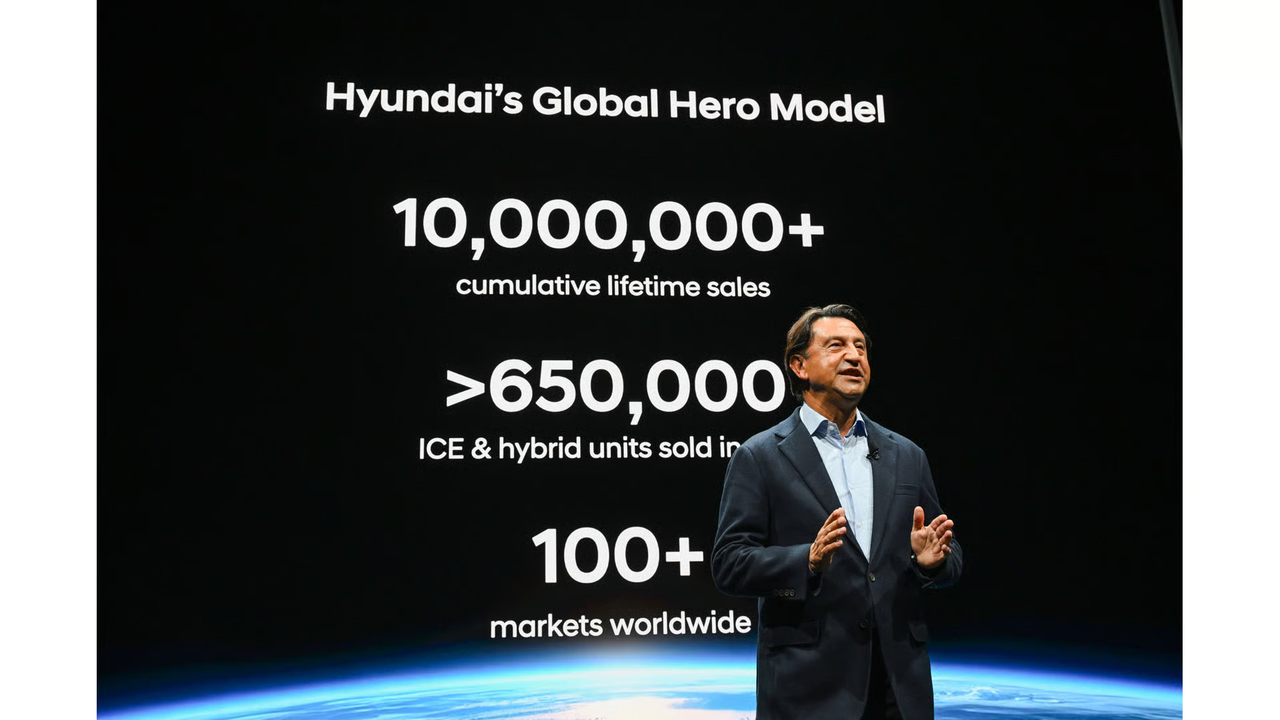
Hyundai Motor Group retained Hyundai Motor CEO Jose Munoz and Kia CEO Song Ho-sung in an executive reshuffle Thursday, prioritizing leadership stability to steer its automakers through escalating headwinds across key global markets.
Munoz, who became Hyundai Motor’s first foreign CEO in November 2024, will lead the automaker for a third year, while Song has led Kia as CEO since 2020.
Both leaders face intensifying pressure to lift profitability after the third-quarter earnings. Hyundai Motor was hit by its first quarterly revenue decline in six years between July and September.
Kia posted record third-quarter revenue and a 24.3 percent year-on-year rise in operating profit. Its operating profit for the first nine months, however, fell 8.1 percent from a year earlier.
Domestically, Munoz and Song are tasked with defending Hyundai and Kia’s home turf against the aggressive penetration of cost-competitive Chinese electric vehicle manufacturers.
According to October data from the Korea Automobile & Mobility Association and the Korea Automobile Importers & Distributors Association, domestic brands accounted for just 48.7 percent of the 258,284 electric passenger cars newly registered this year — slipping below the 50 percent mark for the first time.
Compared with Hyundai and Kia’s combined EV sales of 103,892, Chinese-built EVs posted 112,417 sold over the same period, lifting their domestic market share by 8.4 percentage points to 43.5 percent.
The surge was driven primarily by Shanghai-built Tesla models, which delivered 89,148 units, alongside major Chinese EV makers such as BYD with 20,137.
In North America, Hyundai and Kia’s pivot to a “hybrid-first” strategy, largely driven by an EV demand slowdown, faces supply hurdles. While the new Hyundai Motor Group Metaplant America in Georgia is being converted for hybrid mixed production to support supply expansion, scaling output is expected to take time — leaving them fully exposed to 15 percent auto tariffs.
Hyundai’s domestic union also slashed management’s plan to shift 200,000 vehicles of annual production to the US down to 74,000, mostly Palisade Hybrids.
Europe presents another hurdle despite its relatively high EV adoption — though lower than hybrids — as the European Commission imposes provisional safeguard measures on hybrid passenger cars for up to 200 days starting Dec. 1, capping Korean imports at 67,924 units.
While locally produced models such as the Hyundai Tucson Hybrid from the Czech plant and the Kia Sportage Hybrid from Slovakia are exempt, key models shipped from Korea — including the Hyundai Kona and Santa Fe hybrids and the Kia Niro, Sorento and the all-new Seltos hybrids — face strict quota limits.
To support Hyundai and Kia’s global push, the group carried out leadership changes across key supply and engineering affiliates aimed at accelerating software-defined vehicle business, electrification and manufacturing innovation.
At Hyundai Mobis, Baek Cheol-seung, former CEO of Hyundai Transys, was promoted to president and CEO to overhaul the parts manufacturer’s portfolio toward high-margin electrification and auto electronics. Former CEO Lee Gyu-suk steps down to serve as senior adviser.
Park Chan-young, who previously served as Hyundai Motor’s procurement chief, steps in as vice president and CEO of Hyundai Transys to streamline supply chains and expand global powertrain, electrification and seat systems.
Na Tae-jun, head of the building works division at Hyundai Engineering, has been promoted to vice president and CEO to focus on high-tech industrial construction — such as North American EV plants — and risk management. Outgoing CEO Joo Woo-jeong takes on an advisory role.
At Hyundai Kefico, software-defined vehicle architecture expert Yoo Ji-han takes the helm to lead development of next-generation controllers, while outgoing CEO Oh Joon-dong was named Hyundai Motor’s head of domestic production and chief safety officer to drive artificial intelligence-led manufacturing and labor stability.
hyejin2@heraldcorp.com