What to know about claim deadlines, compensation limits and your rights as a customer
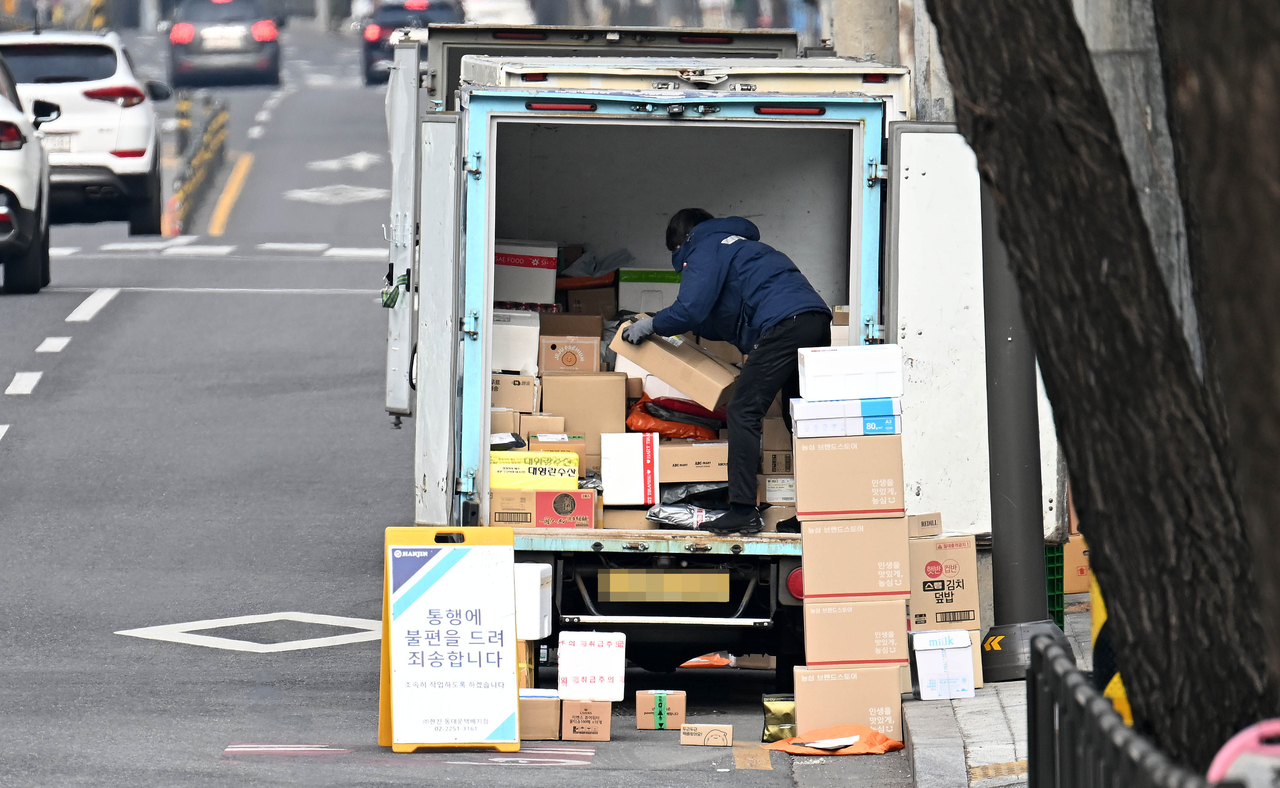
A parcel arriving damaged — or not arriving at all — can be a costly inconvenience.
In South Korea, delivery service providers are generally responsible for packages from the moment they take possession of them, but compensation rules and claim deadlines differ significantly between Korea Post and private delivery companies.
Knowing when to file a claim, what evidence to keep and how much compensation you are entitled to can make all the difference.
Act quickly: When to report damage
For private parcel delivery services, commonly known as "taekbae," customers must report any damage or partial loss within 14 days of receiving the package. Otherwise, the company's liability generally expires under the Fair Trade Commission's standard terms and conditions for parcel delivery services.
If a package never arrives, customers should contact the delivery company as soon as possible.
Claims are typically handled by the sender, who entered into the delivery contract, although recipients can also report delivery problems.
Korea Post operates under stricter rules.
Under Article 41 of the Postal Service Act, recipients may refuse to accept a parcel if they suspect it has been damaged. Once the parcel has been accepted, however, they are generally barred from raising objections.
Recipients should therefore inspect packages for signs of damage before accepting them whenever possible.
Compensation claims for registered postal parcels must be filed within one year of dispatch, either by the sender or by the recipient with the sender's consent.
Why declaring a parcel's value matters
Failing to declare the value of a package can leave customers significantly undercompensated.
For standard registered postal parcels and private parcel delivery services, compensation is generally capped at 500,000 won ($372) if the item's value is not declared.
For example, if a lost item is worth 200,000 won, customers may recover the full amount upon providing proof of its value. If it is worth 1 million won, however, compensation is generally limited to 500,000 won.
Customers sending expensive items can obtain higher coverage by declaring their value and paying an additional fee, subject to the carrier's compensation limits.
Korea Post offers an enhanced coverage service known as "ansim sopo," with compensation of up to 3 million won. Private delivery companies have their own surcharge and coverage policies.
Packages exceeding carriers' maximum permitted value may be refused. Underdeclaring an item's value can leave customers unable to recover their full losses.
How to claim compensation
Customers should retain shipping receipts, tracking numbers, photographs or videos of damaged items and their packaging, and documents proving the item's value, such as purchase receipts.
The delivery company or Korea Post will review the evidence before determining the amount of compensation.
Those dissatisfied with Korea Post's compensation decision can file a lawsuit within three months of being notifed of the decision.
For private parcel delivery services, liability generally expires one year after delivery. If a package is lost entirely, the one-year period begins on its scheduled delivery date.
Customers unable to reach an agreement with a delivery company can seek assistance from the Korea Consumer Agency through the 1372 Consumer Counseling Center.
If legal action becomes necessary, customers should be mindful of the applicable tiem limit. An exception applies when a delivery company knowingly conceals damage or partial loss when handing over a package, in which case its liability extends to five years from delivery.
When compensation may be denied
Delivery companies are not automatically liable for every instance of loss or damage.
Compensation may be denied if the damage results from circumstances beyond the carrier's control, such as natural disasters, or from the sender's or recipient's own negligence.
Inadequate packaging, inherent defects in the item and failure to comply with shipping restrictions may also affect eligibility for compensation.
Customers should pay particular attention to any liability exclusions when sending fragile or otherwise restricted items, although such exclusions do not automatically absolve carriers of responsibility for their own negligence.
The best protection starts before shipping: Pack items securely, declare their actual value and keep records of both the package's condition and its contents.