Koreans’ grain and calorie intake decline over 10 years
한국인 곡물 섭취량·칼로리 섭취량, 10년간 감소
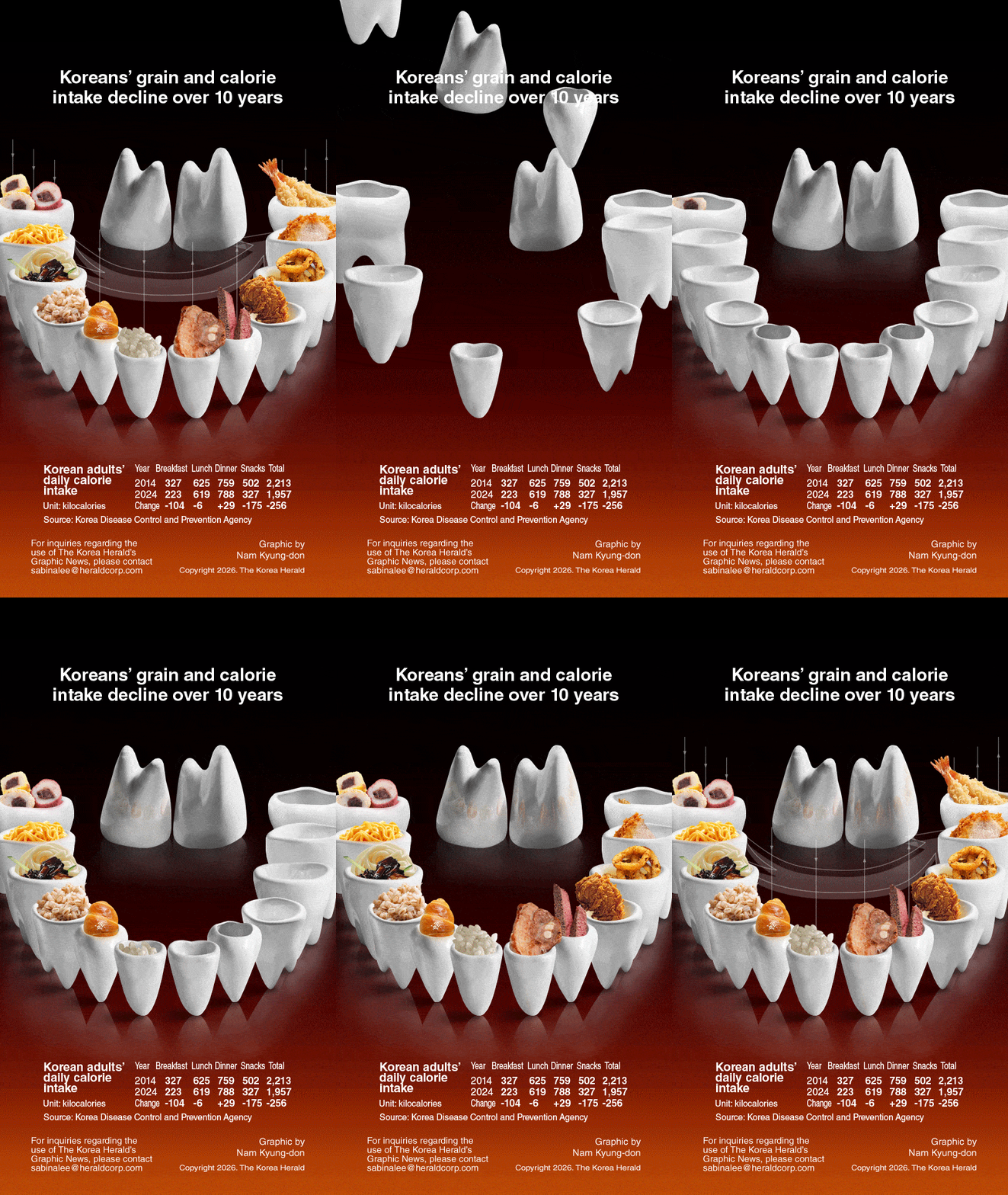
Grain consumption and daily calorie intake among South Koreans aged 20 to 49 declined over the past decade, government data showed, amid rising living costs and changing eating habits.
생활비 상승과 식습관 변화 속에서 한국의 20~49세 인구의 곡물 섭취량과 하루 칼로리 섭취량이 지난 10년간 감소한 것으로 나타났다.
According to the Korea Disease Control and Prevention Agency, daily grain consumption fell from 298 grams in 2014 to 255 grams in 2024, while average daily calorie intake dropped from 2,213 kilocalories to 1,957.
질병관리청에 따르면 하루 곡물 섭취량은 2014년 298g에서 2024년 255g으로 줄었으며, 하루 평균 칼로리 섭취량도 2,213킬로칼로리에서 1,957킬로칼로리로 감소했다.
The growing number of single-person households and rising food prices are cited as key factors behind the shift. Single-person households totaled 8 million in 2024, accounting for 36.1 percent of all households, while dining-out prices rose by more than 3 percent annually for four consecutive years.
1인 가구 증가와 식품 가격 상승이 주요 원인으로 꼽힌다. 2024년 1인 가구는 800만 가구로 전체 가구의 36.1%를 차지했으며, 외식 물가는 4년 연속 매년 3% 이상 상승했다.
Despite the decline in calorie intake, the adult obesity rate rose from 34.8 percent in 2016 to a provisional 39 percent in 2025, highlighting a growing gap between calorie consumption and weight trends.
칼로리 섭취량 감소에도 성인 비만율은 2016년 34.8%에서 2025년 잠정 39%로 상승해, 칼로리 섭취량과 체중 변화 추세 사이의 격차가 커지고 있음을 보여준다.
Experts point to deteriorating dietary quality as a possible explanation, with consumption of beverages and meat increasing while that of grains and fruit declined. The figures suggest that eating fewer calories does not necessarily translate into healthier dietary habits.
전문가들은 식단의 질 저하가 원인일 가능성을 제기한다. 음료와 육류 섭취는 증가한 반면 곡물과 과일 섭취는 감소했다. 이는 칼로리를 적게 섭취한다고 해서 반드시 더 건강한 식습관으로 이어지는 것은 아니라는 점을 시사한다.
khnews@heraldcorp.com