
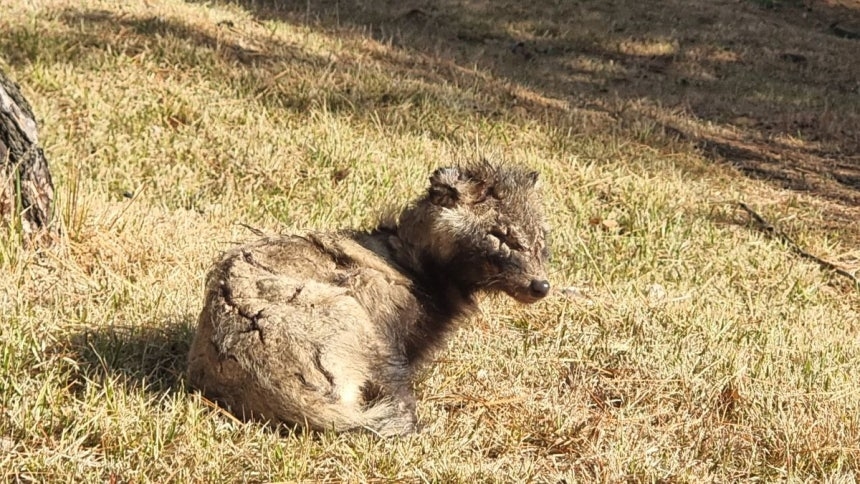
Raccoon dogs suspected of being infected with mange, a contagious skin disease that causes severe hair loss, have been spotted in Songdo, Incheon, raising concerns among residents over the risk of transmission to humans, news reports said Sunday.
According to the Incheon Wildlife Rescue and Management Center and Yeonsu District Office, sightings of raccoon dogs with patches of missing fur have been reported at golf courses, waterfront parks and schools in recent weeks.
A total of 89 requests to rescue or capture raccoon dogs were filed in Yeonsu-gu between January and Nov. 12, up 82 percent from 49 throughout 2025. Of them, 38 were related to suspected mange infections.
On Oct. 30, one of the animals entered a high school in Songdo, prompting teachers to advise students to refrain from outdoor activities, officials said.
Mange is caused by parasitic mites that burrow into the skin and lay eggs, triggering itching and inflammation. The mites can also spread to humans and pets through contact with infected animals.
In humans, however, symptoms are generally mild and typically subside within several days.
"Songdo has well-developed green spaces and waterways, as well as numerous feeding stations for stray cats and no natural predators, which appears to be contributing to the growing raccoon dog population," an official at the Incheon Wildlife Rescue and Management Center told Yonhap News Agency.
The official also suggested that colder weather may be contributing to the spread of mange and making raccoon dogs more visible to residents.
"As temperatures drop, raccoon dogs' immune systems weaken, making them more susceptible to mange," the official said.
"They also tend to seek out sunny areas to escape the cold, making them more visible to residents."
cjh@heraldcorp.com