LS Cable & System, KMMI commit W650b to production expansion as Washington tightens defense supply chain rules
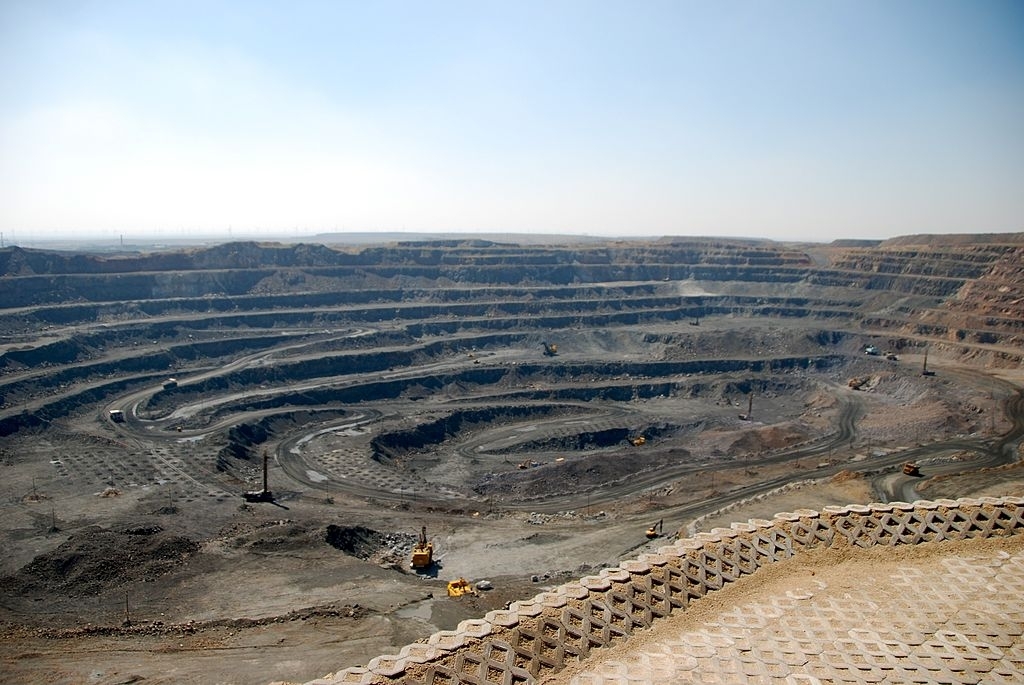
Ahead of tougher US curbs on Chinese-sourced materials in defense equipment starting next year, South Korean firms are ramping up investments in rare-earth permanent magnets, seeking to capitalize on growing demand for supply chains independent of China.
LS Cable & System has announced a 350 billion won ($263 million) investment to build a rare-earth magnet plant in Gumi, North Gyeongsang Province. Another magnet maker, KMMI, has announced a 300 billion won investment to expand its rare-earth and non-rare-earth magnet production in Pohang, North Gyeongsang Province.
The investments come as Washington and Beijing compete more fiercely over rare-earth minerals used to make powerful permanent magnets, which are critical components in electric vehicles, drones, robots, electric devices and missile systems.
Starting Jan. 1, 2027, the US will expand restrictions on certain permanent magnets, tantalum and tungsten sourced from China, Russia, Iran and North Korea in defense procurement, extending the rules to cover the entire supply chain from mining and refining to finished products.
The rules apply to samarium-cobalt and neodymium-iron-boron magnets used in US defense contracts. Until now, the rules have primarily targeted alloy production and manufacturing processes. But from next year, suppliers will face restrictions on sourcing raw materials, including samarium and cobalt used in samarium-cobalt magnets.
The regulatory shift is expected to boost demand for alternative suppliers that can make magnets without depending on Chinese raw materials or processing plants.
China accounts for roughly 70 percent of global rare-earth mining and about 90 percent of refining and processing.
Neodymium magnets are widely used in electric vehicle motors, wind turbines and robots, while samarium-cobalt magnets can withstand high temperatures, making them suitable for fighter jets, missiles, radar systems and other defense applications.
For South Korea, which depends heavily on imported rare-earth resources, the US restrictions have added urgency to efforts to develop domestic manufacturing capacity and diversify supply sources.
LS Cable & System is pursuing one of the country's largest rare-earth magnet production projects through its subsidiary Korea Motion Works, which signed a 350 billion won investment agreement with the North Gyeongsang provincial government and Gumi city officials on Oct. 29.
Construction of the Gumi plant is scheduled to begin in the first half of 2027, with mass production of neodymium magnets for electric vehicles and robots expected in the second half of 2028. Production will later expand to samarium-cobalt magnets for defense applications.
Once completed, the facility will have an annual capacity of more than 1,000 tons, equivalent to roughly 17 percent of South Korea’s estimated domestic demand of 6,000 tons.
To establish a supply chain outside of China, LS Cable & System plans to source rare-earth materials from Australian company Lynas, which will be processed into metals by LS Eco Energy in Vietnam before being supplied to magnet manufacturing operations in South Korea and the US.
Meanwhile, KMMI, a South Korean subsidiary of US-based rare-earth magnet producer Evolution Metals & Technologies, plans to invest 300 billion won through 2030 to expand rare-earth and non-rare-earth magnet production in Pohang. The company plans to establish an annual production capacity of 6,000 metric tons on a site covering approximately 118,000 square meters.
The expanded facility is expected to supply magnets for electric vehicles, defense equipment, semiconductors and other advanced industries.
sahn@heraldcorp.com