
Pentagon proposal could allow initial construction in Korea, but Democrats' gains raise questions over congressional approval
South Korean shipbuilders could gain a rare opportunity to build warships for the US Navy at their domestic yards, but a political shake-up in Washington threatens to complicate the Pentagon's emerging procurement plan.
The proposal would allow allied shipbuilders to construct the first one or two vessels in their home countries before shifting subsequent production to the US. For Korean companies, the arrangement could provide immediate orders while giving them time to expand their American shipbuilding operations.
But Democrats' gains in the US midterm elections have raised questions about whether Congress will approve the arrangement, particularly as lawmakers prepare to challenge President Donald Trump's proposed defense spending increases.
According to media reports, the US Department of Defense is expected to complete its review of an allied warship procurement framework Thursday.
Under the proposed arrangement, foreign shipbuilders could initially build vessels at their domestic yards in exchange for commitments to invest in US facilities, train American workers and transfer technology needed for subsequent production in the US.
The initiative comes amid the Trump administration's proposed $65.8 billion navy shipbuilding allocation for fiscal 2027, covering 34 vessels, including nuclear-powered submarines and conventional frigates, alongside investments in domestic shipbuilding capacity.
Industry observers see the proposed "build-first, localize-later" model as particularly attractive to Korean shipbuilders. It could allow the use of established domestic production capacity to deliver vessels sooner while developing US facilities and workforces.
The political outlook, however, has become more complicated following the midterm elections.
Democrats are challenging Trump's proposed $1.5 trillion defense budget, which includes $350 billion in additional funding through reconciliation and emergency spending measures.
According to a Wednesday report by The Wall Street Journal, the additional funding would help finance the $65.8 billion shipbuilding initiative, more than twice the navy's typical annual shipbuilding budget.
Rep. Adam Smith, who is expected to become chairman of the House Armed Services Committee, is among Democratic lawmakers questioning the administration's spending priorities, including its proposed large surface combatants.
The debate could affect Korean shipbuilders even if Congress preserves the broader allied procurement initiative.
Industry sources say Democrats may be more willing to support cooperation on smaller combatants, including frigates comparable to Korea's 3,600-ton Chungnam class, than the administration's proposed large warships.
However, the location of initial construction could become contentious.
Lawmakers could seek to require all US Navy vessels to be built at American shipyards, eliminating the proposed exemption for the first one or two ships built by allied partners.
Such a requirement would undermine a key advantage of the Pentagon's proposed framework for Korean companies, which have extensive domestic shipbuilding capacity but are still expanding their US operations.
"If we lose that bridge provision, it would be more challenging to do business in the US," an industry source said.
"Since US shipyards currently lack the capacity for modern combatants, it would directly lead to delayed deliveries, higher labor expenses and costly workforce training."
Korean shipbuilders have been expanding their American operations as part of broader bilateral shipbuilding cooperation, including the Korean government's $150 billion Make American Shipbuilding Great Again initiative.
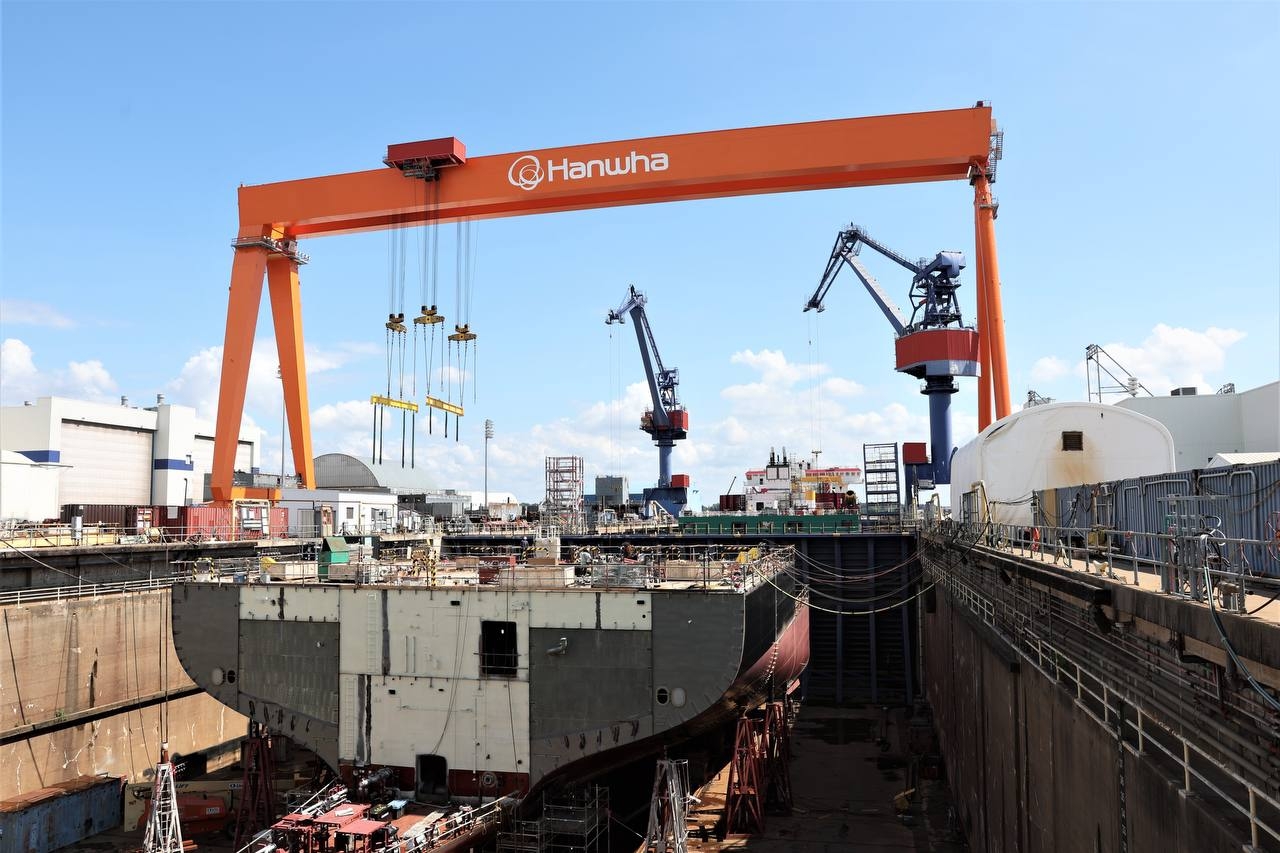
Hanwha Group, which acquired Philly Shipyard in Pennsylvania in 2024, recently secured a $269 million contract through TOTE Services to construct a medium landing ship for the US Navy, with options for three additional vessels.
The group plans to invest another $400 million by 2027 to expand the shipyard's facilities, introduce automation and prepare for naval combatant construction, targeting the necessary certifications by 2028.
HD Hyundai is also pursuing a US expansion through a joint venture with construction company Kiewit to develop a new shipyard.
Construction is scheduled to begin in 2027, with initial production focused on auxiliary vessels such as fleet replenishment oilers.
For both companies, the Pentagon's proposed arrangement could bridge their established Korean production bases and their longer-term ambitions in the US naval shipbuilding market. Whether that bridge survives congressional scrutiny remains uncertain.
hyejin2@heraldcorp.com