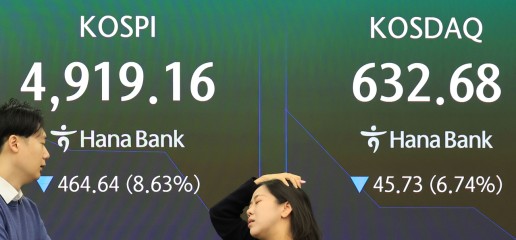
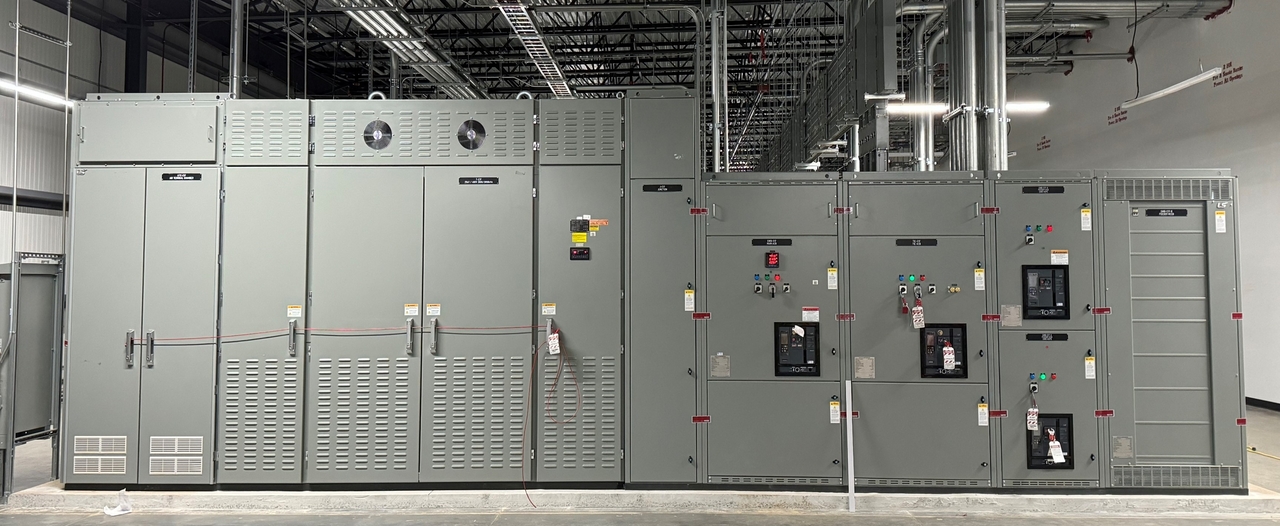
Growing voter opposition to data center construction across the US, reflected in the midterm election results, is putting pressure on South Korean power equipment makers that have been counting on the region’s AI infrastructure boom.
Of 41 local ballot measures related to data center construction across 10 US states, 28 proposed restrictions ranging from construction bans to temporary moratoriums and stricter regulations, according to Ballotpedia.
Locals have raised concerns over electricity costs, water consumption, noise and emissions from emergency generators. A Gallup survey published in May found that roughly 70 percent of US respondents opposed constructing AI data centers in their communities.
Growing opposition to data center construction directly challenges a key growth driver for major Korean suppliers such as HD Hyundai Electric, Hyosung Heavy Industries and LS Electric, whose combined order backlogs have climbed to roughly 37.9 trillion won ($27.9 billion) amid surging electricity demand.
Hyosung Heavy Industries is the leading beneficiary of US big-tech’s infrastructure expansion because of its expertise in ultrahigh-voltage transformers and circuit breakers. As hyperscale data centers consume massive power, they depend on these specialized high-voltage systems to maintain grid stability and prevent outages.
As of the third quarter, the company recorded a record-high backlog of 18.9 trillion won in its heavy industrial division, with the North American market accounting for 60 percent.
HD Hyundai Electric holds $8.84 billion in backlog orders, including a landmark 1.12 trillion won supply agreement signed with a major global tech firm. LS Electric boasts a 7.04 trillion won backlog, with power distribution panels accounting for 2.25 trillion won.
Amid growing uncertainty surrounding the US data center sector, industry sources say key risks for Korean manufacturers include additional regulatory hurdles and potential delays to project timelines.
During a Korea Financial Investment Association webinar on Wednesday, Bloomberg Economics Chief Economist Tom Orlik warned, “State governors may take the election results as a signal to impose new restrictions on data center construction.” He emphasized that Korea and Taiwan, which benefited most from the AI boom, could end up being the biggest losers if momentum stalls.
He added, “While this may not impact orders already in the pipeline, it will weigh on market expectations for future orders and long-term profitability, and that is where the real risk lies.”
“We have not yet received any notifications regarding order delays from our clients,” said an industry source. “However, we are closely monitoring the situation for any potential regulatory developments on data centers.”
Given their recent push to scale up their production footprint across North America and Korea, Korean suppliers are highly vulnerable to operational delays.
Currently, HD Hyundai Electric is boosting capacity at its Ulsan transformer plant and Cheongju facilities, while Hyosung Heavy Industries is carrying out a $157 million upgrade in Memphis and LS Electric is pushing forward with a $250 million expansion in Utah.
hyejin2@heraldcorp.com