800-year-old shipwrecks off Korea's west coast shed light on ancient maritime trade routes
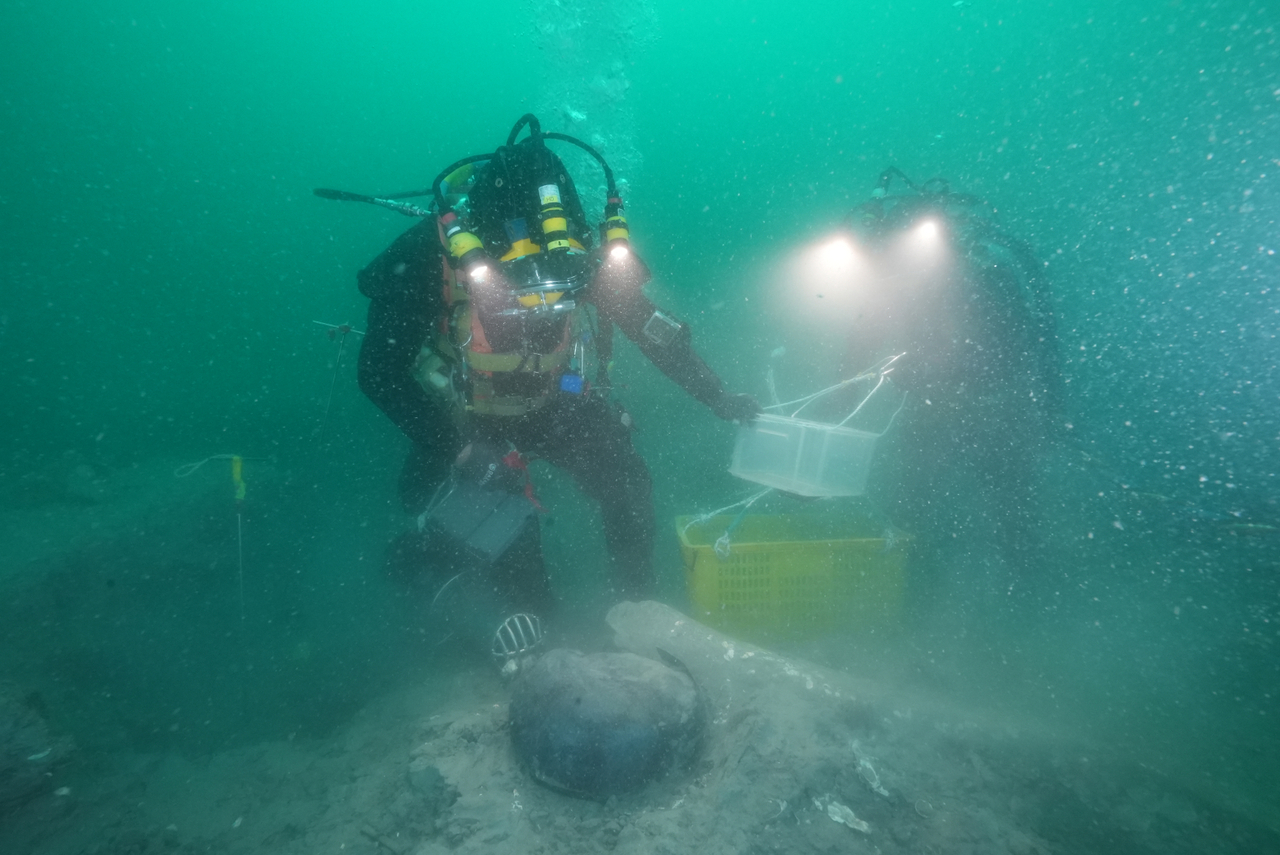
Remains of two shipwrecks believed to date to the Goryeo Kingdom (918-1392) have been identified off the coast of Mado in Taean, South Chungcheong Province, offering new clues as to how goods were transported to the kingdom's capital.
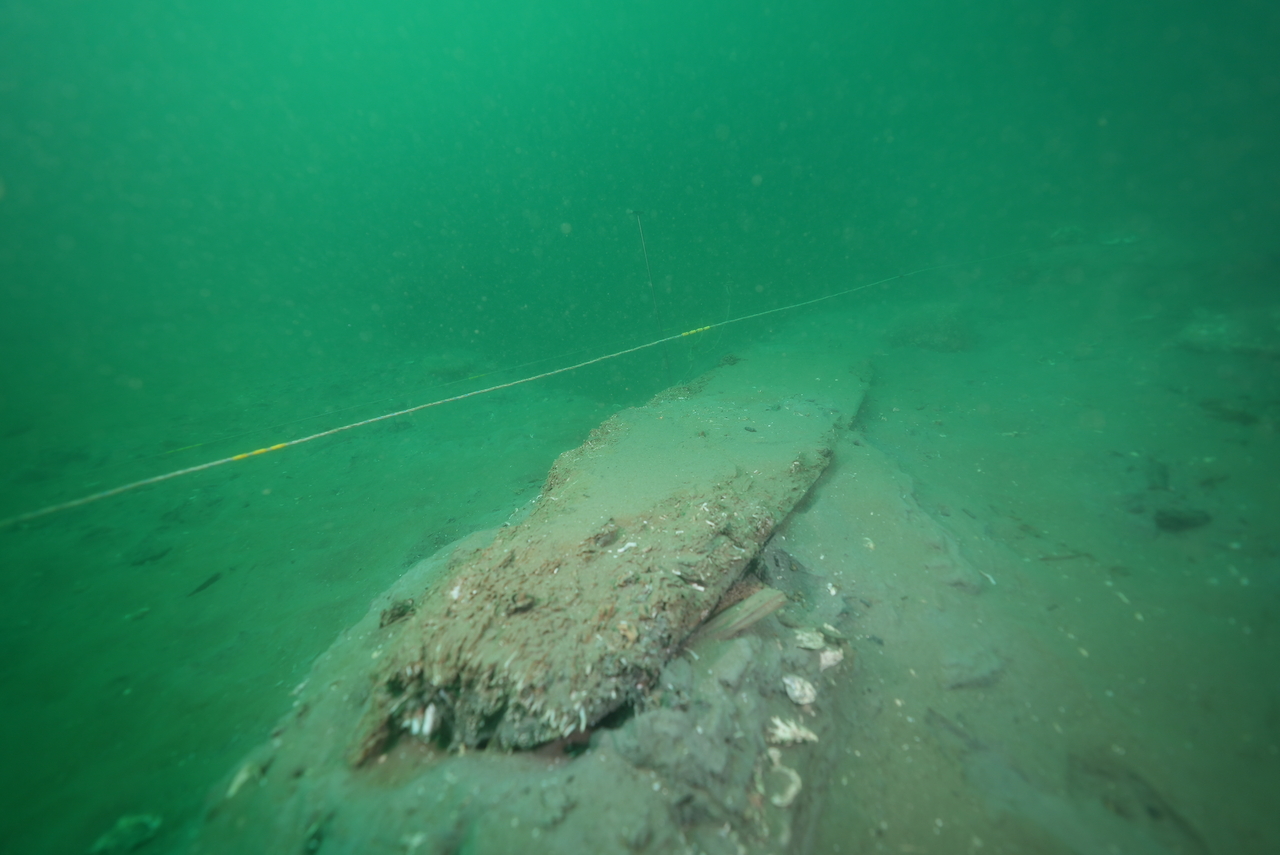
The National Research Institute of Maritime Heritage announced Wednesday that underwater excavations near the island this year confirmed the remains of a vessel designated Mado No. 5 and uncovered evidence of another shipwreck, provisionally identified as Mado No. 6. They are the fifth and sixth ancient vessels discovered in the area.
Following the discovery in 2025 of bundles of celadon vessels and fragments of a ship's hull suggesting the presence of Mado No. 5, full-scale excavations began this year.
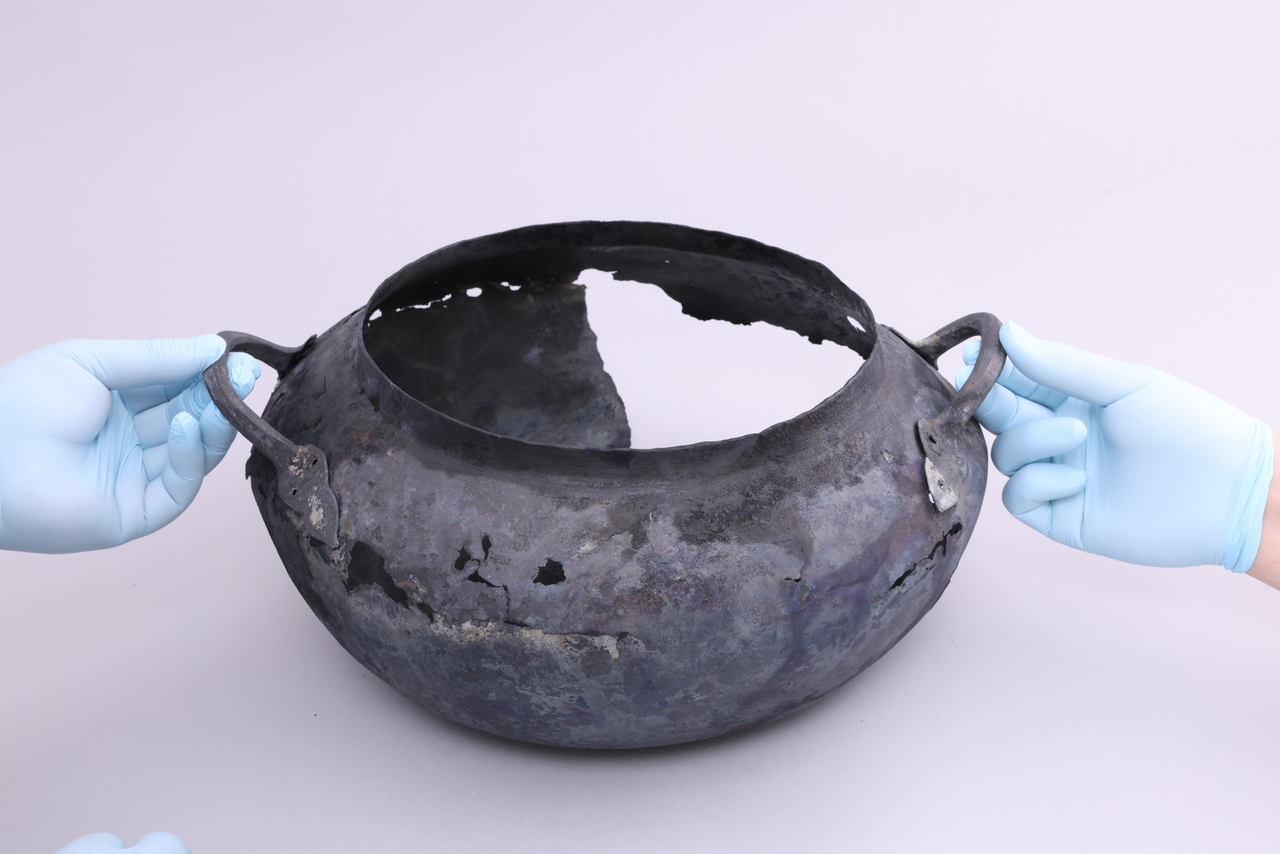
Researchers recovered 54 artifacts, including ship components and equipment such as a stone anchor, cylindrical wooden timbers and ropes. The finds also included rice-straw sacks used to carry cargo, a bronze jar likely used aboard the vessel, and bundles of celadon believed to have been made between 1150 and 1175.
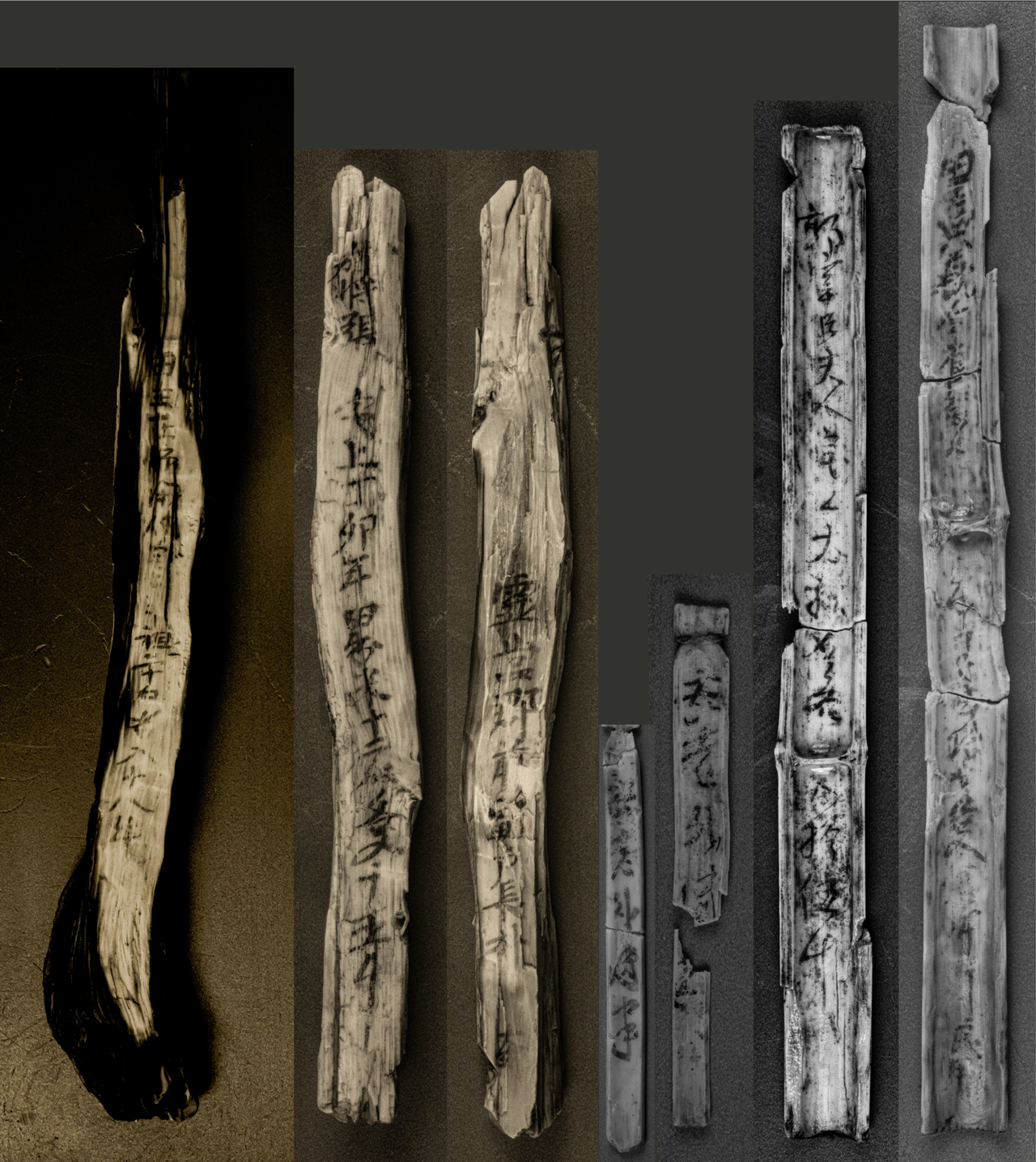
Among the most significant discoveries were 26 wooden tablets bearing inscriptions that provide details about the vessel's cargo, including when and where it was collected and when the ship was scheduled to sail.
The tablets bear the inscriptions "Jeongmyo Year" and "Twelfth Lunar Month of the Jeongmyo Year," indicating when the cargo was collected. Combined with radiocarbon dating of organic materials, which places the wreck between the mid-12th and early 13th centuries, and the dating of the celadon, researchers have identified the year as 1207.
"The 12th lunar month of that year fell roughly in January 1208, when severe winter conditions would generally have made sea travel difficult," a research official said. The vessel is therefore believed to have departed in the spring of 1208.
The inscriptions identify Yeongam-gun and Anno-hyeon, both in present-day Yeongam, South Jeolla Province, as the cargo's points of origin. Its destination was Gaegyeong, the Goryeo capital, in present-day North Korea.
Researchers say Mado No. 5 bears striking similarities to Mado No. 1, another Goryeo-era vessel excavated in 2009. That ship also sank in 1208 while carrying goods collected the previous year from several locations in southwestern Jeolla Province.
One wooden tablet from Mado No. 5 records a shipment from Anno-hyeon to a recipient named Song Deuk-deok in Gaegyeong. Its handwriting and wording are nearly identical to those on a tablet recovered from Mado No. 1, suggesting that both may have been written by the same person.
The similarities in their cargo origins and estimated sailing dates have led researchers to believe the two vessels belonged to the same fleet, transporting separate shipments to the capital.
Meanwhile, a separate investigation of an underwater anomaly detected through acoustic profiling revealed evidence of another buried shipwreck, Mado No. 6.
A test excavation yielded around 20 Goryeo-era artifacts, including a celadon oil bottle, a stoneware kundika, a ritual water vessel, wooden tags, rice-straw sacks and wooden cargo supports.
Two of the wooden tags identify the sender as Mok Ryang, a "hojang," or head of local administrative clerks, in Saju, present-day Sacheon, South Gyeongsang Province. Saju was home to one of 13 government warehouses used to store grain taxes during the Goryeo period.
The institute plans to continue excavations at the Mado No. 5 site in 2027 while conducting a more extensive investigation of the newly discovered wreck to determine its origins and historical significance.
hwangdh@heraldcorp.com